
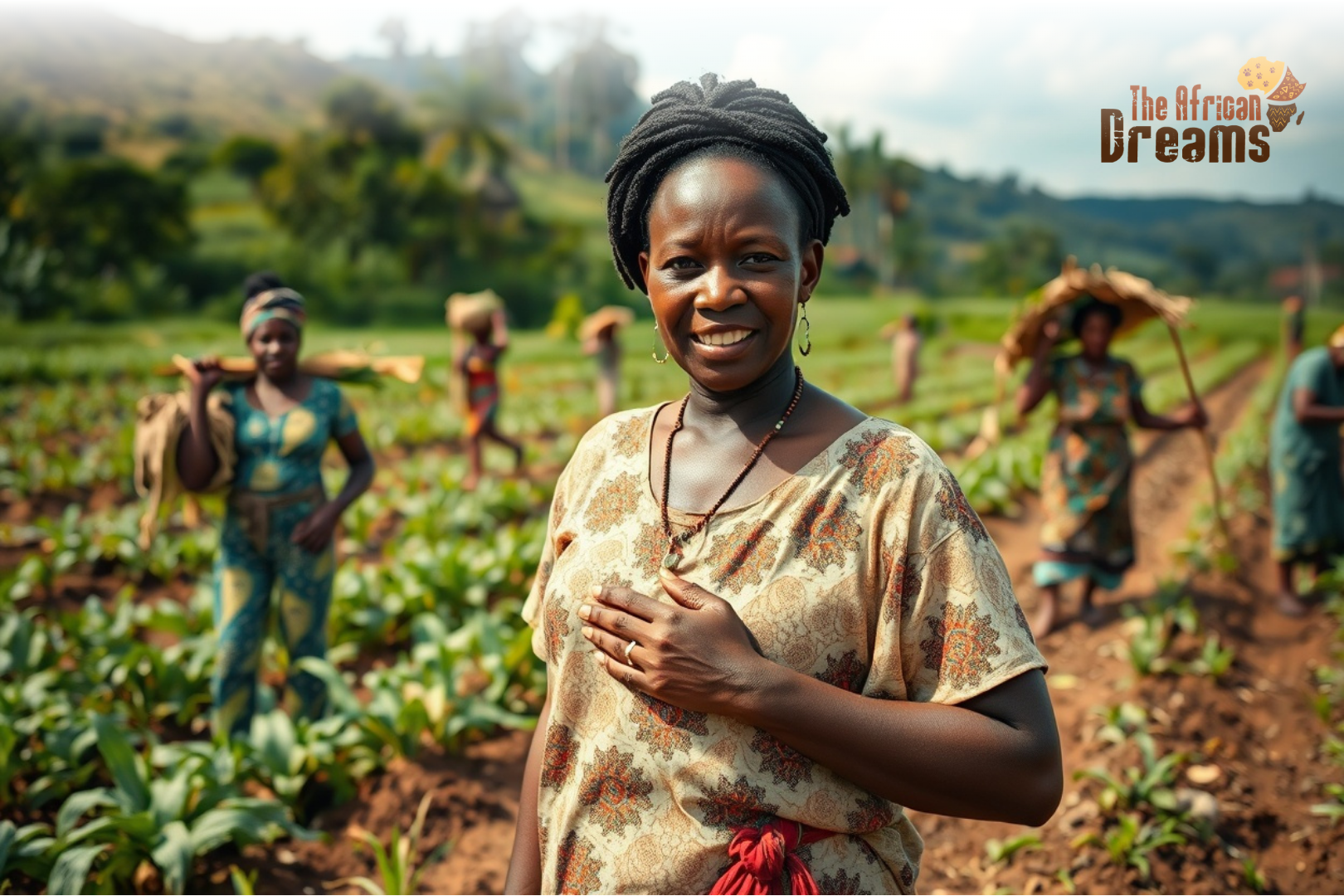
Discover Gender Equality in Uganda’s Agriculture
Did you know that more than half the farmers and laborers working in the fields of Uganda are women? The majority of the 70% of the population engaged in agricultural work are women. They mostly fall behind because of gender mainstreaming.
Sarah Namukose, a smallholder farmer in the Budaka district, has no say in how her family spends the income from their land. This is the harsh reality of gender norms in Uganda. Women in Uganda provide the most value to their agriculture. But they are often overlooked. This is a common struggle for the female farm owners and workers.
Women in Uganda play a crucial role in the agriculture sector. Rural development and food security heavily depend on them. They are the backbone of the agriculture sector. Therefore, the impact of gender equality in Uganda’s agriculture is massive.
In this blog, we will discuss the impact of gender equality in Uganda’s agriculture and why it is important.
Article Highlights
Women are the main workforce working in the fields of Uganda and providing for a better economy.
Gender norms and cultural stereotypes hinder the proper use of the labor force in Uganda.
Smallholder women farmers are the most affected group because they lack resources.
Women’s cooperatives and farmer groups help women get involved and ensure gender equality in Uganda’s agriculture.
Women’s Role in Uganda’s Agriculture
Uganda’s economy and food security stand tall because of women’s involvement. If you visit a farm anywhere in the country, you will see women working. What they lack is information and empowerment. But it doesn’t stop them from nurturing the sector. They provide as much as men, if not more, for Uganda’s agriculture.
Agriculture workers are the country’s main labor force. Female participation in agriculture is higher than male participation. The impact of this is significant.
Most rural women work in agriculture and contribute to 90% of the food production. Household food security in the rural areas depends mostly on these women. Subsistence farming is a female game in the country. Their livelihoods depend on these women.
Women in Uganda also work on cash and food crops. This is where the male farmers do the majority of the work. Women’s involvement in cash crops is limited because they work on food crops for their community. They have limited control over their earnings. There is also a disparity in decision-making. They usually don’t have a say in how their household resources are spent.
This is why gender equality in Uganda’s agriculture is important, so women in Uganda can also participate in decision-making and can have control over their earnings.
Gender Equality in Uganda’s Agriculture: Smallholder Farming
The coronavirus pandemic highlighted the importance of women in agriculture. The involvement of women in agricultural and economic development shed a new light.
Women without land or resources saw firsthand how harsh life had become. After lockdowns ended, most women started small farms. They used whatever savings they had or took loans to start farming.
The division of labor based on gender in smallholder farming became clear. Before this revolution, women predominantly worked on primary processing operations. But the lockdown changed the whole scenario. They started to become more intertwined with actual farming work. They started producing cash crops to generate income.
However, there are still gender differences in the adoption rates of different crops. For example, men and women adopt drought-tolerant maize (DTM) and non-DTM varieties in different ways.
Gender roles are an interesting research topic in Uganda’s agriculture right now. Gender norms prevent women in rural areas from taking part in decision-making. Women are more focused on making decisions about livestock and irrigation now. Women’s access to land, credit, and other resources is a big factor. It decides how much influence they have over decision-making.
What are the Barriers to Gender Equality in Uganda’s Agriculture?
Empowerment and full participation of women in Uganda’s agriculture has a long way to go. There are barriers blocking efforts. Social norms are making inclusion harder. And other stereotypes prevent women from achieving their full potential. Let’s take a look at some of these barriers.
- Cultural norms and traditions about women’s involvement are a serious issue. It restricts their participation in agriculture.
- Discriminatory gender norms also prohibit women from accessing information, labor, land, or equipment.
- A major problem for women is the patrilineal practice of inheritance. Women usually don’t get their families’ land. In many districts, they are only seen as helpers in agriculture and nothing more.
- They have limited training opportunities. Advisory and extension services are biased towards men in the country.
- Another issue that fuels gender inequality is time poverty. They do household chores, care for children and the elderly, and work on the farms. This work burden does not allow them any leisure or time for rest. The more time they spend doing this work, the less they can provide from the farms.
Increasing Gender Equality in Uganda’s Agriculture: Over the Years
The plots women manage are less productive. But it doesn’t hold them back. They still produce enough to compete with their male counterparts. Diminishing gender inequality will go a long way in Uganda’s agricultural development. So how do you manage gender inequalities?
- The government of Uganda strongly promotes gender-responsive policies for the sector. One such initiative was the 2007 Gender Equality Policy of Uganda. This policy creates gender strategies for implementation. It included women’s empowerment in the first Agricultural Development Plan of Uganda.
- There are also women’s cooperatives and farmer groups. They promote gender equality in agriculture. For instance, the Manyakabi Area Cooperative Enterprise (MACE) supports female farmers.It has around 9000 female members. They offer agricultural inputs, transportation, and training to their members. Most of their members have seen increased yields almost double or triple.
- Improving women’s access to credit is important. It helps ensure their inclusion in financial services. Digital Financial Services (DFS) does that. They offer mobile banking services for women farmers. This allows them to save money, get loans, and make transactions easily.
Final Thoughts: Impact of Gender Equality in Uganda’s Agriculture
Gender equality in Uganda’s agriculture has a big influence on its food security. It helps boost rural development and the economy as well. But it is not easy to establish. There are many barriers that women and the country need to overcome to prosper. There is no exception for women if Uganda’s agriculture is to see its full potential.
Many organizations and Uganda’s supportive government are already working on women empowerment programs. They are collaborating to ensure gender equality in Uganda’s agriculture sector so that more women can participate and contribute.
It’s also encouraging that stakeholders agree the economy would struggle without women’s participation. It is clear that involvement is crucial for changing cultural, traditional, and gender norms to support the economy. Therefore, it is high time to ensure gender equality in Uganda’s agriculture and motivate women to support the country in its development path.






0 Comments