
Uganda’s Sustainable Farming Practices: Perspective from Successful Farmers
More than 90% of farms worldwide are run by individuals or families. Besides, these farms depend on family labour. So, nearly all of these farms are only centred on providing food for themselves or the local communities. And they need to use more modern practices like sustainable farming practices, for maximum outputs. The need to practice sustainable farming is even bigger in countries like Uganda, where little technology and knowledge are present.
In this article, we will learn about Uganda’s sustainable farming practices and the farmers in Uganda who have embraced them to become successful.
Article Highlights
Uganda’s sustainable farming practices include the use of modern technology, climate-smart agriculture, and other methods to ensure greater and better production.
Smallholders are the backbone of Uganda’s agriculture, so they should be given priority in receiving these sustainable farming practices.
The government is already working to ensure that farmers have all the facilities they need to shift from subsistence farming to full commercial farming.
Uganda’s Sustainable Farming Practices to Reach its Goals
Uganda is all about agriculture, which keeps the economy breathing. It is also the path that can lead the country to economic growth, building a better future, food security, and so on. About 70% of its employed population is engaged in agriculture, which accounts for 90% of total export earnings and nearly a quarter of GDP.
Agricultural activities are even greater in the rural areas. Over 85% of the population in rural areas depends on agriculture as their primary source of livelihood.
The role of smallholder farmers is the biggest contributor here. These farmers support the backbone of Uganda’s agricultural sector. However, the production rate is meagre compared to the average yield capacity of land. There are several reasons behind this low rate of production.
But things can change by incorporating Uganda’s sustainable farming practices like climate-smart agriculture. It can ensure more production, better crops, and the ability of farmers to produce throughout the year. According to a study by the FAO, sustainable agriculture can increase productivity by 79%.
What is Sustainable Farming Practice and its Elements?
Sustainable farming practices can be referred to as environmentally, economically, and socially sustainable practices that utilize modern techniques and trends. This method uses a set of actions regardless of the size and location of the land. It uses a diverse range of crops, science-based practices, etc., to increase productivity while minimizing environmental damage.
The elements or ways of sustainable farming can be the following:
- Organic farming
- Crop rotation
- Agroforestry
- Climate-smart Agriculture
- Energy efficiency
- Water conservation
- Integrated Pest Management (IPM)
Uganda’s Sustainable Farming Practices by Smallholders
UN Women is running a training program to develop sustainable farming practices among women in Uganda. The program is not only limited to training but also provides climate-resilient seeds.
A group of 1,000 farmers in the Yumbe and Adjumani districts gained new farming skills and received higher-yielding crop varieties. Before the training, they used to plant through broadcasting. Now, they know the basic farming practices. Planting in lines, handling post-harvesting, and using highly productive seeds are the current core aims. These practices bring more money and success to smallholders.
Through the project, more than 1,400 women learned climate-smart agriculture and Uganda’s sustainable farming practices.
One of the beneficiaries is Celina Kuli. The middle-aged woman faced hurdles in providing for her family. During her training, she received guava seedlings and green gram seeds. She learned how to bring the best production.
“After the training, I have to weed for two weeks to prevent any pests. In the past, I only started to week after one full month.”
Now that she knows the importance of early weeding, there’s a massive difference between her production and before.
Success Stories: Uganda’s Sustainable Farming Practices
A. Dinavence Ekibahirire: Dinavence Ekibahirire is a 61-year-old widow from Karubuguma village in the west of Uganda. She learned a new way of sustainable farming from COSIL’s agroecology project.
The woman who once struggled to produce more than 50 kilos of beans now grows over 250 kilos. The unbelievable jump in production made her an ambassador of sustainable farming practices in her community.
B. Imelda Tumuhairwe: Imelda Tumuhairwe is also one of the beneficiaries of the COSIL project. She lives with her husband, three children, and two male staff members in Kapapali Village, Nyakacwamba parish, west of Uganda.
She established her coffee plantation farm on about 6 acres of land. She used to use pesticides and chemical fertilizers without knowledge of sustainable practices. She witnessed a spectacular result after she switched to the practice in November 2021.
“After only one season of using organic fertilizer, my coffee production shifted from 10 bags of green coffee to 60 bags on 4 acres of the farm,” she said.
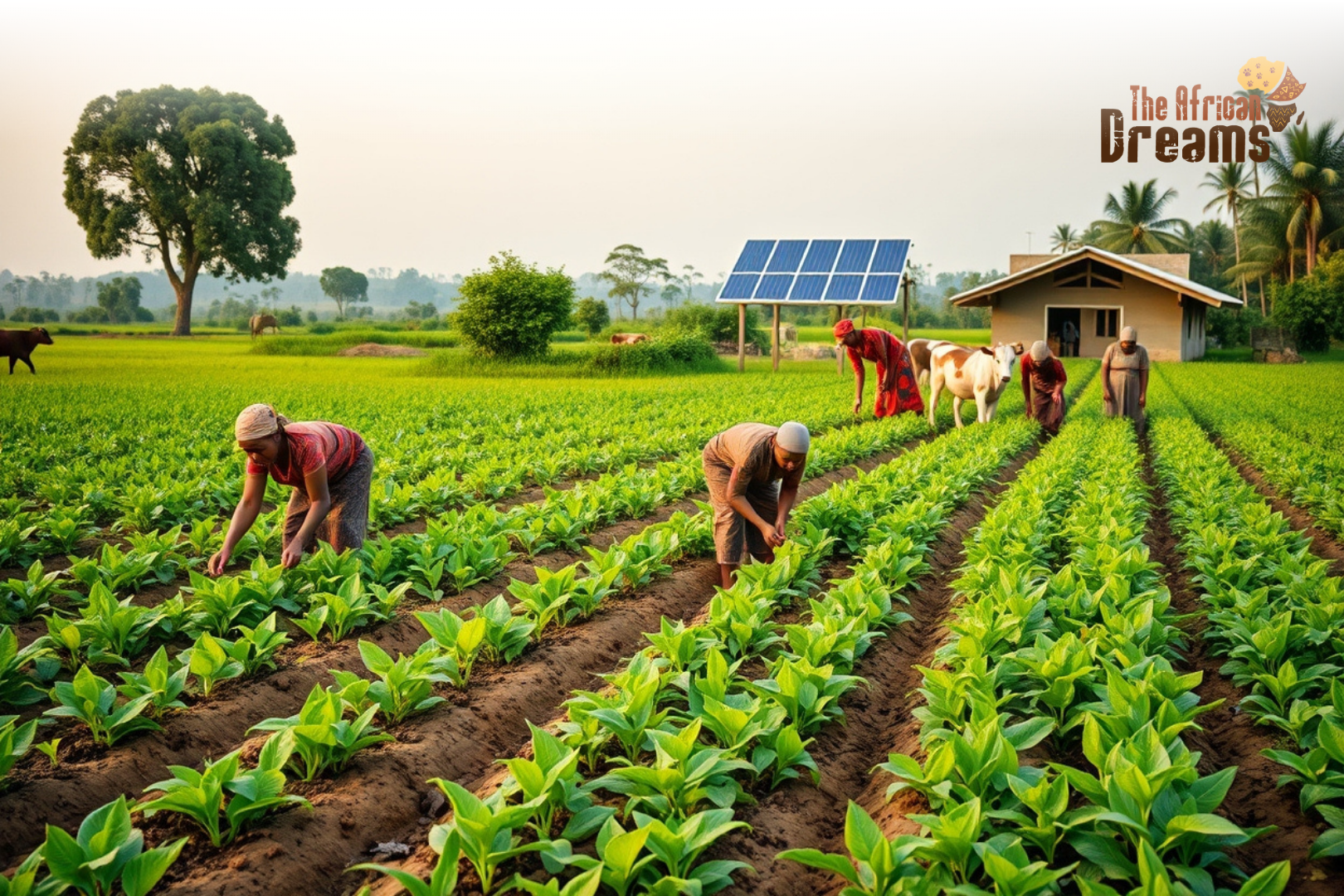
Susan Acan’s farm wakes up when the sun sets. The livestock farm owner powers her farm with solar energy. She integrated the system after learning about sustainable agriculture. Not only is this limited to crop production, but livestock farming also benefits from sustainable agriculture practices.
Nowadays, Susan produces up to 22 litres of milk each day. This is a huge success for smallholders in Uganda and sets great example of Uganda’s sustainable farming practices. As she plans to expand her herd to 50 cows, she also wants to inspire others.
Challenges to Implement Uganda’s Sustainable Farming Practices
Uganda’s agriculture is dominated by smallholders. They are farmers from rural areas who often suffer from not having enough food and a lack of money to meet health and education fees.
Smallholders operate within the family. They plan the production, yielding, and everything else centred on their family’s needs. So, everything takes place within a small community.
Implementing the proper practices of Uganda’s sustainable farming faces several challenges.
- Smallholders, especially women in charge of a family, lack access to agricultural extension services. So the primary challenge is that farmers are not interested in commercial farming.
- Other challenges include less infrastructure,
- Limited market access,
- Climate change, and
- Post-harvest losses.
Solutions
Success for Ugandan smallholders depends heavily on Uganda’s sustainable farming practices. To implement Uganda’s sustainable farming
- Uganda needs to build a road network connecting the central areas. This will decrease transportation costs and time to send the produced goods to overseas locations.
- Climate change has a significant impact on agriculture. Farmers can overcome this by receiving training and knowledge and using genetically modified seeds.
- It can also help them reduce post-harvest losses. From another perspective, these challenges can be seen as potential opportunities.
Final Thoughts: Uganda’s Sustainable Farming Practices
Uganda is on its way to building a sustainable economy by realizing the best agricultural practices, which are Uganda’s sustainable farming practices. The challenges mentioned above are part of sustainable farming practices. Those who can utilize these are successful in agribusiness.
Despite challenges, Uganda’s sustainable farming practices continue to be adopted by the smallholders nowadays. More farmers are now getting into it. With proper strategies and government initiatives, Uganda’s sustainable farming practices will certainly be more beneficial for improving the agricultural sector.





0 Comments