
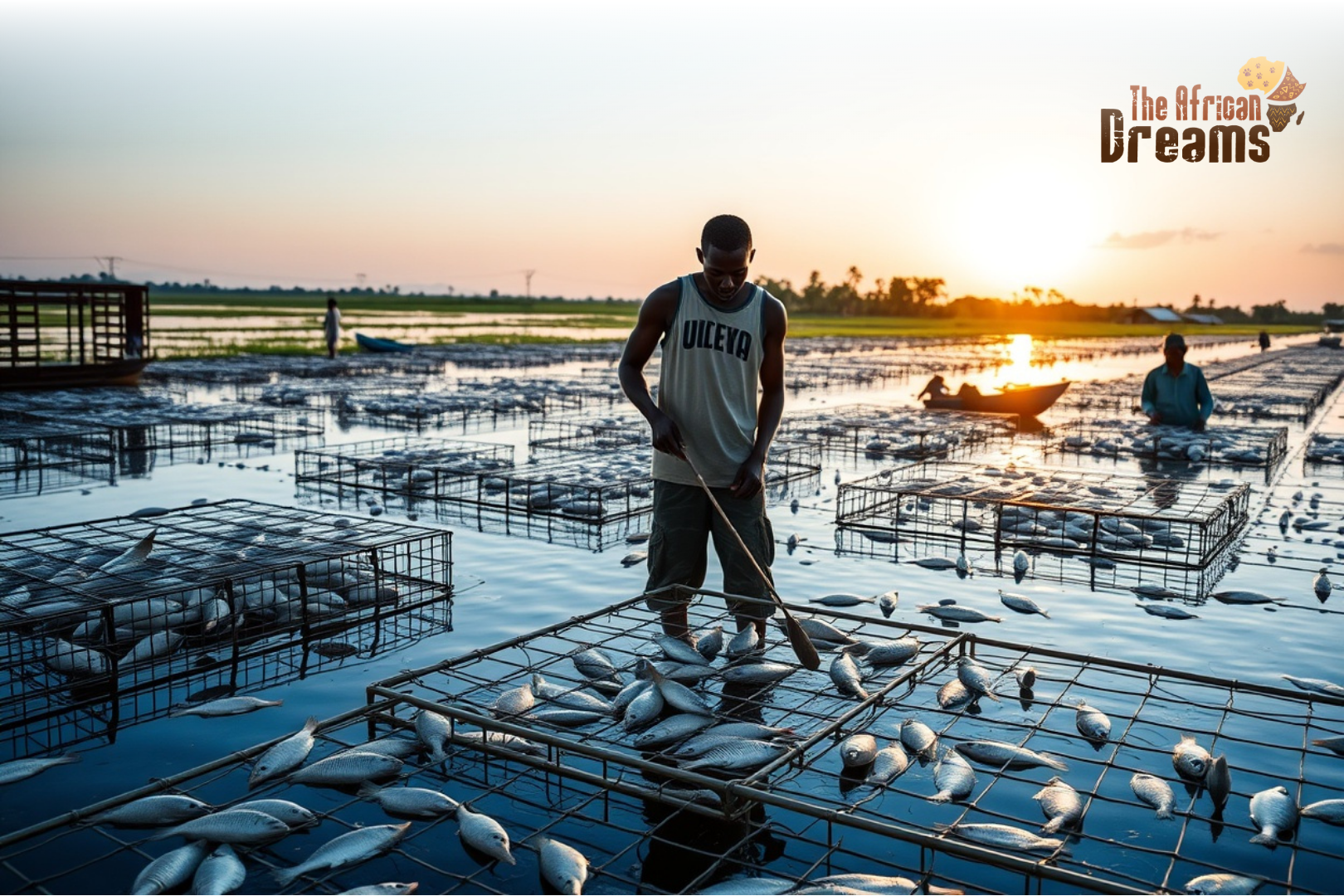
Introduction: Uganda’s Fish Farming
Lake Victoria, on Uganda’s shores, once boasted a ripe environment for fish businesses. However, fish production is coming up short because of poor farming practices. In recent years, the youth and local agencies have taken initiatives to improve Uganda’s fish farming, especially its production.
Despite challenges, Uganda’s fish farming offers boundless growth opportunities for its people. Tilapia and cage fish farming, in particular, saw rapid expansion in recent years. Fish marketers are taking extensive measures to counter overfishing. Uganda’s natural resources align with fish being an alternative protein source for the country’s people
Uganda’s fish farming is greatly changing its agribusiness landscape. It has the potential to reshape how people view agriculture. In this article, we will see how Uganda’s fish farming is changing the agribusiness of the country.
Article Highlights
Uganda’s fish farming has seen a rise in the last few years because Lake Victoria’s captured fish production has seen better days.
Nile Tilapia, Nile Perch, and North African Catfish are the most popular among fish farmers.
Farmers have moved to Integrated Agriculture-Aquaculture (IAA) to increase food security and income.
Innovations in the fish farming industry have led to lower input costs and more profit.
Rise of Uganda’s Fish Farming
The aquaculture sector, including Uganda’s fish farming, is one of the fastest-growing sectors in Uganda. The country produces around 15000 tons of fish from aquaculture alone. This produce comes from small-scale, commercial, stocked community reservoirs and minor lakes in the country.
Uganda has more than 20000 ponds in its territory. The average size of these ponds is 500m2 surface area per pond. Production ranges from 1500 to 15000 kg per hectare each year. One-third of the smallholder subsistence ponds have turned into profitable fish farms.
The most commonly found species in fish farms are the Nile Tilapia and the North African Catfish. Tilapia is popular for its growth characteristics and easy production of fish feed. It is widely farmed in the whole country and has held the number-one spot in production for a long time. The North African Catfish only recently overtook the Tilapia as the most popular species for aquaculture.
Most farmers operating at the subsistence level use pond culture to farm fish. However, this needs fixing when it comes to commercialization. Farmers have increased the pond surface area to accommodate a bigger haul, so they have started switching to cage fish farming. It was first done in Lake Victoria in 2010.
The possibility of farming large quantities in small areas is endless with cage farming. For example, a farmer can raise one ton of fish in 8 months in a single cage. Cage farming has shown high potential, with production figures from the Source of the Nile (SON) fish farm in northern Lake Victoria increasing from 290 tons in 2011 to 506 tons in 2013.
Uganda’s Fish Farming: Commercial and Socioeconomic Impacts
1. Food Security and Job Creation: Integrated Agriculture-Aquaculture (IAA) has gained significant traction in Uganda. It is a must for increasing food security and efficient use of resources. The country cannot sustain its economy with agriculture alone. That is why organizations promote fish, poultry, livestock, and other varieties of sustenance.
The socioeconomic, as well as commercial, impacts are huge. Aquaculture, which includes Uganda’s fish farming, is essential for the vast majority of people living in the country. It acts as an alternative protein source. With the rough climate in the country, everything they do to improve their living conditions is important.
It is also a big source of employment. Almost 200000 people are connected to the fish farming industry. 60% of them are directly employed in Uganda’s fish farming. For each person working on the farms, there are three people indirectly working along the value chains.
2. Income for Communities: The commercial side is even more lucrative. This is where the change in agribusiness is noticed the most. Both small and large fish farms help meet the nutritional demands. For commercial farmers, the aquaculture productivity has increased by 0.5 to 1.28 kg per cubic meter.
Processed fish have more demand than unprocessed ones. Sausages from Tilapia fetch the highest prices. A farmer can sell one-kilogram sausage packs for 24000 shillings, whereas its counterpart only sells for one-third of the price.
3. GDP and Exports: Uganda’s fish farming has a significant impact on the country’s Gross Domestic Product (GDP). The fisheries sector includes capturing fish and aquaculture. It contributes to 3% of the total GDP and 12% of the agriculture sector’s GDP.
A 2015 study saw a positive relationship between GDP and the fish industry’s contribution value. As the fish farming industry grows, its impact on Uganda’s GDP will also increase. Fish are also great resources for export and foreign currency. Uganda mainly exports Nile Perch to the European market.
Apart from that, Uganda exported 54 million USD worth of fish fillets in 2022. The main markets for Uganda’s fish fillet exports are Israel, Spain, Italy, the UAE, and the Netherlands. This shows that working in the fish processing and export business in the region is noteworthy.
If you are interested in exploring Uganda’s fisheries further and want to start a business here, you can also read Is Uganda’s Fisheries Profitable?
Advancements in Uganda’s Fish Farming: Changes to Agribusiness
Uganda is in the agricultural revolution stage. The third wave theory suggests agricultural, industrial, and lastly the ongoing informational revolution. But Uganda is one step ahead. They are trying to integrate the informational revolution with agriculture.
Modern pond systems have been turned into small-scale production units. The drive to commercialize aquaculture and Uganda’s fish farming has allowed farmers to expand their pond surface area. They are using formulated feed to increase productivity.
Effective feeding systems became crucial for the long-lasting sustainability of Uganda’s fish farming. Fish seeds are now being made on-site. The Kajjansi Aquaculture Research and Development Center has made it easier for farmers to collect feed ingredients. Feed quality has also improved significantly.
The Black Soldier Fly (BSF)
The Black Soldier Fly (BSF) larvae have become popular as fish feed. It is almost as good as the fishmeal made from silverfish. The BSF larvae contain 55% protein and have the potential to reduce feed costs. The market price of insect-based feed is around 3900 UGX per kg. This is lower than both fish meal and soybean meal. By lowering the cost of feed, farmers can increase their profit margins.
BSF also has a byproduct called frass. It acts as an organic fertilizer in ponds and enhances the ecosystem.
However, accessing the urban and municipal markets is tough enough as it is. To address the problem, a low-cost mobile fish vending unit with chilled crates, a utility box, a processing area, and storage is being used. These vending units transport, store, and deliver live, raw, and semi-processed fish directly to customers.
All these innovations have made Uganda’s fish farming more profitable than ever. The whole fisheries industry will play an important role in the upcoming years. That is why the farmers in Uganda are jumping on the bandwagon to integrated farming systems.
Uganda’s Fish Farming: Changing the Agribusiness Views
Many innovative approaches taken by the government of Uganda and other organizations have a long-lasting effect on Uganda’s fish farming. These steps will also improve the agribusiness sector of the country and its market growth.
Anyone with a moderate-sized pond can start cage culture at any time. Communities reliant on Uganda’s fish farming for their protein needs can produce enough to have leftovers for sale in the market.
Uganda’s fish farming and the overall fisheries sector need to hold on to the developments it has been pursuing. The shift from capture fisheries to aquaculture has made fish more affordable and accessible for the general population. That’s why the long-lasting visions need to be revised to address the issues, and Uganda’s fisheries will be on a path to success.
Discover why Uganda is becoming an attractive hub for agricultural investments here: Why Uganda Is the Next Big Destination for Agri-Investors.






0 Comments