
Introduction: Private Sector in Malawi's Agribusiness
The private sector plays a key role in Malawi’s agribusiness. It drives growth and sparks innovation. It assists farmers in securing better seeds, tools, and markets. Private sector investment in processing and packaging services adds value to crops. This lifts incomes and generates rural employment.
The private sector in Malawi is also a source of technology and training for farmers, which helps increase productivity. With increased private-sector participation, Malawi’s agribusiness sector can become more competitive and sustainable.
Nowadays, the private sector plays a central role in overhauling agribusiness and thus ensuring food security in Malawi. In this blog, we will discuss private-sector participation in Malawi’s agribusiness, including investment opportunities.
Article Highlights
Agriculture is key to Malawi’s economy. It makes up 30% of the GDP and employs 64% of the people. Most workers are smallholder farmers who grow maize and tobacco.
The private sector helps Malawi’s agribusiness. It offers farmers better seeds, tools, technology, and market access. This support boosts productivity and income.
Malawi has many chances for investment. You can invest in crop production, agro-processing, livestock, irrigation, and farm financing. These areas can really boost Malawi’s agribusiness.
Government policies, like the Affordable Inputs Program, and projects such as AGCOM help farmers. They promote better farming, improve market access, and enhance value addition.
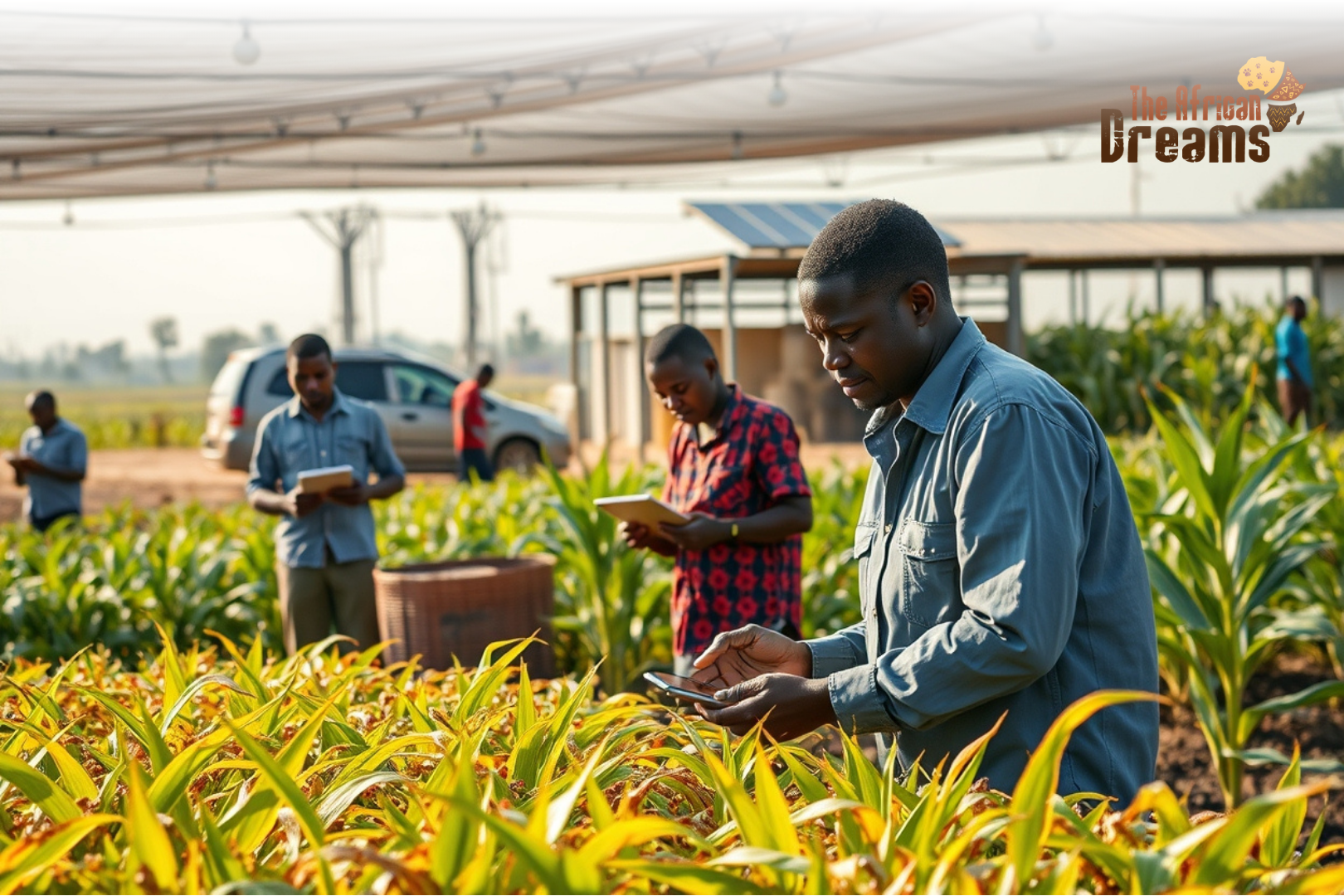
Private companies boost innovation using digital tools, research, and supply chains. They help farmers cut losses and grow profits.
Climate change and reliance on rain-fed farming pose significant challenges. The government and the private sector work together to strengthen and make agriculture more sustainable.
Overview of Malawi's Agribusiness Landscape
Agriculture is the backbone of Malawi’s economy, accounting for about 30% of GDP and over 80% of export earnings.
The sector supports roughly 64% of workers. Smallholder farmers grow crops on about 69% of the farmland.
Maize is the main food crop in the country. Tobacco earns the most foreign exchange, accounting for over 40% of export income. Although it is crucial, the sector is plagued by low productivity, rainfall, and insufficient irrigation.
The Agricultural Commercialization Project aims to boost productivity, diversify agricultural activities, and improve Malawi’s agribusiness.
Role of the Private Sector in Agricultural Development
The private sector is a critical player in the development of Malawi’s agribusiness and overall agricultural sector. It brings investment, technology, and expertise to make the farmer more productive and wealthier.
Governments are unable to meet all the needs of the farming industry. So, private companies, businesses, and independent groups help out too.
1. Investment and Technology: Private firms invest in tools, seeds, fertilizers, and irrigation systems. This investment enables farmers to adopt better technology, thereby bolstering their crop yields. For instance, improved seeds can yield more crops and better resist diseases than traditional seeds.
The Food and Agriculture Organization (FAO) reports that private sector investment has increased agricultural productivity by 20% in many developing countries over the past ten years. Private firms and other associations can also invest in Malawi’s agribusiness.
2. Market Access and Supply Chains: The private sector assists farmers in selling their goods by forming robust supply chains. Businesses buy crops from farmers or cooperatives. Then, they process, package, and transport them to markets.
This caters to farmers with more buyers and better prices. This also minimizes post-harvest losses through proper handling and storage of products.
3. Innovation and Research: Research in agriculture receives funding from private corporations. They make new products like fertilizers, pesticides, and farm equipment.
These tools help farmers work more easily and boost productivity. For example, many firms now employ digital tools, such as apps and drones, to assist farmers in tracking crop health and weather conditions.
4. Employment and Economic Growth: The private sector creates jobs on farms and in related areas. This includes processing, packaging, transportation, and retail. It is a way to reduce poverty and stimulate economic growth.
Rural employment in developing countries, according to World Bank estimates, has grown by as much as 15% in countries with extensive private sector participation in agriculture.
5. Collaborations with Farmers and Governments: Private companies work with farmers, governments, and NGOs. They develop and share the best farming practices. They also provide training. These relationships enable farmers to develop their skills and adopt more effective methods.
The Malawi government has also created policies to boost private-sector investment. They also need to protect farmers’ rights.
Investment Opportunities in Malawi’s Agribusiness
Malawi’s agribusiness is a hotbed for investment. Malawi’s economy is based on agriculture. It accounts for approximately 30% of the GDP and employs more than 64% of the population. This renders it a critical area for economic growth and development.
Some investment opportunities in Malawi’s Agribusiness are listed below:
1. Crop Production: Malawi has lush soil and a temperate climate. Investors can cultivate maize, tobacco, groundnuts, soybeans, and sugarcane.
There is also increasing pressure to grow cash crops, such as macadamia nuts, tea, and coffee. The crops are used both locally and exported.
2. Agro-processing: Agro-processing is not yet well developed in Malawi. Raw is the way most agricultural products are marketed. This leaves a space for value addition.
Investors can set up processing plants for products like soybean oil, groundnut paste, or fruit juice. This can boost profit margins and create employment opportunities.
3. Livestock and Poultry: Meat, milk, and eggs are increasingly in demand. The livestock sector in Malawi is growing. However, there aren’t enough commercial farmers.
There are good prospects in cattle rearing, poultry farming, and feed production. Good returns can be made on investment there, with better breeds and animal health services.
4. Irrigation and Farming Technology: Malawi is heavily dependent on rain-fed agriculture. That means farming is an unreliable proposition. Rural communities require investment in irrigation, greenhouses, and climate-smart technologies.
Malawi needs solar irrigation and more mobile agricultural tools. These raise yields and lower risks.
5. Malawi’s Agribusiness Financing and Input Supply: There is limited access to quality farm inputs, such as seeds and fertilizers. There is also a gap in financing for smallholder farmers.
Loans, farm insurance, and agri-input supply chains are sectors where companies can capitalize on a ready market.
6. Export Opportunities: Malawi is a member of trading groups such as the Southern African Development Community (SADC) and the Common Market for Eastern and Southern Africa (COMESA). This provides access to regional markets.
Similarly, the African Continental Free Trade Area (AfCFTA) also does so. Investors can ship processed goods and specialty crops to other African countries and beyond.
Government Policies Supporting Malawi’s Agribusiness Growth
Malawi’s Agribusiness is a vital component of its economy. It encompasses the cultivation, processing, packaging, and distribution of agricultural products.
Nations worldwide establish agribusiness-friendly policies. These policies support farmers, create jobs , and enhance food security. Malawi is no different.
A. National Agriculture Policy: The National Agriculture Policy focused on improving productivity. It also aimed to promote agriculture’s commercialization. The policy encourages the use of high-yielding seeds, fertilizers, and modern farming techniques.
It also emphasizes climate-smart agriculture, research and development, and technology. The government aims to recruit more women and young people into farming and Malawi’s agribusiness to promote inclusive and sustainable agricultural growth.
B. Malawi Vision 2063 and MIP-1: The long-term development plan for Malawi is Vision 2063. It aims to transform Malawi into a self-reliant, upper-middle-income country by 2063. Its pillars are the commercialization of agriculture.
MIP-1 is a 10-year plan. It aims to boost productivity, create organized markets, and increase value addition in select areas. It also facilitates agricultural industrialization and access to finance and irrigation.
The plan is to increase agriculture’s contribution to GDP, which was 22.8 percent in 2020, to 30 percent by 2030.
C. Affordable Inputs Program (AIP): The Affordable Inputs Program is a crucial initiative for smallholder farmers. Designed to replace the Farm Input Subsidy Program in 2020.
AIP attempts to ensure smallholder farmers have access to fertilizer and seeds. 1.5 million farmers are targeted for the 2023-2024 crop season. Each beneficiary was requested to give K15,000 for a 50 kg fertilizer bag.
More than 81% of farmers received their inputs by December 2023. This strategy helps people access resources. It boosts productivity and cuts poverty in rural homes.
D. Agricultural Commercialization Project (AGCOM): AGCOM is an important support program for Malawi’s agribusiness. It is funded by the Malawian government and the World Bank.
The project helps farmers and agribusinesses boost productivity and crop value. It does this by connecting its products to the market.
AGCOM promotes cooperatives and productive alliances. It also funds irrigation and automation. Over 100 tractors have been purchased through the project to improve access to machinery. The programs have raised crop output and productivity in several districts.
E. National Agriculture Investment Plan (NAIP): NAIP provides a platform for governmental and private sector investment in agriculture.
Its four pillars are:
1. Policy and coordination
2. Production and productivity
3. Market growth
4. Resilient livelihoods
The government is using NAIP to promote irrigation, seed systems, and agricultural financing. The initiative offers training and funding to young and female entrepreneurs.
F. Support for Women and Youth: The Malawi government supports women and youth through the National Economic Empowerment Fund. This fund offers microfinancial services to interested young people and women in farming.
In 2021, it spent approximately K5.5 billion on youth and women’s organizations. This program promotes job development and inclusive growth in the sector.
Impact of Government Policies
These policies are already working and improving Malawi’s agribusiness. The use of fertilizers in Malawi has risen from 28 kilograms per hectare in 2005 to 45 kilograms per hectare in 2019.
At the same time, average crop yields increased from 3.2 metric tons per hectare to 7.8 metric tons per hectare. These changes prove that Malawi can increase its agricultural productivity and profitability with the right policies and investments.
Future Outlook for the Private Sector in Malawi's Agribusiness
Malawi’s agribusiness sector is changing a lot. This shift happens because of government efforts, private investment, and new technology. This transformation offers both possibilities and perils for the future.
Government Initiatives and Private Sector Engagement
Agriculture is an essential part of the economy, which is also regarded as a significant growth driver within the economy. The government wants to boost farming productivity and support Malawi’s agribusiness sector.
This is part of its Malawi 2063 plan, focusing on the Medium-Term Implementation Plan (MIP-1). This program focuses on aspects such as irrigation, mechanization, and structured markets. The private sector is obliged to invest in these areas, and incentives are provided to promote development.
Growth in Agritech and Export Diversification
The agritech space is experiencing significant turf activity in the agribusiness sector. In 2024, agritech startups in Malawi raised $15 million. They will focus on precision farming and sustainability. This investment will boost productivity and help smallholder farmers reach the market.
And there’s a push to diversify exports beyond traditional crops, such as tobacco. Demand for non-traditional exports like macadamia nuts, tea, and pulses has grown. This demand led to a 21.6% increase in exports over the past year.
Challenges in Malawi’s Agribusiness and Solutions
Even with these positive changes, Malawi’s agribusiness still faces risks. Climate change is the biggest one. Its dependence on rainfed agriculture means it is susceptible to climate variation, such as droughts and floods. These result in significant crop losses and pose risks to food and economic security.
Addressing these challenges would require investment in climate-resilient farming practices and infrastructure. More government support and private sector investment will help Malawi resolve these challenges and move forward with advanced technologies and local support.
Final Words: Private Sector in Malawi's Agribusiness Ensuring Growth
In Malawi, the private sector is a game changer for agricultural growth. Investment, technology, and market access are crucial for farmers and Malawi’s agribusiness sector. This support enhances crop yields, improves farmer incomes, and creates employment opportunities.
The private sector promotes innovation and sustainable farming for long-term growth. Working closely together, the government, private industry, and farmers can boost Malawi’s agribusiness sector. That’s why the Malawi government has taken steps to promote investment and collaboration between public-private partnerships. Many NGOs are also participating.
Today, the private sector is crucial to the development of Malawi’s agribusiness sector, helping it grow and ensure economic contribution.
To learn about the reasons for investment in Malawi and its several sectors to invest in, you can read Investment Opportunities in Malawi.

0 Comments