
Introduction: Potential of Malawi’s Economy
Malawi’s economy is on its way to grow and prosper, and has taken many steps towards development. One of its notable initiatives, the Malawi Growth and Development Strategy (MGDS III), shows how the country plans to improve key areas and create new opportunities.
Agriculture is the biggest part of Malawi’s economy. With more advanced tools, training, and support, it can help lower poverty and help other sectors like trade and industry. Energy, industry, and tourism also have admirable potential. Clean and steady energy can power homes, businesses, and schools. A growing industry can create more jobs and raise income.
The tourism sector, if improved, can generate revenue, create jobs, and support local communities, as travelling is increasingly popular nowadays. Transport and ICT help connect people and businesses. With better roads and the internet, goods and services can move faster, and more people can take part in the economy.
The health and education sectors are also important and crucial to prioritize. When people are healthy and skilled, they work better and support growth. Since manpower is crucial, having a skilled and healthy population is something not to overlook. This plan focuses on effective needs and long-term change. It helps both local and foreign investors to be part of Malawi’s development journey and help Malawi prosper.
With the right support and partnerships, the country can build a strong and fair economy for everyone. This article discusses the structure of Malawi’s economy, including its growth and development strategy (agriculture, energy, industry, tourism development, transport and ICT, health), education and skills development, basic economic statistics, and recent economic growth (recent economic overview and development challenges).
Article Highlights
1. The Structure of Malawi’s Economy
2. The Malawi Growth and Development Strategy
Agriculture
Energy, Industry and Tourism Development
Transport and ICT
Health
Education and Skills Development
3. Basic Economic Statistics
4. Recent Growth of Malawi’s Economy
Recent Economic Overview
Development challenges
The Structure of Malawi’s Economy
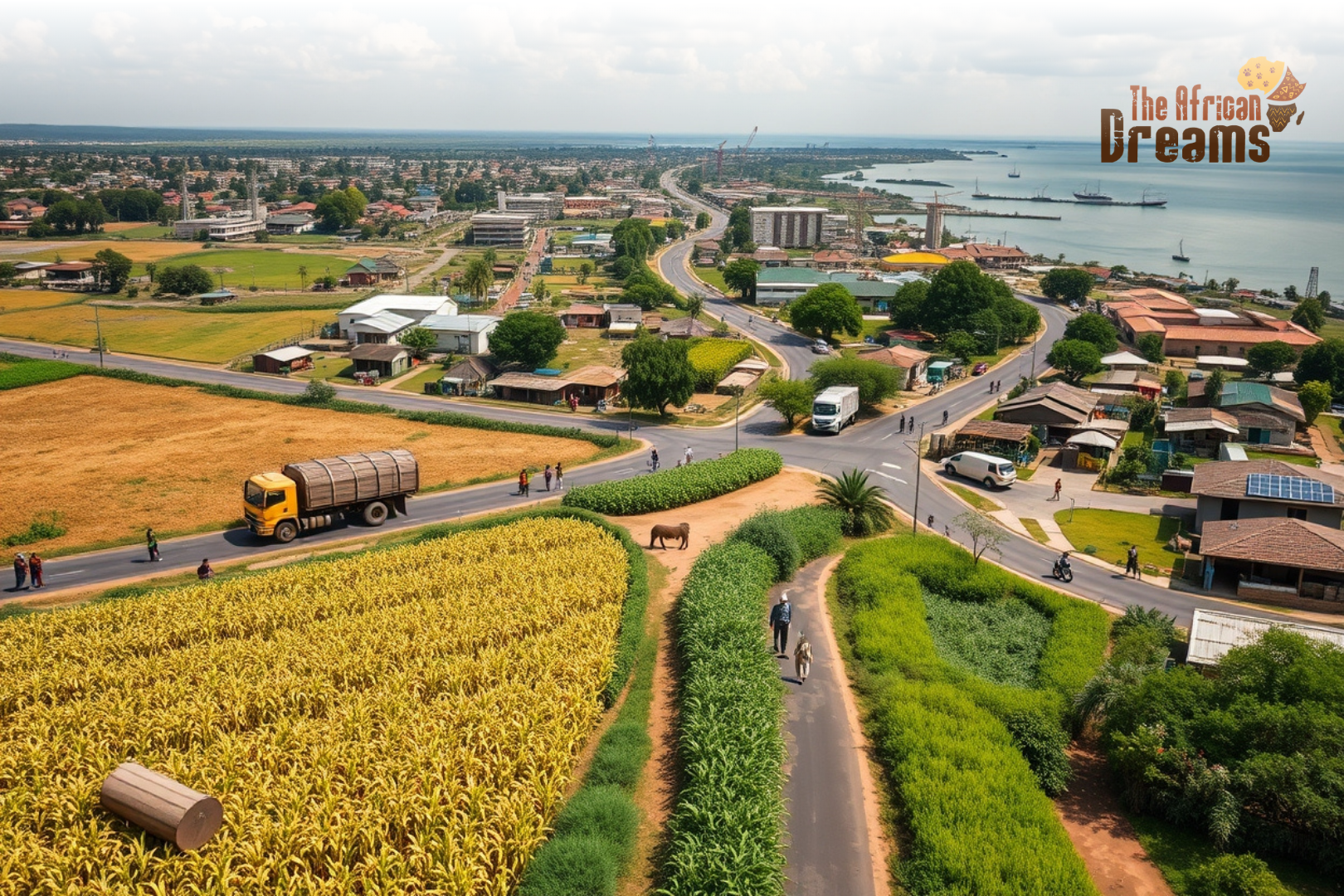
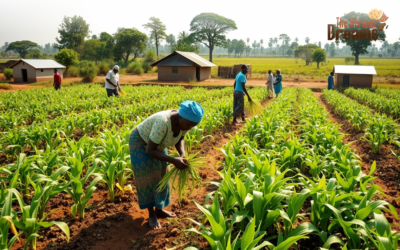
Malawi is a country that has an agro-based economy with the agriculture sector representing over 35.5 percent of GDP. The sector employs about 84.5 percent of the labour force and accounts for 82.5 percent of foreign exchange earnings. This contributes heavily to Malawi’s economy and overall development.
Malawi’s agricultural characteristics are determined by a dual structure consisting of commercial buildings that grow cash crops and a large smallholder sub-sector that mainly works with mixed subsistence farming. The staple food of Malawi is Maize. It accounts for 80 percent of the cultivated land in the smallholder subsector. The main agricultural export crop is tobacco, followed by tea, sugar and coffee.
The manufacturing sector represents 11 percent of GDP in Malawi and comprises mainly agro-processing activities in the tobacco, tea and sugar industries. Distribution and services represent about 22 percent of GDP. While Malawi was not gifted with the amount of mineral resources present around its neighbouring countries, the potential growth of Malawi’s natural resource extraction is significant. Minerals can be found, including uranium, coal, bauxite, phosphates, graphite, granite, black granite, vermilite, aquamarine, tourmaline, rubies, sapphire and rare earths.
The Malawi Growth and Development Strategy
Malawi Government’s Economic Program
The Malawi Growth and Development Strategy (MGDS III) is a significant initiative taken by the Malawi Government. It is the medium strategy that is fabricated to help Malawi’s long-term development hopes and plans. The strategy covers a time period of 5 years from 2017 to 2022 and is a successor to the MGDS II, which started from 2011 and ended in 2016.
The primary focus of this plan is to move Malawi to a productive, competitive and durable nation through different agricultural, economic growth, energy, industrial and infrastructure development practices to result in substantial growth in both sectors. They wish to implement this while remaining eco-friendly and addressing water, climate change, environmental management and population challenges.
5 Key Areas of MGDS III: Malawi’s Economy
The strategy prioritizes 5 key areas:
- Agriculture, Water development and climate change management
- Education and skills development
- Transport and ICT infrastructure
- Energy, Industry and Tourism Development
- Health and Population
1. Agriculture
Agriculture is the backbone of Malawi’s economy, making up nearly a third of the country’s GDP and employing most of the labour force. It has strong potential to support industrial development. But this potential is limited because farming depends mostly on rain, which leads to problems like post-harvest losses, little crop variety, small land plots, land degradation, low investment in research and extension services, and weak market systems.
Investing in climate adaptation has the biggest positive impact on reducing poverty and improving education, health, agriculture, water development, economic growth, urbanization, and governance. Because of this, several strategies focus on both adapting to and reducing the effects of climate change.
Adaptation helps protect communities and ecosystems from harm caused by climate change. Mitigation lowers the risks by cutting the release of GreenHouse Gases (GHGs) and removing them from the air. Both approaches support agriculture and other important sectors.
While solving problems in agriculture, other areas like the environment, forestry, water resources, parks and wildlife, women and youth productivity, health, education, energy, industrial production, and transportation will also be strengthened. This is because improving agricultural productivity won’t work well unless water resource management and transportation infrastructure that help rural access are improved. Focusing on this will lead to better productivity and greater resilience.
2. Energy, Industry and Tourism Development
A strong energy sector can boost services and raise output in areas like manufacturing, trade, tourism, and other services. Having clean, steady, affordable, and sustainable energy is key to keeping and raising people’s living standards. It helps communities power homes, schools, health facilities, and run businesses and other productive work.
Malawi has both good energy sources like coal, fuel wood, solar, hydro and wind. Right now, most of the energy (about 89%) comes from biomass, while electricity makes up only 3% of the national supply. This shows that other sources like solar and wind haven’t been used much and need more focus.
Industrialization and changing the structure of the economy are key to keeping up steady, long-term growth of Malawi’s economy. This helps increase per capita income, create good jobs in both rural and urban areas, and open up business opportunities for both men and women.
It also helps grow the tax base to support Malawi’s social needs and reduce the large trade deficit. Focus will also go to mining, from exploration to regulation, to unlock its value and support rural communities near the sites.
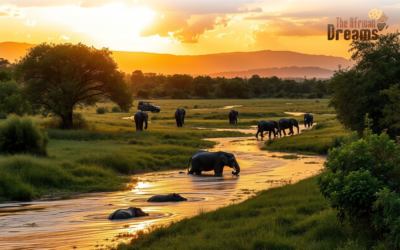
Another sector with strong potential to help transform Malawi’s economy is tourism. At the moment, it is contributing only 7% to the GDP and 6.2% to total employment in 2016. Still, as a labour-heavy industry, tourism can help lower youth unemployment by creating many jobs and boosting local businesses.
Because it’s part of the service sector, tourism currently hires more women than men. Regardless, most of them work in jobs that require fewer skills and pay less. This presents a chance for change. If more women are given proper training and knowledge in tourism and about tourism, they can be a part of and get better, higher-paying roles. This shift could improve income levels and gender equality in the sector.
With the right investment and support, tourism can grow into a major employer and income source, helping the country build a more balanced and inclusive economy.
The MGDS III aims to improve access to steady, sustainable energy and encourage investment in affordable alternative sources. It pushes for more use of renewable and clean energy, especially in rural and urban areas that are often underserved.
In terms of industrialization, MGDS III focuses on making the business environment better for investment and private sector growth. It helps the growth of production and export of manufactured products, and improves the usage and control of non-renewable resources.
For the tourism sector, the strategy marks the important need and requirement to invest in infrastructure, raise the standard of tourism products and services, and protect both cultural heritage and the environment. These efforts are expected to build stronger industries, expand economic opportunities, and support sustainable development across multiple sectors. By aligning with these goals, Malawi’s economy can unlock long-term benefits that touch energy, business, and tourism.
3. Transport and ICT
Transport and ICT play an important role in accelerating the growth of other sectors and supporting both poverty reduction and wealth creation. Having safe, affordable, good and efficient access to transport and ICT is critical for improving Malawi’s economy and economic competitiveness. Good transport systems bring economic and social gains by opening access to markets, creating jobs, and boosting investment.
Meanwhile, ICT is central to modern business, productivity, trade, and social development. These two sectors also work together; Intelligent Transportation Systems (ITS) depend on ICT for smooth and smart operations, while transport networks help expand ICT activities. Despite their importance, Malawi is lagging behind.
The 2017 Global Competitiveness Report ranks Malawi’s infrastructure at 135 out of 138 economies, far below other SADC countries. This underlines the urgent need for focused investment in both areas to raise national competitiveness and long-term growth.
In Malawi, high costs and limited access to reliable transport and ICT infrastructure hold back economic growth. The country’s landlocked position and weak infrastructure cause high transport costs. Although Malawi has a multi-modal system with roads, rail, air, and inland water transport, most attention has gone to road transport, while other modes remain underdeveloped.
Rapid population growth has made it harder to improve road infrastructure. To progress, Malawi must create a better environment for infrastructure investment, focusing on building a balanced multi-modal network. Improving transport and ICT systems is important to increase access, lower costs, and support long-term growth. A well-connected system will also boost productivity and create new business opportunities throughout the country, thereby strengthening Malawi’s economy.
The MGDS III focuses on cutting down travel time and costs for people and goods while making transport more reliable and efficient. It also aims to improve access to both local and international markets as well as to social and public services. Reducing accidents and their human and economic impact is another important goal.
To reach these targets, more private sector investment will be needed in running and managing transport infrastructure. For ICT, the strategy stresses the need to increase access to information and communication services. It also signifies developing a strong, durable ICT infrastructure, growing the number of ICT-skilled workers ready for industry jobs in both public and private sectors, and making postal services more efficient. These efforts together support better connectivity and services that can help Malawi’s economy grow.
4. Health
Better health is key to raising national productivity, speeding up the growth of Malawi’s economy, and reducing poverty. Health also affects other important areas like education, agriculture, and industry. Problems like climate change and damage to the environment cause serious health issues, including more diseases spreading and coming back. On the other hand, population size, structure, and distribution are closely linked to social and economic development.
Fast population growth and higher densities can harm the environment because of expanding agriculture, settlements, and other ways people make a living. This increases risks, especially for women, children, persons with disabilities, and other groups affected by natural disasters like floods, drought, and epidemics.
Good population planning and management help improve access to quality basic services and amenities. They also support better economic outcomes and reduce damage to the environment.
The MGDS III focuses on good health sector planning at all levels and better access to fair health services. It aims to improve the quality of health care, keep patients safe, and provide services that focus on people’s needs.
MGDS III also highlights the need for better domestic funding for health to keep skilled health workers. MGDS III also focuses on fighting diseases. The strategy works to lower the number of new and existing cases, reduce sickness and death caused by malnutrition, and improve hygiene and sanitation practices.
Slowing down the rate of population growth is very important if Malawi wants to manage its natural resources well and develop Malawi’s economy. The MGDS III focuses on good population and development planning at all levels. It also aims to raise awareness about how population and development affect each other. This priority area helps build the strength and ability of Malawians to be productive and resilient.
5. Education and Skills Development
Education plays an important role in socio-economic development and industrial growth by fostering important skills. It empowers all Malawians, including women, youth, and persons with disabilities. As a result, investing in education and skills over the long term is crucial for developing human capital and contributing to Malawi’s economy.
A population with good education and skills will help Malawi’s economy grow faster and achieve the SDGs. To build a workforce that can truly help the country develop, Malawi must increase the number of students moving from primary to secondary school and from secondary to tertiary education.
Malawi’s population is about 17.2 million, with 20.4% of people unemployed. This is a large group of untapped human capital that, if fully used, could boost the country’s socio-economic growth. Many young people who finish secondary education but do not continue to higher levels stay unemployed because they lack the right job skills.
To use this labour force for real development, this skills gap must be fixed. The education system should take a full life-cycle approach and include training in entrepreneurship and vocational skills.
The MGDS III prioritizes better access and justice throughout the entire education system, and getting rid of corruption. This includes improving the quality of Early Childhood Development, primary, secondary, and tertiary education, as well as strengthening the governance and management of education.
For the development of various skills, the strategy hopes to grow and develop access and justice in training programs, enhance the quality of the skill knowledge and training programs, as well as the labour force. Also, it hopes to build stronger workforce capabilities with good systems that support fairness, contributing to Malawi’s economy. Special focus will be given to girls’ education and women’s empowerment
Basic Economic Statistics: Malawi’s Economy
Malawi’s economy largely depends on farming, which accounts for over 35.5% of GDP and employs 84.5% of the workforce. Most farms are small and grow maize, while large farms grow crops like tobacco, tea, sugar, and coffee for export. Making goods (mainly food-related) adds 11% to GDP, and services add 22%.
Malawi’s economy is growing slowly, with GDP that was expected to rise only 2% in 2025. This won’t stop the falling income per person. Farming is getting better after the dry weather, but factories and services are still weak because of insufficient foreign money. Inflation is over 30% and is driven by poor harvests, import restrictions, and high government spending. More than 71% of people are poor, and there is not enough food. Most of the energy comes from firewood, which is not ideally eco-friendly.
- Gross National Income (GNI) US$2.3 billion
- GNI per capita US$170
- Gross Domestic Product (GDP) US$2.2 billion
- GDP growth (annual) 8.4%
- Inflation 7.5%
- Agriculture, value added (% of GDP) 35.5
- Industry, value added (% of GDP) 19.8
- Services, value added (% of GDP) 44.7
- Export of goods and services (% of GDP) 28.0
- Import of goods and services (% of GDP) 52.8
- Gross capital formation (% of GDP) 16.3
Recent Growth of Malawi’s Economy
A. Recent Economic Overview
Malawi’s economy is expected to have a slow growth rate. Its real GDP is rising by only 2% in 2025. This is not enough to stop income per person from falling, which will happen for the fourth year in a row. The small growth is mainly because of a slight recovery in farming after droughts caused by El Niño in 2024.
Industry and services may also grow a little, driving progress at a slow pace, but nonetheless, they will still be weak. One major problem is the lack of foreign currency, which makes it hard to buy needed goods from other countries. Also, Malawi’s stronger currency is making imports cheaper but damaging exports. Hence, causing trade problems.
In 2026, the growth rate might increase to 2.4%, but that still won’t help lower the percentages of poverty. The budget deficit is expected to widen to 8.7% of GDP in 2025 due to election-related spending and the need to cover costs previously funded by the United States.
Inflation will stay very high, over 30%, because of poor farming output, new import bans, and too much money in the economy. There are big risks to this outlook, including possible government overspending and weaker global demand.
If Malawi fails to address its trade problems, shortages of important goods will continue. However, Malawi’s economy could improve if the U.S. restarts aid, trade rules are eased, mining projects move faster, or if Malawi quickly wraps up debt talks with external lenders.
B. Development Challenges in Malawi’s Economy
Over the past 3 years, Malawi’s economy has faced many challenges.
- Income per person has reduced because the population is growing faster than Malawi’s economy.
- The country faces major financial problems, including high debt, government overspending, and strict rules on money and prices.
- There is also a huge shortage of foreign money. This makes it hard to import goods and keep Malawi’s economy stable.
- Moreover, natural disasters and outside problems have made life harder, especially for poor families who cannot recover easily. In 2024, Malawi’s economic growth slowed to just 1.8% because of a major drought and lack of foreign exchange. Poverty increased, affecting over 71% of the population. Rising prices and limited government funds have made things worse, and chances for recovery are low.
- There has been progress in lowering child deaths and birth rates, but starvation is still a large challenge to tackle. Poor harvests since 2022 have lowered food supplies and hurt children’s health, and damaged their physical bodies. Without a minimum or a good amount of foreign currency, Malawi cannot import enough food for its population.
As a result, poverty is expected to increase in 2025, with 417,000 more people falling below the poverty line, raising the total to 15.8 million.
Final Thoughts: Malawi’s Economy
Malawi’s economy depends heavily on its agriculture, which contributes significantly to the country’s GDP. Farming is crucial but faces several types of challenges, such as unfavourable weather, unfinished and broken roads, and limited financial support. So taking on these challenges and staying on par with climate change is key to substantial preservation and growth. The Malawi Growth and Development Strategy III (2017–2022) aims to grow Malawi’s economy by improving farming, roads, power, and skills.
Though Malawi doesn’t have large mineral resources, it could grow in the mining sector. Tourism and industries can also grow substantially, which in turn can create jobs, increase employment and ensure fairness for all groups. Roads, overall infrastructure, and a continued strong internet system also need support, as they are underdeveloped. Health, family planning, and education are also important sectors to improve to build a strong, smart workforce that contributes to Malawi’s economy.
That’s why, to improve Malawi’s economy, government intervention through supportive policies, public-private collaboration, and investment from local and global communities and organizations is needed. Malawi’s economy will also need national and foreign aid, fair trade rules, better mining, and debt settlement. Instead of focusing on the agricultural sector, the energy, mining, industry, and tourism sectors should also be promoted.
With the Malawi Growth and Development Strategy (MGDS III), the government has already planned to improve key areas and create new opportunities. Now, it is time for the government, local and global businesses, and communities to collaborate and support the partnership. Implementing these strategies with thorough research and effort will help Malawi’s economy continue to grow.

0 Comments