
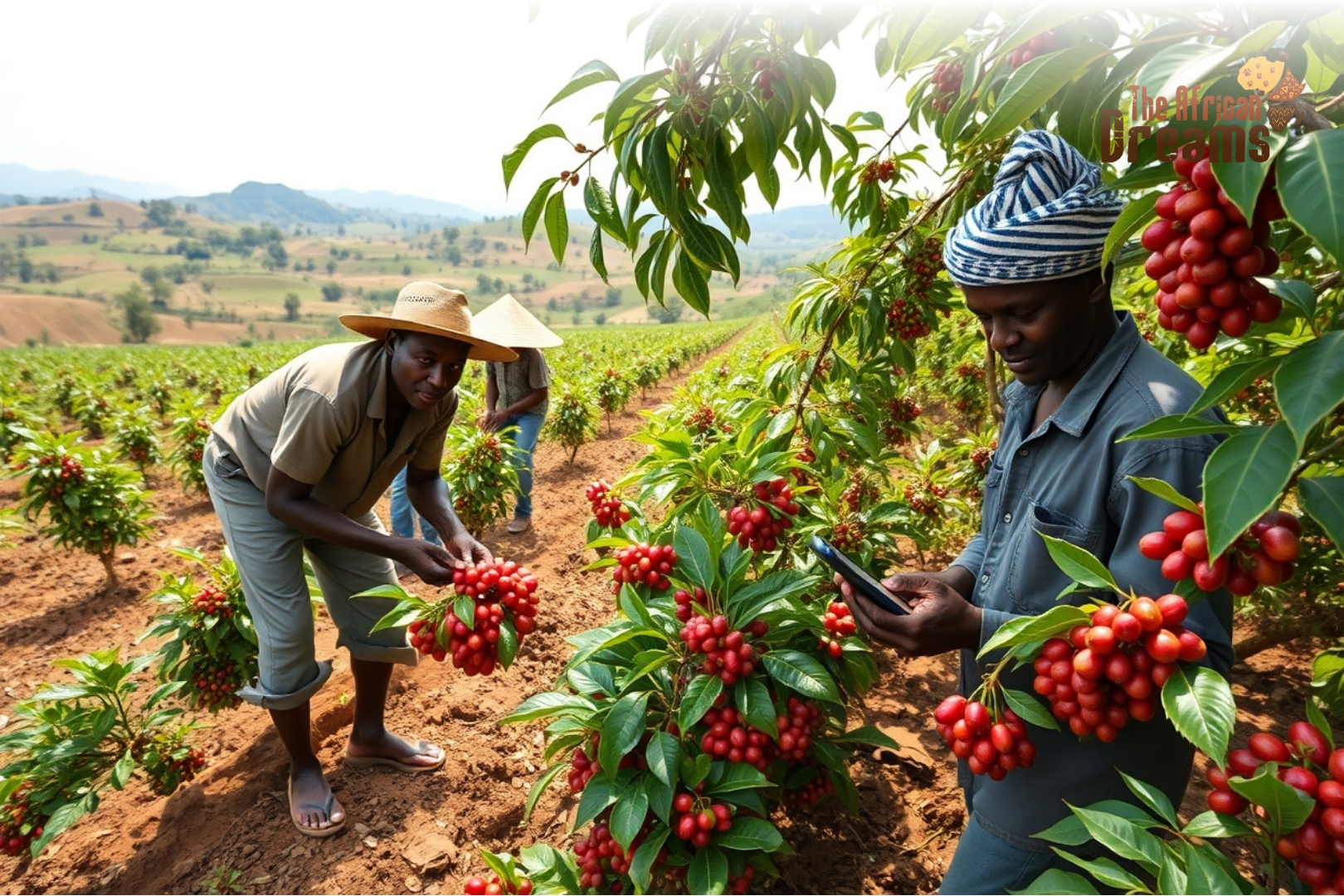
Introduction: Discover Uganda’s Coffee
Uganda is one of the top ten producers and exporters of Coffee. The industry here has gone through some major changes in recent years. Modern farming practices have caused a revolution in the cultivation and production of Uganda’s coffee.
Adopting and exploring new ideas in Uganda’s coffee production have led to increased production and improved quality. This was necessary to meet the growing global demand for Uganda’s coffee. Coffee production is an extremely valuable source right now, especially for a country that heavily relies on selling agricultural products for its livelihood.
So, how much has new technology and knowledge impacted the farming practices for Uganda’s coffee? Let’s find out.
Article Highlights
Uganda’s coffee is very important and holds a lot of potential, but the sector requires a touch of modern tech, knowledge, and training
In terms of knowledge, remote sensing and GIS are being utilized to map coffee production systems in the whole of Africa.
A training program in 2021 helped to yield 250% more products from smallholders and raised their income by an average of 70 USD a year.
Overview of Uganda’s Coffee Industry
But when Brazil’s coffee supplies were affected by frost in the 1970s, it was up to Uganda’s farmers to meet the rising global demand for coffee. The coffee industry in Uganda was under total state control for the longest time. But back in 1991, it was liberalized, and coffee became the top foreign exchange earner in the late 1990s.
However, the Uganda Coffee Development Authority still does most of the export quality control and classifies the product. The industry currently supports around 2 million smallholder farmers.
Uganda’s Coffee Industry: Impact of Tech, Knowledge and Training
- Limited knowledge and
- Leaf rust and red blister issues
- Lack of adequate resources of farmers has been detrimental to the production of high-quality coffee.
To address these challenges, Uganda is working with World Coffee Research for a roadmap to modern coffee production practices.
Technological Changes in Uganda’s Coffee Breeding
Employees from the African region’s coffee industries said,
“As a planet, we are fast running out of land to plant more. We need to use technology to make us better farmers and increase our yield with the land that we have.”
What they meant was that African coffee farmers needed to utilize precision agriculture tools.
The Ugandan Coffee Farmers Alliance uses a mobile app for their dealings with coffee beans. Around 13000 UCFA farmers use this regularly. The app can make accurate recordings of coffee sacks, send instant SMS to confirm delivery and payment, and also do cashless transactions.
Another interesting innovation was the Nuru app. The app is an AI program called the Coffee AI model. It can scan, diagnose, and detect disease and pest infections on coffee plants. It also provides farmers with guidance on how to address the issue. They have developed the app to identify the leaf rust and red blister issues that are affecting coffee production in Uganda.
Knowledge and Empowerment
In an article published in MDPI, researchers suggested using an approach that maximizes resource use, alongside cutting costs for farmers.
Gender inclusion was a big change for Uganda’s coffee farmers. Knowledge of modern coffee farming techniques was introduced to women in the country.
The UGACOF project in the southwestern region adopted the Gender Action Learning System that focuses on revenue division and household planning decisions. This has expanded women’s participation in agroforestry in Uganda and increased business training for at least 500 women.
Women farmers in the eastern region of Bududa are building their livelihoods around coffee. As a result, more women have started to plant their coffee. They are working to reduce women’s dependence on men in coffee farming.
Training Programs for Uganda’s Coffee Farmers
This coffee program included input sales in 2021 to help farmers access essential farming tools. The result was a 250% increase in coffee supply by smallholder farmers. The program also impacted the farmers’ income by an average of 70 USD a year.
Modern Coffee Farming Practices in Uganda
After that came wet processing equipment that can process 1200kg of cherries per hour. This changed the fermentation control techniques to produce high-quality coffee, and fully washed and semi-washed methods were adopted.
Uganda’s coffee farmers also use Hermetic storage and cold chain management technology. This heavily reduces insect infestation, mold, and fungus growth in storage. The use of drip irrigation systems is a game-changer for Ugandan coffee farmers. They water the plant roots directly.
Organic coffee took a huge boost with the movement for organic products. They use composted organic matter instead of chemical fertilizers to maintain soil quality. Contours, terracing, mulching, and shade trees are some popular techniques among organic coffee producers.
Final Thoughts: Improvement in Uganda’s Coffee Farming
Today, slowly but surely, coffee farming in Uganda is seeing a new light. Soon, Uganda’s coffee farmers will be able to produce and export on the same level as the world’s largest coffee producer, Brazil. The impact of training, technology, and knowledge has been substantial in the changes Uganda’s farmers have experienced.
To learn more about Uganda’s agricultural technologies, you can read Uganda’s AgTech: Technology in Agricultural Startups.






0 Comments