

Did you know that agribusiness is one of the most profitable industries to invest in? Looking for a country with enough cash crops to invest in? Look no further, as Cameroon is the right destination for you.
Cameroon, often referred to as “Africa in miniature,” presents a vibrant geography and culture. This, in turn, supports a diverse agricultural sector. The sector is not just a backbone but the very heartbeat of the nation’s economy. Agriculture employs 70 percent of its workforce. It also provides 42 percent of its GDP and 30 percent of its export revenue.
Let’s explore Cameroon’s agriculture a bit more and the potential of its key cash crops. These crops boost the economy and help bring food to the table of many farmers. They help improve the country’s exports. Now, let’s dig in and see how the potential cash crops. They can help investors get unimaginable returns and here we will tell you exactly why.
Article Highlights
Cameroon’s top four cash crops—cocoa, coffee, cotton, and bananas and their role in the economy.
Possible investment opportunities in Cameroon’s thriving agricultural sector.
How sustainable farming practices and foreign investments help change the agricultural landscape of Cameroon.
Cocoa: The Sweet Crop of Cameroon
Cameroon is the 4th largest producer of Cocoa. Cocoa is one of the leading contributors to the national income. Cocoa grows in the humid, shadowy undergrowths of Cameroon’s vast forests. Farmers spend countless hours nurturing the cocoa trees. Once extracted and fermented, the beans are then exported across continents to become delicious chocolate.

In the last 2 seasons, Cameroon has seen an increase in cocoa production. The crop in the 2020-2021 season was 182 tonnes. This also impacted its prices, which increased from 1210 FCFA to 1290 FCFA per Kilogram of beans. This increased to 691 tonnes in the 2022-23 season. Cocoa farming in Cameroon is considered a tradition. Yet, it faces modern challenges such as fluctuating global prices and a lack of sustainable farming practices. Nevertheless, initiatives aiming to increase yield and improve quality are helping Cameroonian farmers. They can now live better.
Coffee: Brewing Growth and Prosperity
Cameroon’s highlands are perfect for coffee cultivation. Arabica and Robusta beans both types, are grown in Cameroon. Historically Cameroon was a key player in the global coffee market. It reached its peak in 1990 when it produced 156,000 metric tons of coffee. has seen significant declines since then. Despite challenges, Cameroon still ranks as the 21st largest coffee producer globally. The country produces approximately 34,000 tonnes of coffee annually.

The aroma of freshly brewed Cameroonian coffee often fills the air in local markets. Coffee has a deep-rooted significance in the country’s culture and economy. Japan has invested $2.2 million in boosting production, with a target of reaching 160,000 tonnes by 2030. This investment is to improve productivity and market access through strategies supported by UNIDO and the Japanese embassy. Cameroon also has specialty coffee like Boyo from the Northwest Province, which is processed in high-quality micro-lots and has a higher price. It is usually produced by hand by the local farmers.
Coffee cultivation has been rejuvenated in recent years. This was possible thanks to government and NGO efforts. They have been working to revitalize infrastructure, aiming to enhance both quality and quantity of production. This crop provides not just an economic lifeline but also a cultural connection. It fosters a sense of community among growers. With its diverse climate and fertile lands, Cameroon offers a promising investment opportunity. Investing here supports local farmers and contributes to economic growth. To learn more about its coffee industry, click here.
Cotton: The White Gold of Northern Cameroon
Cameroon is the 19th largest exporter of Raw Cotton in the world. Raw cotton is the cotton that is not carded or combed. In 2022, Cameroon exported $102M in Raw Cotton and it was the 10th most exported product. The countries that are mainly responsible for Cameroon’s exports are India, China, Vietnam, Pakistan, and Turkey.
The export amounts are as follows:
India – $31.7M
China – $26M
Vietnam – $13.8M
Pakistan – $12.9M
Turkey – $7.41M
Source: Raw Cotton in Cameroon
The area in the north contains vast expanses of cotton fields. The cotton belt includes North, Extreme-North, and a small part of Adamaoua. Cotton is profitable for farmers and the production has been increasing for the past several years. Cotton is termed as ‘white gold’ by those who depend on it. It is the biggest source of employment in the north. Cotton is the major cash crop for the North and Extreme North provinces. Its cultivation supports the livelihoods of many in the northern regions.

Sodecoton purchases 100% of the country’s seed cotton production. Sodecoton is a State-owned enterprise. Cotton is the most important agricultural crop in Northern Cameroon. The crop’s journey from field to fabric involves numerous stages of processing. Each process adds value and provides employment. However, there are challenges, such as competition from synthetic fibers and the global demand for organic cotton. These prompt continuous evolution in farming techniques.
The International Finance Corporation (IFC), part of the World Bank Group, has agreed to a €15.5 million investment with Standard Chartered Bank Cameroon. This funding contributes to a larger €31 million facility that Standard Chartered is providing to Sodecoton. This is done to support its cotton export operations over a one-year period.
Bananas: From Local Staple to International Delight
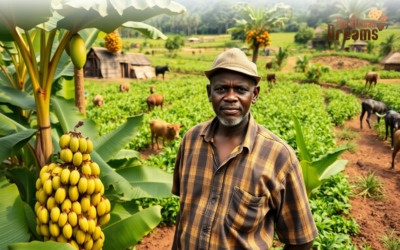
Cameroon is one of the top 5 banana producers worldwide. Bananas, both plantains and dessert types, are an essential part of Cameroon’s agriculture. Second to timber, bananas are a staple and primary source of export revenues. Beyond their role as a staple food for locals, bananas are a substantial export commodity. They are served roasted or fried. They are also eaten in sauces and as porridge.

The banana industry supports a chain of activities. It starts with cultivation and ends with shipping. It is significant in providing jobs and contributing to the national economy. Banana production employs 1 out of every 7 workers. In 2022, Bananas was the 7th most exported product in Cameroon and exported $144M. The export destinations of Cameroon’s bananas are the United Kingdom, France, Germany, Slovakia, and Czechia. The Banana industry presents immense investment opportunities.
The export amounts are as follows:
United Kingdom – $41.7M
France – $22M
Germany – $20.2M
Slovakia – $19M
Czechia – $18.7M
Source: Bananas in Cameroon
In March 2024, Cameroon’s banana exports fell by 26% compared to the previous year, totaling 14,208 tons. The most significant drop was seen by Plantations du Haut Penja (PHP), the market leader, which reduced its exports by 35.4% to 10,174 tons.
In recent years, sustainability in banana production has become a crucial concern. Producers are adopting more environmentally friendly practices to ensure that this vital crop remains viable and profitable. Cameroon plans to increase its annual banana production to 500,000 tons by 2030, up from the current 210,000 to 240,000 tons. This goal is part of the National Development Strategy 2020-2030 (SND 20-30) to boost export capacities and economic growth.
Conclusion
Cameroon’s agricultural sector offers a fertile ground for investors looking for profitable ventures. With its diverse climate and rich soils, the country excels in the production of vital cash crops like cocoa, coffee, cotton, and bananas. These crops not only form the backbone of Cameroon’s economy. It also holds the potential to yield substantial returns for investors. By investing in Cameroon’s agriculture, investors can support local communities and improve the lives of the farmers. As Cameroon continues to develop and enhance its agricultural practices, the time to invest is now. So, wait no further and invest in Cameroon and help improve its economy.
0 Comments