
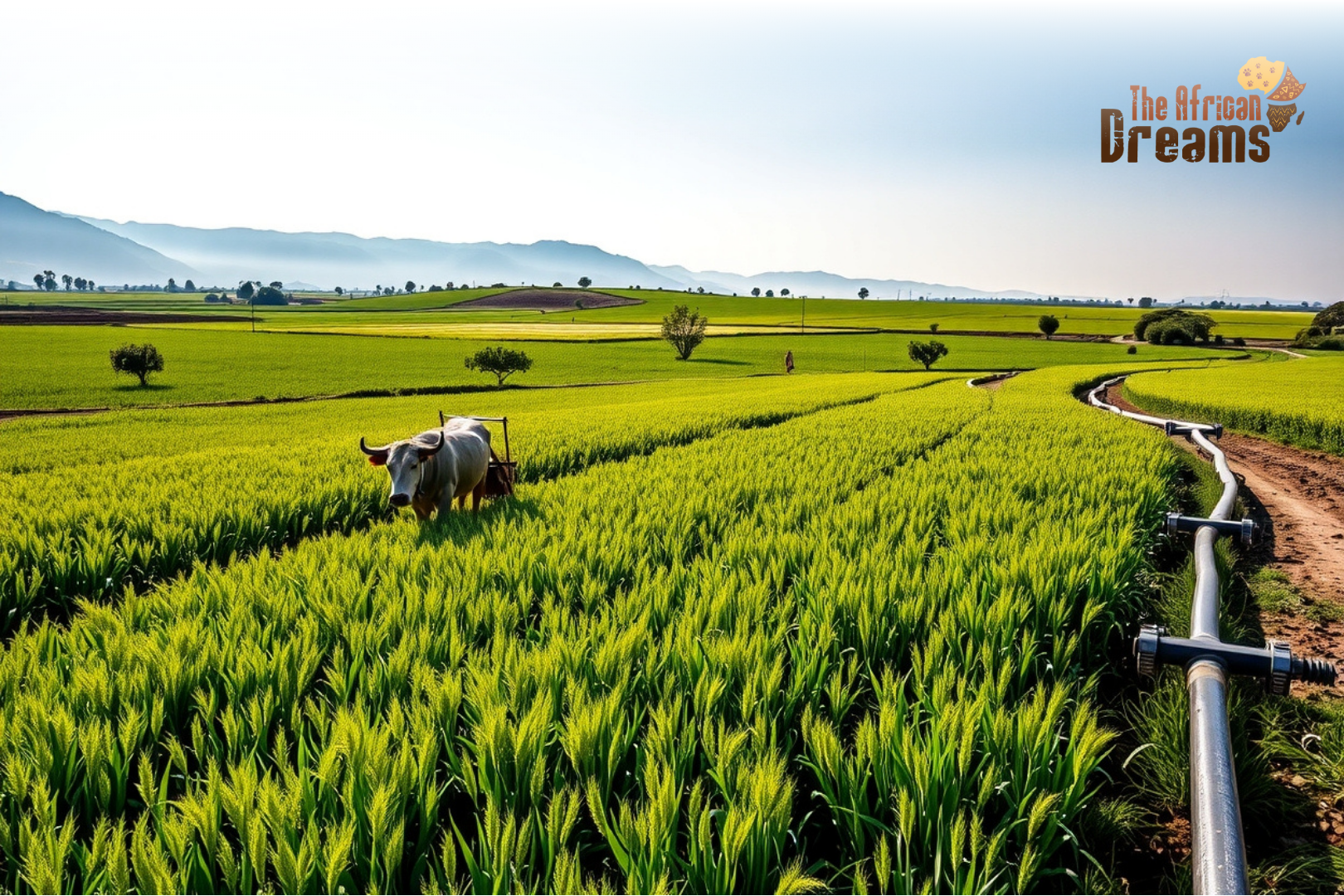
Let’s picture a farmer in Ethiopia, working barefoot under the sun among the teff crops just as his forefathers did. This scene is not uncommon in the country. Farming is important to Ethiopia’s life, tradition, and economy. Ethiopia’s farmers have been planting crops such as coffee and cereals for the country even today.
Currently, agriculture is the lifeline of the Ethiopian economy. The sector that has received the most attention is livestock, which the World Bank states accounts for about 70% of Ethiopia’s employment and contributes about 37% of its GDP. Ethiopia is also the largest exporter, with coffee alone exporting over $1 billion in 2022. This makes Ethiopia the largest producer of coffee in Africa and supplies European, Middle Eastern, and other regions.
Basic foods, such as teff, indigenous grains to Ethiopia,, have a dual function of providing the population with food sustaining the local economy. Six million tons of teff are grown annually, supporting millions of smallholder farmers. Equally important is livestock farming; Ethiopia has the largest number of livestock in Africa, estimated at $144 billion.
But, the sector has challenges such as climate change and lack of access to technology. Yet, it has become a significant part of the country’s economy and it stands as its pride.
How has Agriculture affected Ethiopia’s Economy
Ethiopia’s agriculture is the main sector of the economy. Also responsible for employment, GDP contribution and export earnings.
-
Contribution to GDP
About 37 percent of Ethiopia’s Gross Domestic Product (GDP) is contributed by agriculture. This important share indicates that the sector plays a major role in promoting economic growth and development.
-
Employment
Agriculture is the largest employer in the country, providing employment to about 75 percent of the workforce. This emphasizes how important the sector of agriculture is to livelihoods of the majority of the population.
-
Export Earnings
Ethiopia’s export earnings account for 80% of the agriculture sector’s earnings, with coffee being the highest foreign exchange earner. Ethiopia’s main exports are gold and coffee. Other exports include live animals, oilseeds, and flowers. Ethiopia’s main export partner is Switzerland, mainly for the export of gold.
Agriculture is thus an important part of Ethiopia’s economy as evidenced by its contribution to GDP, employment and export revenues. This sector is very important for the country’s continued economic growth and sustainable development. Modernization of this sector are also necessary.
Current Agricultural Landscape
- Major Crops and Livestock
Africa’s largest coffee producer and the world’s fifth largest exporter of Arabica coffee is Ethiopia. The country exported 300,000 tons of coffee in the 2021/22 fiscal year, which brought in a record $1.4 billion in revenue. More than 50 million people depend on teff, a grain originating from Ethiopia, as a staple food. Approximately 6.5 million smallholder farmers grow it on 3 million hectares, producing about 52.8 million quintals each year.
Ethiopia’s livestock farming is an integral part of its poor Agricultural sector. Africa’s largest livestock population, over 71 million cattle, 43 million sheep, 54 million goats and 4.5 million camels are in the country. Livestock accounts for 60-70 percent of livelihoods and is critical for Ethiopia’s rural economy. Furthermore, most farmers (about 80%) plow their croplands using animal.
- Farming Systems and Practices
Ethiopia’s agricultural landscape is dominated by smallholder farmers who contribute to almost 95 per cent of Ethiopia’s agricultural output. These farmers operate on less than two hectares of land and rely on farming using traditional methods. Mixed farming systems, combining crop cultivation and livestock rearing helping farmers diversify their income sources.
- Regional Variations in Agriculture
Ethiopia’s diverse topography results in regional variations in agriculture. The highlands, particularly in Oromia and Amhara regions, are suitable for cereals like teff and barley. In contrast, the lowland areas, such as Afar and Somali regions, are better suited for pastoralism and cultivating drought-resistant crops. Understanding these regional differences is essential for tailoring agricultural policies to local needs.
Ethiopian Agriculture Challenges
The agricultural sector is important to the Ethiopian economy. Many problems affecting its growth and sustainability needs to be addressed.
- Environmental Degradation and Climate Change
Ethiopian agriculture is severely threatened by climate change. Temperature and variability in the rainfall patterns in the country have increased, resulting in droughts as well as floods. Such climate related events have produced reduced crop yields and livestock losses and this has further aggravated food insecurity. The Food and Agriculture Organization (FAO) says Ethiopia is highly vulnerable to climate variability, which can greatly affect agricultural productivity.
- Land Degradation and Soil Fertility Issues
Land degradation is a critical issue affecting Ethiopia’s agricultural productivity. Overgrazing, deforestation, and unsustainable farming practices have led to soil erosion and loss of fertility. The World Bank reports that land degradation affects a significant portion of Ethiopia’s land area, reducing agricultural productivity and contributing to poverty.
- Limited access to Modern Farming Technologies
Improved seeds, fertilizers and irrigation systems and other modern farming technologies are unavailable to many Ethiopian farmers. Such limitation impairs efforts to enhance agricultural productivity and attain food security. Modern agricultural technologies have not been widely adopted in Ethiopia, the World Bank says, with only a small percentage of farmers using improved inputs.
Investment Opportunities
Horticulture Development
The agro-climatic zones of Ethiopia are suitable for growing fruits, vegetables and flowers.
Opportunities:
- Fruit and Vegetable Farming: Ethiopia exports over $300 million worth of fresh produce annually, and has significant untapped potential.
- Floriculture: Floriculture sector has grown by an average of 20 percent per annum, making Ethiopia the second largest flower exporter in Africa.
- Market Demand: Organic and fresh produce demand in Europe and the Middle East.
Coffee and Specialty Crops
The world’s fifth largest Arabica coffee exporter.
Opportunities:
- Achieve high production of high-quality Arabica coffee for premium global markets.
- Start investing in value-added coffee processing and branding to export coffee.
- Global health-conscious markets are buying speciality crops like spices and herbs (ginger, turmeric).
Livestock and Dairy Farming
Ethiopia has the biggest livestock population in Africa, with over 71 million cattle.
Opportunities:
- Dairy Production: Ethiopia imports an annual $10 million worth of dairy products. The FAO states that investing in modern dairy farms can bridge this gap.
- Meat Processing: Part of expanding meat processing facilities to help increase exports to the Middle East and Asia.
- Poultry: Opportunities exist for large-scale production of chicken and egg, given increasing domestic consumption.
Agro-processing and value addition
Agro-processing provides significant value-addition opportunities consistent with the government’s industrialization agenda.
Opportunities:
- The processing of teff, wheat, and maize into flour and ready-to-eat products for domestic and export markets.
- Food storage and packaging facilities to reduce post-harvest losses.
- Oilseed (e.g., sesame and sunflower) processing for export and domestic markets.
Agricultural Infrastructure Investment
A bottleneck to agricultural growth in remote areas is poor infrastructure.
Opportunities:
- Improve market access by building roads, cold storage facilities, and logistics hubs.
- Support value chain development through establishing Integrated Agro Industrial Parks (IAIPs).
- Provide digital platforms for farmers to access markets and get agricultural extension services.
- The global community’s commitment to support Ethiopia’s agricultural development is evidenced by the recent endorsement by the Climate Investment Funds of a $500 million plan to help Ethiopia restore degraded land and enhance food security.
Government Support and Incentives
- Tax Holidays: Ethiopian Investment Commission: Up to 15 years of tax exemption for agricultural investment
- Duty-Free Imports: Exemption for agricultural equipment and inputs.
- Land Lease: Agricultural projects can be done on long-term land leases.
- Export Incentives: Forex priority access for exporters and reduced customs tariffs.
Conclusion
Imagine an Ethiopian farmer, proud of his thriving coffee plants field, the buzz of modern irrigation systems, and the excitement of an agro-industrial park nearby. This is not a dream; it’s a look at where Ethiopia’s agriculture will be.
Ethiopia has transformed its agriculture greatly in the last few decades. The country has shown resilience and innovation, boosting coffee exports, implementing climate-smart practices, and establishing Integrated Agro-Industrial Parks. Farmers and sustainable methods adopt modern tools to reshape landscapes that are near degradation.
There are challenges on the journey, but the future looks promising. Ethiopia’s agriculture is poised to become a world leader in sustainable farming if the country continues to invest in technology, infrastructure and education. The seeds of progress we plant today will reap a harvest of prosperity for generations and are suitable for farmers, investors, and the nation.
0 Comments