
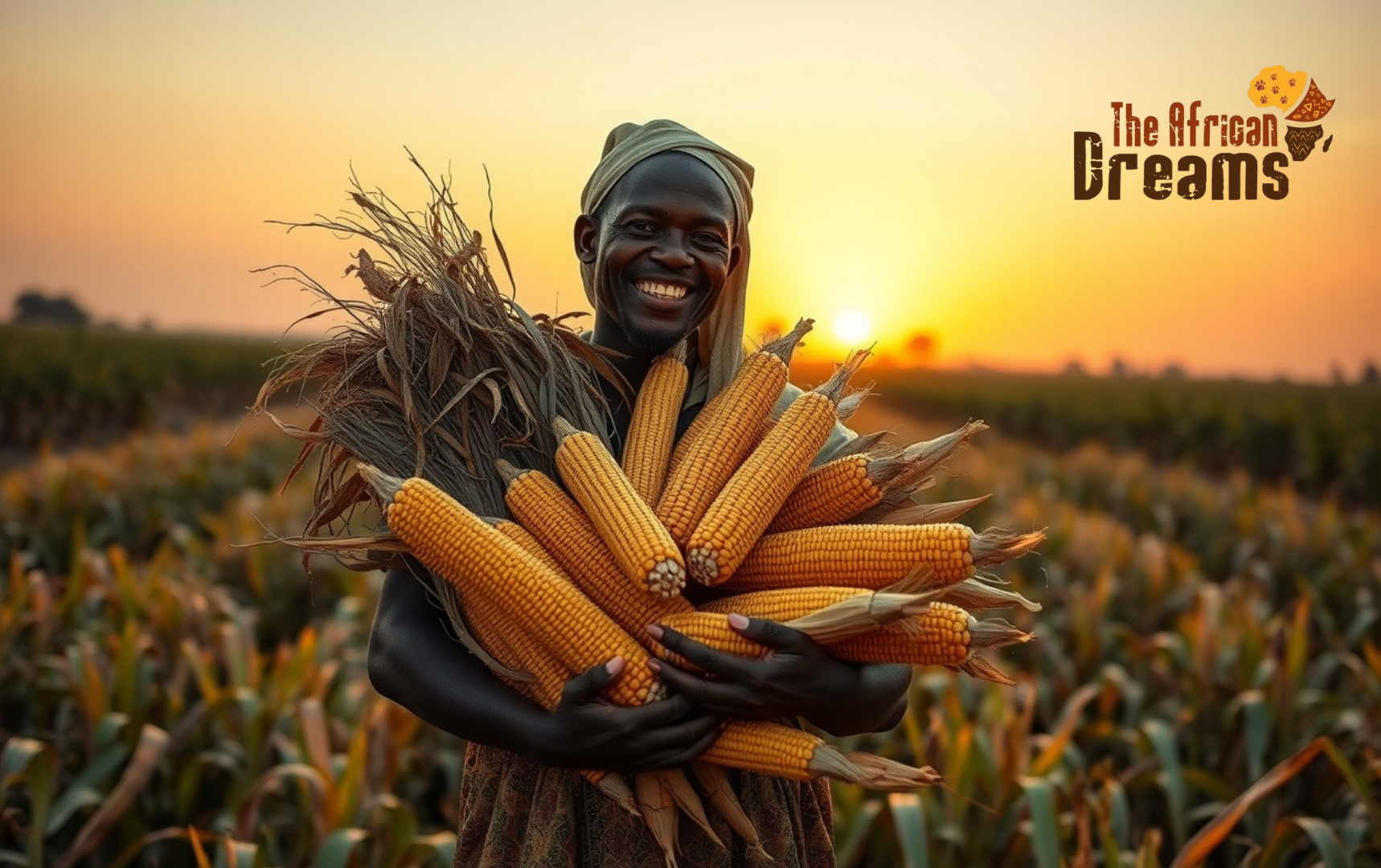
Chad’s agricultural sector is supported by around 80 percent of the population through maize farming. Maize is a staple crop of great importance for food security. It is a key component of animal feed and agro-industrial products. Maize production in Chad reached 447,920 metric tons in 2021. Projections show this figure could grow to over 503,940 metric tons by 2026. The growth of maize emphasizes its importance to meeting Chad’s food demands in the face of a growing population.
As part of the government’s Vision 2030 plan, Chad wishes to transform itself into an emerging economy. The country will diversify its economic base with agriculture in a leading role. Special Economic Zones (SEZs) like ZISARH are projects meant to attract investments. They provide infrastructure and policy support, large-scale maize production, and agro-processing.
These efforts are especially important to overcome the traditional challenges of limited resources and climate-related risks that have often hampered productivity. Chad’s maize sector offers large growth opportunities for both local and international investors.
Challenges in Maize Farming
Maize farming in Chad is one of the most severe challenges to climate variability. It leads to irregular rainy spells and long dry spells which have a major effect on crop yields and production. These conditions make farmers uncertain about their future, who depend on rain-fed agriculture. They have a direct impact on food security and economic stability.
A second challenge is the limited access to modern farming techniques and equipment. Most farmers still rely on traditional methods. This limits the potential for increased productivity. The lack of mechanization not only reduces efficiency but also hampers the scalability of maize production. These obstacles are preventing the sector from reaching its full potential.
Another challenge is the lack of access to high-quality inputs, such as high-yielding seeds and fertilizers. Poor infrastructure and a lack of quality road networks add to this. So, the distribution of these products to the markets becomes more costly. The lack of this infrastructure gap results in a loss of profits for rural farmers.
Lastly, access to financing remains a challenge. There are limited loan options for smallholder farmers. Without enough capital, farmers struggle to invest in necessary improvements. For example, some lack irrigation systems or quality storage facilities to increase productivity.
Improving Maize Farming
Climate-resilient agricultural practices are necessary to tackle climate-related challenges. Drought-resistant maize varieties and water-saving irrigation systems are included. These measures help farmers to be less dependent on rainfall and yields in bad weather.
Another key solution to improving access to modern farming techniques. Government and international agencies are training agricultural extension services to help farmers use advanced technologies. These initiatives aim to increase the efficiency and productivity of maize farming.
It is also important to develop the infrastructure. The government is expanding road networks and storage facilities in the key agricultural zones. This will improve the infrastructure for the timely delivery of high-quality seeds and fertilizers to rural areas. It will also reduce post-harvest losses.
Finally, smallholder farmers will need to have access to finance. The partnership between the government and private sector provides microcredit schemes and loans to farmers. These services help farmers invest in irrigation and better storage generating long-term growth of the maize sector.
Results of Maize Farming Improvements
These strategic measures have been implemented to improve productivity and farmer incomes in Chad’s maize sector. Adopting climate-resilient practices has mitigated the adverse effects of unpredictable rainfall, with yield increases of 9% to 15% reported from drought-tolerant seed varieties and improved irrigation techniques.
Infrastructure improvements, especially in agro-processing zones such as ZISARH, have greatly reduced post-harvest losses. It enhanced market access increasing profit margins for maize producers.
Estimates have shown that better storage and processing facilities have cut losses by up to 10%. This has rendered smallholder farmers financially more accessible. It also facilitates the investment in critical improvements such as mechanized equipment and irrigation. It also facilitates investment in critical improvements, such as mechanized equipment and irrigation. These improvements increase production efficiency.
Overall, these combined efforts have improved yields and created better income opportunities for local farmers. They have also enhanced market integration, contributing to the economic stability of rural communities.
Investment Opportunities in Chad's Maize Farming Sector
Chad’s maize farming sector offers great opportunities for both domestic and international investors. As the country aims to diversify its economy and boost agricultural production, maize farming stands out due to its growing market demand, favorable policies, and potential for large-scale production and value-added processing.
- Agro-Processing Ventures: There is potential for investment in maize-based agro-processing industries. Investment opportunities include milling, animal feed production, and maize flour. ZIARAH is an ideal site for agro-processing due to the tax incentives and modern infrastructure provided by the establishment of Special Economic Zones (SEZs).
- Large-Scale Commercial Farming: Investors can capitalize on Chad’s vast arable lands. There is cover over 72 million hectares to expand large-scale maize cultivation. This opportunity is bolstered by ongoing efforts to improve irrigation systems. Which will reduce reliance on rain-fed agriculture and enhance productivity
- Seed Production and Agricultural Inputs: As climate resilience becomes critical, high-yield and drought-resistant seed varieties are in high demand. Companies that specialize in seed production, fertilizer distribution, agricultural machinery, etc. offer opportunities.
- Infrastructure Development: Investors can explore partnerships to develop storage facilities, transport networks, and logistics hubs. These are key to reducing post-harvest losses and connecting farmers to regional markets. These areas promise good returns on the ongoing improvements in infrastructure in the ZISARH zone.
Conclusion
The contributions in Chad’s maize sector show the potential for sustainable development and increased food security. By investing targeted amounts in infrastructure and farmer training, Chad has increased maize yields. The country has improved market competitiveness and reduced post-harvest losses. Farmers have also been able to overcome the traditional challenges around climate.
The introduction of climate-resilient practices has also made maize farming more profitable. Looking forward, Chad’s maize industry holds significant promise. Continued focus on scaling infrastructure improvements can further elevate productivity and income levels for rural farmers. Expanding market linkages, and enhancing agricultural extension services are also important.
Also, the government continues its efforts toward economic diversification and agricultural development. Chad’s maize sector is poised to contribute more to national food security and rural prosperity. That’s why investors explore Chad’s agricultural sector with a long-term growth perspective.
0 Comments