
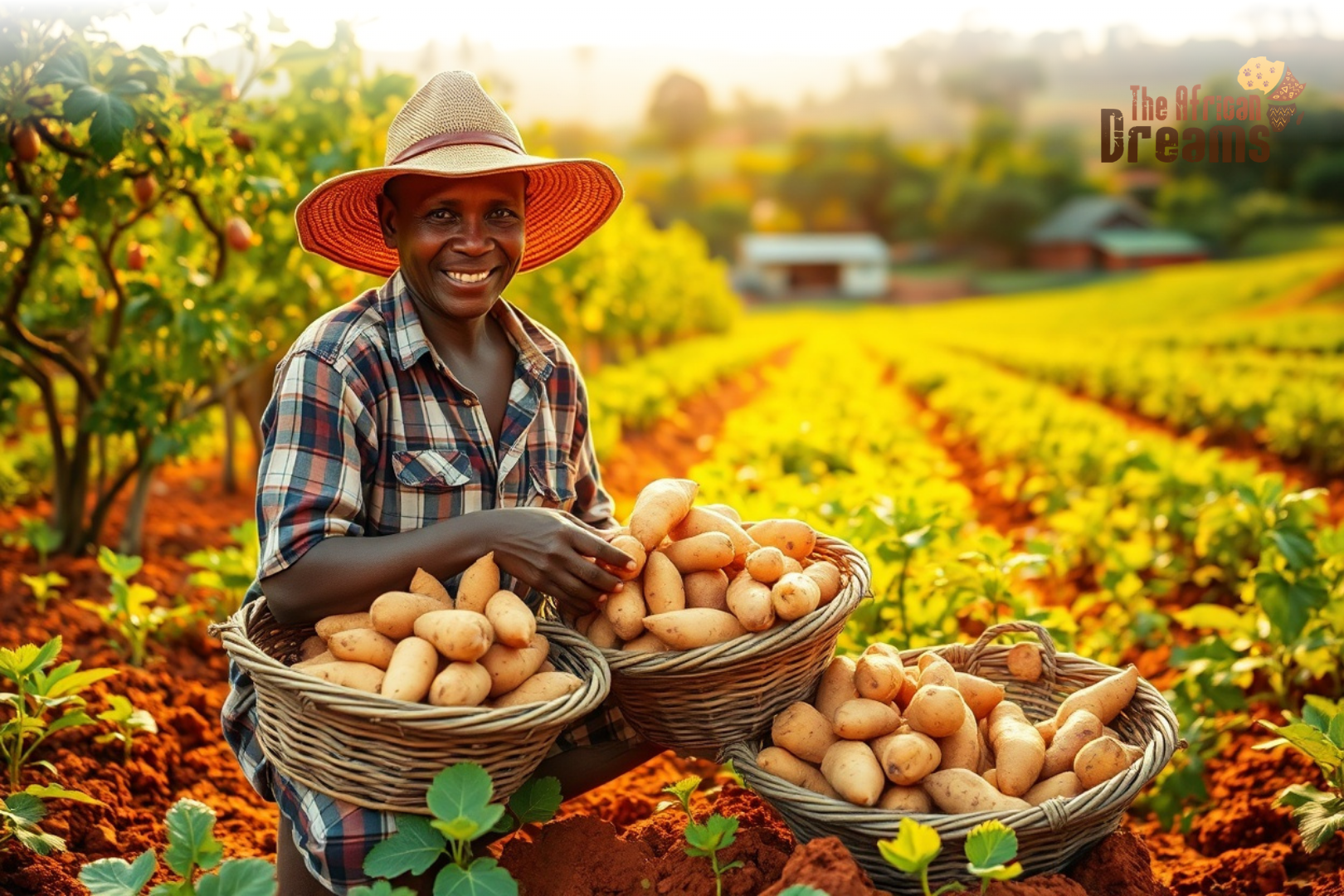
Introduction: Uganda’s Sweet Potato
Did you know that 40% of Ugandan farmers grow Uganda’s sweet potato as a major security crop? Scientifically known as Ipomoea batatas, it is the fourth most important crop in Uganda in terms of production volume, alongside Banana and cassava.
Uganda produces about 1.85 million metric tonnes of sweet potato each year. 47% of the total produced potatoes come from the eastern region. In Uganda, the average consumption of Uganda’s sweet potato is 85 kg a year. People consumed it in several ways, such as steamed, boiled, fried, or roasted.
Uganda’s sweet potato can bring significant income both locally and internationally. The root crop can generate heavy cash from inside and outside. In this article, we will explore the opportunities to grow Uganda’s sweet potato.
Article Highlights
Uganda is the top producer of sweet potato in Africa, but the country has a long way to go to make it viable for the people.
Containing several vitamins and minerals, this root vegetable, Uganda’s sweet potato, is a superfood. It is fighting against VAD, which affects about 38% children under the age of 5.
There are endless opportunities to commercially produce Uganda’s sweet potatoes and earn export revenue.
Uganda’s Sweet Potato: Why is it the Superfood
Uganda’s Sweet potato is a root vegetable and has high nutritional value.
It is full of antioxidants and rich in vitamins and minerals. It has vitamins A, B, C, and E. Minerals like fiber, potassium, iron, and zinc are also found in it. Vitamin A deficiency is a major health issue in Uganda. Around 38% of children aged 6 months to 5 years and 36% of women aged 15-49 suffer from vitamin A deficiency (VAD).
Uganda’s sweet potato is a rich source of vitamin A and other nutrients, helping to reduce health problems. Among the varieties, the orange-fleshed sweet potato contains vitamin A. 125g of sweet potato daily meets a preschool child’s vitamin A needs.
This is why Uganda is currently running campaigns to make sweet potatoes a regular part of its diet. This will improve the overall health of the population and serve as a lesson for others dealing with a similar problem.
In 2007, an NGO named HarvestPlus introduced the orange-fleshed sweet potato (OFSP). The NGO aims to support over a million farmers. They encourage planting it and making it a regular part of meals. Given the overall situation in Uganda, it’s considered a superfood.
Success Story: Farmers in Sweet Potato Production
The research organization HarvestPlus is working closely with the orange-fleshed sweet potato (OFSP). HarvestPlus estimates that there are 2.25 million OFSP farmers in Uganda. The number is increasing each year. The adoption rate increased by 70% in just 4 years, starting from 2013. This also boosted people’s vitamin A intake. The progress was possible because of some successful farmers in Uganda.
Eugene Ekinyu
Eugene Ekinyu began a farmer group in 2003 and finished training in 2004. The sweet potato farmer from the Soroti district of eastern Uganda now has 300 members. Ekinyu sent 3 of his children to university by producing sweet potatoes. His success didn’t come overnight.
After fighting through challenges and hard work, Ekinyu stands strong now. Many other farmers also did well and gained economic stability. Some bought new houses, some opened new businesses, and some sent their children to school. As Eugene plans to buy a new house, he has already fixed a name, “The Sweet Potato House.”
Challenges in Uganda’s Sweet Potato Farming
Uganda is the leading producer of sweets in Africa and the third-largest after China and India. But there are also some challenges and solutions for these challenges as well.
1. The common problems in Ugandan agriculture are associated with crop-specific problems. For example, the potatoes are planted and cultivated at the same time. So, this makes the market oversaturated and causes a downfall in price.
2. Existing common problems like post-harvest handling, pests, diseases, transportation supports, etc., are merging to become a major challenge for production.
3. The Teso sub-region in Uganda has the perfect climate and soil for sweet potato production. But only one-third of the produced potatoes make it to the market. Most of it perishes as the supply chain is weak in Uganda.
4. Farmers use the traditional method of cultivating the crop, which reduces the production rate as well. It can’t cope with the current climate and falls short of producing the expected amount.
5. Climate change, drought, and soil degradation threaten food production. While these issues can be managed with countermeasures, the real challenges are the daily struggles of the farmers. Delays in getting plants on time push back planting schedules. Though sweet potatoes should ideally be planted in February, supply shortages often cause delays until April.
Solutions
To ensure the deficiencies in Uganda’s sweet potato farming are addressed, Uganda needs to work closely on the issues.
1. Building a sustainable ecosystem is a must for the country. As with other agricultural concerns, Uganda needs to address the primary fields so that not only sweet potatoes but also other crops can benefit from the new systems.
2. Uganda can run projects in collaboration with organizations, like UN development bodies. There are other organizations as well, looking to provide support for the agriculture sector. The Food and Agriculture Organization of the United Nations (FAO), the International Fund for Agricultural Development (IFAD), the International Institute for Rural Reconstruction (IIRR), the International Fertilizer Development Center (IFDC), etc., are the ones supporting agriculture in Uganda.
A research organization HarvestPlus, is working closely with the orange-fleshed sweet potato (OFSP) that provides seed loans to the farmers to grow sweet potatoes and pay back over time.
3. Practicing sustainable farming, including climate-smart agriculture and advanced technologies, will also be beneficial.
4. Building new infrastructures to support the farmers is also a crucial part. Thousands of farmers and investors are interested in the agricultural sector of Uganda. The country only needs to show them that it is doing everything to help them out.
Final Thoughts: Growing Uganda’s Sweet Potato
Uganda’s sweet potato offers ample scope and opens doors to opportunities not only as a consumed food in Uganda but also as an export product. It fulfills all the criteria to become one of the most important root crops in Uganda. It is supporting the agricultural sector by becoming drought-tolerant, earning foreign exchange, fighting VAD, etc.
There are many opportunities to commercially produce Uganda’s sweet potatoes and earn export income. Thus, it has an open space to bring economic benefits to the farmers. As Uganda depends solely on agriculture, it needs to utilize every potential sector. That’s why, along with the Ugandan government, several organizations are also helping.
With proper planning and implementation, collaborations among organizations, public-private partnerships, and local and global investment, Uganda can improve its sweet potato farming. It only awaits the investors and farmers to take up the challenge.






0 Comments