
Price, Profit Margin, and Intermediary Market in Uganda
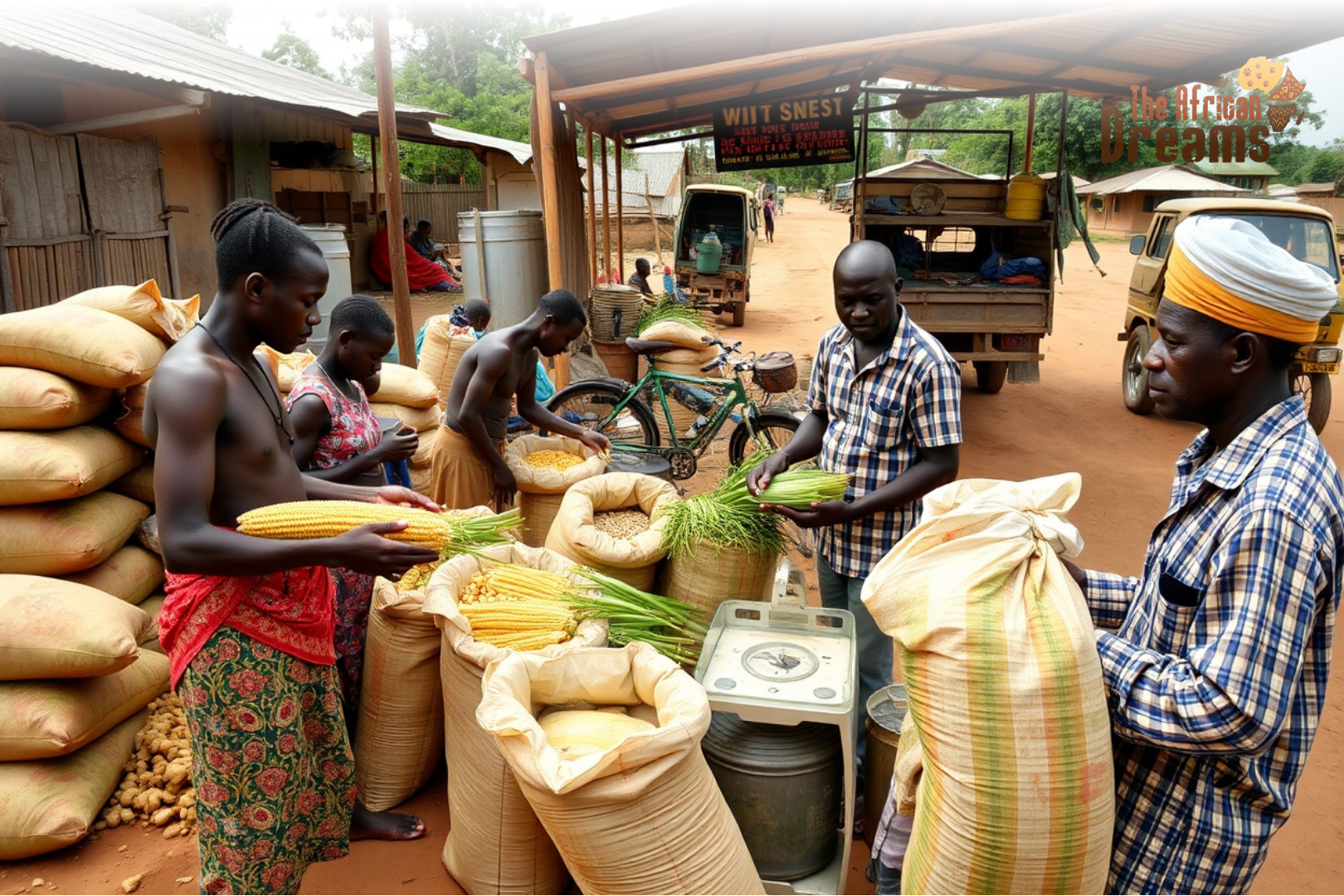
What do you think is the biggest worry for a smallholder farmer like Robert Tigarya? Is it the weather or climate change? Pests or diseases destroying his crops? He wakes up every day to tend to his crops. He is hopeful that he will have a good harvest. But what worries him the most is getting a fair price for his produce. This is true for most smallholder farmers in the market in Uganda. What leads to these farmers not getting the right price is a market situation and poor value chain policies.
They face challenges accessing markets, dealing with intermediaries, and getting back what they deserve for their hard work. In this article, we will discuss how to understand price, profit margin, and the intermediary market in Uganda, how prices are set, how profits are distributed across the many levels of the value chain, and what role middlemen play in all this.
Article Highlights
Intermediaries are not just price hikers, but they also contribute to the value chain in the market in Uganda.
Different crop types have different value chains. Some are well organized, and some have internal issues.
Price and product margins depend on crop quality, access to information, and transparency in the market in Uganda.
What Intermediaries or Middlemen Offer in the Value Chain in the Market in Uganda
The agricultural value chain, in its current state, cannot function without intermediaries. Even if their inclusion increases prices in certain markets, the market in Uganda itself cannot work as efficiently without them. They work as a bridge connecting farmers and buyers. There’s a common consensus that middleman are only cost-adders; their role is way more complex than it seems.
The value chains are divided between different crop types. But almost every single crop goes through middlemen. There are village agents, local aggregators, traders, processors, and other organizations working on logistics.
A single village agent works with 200 to 300 farmers in that village. Their whole supply depends on this one person and his service. This is more noticeable in remote rural areas where transport is scarce.
Village agents don’t just work as intermediaries. They act as advisors who receive special training on modern farming practices.
Intermediaries add other values like:
- Giving input for better yield.
- Providing maize shelling, coffee washing stations, cold storage, and access to better seeds for their communities.
- Forwarding market information and other insights about trends and prices.
- They also work as quality assurance agents.
Are you wondering where the problem lies, then?
Fair question. The problem comes from mistrust and a lack of transparency. What they are supposed to do is promote information sharing so the farmers can get their deserved prices. They should provide incentives for better-quality produce. The position itself should be for the employment of the youth.
Value Chains & Price Setting: Two Different Stories
The term diverse is an understatement for Uganda’s agriculture. The country has much potential for agricultural development. Most first-world countries took off on the back of the industrial revolution, but Uganda is different.
The country’s potential lies in agriculture. And for it to succeed, the value and supply chains need to be revised.
Maize Value Chain
As the third most farmed crop in Uganda, the maize value chain is a good example of how value chains need to work. Maize is a staple crop for both the incomes of all levels of farmers and the food security of the country. This one is similar to the majority of crop value chains in the market in Uganda. There are five stages in this one –
-
Inputs
-
Production
-
Aggregation
-
Processing
-
Distribution (Marketing)
Uganda is one of the three largest exporters of both maize and maize flour. As there is an incentive to export, the government keeps a close watch on the value chain. The actors here are mostly working on a large scale. Smallholder farmers dominate production.
There are multiple large and medium-sized mills. This range from smallholders to large businesses all have equal stakes and importance. If the smallholders suffer, so does the larger economy.
Cotton Value Chain
This is another example where the value chain differs from traditional norms. Cotton has been an important product for Uganda since its introduction in 1903. The country is almost naturally suited for cotton production.
Uganda’s cotton is considered a high premium in the world market.
The value chain differs from traditional ones because it goes both upstream and downstream. Large numbers of farmers and tailors are included in it. 31 of the 38 total ginneries are currently active in the country.
Alongside this, the government has taken steps to ensure there is no secondhand clothing. There is an excise duty on used clothing as well. The local apparel industries suffer heavy losses because of this legislation.
Apart from that, the ginneries need costly maintenance, and shunning the local industry takes away their incentive to produce cotton. Farmers in the western regions have switched over to farming coffee and dairy instead of cotton. Cotton farming has started to become niche, and there is a lot of information gap in the markets.
Price Setting, Profit, and Produce Margins
There are two ways that prices are set. One is the farm-gate price, and the other is the market price. When the difference between these two prices goes higher, the economy suffers massive blows.
The knowledge and information on market prices also influence the farm-gate price. Here is a general idea of how variations affect pricing and spread.
Farmers with this knowledge can bargain for better prices because they know the commodity is sold at a higher price in the market in Uganda. Market price, on the other hand, depends on demand, supply, and consumption rates.
There’s a lot of productivity gap in agricultural products. For instance, the average maize farm yield is 2.3 tons per hectare, but there’s potential to produce around 8 tons. The gap is ever larger for cassava, with 3.3 tons per hectare, where the potential is 20 tons per hectare. Farmers who can get full usage out of their lands can start farming commercially and increase their profits.
Variation in Maize Prices in Market in Uganda: Case Study
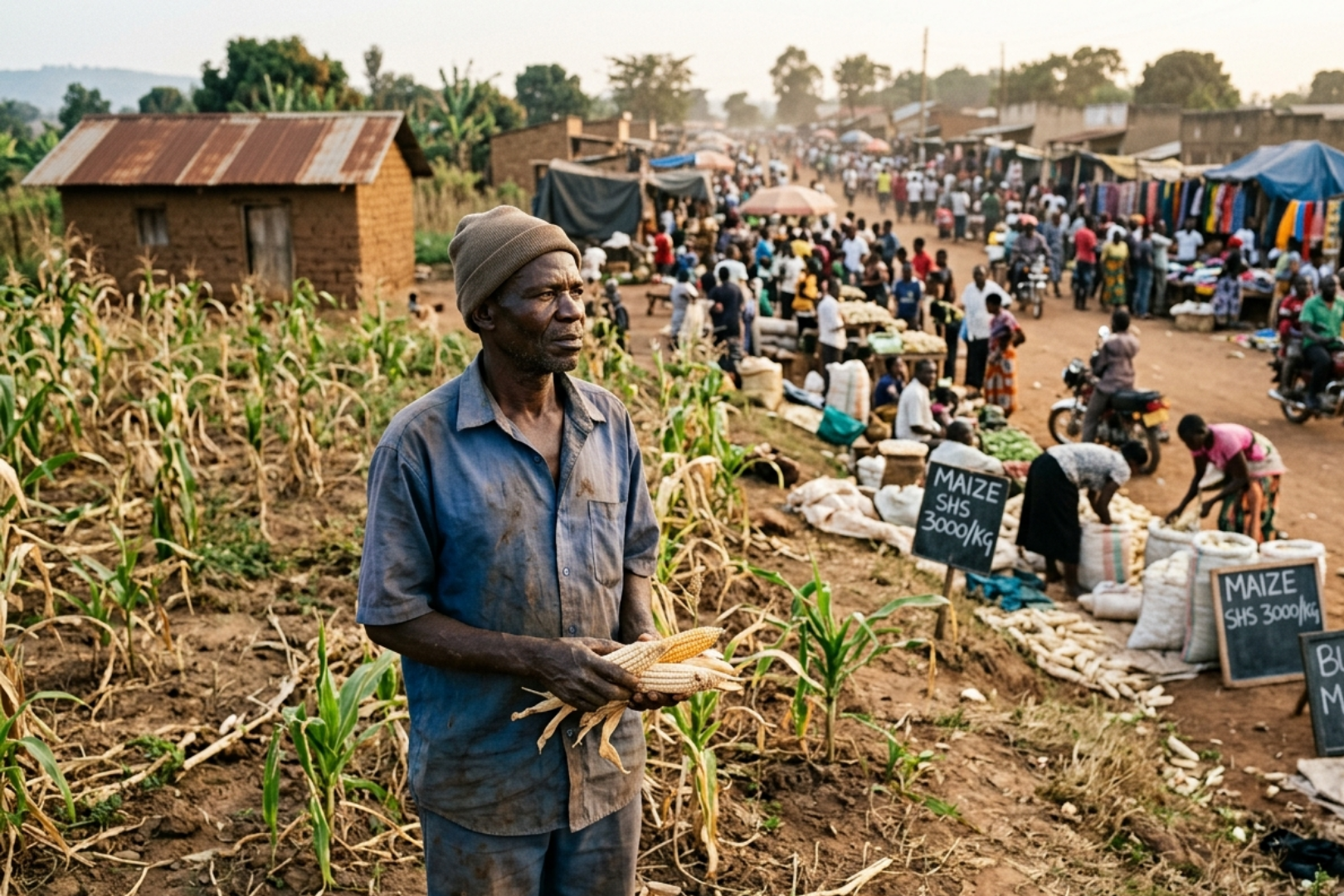
Busitema University researched the maize price variation in different regions of the country. They went to 253 maize traders in five districts of different regions. They surveyed Soroti, Mbale, Tororo, Bukedea, and Busia.
What they discovered was that one of the reasons the prices increased was because of the quality of maize. The other factor they found was middlemen causing price fluctuations.
Middlemen here are called brokers who help negotiate dealings of maize and maize flour for access to the market in Uganda. They decided which maize had good quality and should be priced higher.
Final Thoughts: Improving Agricultural Value Chain of the Market in Uganda
Small-scale or large-scale should not be important. The existing value chain is already important enough that significant changes can cause instability in the market in Uganda. Unless the government can tightly control the flow of goods and cash, the problems in the value chain will keep existing.
The government also needs to strengthen market access for smallholders. They are the main priority because they are the ones who are out of touch. The market information service project is a good source of information on where work is needed. Improving these conditions will develop the agricultural value chain of the market in Uganda. Therefore, Uganda’s economy will grow even stronger.






0 Comments