
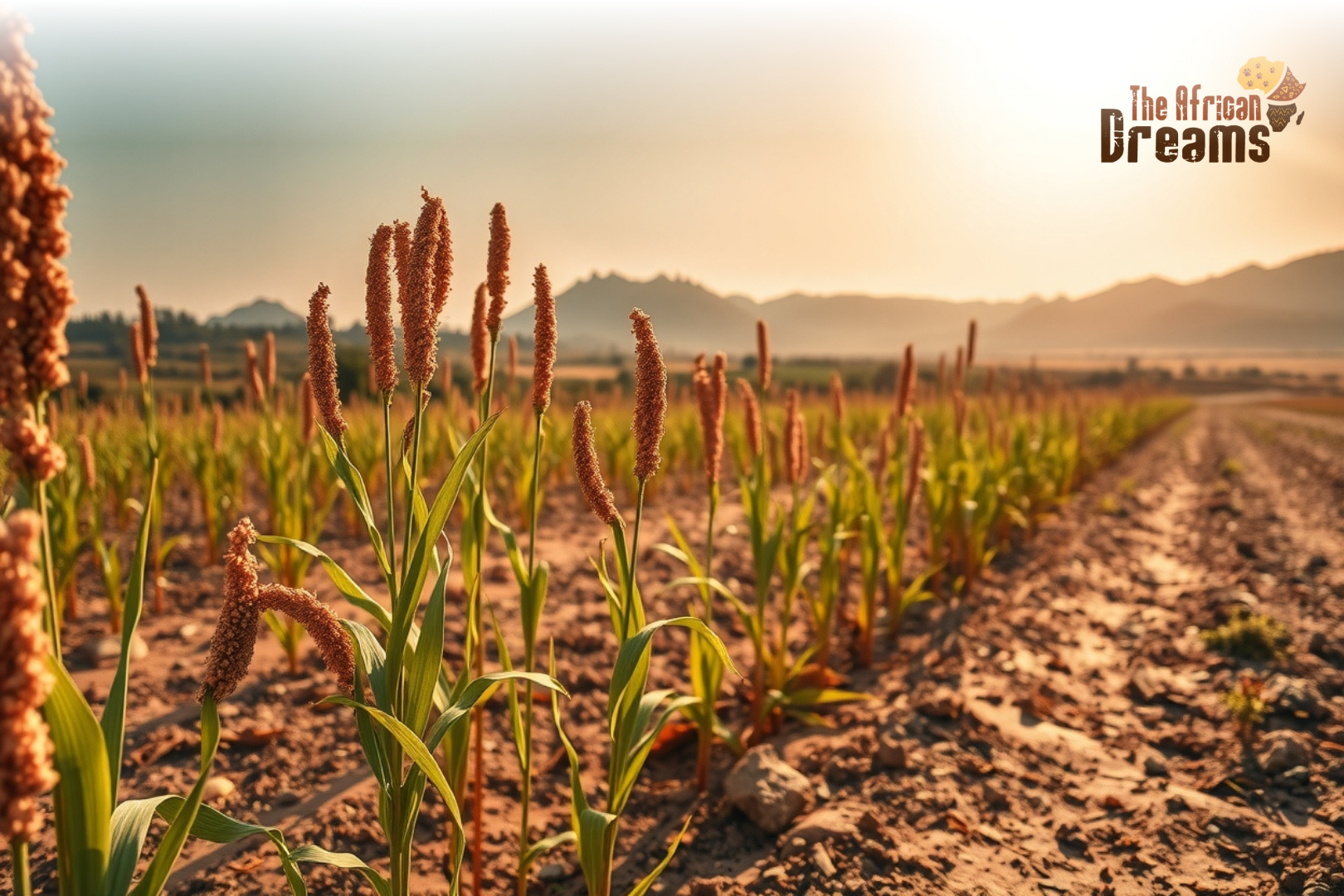
Ethiopia is a nation that is full of different landscapes and rich cultures; it is also referred to as the cradle of humanity. Its mountains, plains, and valleys talk of strength and endurance. Sorghum is one of its valuable crops. Generations of Ethiopian farmers have relied on this grain to flourish in areas with unpredictable rainfall and soil not well suited to farming. To most people, sorghum is not just food, it is a symbol of survival and economic stability.
In Ethiopia, sorghum is deeply woven into the landscape of rural life and the national economy. This article journeys through how sorghum contributes to Ethiopia’s economy, the challenges it faces, success stories, and especially the investment opportunities that lie ahead. Let us examine how this humble grain rises in importance.
The State of Sorghum Production in Ethiopia
Imagine a lowland farmer in Oromia. She has tall sorghum plants in her fields, standing against the burning sun. Her crop gives hope of a good harvest even when things are bad. It is this hardiness that makes sorghum an Ethiopian agricultural building block. It provides millions of people with food, contributes to the local industries, and is involved in the cultural traditions.
The potential of sorghum production in Ethiopia is beginning to be realized in the world today. Ethiopia stands a possibility of excelling as demand increases for gluten-free and drought resistant crops. This simple grain has the potential to be a major player in world agriculture and a growth engine for the country with the right support.
Ethiopia is a major producer of sorghum in the world. During the 2023/2024 season, the nation had estimated 4.01 million metric tons of sorghum, comprising approximately 7 percent of the global output. This was a tremendous production of 1.48 million hectares of land with an average yield of 2.71 tons per hectare.
Oromia leads the way, contributing 42% of the nation’s sorghum production, followed by Amhara at 34% and Tigray with 13%. This wide regional coverage shows sorghum’s adaptability to different environmental conditions in Ethiopia.
Though production has seen minor dips in recent years, sorghum remains the fourth most produced cereal in the country. Its importance goes beyond numbers, as it provides food security and sustains millions of Ethiopian farmers.
Advances in Sorghum Farming in Ethiopia
Ethiopia has achieved significant development in sorghum farming in several ways:
- Development of Better Varieties: Ethiopian Institute of Agricultural Research (EIAR) has developed high yielding and drought resistant sorghum varieties. These varieties have shown up to a 50% increase in yield over traditional landraces.
- Increased Agronomic Practices: Optimal planting dates, row spacing, and integrated pest management techniques have increased sorghum production. For example, applying the suggested planting methods has increased yield by about 20%.
- Community-Based Seed Multiplication: Efforts, such as community-based seed multiplication schemes, aim to improve farmers’ access to quality seeds. Such programs in West Hararghe produced more than 215.6 tons of certified seeds in 2016-2017, benefiting many smallholder farmers.
- Research and Development Collaborations: The collaboration between national research institutes and international bodies has helped spread better sorghum technologies, leading to improved crop performance and resilience.
Challenges in Sorghum Production in Ethiopia
The sorghum production in Ethiopia is characterized by a number of challenging issues:
- Drought Stress: Drought is a serious problem, particularly in areas such as North Welo and Waghemra. Water shortages during grain filling may significantly reduce yields.
- Parasitic Weeds: Striga hermonthica is a parasitic weed that infests sorghum fields. This can reduce yield by 100% in extreme cases.
- Poor Soil Fertility: There are numerous regions where sorghum is grown with low soil fertility (especially where there is a lack of nitrogen), and this inhibits crop production.
- Unavailability of better Seeds: The farmers are also using the old seeds because they have fewer options for better varieties, which brings about low productivity.
- Insect Pests: Insects such as stem borers and shoot flies frequently damage crops, resulting in significant yield reductions.
Investment Opportunities in Ethiopia’s Sorghum Sector
For investors, donors, governments, and agribusinesses, sorghum offers multiple entry points. Below are promising investment areas.
1. Seed Systems & Multiplication
- Establish certified seed farms, private seed companies focused on improved sorghum varieties.
- Quality Declared Seed (QDS) systems to lower certification costs but maintain quality.
- Community seed production schemes to ensure local access and reduce transport costs.
- Hybrid seed development and licensing.
The broader study in sub‑Saharan Africa suggests that investing in seed systems offers high returns because of the multiplier effects: improved yields, risk reduction, and adoption.
2. Input Supply & Agrochemical Distribution
- Local agro‑dealerships supplying fertilizers, micronutrients, herbicides, and biocontrols.
- Soil testing services, microdosing kits, and custom fertilizer blends for sorghum terrains.
- Digital ag input platforms linking suppliers and farmers.
3. Processing & Value Addition
- Milling and fortified flour blending: producing sorghum flour or composite flours for modern retail and food processing.
- Malting & brewing: supplying sorghum malt to breweries as a substitute for malted barley.
- Biorefineries/sugar/syrup production: taking sorghum biomass to produce syrups, ethanol, bio‑products (e.g., plastics precursor), animal feed. Small biorefinery pilots have been proposed to scale in Africa.
- Snack/food products: extrusion, flakes, cereals using sorghum as a base.
- Animal feed mills: using sorghum grain and byproducts (bran, residues) in feed mixes.
4. Storage, Logistics & Cold Chain
- Building community‑level and cooperative storage facilities (warehouses, hermetic bags, silos) to reduce postharvest losses.
- Investing in rural transport (including electric mobility) to reduce the cost of moving grain from farm to processing hubs. A recent study suggests electric mobility can enhance rural value chains in Ethiopia.
- Digital logistics platforms connecting farmers, traders, and processors.
5. Market Infrastructure & Trading Platforms
- Commodity exchanges or forward contracting to reduce farmers’ exposure to price volatility (e.g., extending the Ethiopia Commodity Exchange to sorghum).
- Digital market information systems and e‑platforms.
- Contract farming schemes linking farmers to processors.
6. Insurance, Climate Services & Risk Mitigation
- Index‑based weather insurance to reduce risk for farmers adopting improved inputs.
- Forecasting, advisory services, and climate data platforms are available as paid services or subscriptions.
7. Research & Development, Breeding
- Private sector‑led breeding programs, biotechnology, genomic selection, and gene editing.
- Partnerships between research institutes and private seed firms.
- Nutritional breeding (e.g., high protein, improved digestibility) to address food security and premium markets.
8. Renewable Energy & Value Chain Integration
- Co‑generation: using sorghum stalks or residues for bioenergy or biomass power for processing facilities.
Integration of biomass, solar, or hybrid systems to power rural processing.
Conclusion
Sorghum is a silent type of promise in the blowing of the winds across the field. Not only is it a drought-tolerant crop, but it is also a keystone of rural resilience, a food staple, and an unrealized raw material in the industrial sector. Nonetheless, sorghum in Ethiopia is underutilized despite all its significance. What could be is constrained by productivity gaps, weak markets, seed systems, and bottlenecks in infrastructure.
It is high time that bold investment and coordination were made. The opportunities have to be taken up by the private investors, development agencies, governments, and research institutions: seed systems, processors, storage, biorefineries, market linkages, climate services, and most importantly, farmers in the middle.
By converting sorghum into a versatile value chain, not only will Ethiopia increase its food security and rural livelihood levels, but also offer a major boost to the economy in its diversification and potential to be exported, as well as in its resilience to climate change. So millions of farmers may have a dawn in their fields, as well as their future.


0 Comments