
Introduction
Ethiopia’s agricultural sector is the backbone of its economy, employing over 80% of its population and contributing significantly to the country’s GDP. Among its key agricultural exports, sesame seeds stand out as a vital crop, ranking second only to coffee in value. Globally recognized for their high oil content and premium quality, Ethiopian sesame seeds are a significant contributor to foreign exchange earnings. With its favorable climatic conditions and vast arable land, Ethiopia has positioned itself as one of the world’s leading sesame seed producers and exporters, making this crop a cornerstone of its economic landscape.
Types of Sesame Seeds and Production in Ethiopia
Ethiopia is home to three major sesame varieties, each with unique qualities that cater to different market demands:
- Humera Type: Known for its high oil content and large, uniform seeds, this variety is primarily grown in the Humera region. It is highly valued in international markets for its suitability in oil extraction and snack production.
- Gondar Type: This variety is recognized for its adaptability and moderate oil content. It is widely cultivated in the Gondar region and sought after for various culinary applications.
- Wollega Type: Predominantly used domestically, this variety offers a distinct flavor profile that aligns with local culinary preferences.
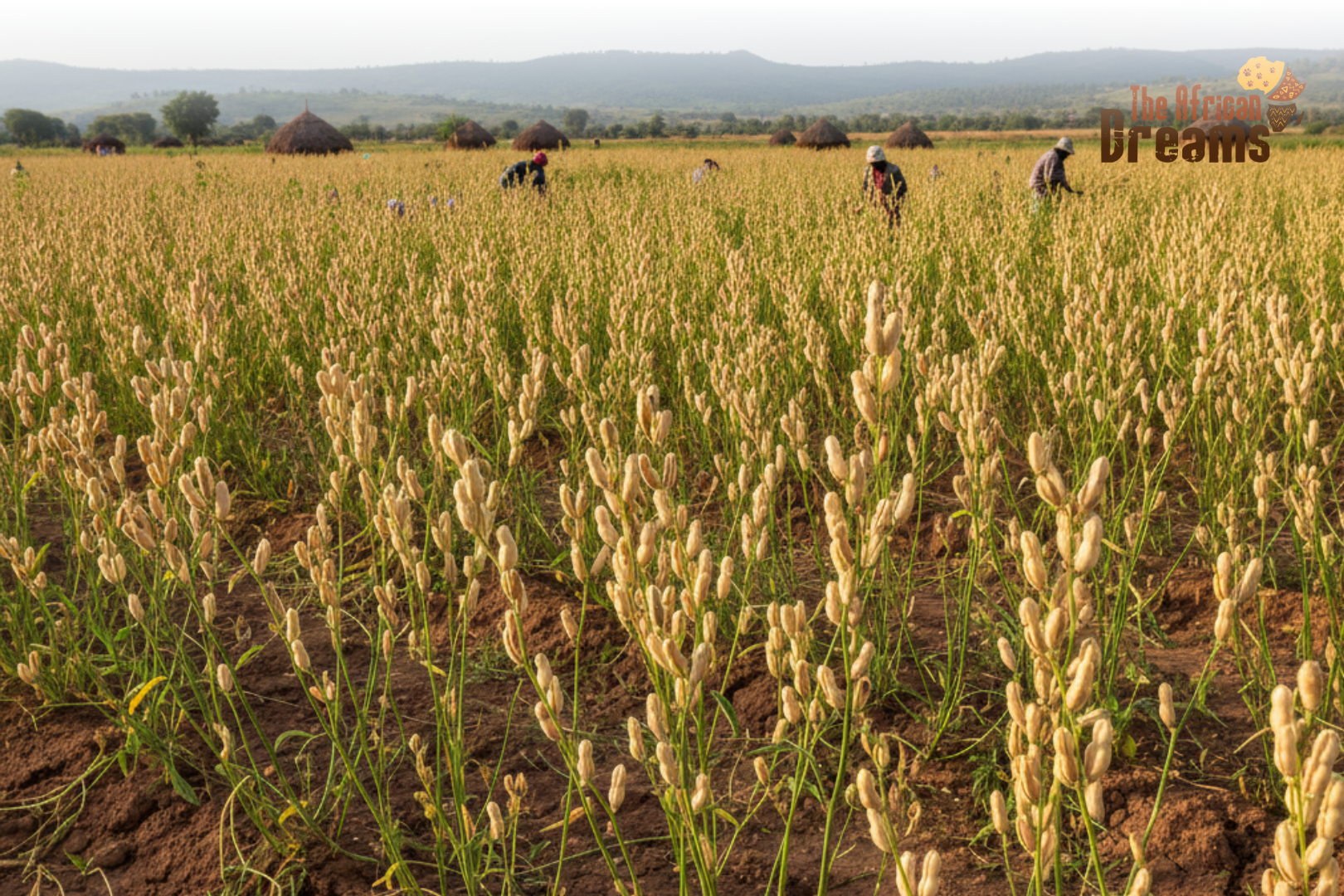
Ethiopia’s sesame production relies heavily on smallholder farmers who practice traditional farming methods. Despite their efforts, productivity remains low, averaging around 500 kg per hectare, mainly due to limited mechanization and access to modern agricultural inputs.
Current State of Sesame Seed Farming
Sesame farming is concentrated in specific regions, including Amhara, Tigray, Oromia, and Benishangul-Gumuz. These areas collectively contribute to Ethiopia’s significant sesame output. The country’s total production fluctuates annually due to factors like weather conditions and political stability.
In recent years, the sector has faced challenges due to conflicts in Tigray, one of the primary sesame-growing regions. However, farmers in other areas have stepped up production, ensuring Ethiopia maintains its position as a leading sesame producer.
The economic contribution of sesame extends beyond exports. It provides livelihoods for millions of farmers and supports numerous value chain activities, from transportation to marketing. Sesame farming plays a pivotal role in rural development, helping reduce poverty and improve food security in farming communities.
Export Potential of Ethiopian Sesame Seeds
Ethiopia is a key player in the global sesame market, supplying high-quality seeds to major international markets.
- Key Export Destinations: The primary importers of Ethiopian sesame include China, Israel, Japan, Turkey, and the UAE. These countries value Ethiopian sesame for its superior quality and high oil yield.
- Global Demand: Sesame seeds are essential in various industries, from food products like tahini and oil to non-food applications in cosmetics and pharmaceuticals. This diverse demand ensures consistent market opportunities for Ethiopian producers.
- Revenue Generation: Sesame exports contribute significantly to Ethiopia’s foreign exchange earnings, generating hundreds of millions of dollars annually. The crop’s export value fluctuates with global market prices but remains a reliable source of income for the country.
Despite these achievements, Ethiopia’s export market faces stiff competition from countries like India, Sudan, and Nigeria. Additionally, the lack of value-added processing limits the country’s ability to tap into premium markets, where processed products command higher prices.
Challenges in the Sesame Sector
While Ethiopia’s sesame industry has immense potential, several challenges hinder its growth:
- Low Productivity:
- Traditional farming methods and limited access to improved seeds and fertilizers contribute to suboptimal yields.
- Reliance on rain-fed agriculture makes production vulnerable to climate variability.
- Post-Harvest Losses:
- Poor storage facilities and handling practices lead to quality degradation and significant financial losses.
- Market Volatility:
- Fluctuations in international sesame prices affect farmers’ incomes and the country’s export revenue.
- Infrastructure Gaps:
- Inadequate transportation networks and market linkages hinder efficient distribution and export processes.
- Conflict and Instability:
- Political unrest, particularly in key sesame-producing regions like Tigray, disrupts production and trade activities.
- Environmental Concerns:
- Unsustainable farming practices contribute to soil degradation, threatening the long-term viability of sesame cultivation.
Investment Opportunities in the Sesame Industry
Despite the challenges, Ethiopia’s sesame sector presents numerous investment opportunities:
1. Commercial Farming Expansion:
- Ethiopia has vast uncultivated arable land suitable for large-scale sesame farming. Investments in mechanized agriculture can significantly boost productivity.
2. Value-Added Processing:
- Establishing processing facilities for oil extraction, tahini production, and hulling can enhance export value and create jobs. Currently, most sesame exports are in raw form, missing out on higher-value markets.
3. Infrastructure Development:
- Investments in storage facilities, transportation, and market hubs can reduce post-harvest losses and improve market access for farmers.
4. Organic and Niche Markets:
- Ethiopia’s potential to produce organic sesame provides opportunities to access premium markets that demand sustainably sourced products.
5. Research and Development:
- Innovations in seed technology, pest control, and climate-resilient farming practices can address productivity challenges and ensure long-term growth.
Government Support and Policies
The Ethiopian government has recognized the importance of the sesame sector and implemented various policies to attract investment:
1. Incentives for Investors:
a. Tax holidays, duty-free import of agricultural equipment, and affordable land leases are among the benefits offered to agricultural investors.
2. Strategic Development Plans:
a. Ethiopia’s Growth and Transformation Plan (GTP) prioritizes agricultural exports, including sesame, as a key driver of economic growth.
3. International Partnerships:
a. Collaborations with organizations like USAID and the FAO provide technical and financial support to farmers, enhancing their productivity and market access.
Conclusion
Ethiopia’s sesame seeds play a vital role in its economy, contributing significantly to foreign exchange earnings and rural development. The country’s favorable agro-climatic conditions, diverse sesame varieties, and strategic location make it a leading player in the global sesame market.
While the sector faces challenges like low productivity, market volatility, and infrastructure gaps, these obstacles also present opportunities for investors. By leveraging Ethiopia’s untapped potential in commercial farming, value addition, and market expansion, stakeholders can not only achieve profitable returns but also contribute to the country’s economic growth.
With supportive government policies, increasing global demand, and opportunities for innovation, Ethiopia’s sesame industry is poised for transformation. For investors seeking sustainable and impactful ventures, the sesame sector offers a compelling case for exploration.



0 Comments