

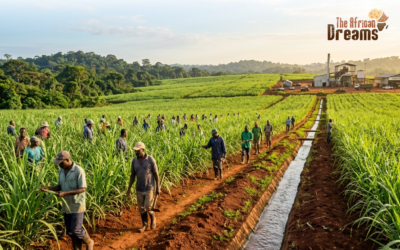
Sesame is one of Uganda’s most significant oilseed crops, grown primarily by smallholder farmers. The crop has immense potential to improve livelihoods.
But why?
Well, mainly because it contributes to food security and increases the country’s export earnings. The demand for high-quality sesame seeds is rising globally, making it a potential field of opportunity for Ugandan farmers. (Also, it is very nutritious!)
Despite the promising market, the sesame sector faces many challenges. Uganda’s sesame industry has seen fluctuating production levels over the years due to poor agricultural practices, a lack of quality seeds, and limited access to export markets.
This case study explores Uganda’s sesame industry’s opportunities, challenges, and developments. Here we will highlight its potential to drive economic growth and improve farmer livelihoods.
Challenges
Sesame is one of Uganda’s most profitable crops, but it comes with significant challenges. To explore more about the opportunities, let’s review the challenges that investors or entrepreneurs should know beforehand.
- Low Yield Due to Poor Agricultural Practices.
Many farmers in Uganda rely on traditional farming methods, which limit sesame yields. Issues like suboptimal spacing, inadequate pest management, and lack of irrigation compound this problem. As a result, production per hectare remains lower than global averages. - Seed Quality Issues.
The quality of sesame seeds produced is a significant concern for international buyers. Due to inadequate post-harvest handling and processing, sesame seeds from Uganda often need to catch up to the international quality standards for export, reducing their competitiveness. - Limited Access to Finance and Inputs.
Small farmers in Uganda need help buying high-quality seeds, pesticides, and fertilizers. The financial ecosystem for agricultural investments needs to be developed, which is hindering potential growth. - Market Access and Export Challenges.
The global demand for sesame is increasing. However, Ugandan farmers need help accessing international markets. Limited market linkages, high logistical costs, and lack of awareness about market standards limit farmers’ ability to scale production and improve incomes.
Solution
Realistically, if we want to tackle these challenges, we need to approach them with a multifaceted approach (which means we use different approaches to solve one major challenge). Many government programs and non-governmental organizations (NGOs) are taking initiatives.
Let’s look at some approaches used to face these problems :
- Training and Capacity Building.
Extension services and agricultural training programs are introduced to educate farmers on improved farming techniques. It includes using better planting methods, pest management strategies, and crop rotation to boost productivity.
- Access to Improved Seed Varieties.
Trying to improve access to higher-quality sesame seeds that are more resistant to diseases and have a higher yield potential. Organizations like the National Agricultural Research Organization (NARO) are researching and distributing improved varieties to farmers. - Improved Market Linkages.
Market linkages through cooperatives and farmer associations enabled sesame producers to bargain for better prices. Plus, the development of export channels and partnerships with international buyers is creating new opportunities for Ugandan sesame in markets like Europe and Asia. - Access to Finance.
Some financial institutions, along with government-backed initiatives, have started offering tailored financial products to sesame farmers. These programs are helping them invest in better inputs and expand production. They are also improving access to credit and insurance, mitigating financial risks associated with farming.
Implementation
The implementation of these solutions has been systematic and collaborative. The program roll-out began with pilot projects in key sesame-growing regions. Here, stakeholders, including government bodies, private companies, and farmer cooperatives, work together to establish improved farming practices.
Stakeholder collaboration ensured that resources were effectively allocated. Investments were directed towards building better storage facilities and upgrading transportation infrastructure. Resource allocation also included funding for training programs and the distribution of high-quality seeds and fertilizers. Monitoring and evaluation mechanisms were implemented to track progress, with regular assessments conducted to ensure that initiatives were meeting their objectives.
Various methods mitigated implementation challenges, such as resistance to new farming techniques and logistical hurdles.
Results
The impact of these interventions has been positive, though there is still room for improvement. Let’s go over the results one by one:
- Increased Yields.
Farmers who have adopted improved agricultural practices have reported significant increases in sesame yields. In some regions, yields have doubled due to better pest management and high-quality seeds. - Improved Seed Quality.
Post-harvest handling practices have improved, resulting in higher-quality sesame that meets international export standards. It has allowed Ugandan sesame to penetrate new markets and fetch higher prices. - Expanded Export Markets.
Through enhanced market linkages, Uganda’s sesame exports have grown. More Ugandan farmers are now selling sesame to international buyers, and the country’s export revenue from sesame has seen a notable increase. - Better Livelihoods.
Smallholder farmers are getting better incomes due to improved market access and increased yields. The sector is transforming from subsistence farming to a more commercially viable and sustainable enterprise.
Final Remarks
The sesame sector in Uganda presents a significant opportunity for growth, thanks to increasing production and improving export earnings. While the industry still faces challenges like limited access to finance and international markets, ongoing initiatives by both the public and private sectors offer hope for large-scale development.
By investing in better seeds, training, and market access, Uganda’s sesame sector has the potential to become a global player in the oilseeds market. This can be achieved while also improving the livelihoods of smallholder farmers.
FAQ
- Why is sesame important for Uganda’s economy? – Sesame is one of Uganda’s most valuable export crops. It provides income for over 1.5 million smallholder farmers and contributes to the country’s export earnings.
- What are the main challenges facing sesame farmers in Uganda? – The main challenges include low yields due to poor agricultural practices, lack of access to quality seeds, limited access to finance, and difficulties accessing export markets.
- What solutions are being implemented to support sesame farmers? Solutions include capacity-building programs to improve farming practices, distribution of improved seed varieties, market linkage programs, and financial products tailored for smallholder farmers.
- How have these interventions impacted the sesame industry in Uganda?The interventions have increased yields, improved seed quality, expanded export opportunities, and improved smallholder farmers’ incomes.
- What is the potential of the sesame sector in Uganda? – With continued investment and support, Uganda’s sesame sector has the potential to become a leading player in the global oilseeds market, significantly boosting export revenues and improving livelihoods.





0 Comments