
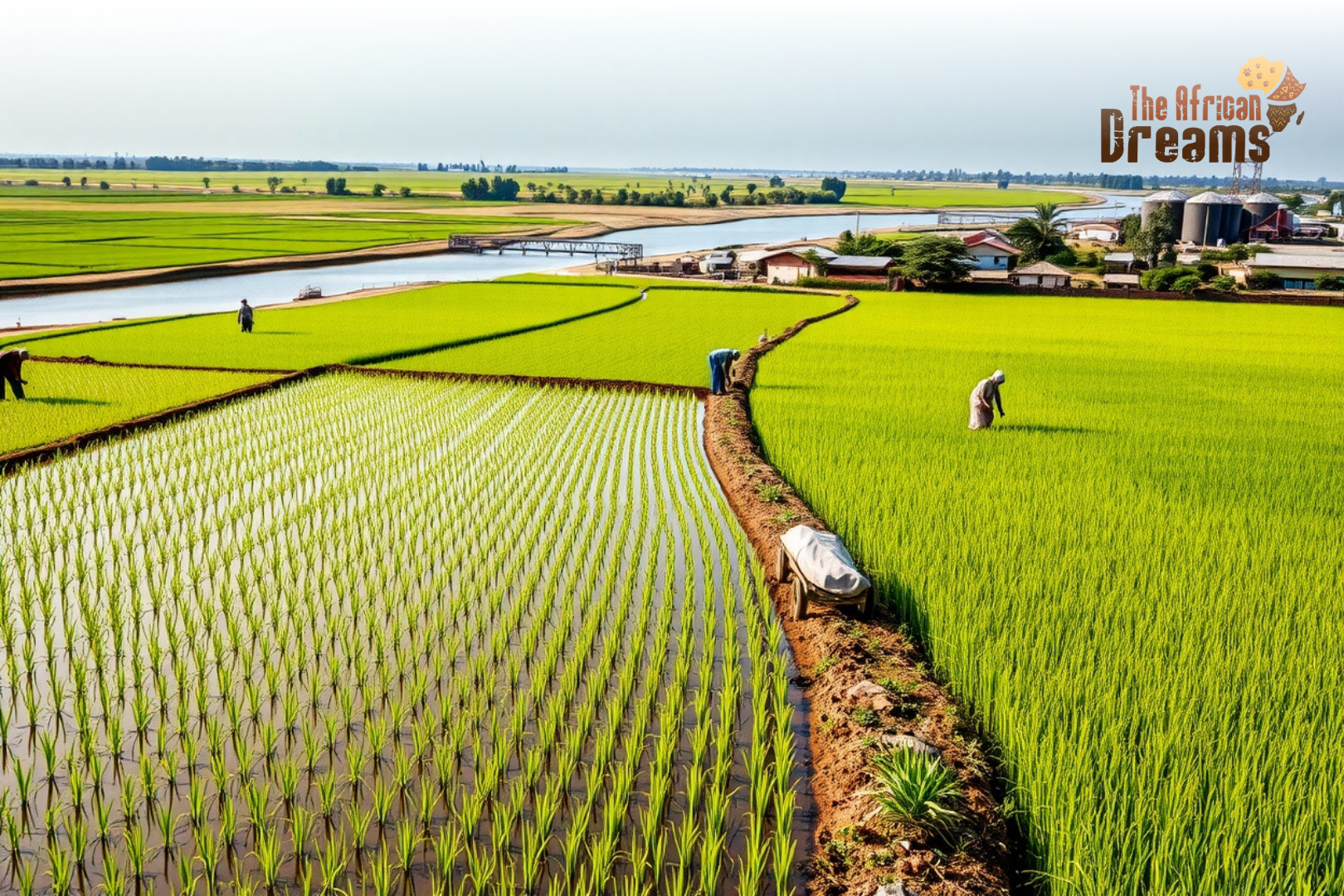
Want to invest but do not have a place in mind? Senegal’s rice industry should be your choice. In this case study, we take a closer look at Senegal’s rice landscape.
Senegal is a country where rice isn’t just a food; it’s a staple of daily life. Most people in Senegal eat rice daily, making it incredibly important to the country’s food security and economy. However, despite its importance, Senegal faces a big problem: it doesn’t grow enough rice. Senegal has to import rice from other countries to meet its needs.
To understand why this is a problem, think about a family that buys food rather than growing its own. If prices go up or there’s a delivery problem, the family might need help getting enough to eat. It’s similar to a country. If Senegal relies too much on rice from other countries, it could face big problems if something disrupts the supply.
Because of this, Senegal is working hard to increase rice production. The goal is to ensure there is always enough rice for everyone without relying too much on rice from other places. This case study looks at the challenges Senegal faces in growing more rice and how it’s trying to solve them.
The Challenges
Rice production in Senegal faces several hurdles.
- Firstly, many farmers still use old and inefficient farming techniques. These outdated methods lead to low rice yields and poor-quality crops. The situation is made worse by the lack of modern farming equipment and high-quality seeds, which are crucial for increasing production.
- Another major challenge is the inadequate infrastructure. Senegal’s rice-growing areas often lack proper roads, storage facilities, and irrigation systems. This makes it difficult to get crops to market quickly and efficiently. When rice can’t be stored properly, it is wasted.
- Also, without good irrigation, farmers are overly dependent on the weather, which can be unpredictable.
- Moreover, most of Senegal’s rice consumption is imported. This dependence on foreign markets exposes Senegal to the uncertainties of global price fluctuations. Consequently, achieving self-sufficiency in rice production has been a strategic goal for the country for nearly three decades.
- Lastly, the cost of energy significantly impacts rice processing in Senegal. Senegal is one of the top rice-consuming countries in Africa. Most of the country’s energy is expensive because it relies on imported petroleum products. This high energy cost makes rice milling more expensive, increasing the price of local rice compared to imported varieties.
These challenges need to be addressed to help Senegal become more self-sufficient in rice production.
The Solutions
To tackle the challenges in the rice industry, Senegal has launched comprehensive initiatives. These strategies focus on technological improvements, infrastructure development, and policy support.
The Senegal River Valley is very important for rice farming in Senegal. It is located in the north of the country and borders Mauritania. This area has the right conditions for growing most of the rice in Senegal. But to stop depending on rice imports, more land must be farmed, and rice yields need to improve. Helping small farmers improve their rice harvests is essential to this plan.
Modern agricultural technologies are being introduced to help farmers improve yields and quality. These include the use of improved seed varieties and more efficient farming equipment. Farmers are given training programs to help them effectively utilize these advancements. This is combined with efforts to enhance irrigation systems. Along with improving farming, these technologies also turn previously unusable land into farmable land. These are crucial for stabilizing production regardless of seasonal changes.
On the policy front, the government is implementing measures to support farmers and processors financially and technically. This includes subsidies for inputs like fertilizers and easier access to markets. Policies are also in place to attract investments into rice milling and processing. Its focus is to reduce the overall cost of local rice production, making it more competitive with imports.
Furthermore, partnerships with international agencies and private sector stakeholders are vital. These collaborations aim to provide the necessary expertise and funding to address the infrastructural deficits. Building better roads and storage facilities, and creating more efficient supply chains are the main issues.
Implementation
1. Introduction of Modern Farming Techniques:
Training programs were developed to help farmers learn modern agricultural practices. High-yielding seed varieties and efficient farming equipment were distributed to improve productivity. In the Senegal River Valley, training centers were established where farmers could learn about crop rotation, pest management, and the use of organic fertilizers.
2. Infrastructure Enhancements:
Construction of new irrigation systems to provide a stable water supply throughout the year. Upgrades to rural road networks for easier and faster transport of rice from farms to markets. Government-funded projects saw the development of new roads and storage facilities in key rice-growing areas. The aim was to reduce post-harvest losses and improve market access.
The government and development organizations have invested a lot in infrastructure to support the rice sector in Senegal’s Senegal River Valley. This investment works best when partnering with local rice millers like Coumba Nor Thiam (CNT), who help connect smallholder farmers to national markets. CNT, being the third largest rice processor in Senegal, demonstrates the benefits of collaboration between the public and private sectors. It helps reduce Senegal’s reliance on rice imports and boosts regional prosperity.
3. Partnerships for Technological and Financial Support:
Collaboration with international agencies to fund and support infrastructure and technological advancements. Partnership with the private sector to bring investments and expertise in rice milling and processing technologies. The partnership among the International Finance Corporation (IFC), the accelerant, and the Bank of Africa played a significant role. It provides tailored financial products and services to smallholder rice farmers and SMEs within the rice value chain.
The Common Fund for Commodities (CFC) is enhancing CNT’s impact by providing $1.46 million to help CNT’s farmer suppliers improve rice production. This funding is used to build irrigation channels and provide modern farming equipment, making previously unusable land productive. This effort aims to increase the number of farmers CNT works with, expand the area under rice cultivation, and improve rice yields. This initiative should also increase harvest frequency and significantly boost farmers’ incomes over the next six years.
4. Supportive Government Policies:
Implementation of subsidies on agricultural inputs, such as fertilizers and seeds, to lower farmers’ production costs. Introduction of credit facilities specifically designed for smallholder farmers and rice processors. Real-life example: Policies that lowered loan interest rates for rice farmers were rolled out, significantly increasing access to the capital needed to expand rice cultivation.
Conclusion
The rice industry in Senegal offers a promising investment opportunity. It plays a key role in the country’s food security and economic health. Senegal is actively improving its rice production by using new farming methods and building better infrastructure. These changes not only increase rice output but also help the economy grow. Investors have the opportunity to make a meaningful impact by investing in this sector. Senegal’s initiatives to enhance rice production are creating stable economic benefits. Investing here means contributing to a sector vital to the nation and offering both financial returns and the opportunity to support a move towards agricultural self-sufficiency. In a world where market conditions are ever-changing, putting money into Senegal’s rice industry is a smart choice for you.

0 Comments