
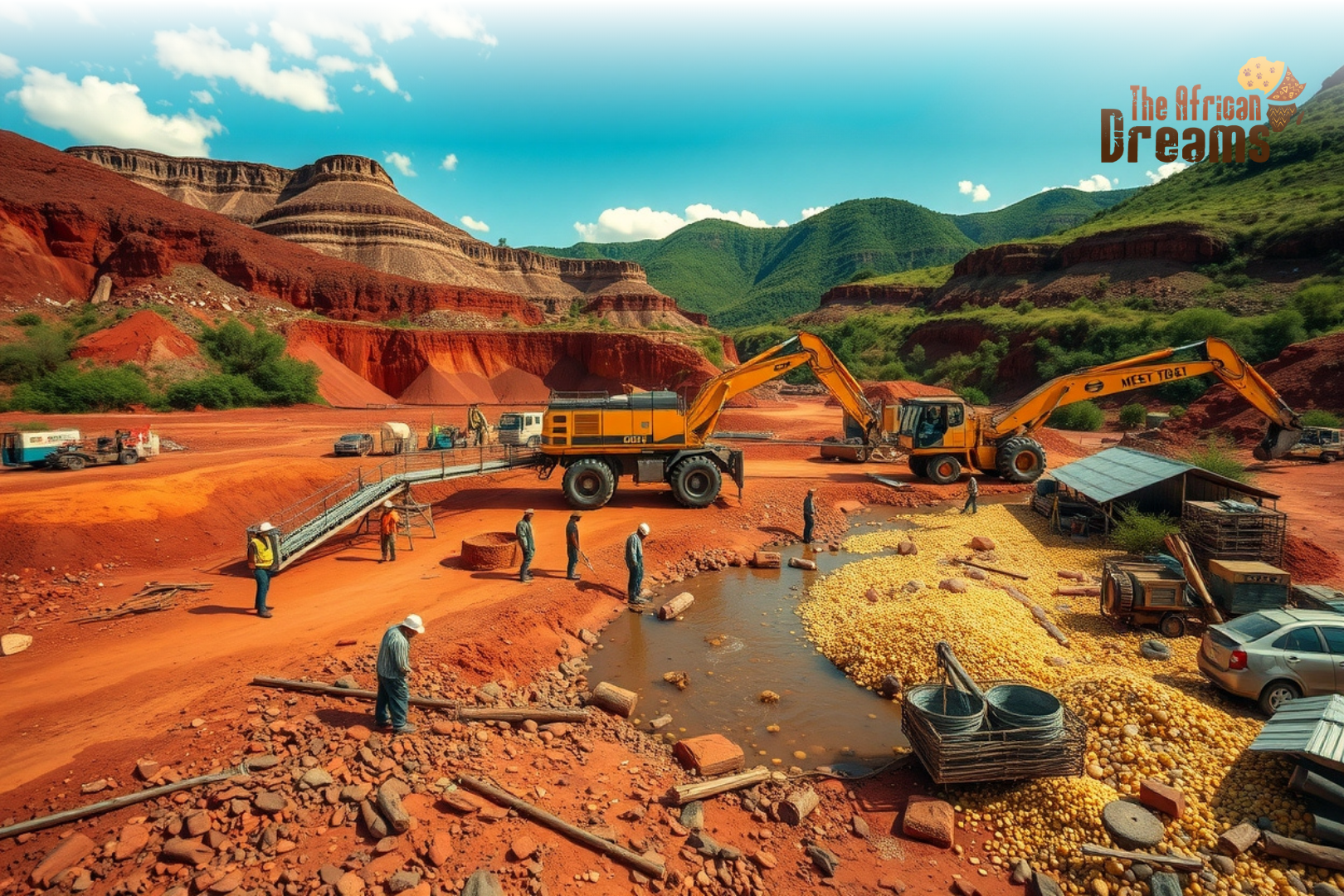
Ethiopia, a country known for its rich history and diverse culture, has always carried the allure of gold within its soil. Long before industrialization took hold, gold was more than a shiny metal it was a symbol of hope and prosperity. In remote villages, people would gather by riverbanks, sifting through sand in search of small, sparkling nuggets. For them, it wasn’t just about finding wealth; it was a way of life, deeply connected to their land and traditions.
Over time, Ethiopia’s relationship with gold began to change. What started as small-scale artisanal mining transformed into a modern industry. Today, advanced machines and technology are digging deeper into Ethiopia’s rugged terrain, uncovering treasures that were once hidden. Gold has become a cornerstone of the country’s economy, funding important sectors like education, infrastructure, and healthcare.
Yet, the story doesn’t end there. Ethiopia’s gold reserves remain largely untapped, presenting enormous potential for growth. It’s a story that’s still being written—a story of opportunity waiting for investors and innovators. Ethiopia’s gold is more than a resource; it’s a promise of a brighter future, ready for those bold enough to help uncover its next chapter.
Types of Gold and Production Methods
Ethiopia’s gold mining sector relies on two main types of deposits:
- Lode (primary)
- Alluvial (secondary)
Each requires different methods for extraction, reflecting the unique nature of the deposits.
Lode Gold Deposits
Lode deposits are hard rock formations where gold is found embedded in quartz veins or other rocks. Mining these deposits involves techniques like open-pit or underground mining, followed by crushing and milling to separate the gold. These operations require advanced technology and significant investment, making them suitable for large-scale companies. For example, the Tulu Kapi gold project, run by KEFI Gold and Copper, stands out as a key lode gold mining site in Ethiopia.
Alluvial Gold Deposits
Alluvial deposits are found in riverbeds and floodplains, formed when gold is carried and deposited by water. Artisanal miners typically extract this gold using simple tools like pans and sluices. These methods are labor-intensive and lack efficiency, but provide vital livelihoods for many communities.
In 2022, Ethiopia produced around 3,480 kilograms of gold, maintaining steady output. This stability reflects ongoing efforts to formalize artisanal mining and attract investments in large-scale operations. A 2022 study emphasized the need for better technology, legal frameworks, and environmental practices to enhance productivity.
Ethiopia’s gold reserves, diverse extraction methods, and ongoing reforms underline its potential for significant economic contributions. With proper support and investment, both lode and alluvial gold mining can drive growth in the coming years.
Historical Context of Gold Mining in Ethiopia
Ethiopia’s connection to gold mining stretches back thousands of years. Artisanal miners once relied on traditional techniques, sifting through river sands to find gold. Back then, gold wasn’t just a shiny metal it was a symbol of prosperity and an important item in trade. Communities saw it as a treasure that brought wealth and stability.
In the 20th century, things began to change. Modern gold mining took shape with the establishment of the Lega Dembi Mine in Southern Oromia, marking a turning point for the industry. As Ethiopia shifted towards a market-based economy, gold mining became more than a tradition. It evolved into a strategic sector, driving economic diversification and boosting export earnings.
From its ancient beginnings to its modern role in Ethiopia’s economy, gold mining has remained a constant force, reflecting both the country’s history and its ambitions for the future.
Current State of Gold Production
Ethiopia’s gold production has seen ups and downs over the years. In 2013, the country achieved a record high, producing 12,581 kilograms of gold. However, by 2022, production had dropped to around 3,480 kilograms, the same level as in 2021.
This decline can be linked to challenges in the mining sector, such as regulatory hurdles and operational inefficiencies. Despite these issues, the government has taken steps to revitalize the industry. In 2021, the mining sector showed significant progress, with a 115% growth rate that boosted its contribution to Ethiopia’s GDP. This improvement reflects the impact of reforms aimed at reducing illegal mining and attracting investments.
Gold export earnings have also seen impressive growth. In 2021, exports brought in $672 million, a remarkable 25-fold increase over two years. This surge highlights the success of efforts to formalize mining activities and enhance the sector’s economic impact.
Although production levels remain below their peak, Ethiopia’s gold mining sector is on a positive trajectory. With continued reforms and investments, it holds immense potential for further growth.
Export Potential of Ethiopian Gold
Ethiopia’s gold exports have seen their share of ups and downs, painting a picture of both challenges and potential. Just a few years ago, in the 2022/2023 fiscal year, gold exports fell sharply, generating around $117.4 million—a 59% drop compared to earlier periods. It was a tough phase, as issues like illicit trade and global market fluctuations took their toll.
But like gold itself, the industry proved resilient. Recent reforms brought a turnaround. By the first quarter of 2024/2025, Ethiopia’s gold export earnings skyrocketed to $488 million—a staggering 540% increase. This rebound is a testament to the government’s renewed focus on improving policies and curbing illegal mining.
The United Arab Emirates stands as Ethiopia’s biggest gold trade partner, with exports valued at $546 million in 2022.
This growth story isn’t without challenges. Formalizing artisanal mining and addressing regulatory gaps are ongoing battles. Yet, Ethiopia’s rising gold exports reflect a sector ready to shine brighter on the global stage.
Government Initiatives and Policy Reforms
Ethiopia’s gold mining sector has undergone significant changes in recent years, thanks to proactive government initiatives. Here’s how the government is shaping the future of gold mining:
-
Creating Transparent Policies
To attract more investors, the government introduced a new mining policy. This framework focuses on transparency and predictability, giving investors confidence in the regulatory environment. It also promotes sustainable mining practices and encourages collaboration with local communities.
-
Reforming Gold Pricing
The National Bank of Ethiopia has changed its gold pricing strategy. Now, miners receive fixed price premiums based on the quantity of gold delivered. This reform curbs illegal trading, ensures fair earnings for miners, and boosts production.
-
Empowering Artisanal Miners
Artisanal and small-scale miners play a crucial role in Ethiopia’s economy. To support them, the government is offering technical assistance, easier access to financing, and programs to improve safety and environmental compliance.
Investment Opportunities in Ethiopia's Gold Sector
Ethiopia’s gold sector is rich with potential, offering investors a chance to be part of a growing and dynamic industry. Here’s how you can seize the opportunities:
-
Exploring the Unknown
Ethiopia’s vast unexplored regions hold immense promise for discovering new gold deposits. With supportive government policies and incentives, greenfield exploration is an exciting opportunity for ambitious investors.
-
Upgrading Existing Mines
Established mines, like Lega Dembi and Sakaro, offer room for modernization. By introducing advanced technologies and improving efficiency, investors can unlock greater production potential.
-
Supporting Small-Scale Miners
Artisanal and small-scale miners are the backbone of Ethiopia’s gold production. Investors can partner with the government to formalize these operations, enhance their productivity, and ensure sustainable practices.
-
Building Local Processing Facilities
Adding value to gold within Ethiopia is a game-changer. Projects like MIDROC’s $200 million gold processing plant in Benishangul-Gumuz show how refining facilities can increase export value and create jobs.
-
Improving Infrastructure
Mining operations depend on reliable transportation and energy. Investing in infrastructure can boost mining efficiency while contributing to Ethiopia’s regional development.
-
Public-Private Partnerships (PPPs)
Collaborating with the Ethiopian government through PPPs provides access to large-scale projects while sharing risks, making it a win-win for all stakeholders.
Challenges in the Gold Mining Sector
Ethiopia’s gold mining sector is filled with potential, but it faces a number of challenges that need to be addressed for sustainable growth:
1. Dependency on Gold
Gold dominates Ethiopia’s mining industry, making it highly sensitive to global price fluctuations. When gold prices drop, the entire supply chain is affected, creating economic instability. (Source)
2. Regulatory Obstacles
Despite ongoing reforms, inefficiencies in bureaucracy and unclear regulations continue to slow down operations and discourage investments.
3. Environmental Impact
Improper handling of mining waste and chemicals has led to deforestation, soil contamination, and health problems for nearby communities. Environmental safeguards remain a pressing need.
4. Unregulated Artisanal Mining
Many artisanal miners work without proper tools or financing. This not only results in low productivity but also raises safety concerns and contributes to illegal trading. (Source)
5. Political Instability
Regional conflicts and political uncertainties often disrupt mining operations, affecting production and deterring foreign investments.
Case Studies of Successful Investments
Ethiopia’s gold mining sector has been a magnet for major investments, showcasing the transformative impact of large-scale projects on the nation’s economy and communities. Here are two standout examples:
Kurmuk Gold Project
Deep in the Benishangul-Gumuz State lies the Kurmuk Gold Project, Ethiopia’s largest mining venture. This ambitious initiative, led by Canada’s Allied Gold, merges the Dish Mountain and Ashashire deposits. In December 2022, the feasibility study for the project was completed, and by 2025, plant commissioning is set to begin. With a hefty investment of $500 million, the project is not just about gold—it’s about people. Currently employing around 600 workers, it’s expected to create over 1,700 jobs by the fiscal year’s end. The Kurmuk project is more than a mine; it’s a beacon of economic hope for the region. (Source)
Tulu Kapi Gold Project
In the Oromia Region, 360 kilometers west of Addis Ababa, lies the Tulu Kapi Gold Project, spearheaded by KEFI Gold and Copper. As Ethiopia’s first industrial-scale gold mine, this project represents a new era for the country’s mining industry. Backed by international investors, Tulu Kapi combines an open-pit mine with advanced processing facilities, aiming to significantly boost Ethiopia’s gold production.
These investments aren’t just about extracting gold—they’re about building futures. With job creation, infrastructure development, and government support, Ethiopia’s mining sector is paving the way for economic transformation and community growth.
Conclusion
Ethiopia’s story with gold is as rich and vibrant as the metal itself. Once, artisanal miners sifted river sands, hoping to find tiny golden treasures that symbolized prosperity and hope. Today, massive industrial projects like the Kurmuk Gold Project and Tulu Kapi are reshaping this ancient legacy, bringing modern technology, global investment, and new opportunities to the nation.
But this is just the beginning. Ethiopia’s gold reserves remain largely untouched, holding incredible potential for those ready to invest. With reforms underway, better infrastructure, and a focus on sustainable practices, the future of Ethiopia’s gold mining sector looks brighter than ever.
For Ethiopia, gold is more than just a resource—it’s a symbol of promise. It represents growth, opportunity, and a future where its people and economy progress together. The next chapter in Ethiopia’s gold journey is waiting to be written, and it invites bold investors to join in shaping a golden future.

0 Comments