
Introduction
Agriculture has long been the growth driver of the Eritrean economy. It is the one on which the majority of its population relies for livelihood and survival. With its relative climate, availability of land, and unused potential, the agricultural sector in Eritrea is set to get a gigantic ground to develop, particularly in agricultural exports.
Despite challenges such as poor infrastructure, climatic variations, and political instability, there are significant investment opportunities in Eritrea. This article analyzes the export prospects of Eritrean farm produce and why investors would be interested in Eritrea’s agricultural industry and the new opportunities it offers.
Article Highlights
The value of exports of Eritrean agriculture is increasing, particularly in incense, gum arabic, animal, and sesame seeds.
Diversification prospects exist in high-value crops, investment in land, and irrigation within the country.
Climate uncertainty and poor infrastructure cause issues, but they can be addressed by prudent investment.
Government support, good agro-climate, and huge unutilized lands make Eritrea an investment destination of choice for agribusiness.
Overview of Eritrean Agriculture
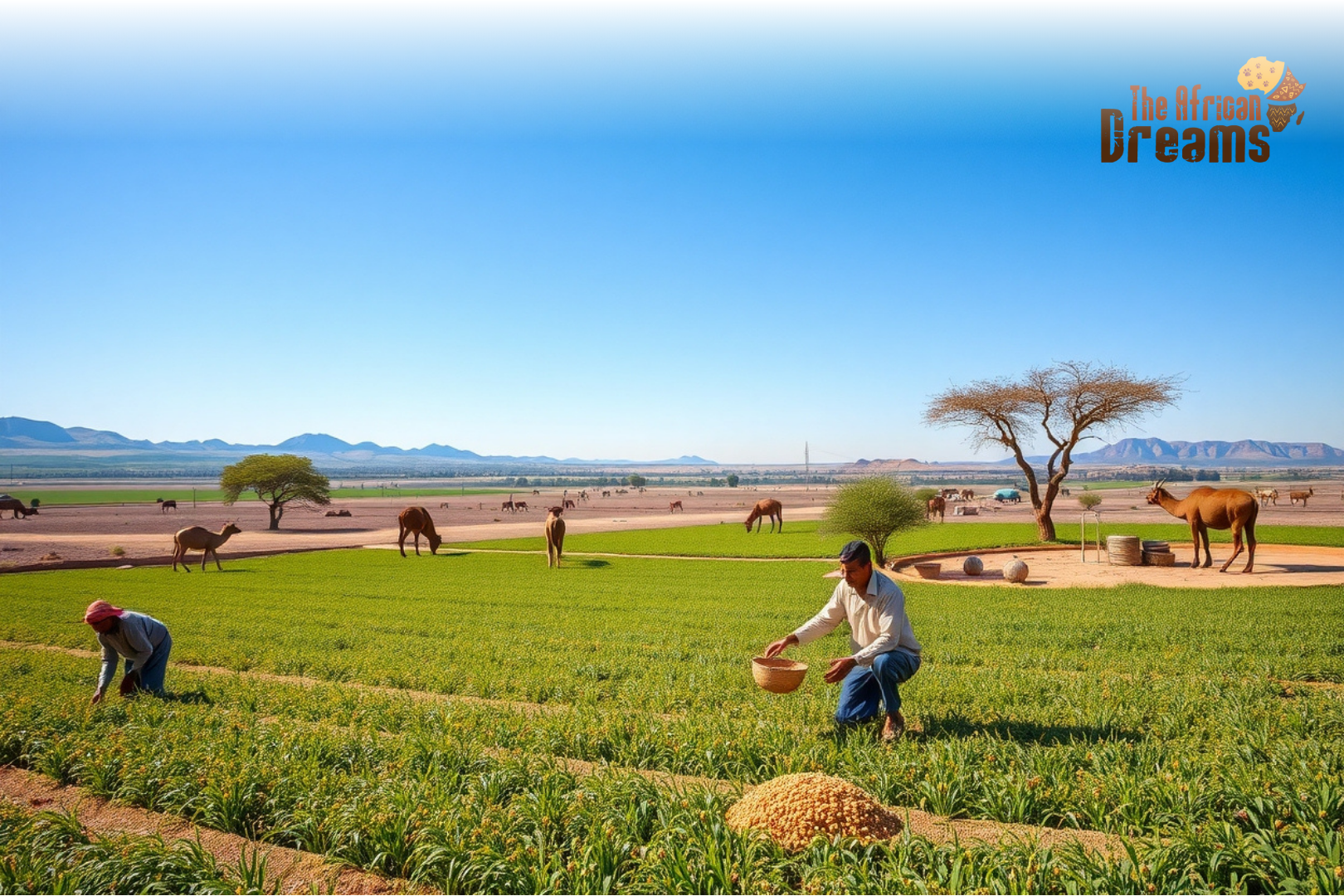
Eritrea, in the Horn of Africa along the Red Sea coast, has diverse agro-climatic zones that enable it to grow a diverse array of crops. The smallholder agricultural system is the prevailing system in Eritrea, and agriculture provides food for nearly 75% of its people.
The industry accounts for approximately 20% of Eritrea’s GDP. Cereals like sorghum, millet, wheat, and barley, legumes, fruits, vegetables, and oilseeds are some of the key crops produced in Eritrea. Livestock keeping, including cattle, sheep, goats, and camels, is also a significant rural livelihood component.
Nonetheless, despite the large agricultural potential and resources, the sector is underdeveloped owing to factors like the dependency on rain agriculture, limited irrigation, and traditional farming practices. Despite this, Eritrea’s agriculture sector has unwarranted untapped potential that presents a sound investment opportunity.
Agricultural Production
As of 2018, the farm production in Eritrea reflected that even though the sector is on an upward trend, still a lot of scope for improvement.
The production quantities of some of the most significant farm products are:
|
|
|
|
|
|
|
|
|
|
These figures represent the situation of the present agricultural output. It is very possible that production yields, crop varieties, and overall production capacity will increase, especially given new investment and technology introduced into the industry.
Agricultural Exports
Eritrea has a thin base in agricultural exports, but with significant growth possibilities. The most important agricultural exports of Eritrea are:
- Gum Arabic: Eritrea is among the rare nations in Africa that export gum arabic, a high-value product of acacia trees. Gum arabic is used widely in the food, drug, and cosmetics industries as an emulsifier and stabiliser. Demand for gum arabic continues to increase worldwide, especially in the Middle East and Asia, offering a niche export market for Eritrea.
- Livestock and Animal Products: Livestock farming is one of the significant branches of Eritrea’s agricultural economy. Sheep, goats, and camels are exported to high-value markets of the Arabian Peninsula and the Middle East. Livestock are of high quality and hence attract demand in high-value markets. Apart from live animal exports, hides, skins, and leather products export is another growth driver.
- Incense and Resins: Eritrea is also a major producer of incense, which comes mainly from the Boswellia tree that produces frankincense. The resin is heavily utilized in religious ceremonies, perfumes, and aromatherapy. Boasting a robust market in Europe and Asia, this export venture is likely to grow, as day by day, people are needing natural products more and more.
- Sesame Seeds: Eritrea is among the leading producers of sesame seeds, which are greatly demanded globally for processing into snack foods, confectionery, and oil. The seeds are predominantly exported to Europe and Asia, whose markets remain in demand due to their health-promoting properties and flexibility.
Key Reasons to Invest
The agricultural sector of Eritrea offers huge investment potential, triggered by several factors. Location, resources, and untapped opportunities are key areas giving investors an excellent opportunity to take advantage of the new and conventional markets.
- Agro-Climatic Favorable Conditions: Eritrea possesses a diversified climate that is highly conducive to the production of tropical and temperate crops. The country’s coastal plains are highly conducive to the production of crops like fruits, vegetables, and flowers, while cereals and legumes are best suited to be produced in the highlands. Eritrea is highly conducive to the production of a wide range of agricultural products, both for domestic consumption and export, owing to its climatic diversity. The extensive coastline and the arable land in the hill country also have room for large-scale irrigation systems, which would significantly expand farm output. Investors can enhance yields and crop seasons by investing in water infrastructure and hi-tech irrigation equipment, which maximizes export volume.
- Virgin Land and Agricultural Expansion: Eritrea possesses around 3.2 million hectares of fertile land, but it has only 10% of the land currently utilized. This presents a golden opportunity for investors who can rent or develop virgin land for commercial agriculture. Land opening for increased agricultural production is necessary to meet local and export markets. In addition, appreciating the country’s fertile lowland and semi-arid land as being very potential for cash crop production such as horticulture products, cotton, and sesame. Investors benefit from investing in land preparation, green agriculture, and infrastructure, all of which capitalize on vast untapped resources.
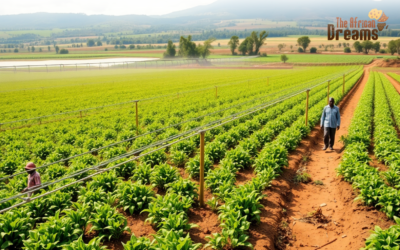
- Irrigation Development: Eritrea’s available irrigable land is around 600,000 hectares, but it is not yet fully exploited. Irrigation would make cultivation year-round possible, and agriculture would be less vulnerable to irregular rainfall and drought. Major investment in irrigation infrastructure would enhance agricultural output. It will make crop production more predictable and is a very profitable investment. Secondly, the growth of irrigation facilities in Eritrea would make possible the growing of high-value crops such as fruits, vegetables, and flowers whose global demand keeps increasing. Investors in irrigation would thus be able to realize enormous fortunes in the country and worldwide.
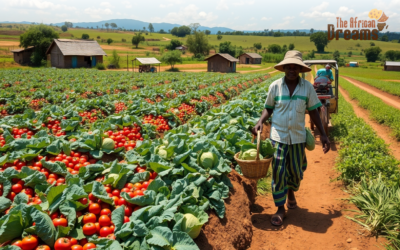
- Diversification into High-Value Crops: Eritrea has great potential to diversify the export agriculture of its staple crops. It can produce high-value crops such as flowers, vegetables, and tropical fruits, creating new export markets. Horticulture has good potential, especially given the growing demand in the world for fresh produce, organic fruit, and ornamental flowers. By encouraging greenhouse farming, hydroponics, and organic farming, Eritrea can increase exports of fruits such as mangoes, papayas, and citrus, which are in high demand in Europe and the Middle East. This would not only increase export earnings but also the rural area economy and employment.
- Livestock and Dairy Farming: The livestock sector of Eritrea holds massive potential for development, especially for meat and milk products. Due to the upsurge in the demand for high-quality meat and dairy products on a worldwide level, Eritrea’s livestock sector has the potential to be an extensive foreign exchange earning industry.By investing in livestock breeding schemes, veterinary services, and feed manufacturing, investors can enhance the productivity and quality of Eritrean livestock. Moreover, dairy development has the potential to unlock new sources of export earnings and enhance regional food security.
Challenges to Overcome
All the potential aside, however, there are a number of challenges that need to be taken into account by investors who would like to get involved in Eritrean agriculture:
- Climate Variability: Though the overall climate in Eritrea is favorable for agriculture, it is prone to drought and erratic rainfalls, which have a devastating impact on crop yields. Investors may look into climate-resilient agriculture such as drought-resistant crops, water-saving irrigation, and conservation technology to avoid such pitfalls.
- Infrastructure Shortages: Infrastructure such as roads, warehousing, and processing remains underdeveloped in the nation. It is a premise of farm produce effectiveness, and of goods storage and movement to market destinations for exports. It is a ramping up of infrastructure investment that is a foundation for Eritrean agricultural capability.
- Market Access and Trade Barriers: Foreign market access can be restricted by trade barriers, transport barriers, and tariffs. Investors will need to overcome these barriers and work together with the government in streamlining export procedures and reducing the costs of trade.
Government Policies and Support for Investment
The Eritrean government has been interested in extending the production of an environment that is favorable for agriculture to flourish. The government’s overall agricultural master plan covers
- Land policy, modernization of farm expansion, and stimulation of irrigation development.
- High-value export item improvement programs and infrastructure were started by the government.
- Moreover, international cooperation with institutions such as the FAO, UNDP, and the African Development Bank is also crucial for technical cooperation and financial aid.
The nation’s priority on developing agricultural exports, rural development, and climate resilience also creates a good business environment for growth.
Recommendations for Investors
For investors, Eritrea offers an exciting opportunity to invest in untapped agricultural resources, expand output, and capitalize on growing global markets. With a focus on high-value agriculture, animal husbandry, and sustainable farming, investors can contribute to accelerating economic growth. They can also earn returns from an expanding agricultural export sector. Investors can
- Invest in Irrigation and Water Management: Put an end to the vagaries of rain by investing in permanent irrigation infrastructure.=
- Diversify Ag Products: Diversify valuable crops of vegetables, fruits, and flowers to have more exports to market with rising demands.
- Invest in Infrastructures: Invest in transport, storage, and processing infrastructures for trouble-free export operations, as well as the avoidance of post-harvest loss.
- Take Advantage of Government Incentives: Utilize the government’s agricultural policy, support for infrastructure development, expansion of land, and exports.
With proper investment, Eritrea’s agricultural sector can expand and give incredible returns on investment as it shapes the country in the long run.
Conclusion
Eritrea’s agricultural sector holds enormous export possibilities. The country has all the blessings in the form of a suitable climate, unspoiled soil, and opportunities for diversification into livestock farming and high-value crops. Even as these are followed by challenges such as climatic uncertainty and the absence of infrastructural facilities, these can be avoided through collaborative investments.
Investors can invest in irrigation, irrigation equipment, and infrastructure, and earn profits. While building the community, Eritrea’s agricultural sector contributes to the country’s economy and improve their lives. Therefore, now is the high time to participate and achieve the best outcomes together.
Frequently Asked Questions (FAQs)
- What are the major agricultural exports of Eritrea?
The major agricultural exports of Eritrea are gum arabic, livestock (sheep, goats, camels), incense (frankincense), and sesame seeds.
- How can investors assist in the development of Eritrean agriculture?
Investors may invest in building irrigational systems, ground development for farming, and capital investment in sophisticated farm machinery and buildings.
- What are the main issues in Eritrean agriculture?
Main issues are uncertainty of the climate, infrastructural issues, and the absence of market access.
- Are government incentives to farm investment favored in Eritrea?
Yes, the government of Eritrea favors offering incentives such as land development policies, increased agriculture, and irrigation.
- Which crops in Eritrea have the greatest export potential?
Gum arabic, sesame, and high-value fruits and vegetables are crops with great export potential.
0 Comments