
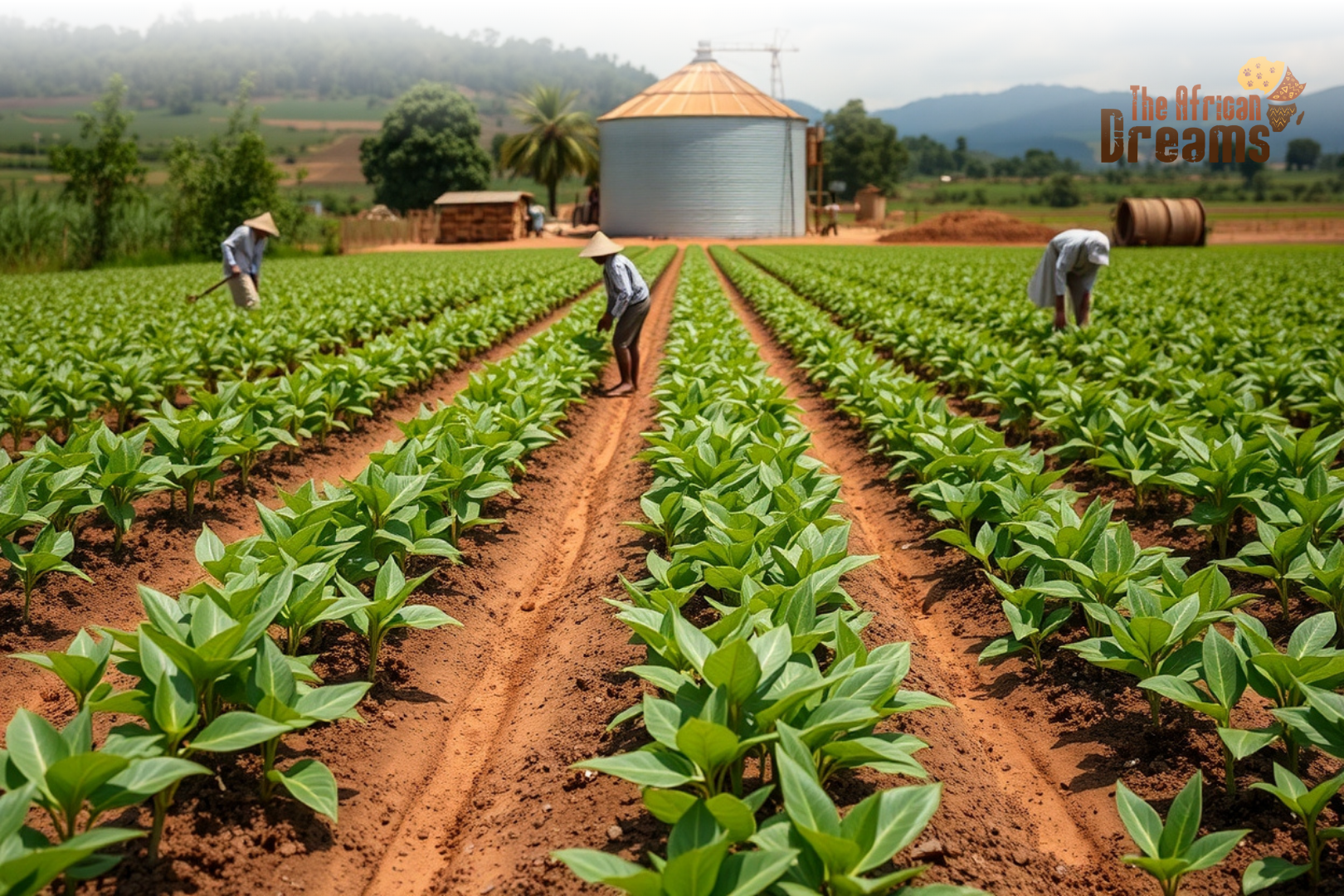
Congo is uniquely positioned to take center stage in this significant food crop farming for food security, animal feed, and industrial use. Investment in soybean farming in Congo, therefore, plays a crucial role in improving agricultural output, creating job opportunities, and reducing food imports as demand increases domestically and internationally. This potential has yet to be realized, though challenges include poor infrastructure, climate change, and generally low adoption of modern farming techniques. This blog discusses the potential of soybean farming in Congo’s agricultural sector.
The Growing Importance of the Soybean
Soybean is a versatile crop used for food and feed, both for humans and animals, as well as for industrial raw material use. With its high protein and healthy fat content, it is a primary staple food ingredient in many regions of the world.
On a global scale, soybeans are mainly used to produce soybean oil—one of the largest vegetable oils—and soybean meal, which is a critical component of animal feeds, particularly for poultry and livestock.
While soybean farming has great potential, it remains underutilized in the DRC. Increased demand for affordable protein and animal feed sources has called for an increase in soybeans. To this end, the country has imported tonnes of soybeans over the last couple of years, proof that demand exists and needs attention at home.
Challenges Facing Soybean Production in the Congo
Some major ills characterize the farming of soybeans in the Congo, despite the reason being there, including:
1. Low Productivity: Most soybean farms in Congo have small-scale farming systems. Farmers use traditional methods of low input, hence poor yields. The average yield in DRC is about 0.5 metric tonnes per hectare, far from what is obtained elsewhere in the world. Improved varieties of seeds, fertilizers, and modern farming techniques that limit productivity on smallholder farms also do not reach the owners.
2. Lack of Infrastructure: Poor infrastructure remains a major bottleneck for Congolese soybean production, with no good roads, storage, or processing facilities. Farmers often find it difficult to move their produce to major markets or process it locally because there are few reliable roads connecting storage facilities and processing plants. Therefore, much of the soybean supply chain is inefficient, resulting in post-harvest losses and reduced profitability.
3. Changes in climate and other environmental risks: Other causes include climate variability, which is expected to affect soybean production. Such unpredictability makes sustaining a steady production level difficult, especially under rain-fed farming systems.
4. Inadequate Market Access and Value Addition: Most soybeans produced in Congo are sold raw, with little value added. The complementing local processing industries in the extraction of soybean oil and production of animal feed are equally less well developed, hence limiting farmers’ ability to capture more value from their crops.
The solution: Invest in modern farming and infrastructure
This calls for addressing some of the inhibiting factors that come with soybean farming in Congo in several ways:
1. Improved Seeds and Use of New Farming Skills: The introduction of high-yield, drought-resistant soybean varieties would directly impact productivity. A training program that equips farmers with the latest agronomic skills is imperative for improving yields through crop rotation, reduced fertilizer use, and improved pest management. Initiatives like Farmer Field Schools will go a long way toward knowledge transfer, helping smallholder farmers understand and improve their farming practices.
2. Infrastructure Development: Much of the infrastructure, including roads, storage, and cold chains, urgently needs investment to reduce post-harvest losses and improve market access. Setting up small processing units for extracting oil from soybeans and manufacturing soybean meal used for animal feed can also enhance the profitability of farming at the local level. Besides, cold storage and an effective logistics system allow soybean storage and transportation to be performed more productively than ever, with less loss and more access to the market.
3. Climate Resilient Farming: This calls for promoting irrigation systems and climate-smart agricultural practices in farming—a mix of conservation farming, agroforestry, and cover crops that protect soil health and retain moisture during dry seasons. In terms of irrigation development, investments can be made in irrigation infrastructures, including solar-powered systems, to ensure steady production despite erratic rainfall among soybean farmers.
4. Market Linkages Improvement: Improving market linkages is crucial to the development of profitable soybean farming, for instance, in Congo. Farmers’ organization through cooperatives or clusters improves pooling opportunities, reduces transaction costs, and captures better product prices. Public-private partnerships may be applied to test more viable value chains for processing soybeans.
Results: Economic Growth and Food Security
Investment in Congolese soybean farming may have the following various emerging beneficiaries for the country’s economy and food security in general:
1. Increase in Agricultural Output: Improvements in farming practices, infrastructure, and the use of high-yielding varieties would enable Congo to multiply its soybean production. This would reduce import dependence and give the country a strong position in regional and global markets.
2. Creating Jobs and Rural Development: This expansion in soybean farming and the installation of local processing industries open up thousands of job opportunities, from farmers to factory workers, along the entire value chain in agriculture. The soybean sector will surely bring in rural development and reduce poverty in farming communities.
3. Improved Food Security: Soybeans are rich in protein, which means that the Congo can also address food security through their production. With the increased availability of this relatively cheap protein source, nutrition will be improved among millions of people, especially in rural areas where high malnutrition rates are experienced.
Final Remarks
Soybean production represents one of the opportunities for Congo to make a breakthrough in increasing agricultural productivity, reducing food imports, and improving employment. Strategic investments in infrastructure, best farming practices, and market linkages will no doubt ensure that Congo realizes its full value from this critical crop.
The future of soybean farming in Congo is promising, suggesting that, with proper support, it will soon become an integral part of the country’s agricultural landscape and contribute to economic growth. Improvements in farmers’ lives will be achieved through investments in modern farming techniques, the installation of processing facilities, and, eventually, the development of resilient agriculture to address climate change. Investing in modern farming techniques, building processing facilities, and eventually developing resilient agriculture to climate change will add value to farmers’ lives. This will contribute to Congo’s food security and position the country in the global soybean market.

0 Comments