

Uganda’s AgTech in Startups: Farmers Taking Advantage
Can you believe that a farmer managed to generate 800% profit just after using a single app? Yes, EzyAgric made it possible and continues to make wonders happen in Uganda. Not only this, but other initiatives are doing similar work in the country. Just like that, Uganda’s AgTechs are shaping the country’s economy in Eastern Africa.
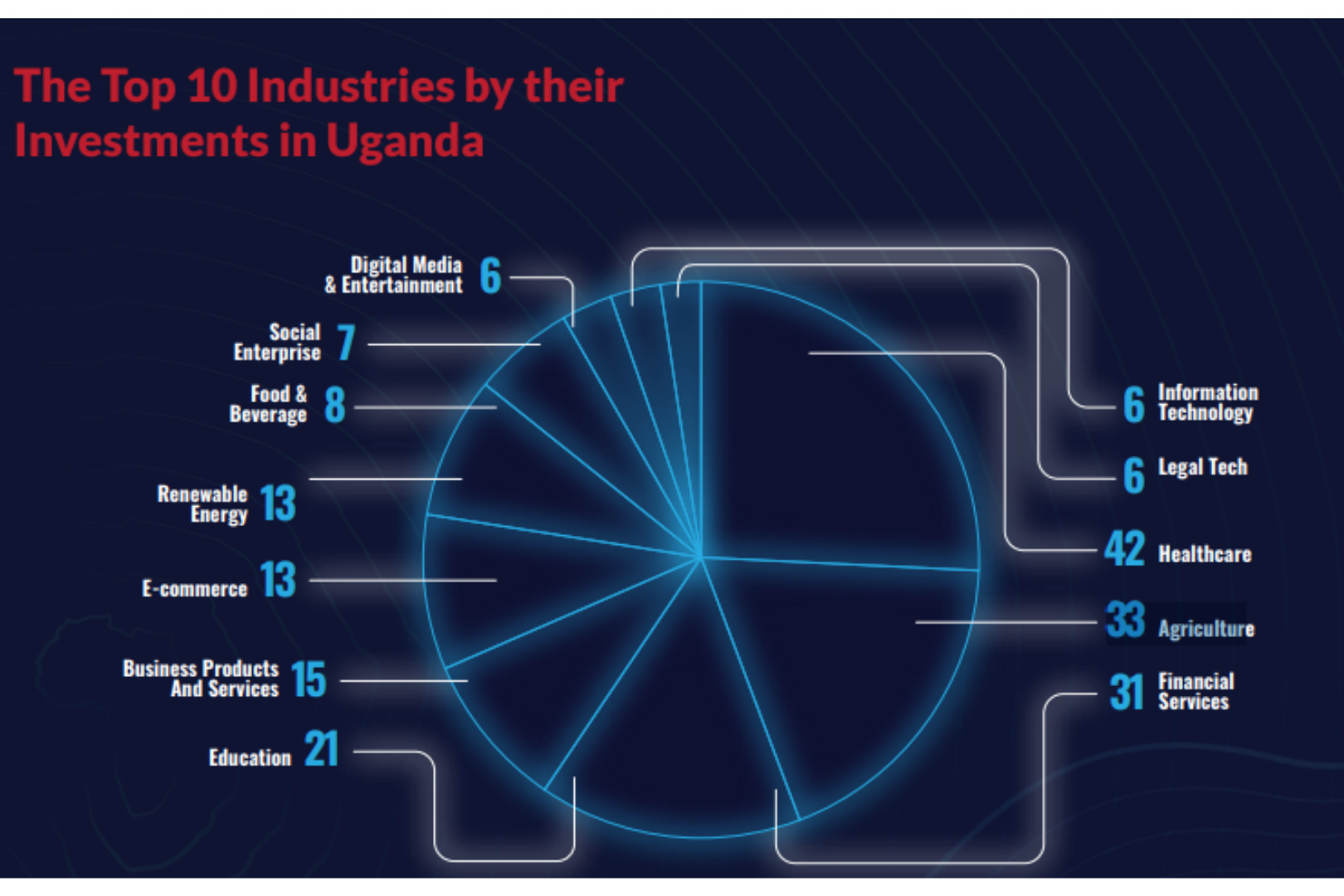
Today, startups in Uganda related to agricultural work are a hub for innovation. A study by the Martin Prosperity Institute of the U.S. found that Uganda is ranked among the top three countries with advanced technological and innovation capabilities in Africa. Besides, Uganda has 1 city in the top 1000 and is one of Eastern Africa’s best countries for setting up a startup.
As 70% of employed people in the country are engaged in agriculture to earn a living, it’s no wonder Uganda’s agricultural startups will focus on this sector to make it more profitable, attention-grabbing, and investment-generating. In this blog, we will discuss Uganda’s AgTechs and agricultural startups.
Article Highlights
Uganda’s AgTechs and agricultural startups are creating a buzz in the agricultural sector, helping farmers earn more profit.
Investors of agribusiness and potential investors are also receiving proper support from these startups to increase their production.
Starting a business in Uganda is very lucrative and promising because of the support and innovative approach from the tech-savvy generation.
Uganda’s AgTechs: Leading AgTechs to Increase Productivity & Profit
The recent experience of Uganda with the startup scene is magnificent. Driven by the need for more organically produced goods and foods from fertile lands, Uganda can become a pioneer in providing food security and a hub for better supply chains to big markets like the USA, Europe, and Asia.
The latest initiatives and Agtech startups offer innovative solutions to farmers. From accessing real-time information like weather conditions, price, market linkage, quality inputs, etc. to getting hands-on experience with communities, forums, and digital training books, these initiatives are throwing their all to help farmers.
The revolution these startups are accountable for shaping the agribusiness sector by ensuring the highest crop yields, reducing post-harvest losses, accessing a better price market, etc.
So, what are these agricultural startups? Let us share a few leaders in the market with you.
1. EzyAgric: One of the many Uganda’s Agritech Startups
Founded in 2015, EzyAgric is an AgriTech and Financial Technology company that offers periodic weather updates, veterinary information, extension services, etc. Not only this, but it also allows the farmers to get access to loans.
The app provides management skills and digital books for the farmers. It has become a one-stop solution for all the farmers in Uganda. The startup is based in Kampala, the country’s capital.
The operation of the startup is simple and pretty easy, requiring only an app. Since the beginning of the journey, EzyAgric has helped over 300,000 farmers and managed transactions worth millions of dollars.
EzyAgric lets the farmers track their income and expenses. This way, Uganda’s AgTechs are helping farmers to make informed decisions based on their capacity.
With data and financial tools, this app increases the productivity of the farmers in the field, keeping them less concentrated on the financial sector. This allows the farmers to spend more time on planning, resourcing, and engaging in other activities.
2. Emata
Emata offers investment loans to the farmers. Being an underdeveloped country and dependent on agriculture, the farmers need economic backup on their end to start afresh, or even in times when the economic return isn’t enough to start the next phase.
Sometimes, farms need to invest in their tools or adopt new tech. Resourcing the seeds, the raw materials, making the land ready, etc., requires investment as well. Since smallholders are out of reach of such investment, they have to rely on these small-scale loans.
Thus, Emata ensures smooth access to much-needed loans and carries the process forward.
3. AquaManager
AquaManager is one of the best in helping farmers with fish farming. To make it more productive and profitable, the startup is the one helping farmers with their needs. Farmers can track water quality, manage their systems more autonomously, and get tips and knowledge on tech, strategy, and more.
With the help of tools from this startup, the overall fish production in Uganda is now bigger. This way, Uganda’s AgTechs are helping farmers track the quality of products and make a strategy based on data.
Uganda’s AgTechs: Farmers Getting the Benefits of the Startups
Let’s talk about Nasaka Mary Goreti, her 55-year-old life is all about agricultural activities.
Following the path of her parents and grandparents, she relies on conventional farming to barely make a living, and leads a decent life in her house made of clay.
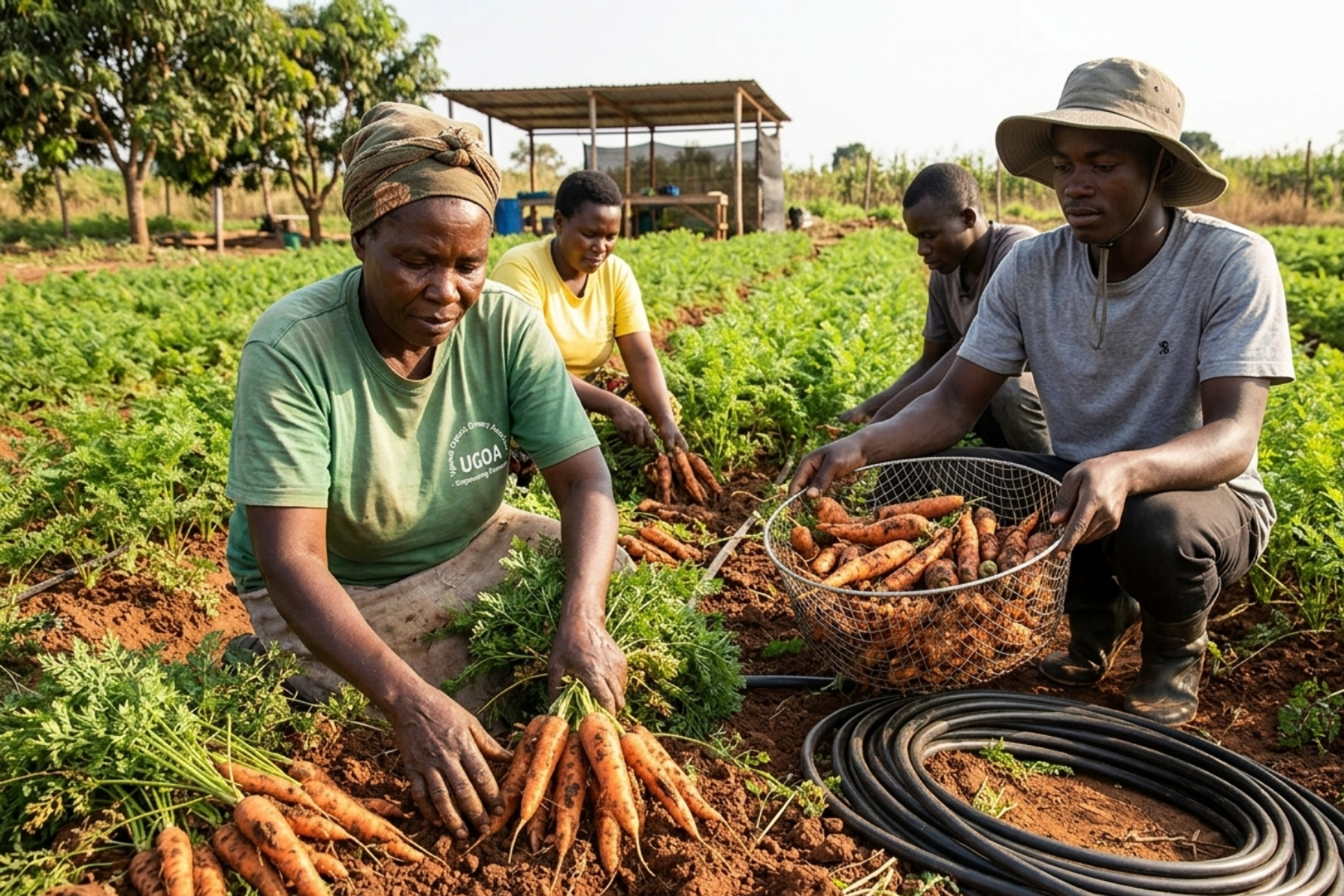
She cultivates corn, tomatoes, cabbage, and coffee on a tiny piece of land, but can’t yield much.
But the bumpy road took a smooth shape after she came to know about Uganda’s AgTechs and agricultural startups. An EzyAgric Agent who introduced her to the EzyAgric App.
With the app helping her to analyze soil, seeds, fertilizer use, and so on, she’s now earning an equivalent of 800 USD, while it was barely a hundred dollars previously.
Another beneficiary of the app is Eria Matovu, who grows onions and green peppers in Luwero district. His way of farming and advising other farmers to adapt to the new farming innovations and practices has changed a lot because of the EzyAgric App.
Challenges Uganda’s AgTechs Face
Uganda’s AgTechs journey is a promising start, yet hindered by some factors.
Farmers often don’t understand how AgTechs can help them, and they don’t know how to reach these service providers. However, these challenges are two-faced, damaging both the farmers and the startups.
- The biggest challenge for these AgTechs is the limited access to funding. Even if they get the funding, the limitation then shifts to another aspect. The initiatives can’t reach the service takers because of poor infrastructure.
- According to AfterAccess, less than half (49%) of Ugandans have access to a mobile phone, with 71% of those connected using a basic phone. As there are limited users, the state of new-gen networks is not available throughout the country. This is where these startups are struggling to get past the barrier of limited users.
- Lack of digital literacy is yet another problem for the farmers. They prefer using old-school methods that they learned from their ancestors.
- Other concerning factors include limited talent in highly specialized technology and business management skills. The current generation is well-educated, but they lack advanced tech management systems. Thus, they’re failing to utilize the available funds.
- There are also limited government incentives and funding. Uganda is ranked 116th out of 190 economies for ease of doing business.
Despite these challenges, there are solutions to make these initiatives more progressive.
Solutions
The Global Entrepreneurship Monitor 2015 indicated that the failure rate of a startup is higher, nearly 50%. But as there are challenges on the road to success, there are solutions as well.
Uganda Investment Authority (UIA) is a key player in promoting and facilitating investment in Uganda’s AgTechs and startups. Uganda Development Bank (UDB) is backing the financial factors.
Innovation Village, a hub for startups and entrepreneurs in Uganda, is leading in building connections to potential investors. International Finance Corporation (IFC) supports the private sector and offers both financial and advisory services.
Besides, there are grant opportunities and incubator programs to support Uganda’s AgTechs and startups.
Moreover, the UN Capital Development Fund (UNCDF) launched the Innovate4Agriculture challenge to provide adequate support. The World Bank’s Disruptive Agricultural Technology (DAT) Challenge is binding the entrepreneurs to develop innovative solutions for the agricultural sector.
Final Thoughts: Business with Uganda’s AgTechs
The future is, in simple words, propitious. Uganda’s AgTech startups are getting traction day by day to reach the target. Take Emata, for example, which raised a $2.4M investment. This is not funding but a reward for the authority and trust it managed to create in the fintech sector. With Emata’s innovative approach, the target markets in East Africa alone are valued at USD 13 billion!
This doesn’t stop with Emata alone, but the other initiatives are also getting a lot of recognition and carrying the Ugandan flag in the agriculture sector.
If your next business destination is in Uganda, take no time to jump into the opportunity by joining hands with Uganda’s AgTechs.
If you want to follow stories like this and discover how startups are helping farmers grow more and earn better, how technology, simple tools, and smart ideas are bringing real change, you can read Booming Agri-Startup In Uganda.





0 Comments