
Introduction: Rwanda’s Gold Industry
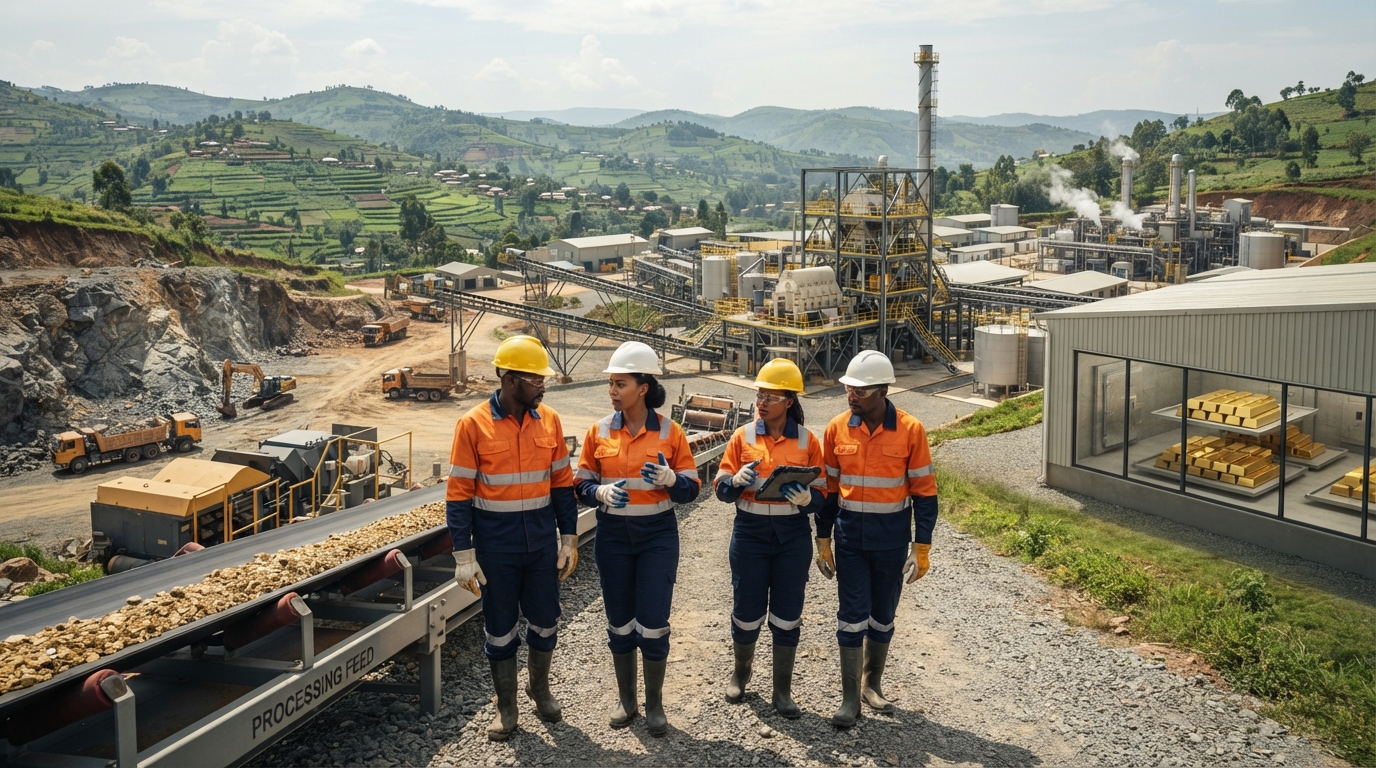
Rwanda is widely known for its natural beauty, but the country is also gaining attention for its growing mineral industry, especially gold. In recent years, Rwanda’s gold sector has attracted interest because of its rising exports, expanding refining capacity, and efforts to promote responsible mining.
Rwanda exported gold worth $5.42 billion in 2022. In 2023, gold exports reached $885 million, followed by another major increase to $1.5 billion in 2024. These figures highlight the growing importance of Rwanda’s gold industry in the country’s economy.
Although Rwanda is not yet one of the world’s leading gold-producing countries, its gold sector is developing steadily. Much of its mineral potential remains unexplored, creating opportunities for further investment and exploration.
The government is also taking steps to attract international investors and strengthen the mining industry. From gold exploration and refining to training and logistics, Rwanda’s gold sector offers several areas for potential investment.
In this article, we explore the development of Rwanda’s gold industry, its major companies, employment opportunities, challenges, and the investment options available to local and international investors.
Article Highlights
Rwanda’s gold exports reached $1.5 billion in 2024. The gold industry contributes around 3% to Rwanda’s GDP and supports economic development. Aldango Ltd. and Gasabo Gold Refinery are major gold refining companies in the country.
Employment in the mining industry increased to more than 76,000 people in 2024. Women make up around 24% of Rwanda’s mining workforce.
Government and NGO programmes are supporting safer working conditions and better practices among small-scale miners.
Areas such as Miyove, Byumba, and Nyungwe have potential for further gold exploration.
Investors can explore opportunities in mining, refining, gold trading, logistics, and vocational training.
History and Development of Rwanda’s Gold Industry
Rwanda’s mining industry was relatively small after the country gained independence in 1962. During its early years, mining was mainly controlled by the state, and gold production depended largely on small-scale and artisanal miners. Exploration activities and access to modern technology were limited.
The industry began to receive more attention during the 2010s as the government worked to attract investors and increase mineral exports. Between 2013 and 2016, reported gold production grew from almost zero to around 2,000 kilograms per year.
An important step came in 2019, when Rwanda opened its first gold refinery, Aldango Ltd., in Kigali. The refinery has the capacity to process gold to a purity level of 99.99%.
During the 2020s, Rwanda also developed its position as a regional gold refining and trading centre. The country began importing gold from neighbouring countries, including the Democratic Republic of the Congo (DRC), refining it, and exporting the finished product.
In 2022, Rwanda reportedly produced 2,900 kilograms of gold. Its gold exports later reached $1.5 billion in 2024, showing the growing importance of mineral processing and gold trading to the economy.
Rwanda’s gold industry is therefore becoming an important part of the country’s economic development. It supports export growth, creates employment, and offers opportunities for businesses involved in mining and mineral processing.
How Rwanda’s Gold Industry Supports the Economy
The mining industry plays an important role in Rwanda’s economic progress. The gold sector alone is reported to contribute around 3% of the country’s GDP.
In 2023, Rwanda’s mining sector generated approximately $1.1 billion in export earnings, compared with only millions of dollars in 2017.
This growth has helped Rwanda strengthen its position as a regional centre for mineral processing. The industry also creates jobs and provides new opportunities for people living in rural communities.
Rwanda’s gold industry is also creating opportunities for women. More women are now working in mining companies and taking on roles as engineers, geologists, business owners, and environmental specialists.
Women's Growing Role in Rwanda’s Gold Industry
Mining has traditionally been a male-dominated industry. However, women’s participation in Rwanda’s gold and wider mining sector is increasing.
By 2022, women accounted for around 24% of the mining workforce in Rwanda. This represented a significant increase in female participation in the sector.
Women are now working in different areas of mining, including technical, managerial, and business roles. Some have also established their own mining companies.
Their growing involvement is helping to improve leadership, business development, and sustainable mining practices. It also creates more opportunities for women to build careers and businesses in a sector that has traditionally offered them fewer opportunities.
The progress of Rwanda’s gold industry is therefore not only creating economic opportunities but also supporting greater participation in the workforce.
Employment Growth in Rwanda’s Gold Sector
The expansion of mining and gold refining has created more employment opportunities across Rwanda.
In 2024, approximately 76,866 people were employed in the mining sector, compared with 49,968 in 2023. This increase reflects the sector’s growing demand for workers as mining, refining, and exploration activities expand.
The growth has been supported by investment in refining facilities, exploration, and machinery. Rising international demand for traceable and responsibly sourced gold has also increased interest in the sector.
These developments create opportunities for people in rural areas to move beyond subsistence farming and find more stable employment in mining-related activities.
As Rwanda’s gold industry continues to develop, demand may also grow for workers with skills in geology, engineering, mineral processing, environmental management, and logistics.
Major Companies and Key Locations in Rwanda’s Gold Industry
Several companies and mining groups are involved in Rwanda’s gold sector. They contribute to refining, exploration, mineral trading, and small-scale mining activities.
As of 2024, the mining industry employed approximately 76,866 people. Some of the important companies and organisations connected to the sector include:
1. Aldango Ltd.
Aldango Ltd. is one of Rwanda’s major gold refining companies. Located in the Kigali Special Economic Zone, it can refine gold to a purity level of up to 99.99%.
The company processes both locally sourced and imported gold, including gold from the DRC. Its refining activities support Rwanda’s position as a regional mineral processing centre.
The company is also associated with traceability standards linked to the OECD and the International Conference on the Great Lakes Region (ICGLR).
2. Gasabo Gold Refinery
Gasabo Gold Refinery is another major refinery based in Kigali. It focuses on adding value to gold through refining and preparing it for export markets.
However, there are also concerns about the refinery’s handling of gold described as potentially linked to conflict sources. This highlights why responsible sourcing and proper traceability are important for Rwanda’s gold industry.
Investors and business partners should carefully review a company’s sourcing practices and compliance records before entering into any partnership.
3. New Bugarama Mining Company (NBM)
New Bugarama Mining Company (NBM) is mainly known for its involvement in tungsten mining. However, the company has also expanded into gold exploration and worked with artisanal miners.
Its development shows how local mining businesses can grow and move towards more organised operations.
The company has also worked with ITSCI on supply-chain traceability, supporting efforts to improve responsible mineral sourcing.
4. Artisanal Mining Cooperatives
Artisanal mining cooperatives operate in several districts, including Gicumbi, Nyamasheke, Rutsiro, and Rusizi.
These cooperatives provide employment and income opportunities for local communities. Government programmes and NGOs also support them through initiatives focused on safety, traceability, and better working conditions.
An estimated 7,000 to 10,000 workers are involved in artisanal and small-scale gold mining activities.
Although these operations support local livelihoods, they still face challenges related to safety, equipment, skills, and access to modern mining methods.
Challenges Facing Rwanda’s Gold Industry
Despite its growth, Rwanda’s gold sector still faces several challenges. Addressing these issues will be important for increasing production, improving working conditions, and attracting responsible investors.
1. Limited Geological Information
Many gold deposits in Rwanda have not been fully explored. Geological studies are still limited in some remote areas, making it difficult to understand the full potential of available resources.
More investment in geological surveys, research, and exploration is needed to identify promising locations and support future mining projects.
2. Skills and Workforce Gaps
The industry needs more trained workers with knowledge of modern mining methods, geology, metallurgy, and environmental protection.
Many artisanal miners still lack proper training in safe blasting, modern extraction techniques, and responsible mining practices.
Although Rwanda has trained more than 2,700 workers in recent years, the demand for skilled labour remains high.
This creates opportunities for investors to support vocational training centres, technical education, and professional development programmes.
3. Working Conditions and Safety
Safety remains an important concern in some mining areas, particularly in artisanal mines.
Mine collapses and serious accidents can still occur where proper structures, equipment, and safety procedures are not available.
Some workers also face low wages, delayed payments, and limited access to protective equipment.
Improving workplace safety, providing better equipment, and introducing modern mining methods will be important for the long-term development of Rwanda’s gold industry.
Inspiring Stories from Rwanda’s Gold Industry
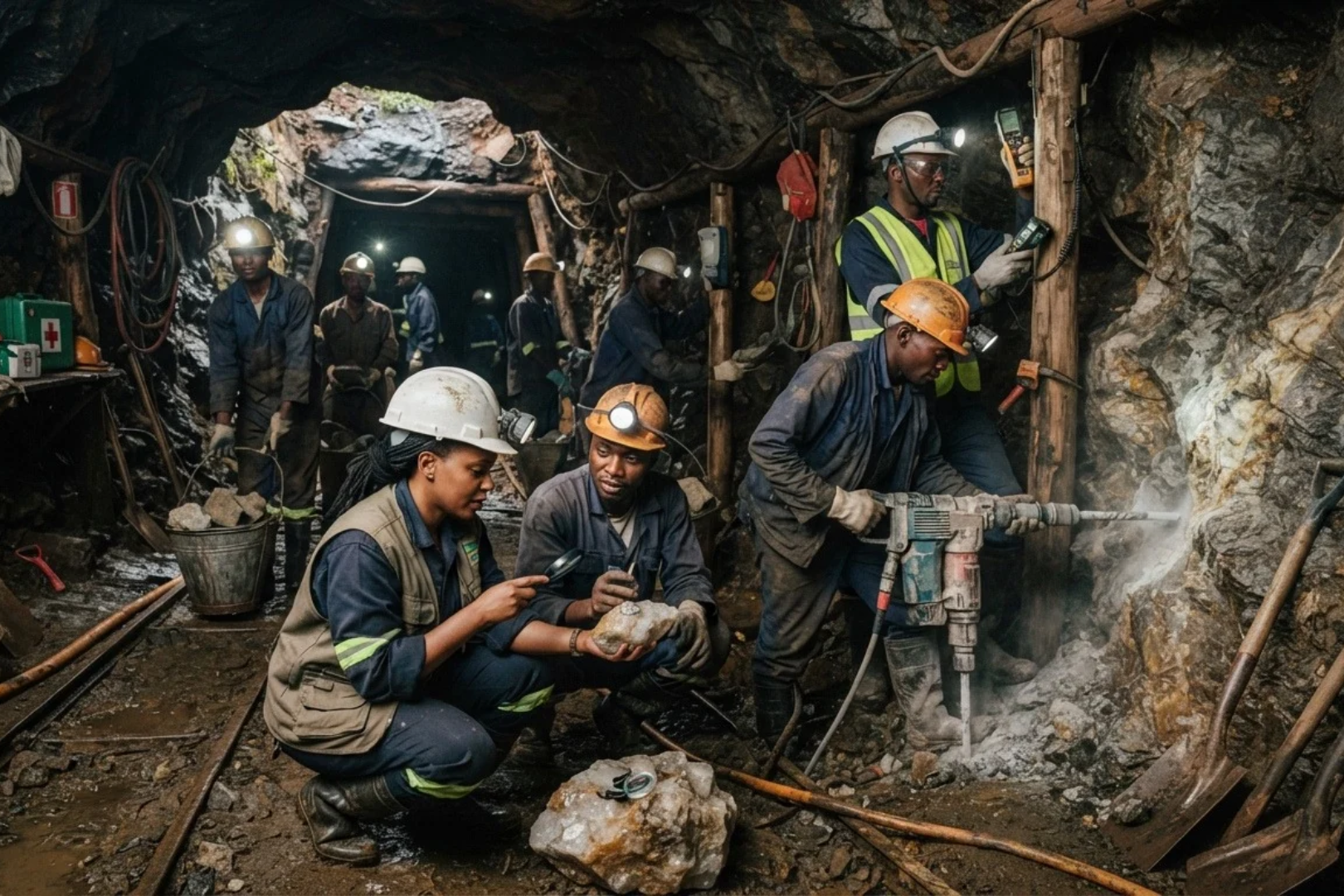
Despite these challenges, Rwanda’s mining sector, including the gold industry, has produced several inspiring stories. These examples show how research, local business development, and responsible mining can create new opportunities.
Dr. Jeanne Pauline Munganyika: Supporting Sustainable Mining
Dr. Jeanne Pauline Munganyika is an example of how education and research can contribute to the development of Rwanda’s mining industry.
She grew up in a rural community in Rwanda and became aware of the difficulties faced by artisanal miners, particularly women.
With support from the RSIF-PASET scholarship, she pursued a PhD in Materials Science and Mineral Processing.
Her research focuses on environmentally friendly gold mining and the recovery of valuable materials from mining waste, also known as mine tailings.
Her work supports the development of more sustainable mining methods in Africa. Despite challenges, including the loss of research samples during the COVID-19 period and balancing motherhood with academic responsibilities, she continued her research journey.
Her experience demonstrates the importance of education, innovation, and research in improving Rwanda’s gold sector.
Janvier Ndabananiye: From Artisanal Miner to Mining Entrepreneur
Janvier Ndabananiye, Director General of New Bugarama Mining Company (NBM), is another example of local business growth in the mining industry.
He started his career as an artisanal mining operator. Over time, he developed his experience and established a mining company operating within a more formal business structure.
NBM has also worked with ITSCI to improve supply-chain traceability.
His journey shows how local entrepreneurs can develop their businesses, adopt better practices, and contribute to the growth of Rwanda’s gold industry.
These stories show that the mining sector can create opportunities for researchers, workers, and entrepreneurs alike.
Investment Opportunities in Rwanda’s Gold Industry
Rwanda’s gold sector offers opportunities beyond traditional mining. Investors can explore several areas where new businesses, technology, and professional skills are needed.
The government is encouraging investment in geological exploration, vocational training, logistics, and mineral processing.
Here are some of the main opportunities:
1. Exploration of Untapped Gold Deposits
Several areas in Rwanda are believed to have potential for further gold exploration. These include Miyove, Byumba, and Nyungwe, among other Prospective Target Areas (PTAs).
The government publishes information about prospective areas where investors may be able to apply for exploration licences or work with local mining cooperatives.
Investors can explore opportunities to introduce modern equipment and improve mining operations. They may also work with existing cooperatives to develop small-scale mining sites into more organised, semi-mechanised, or industrial operations.
Further geological research will be important for understanding the available resources and identifying suitable investment locations.
2. Training and Capacity Building
Rwanda needs more skilled professionals in geology, metallurgy, mine safety, and mineral processing. Investors can support this demand by establishing vocational training centres or working with universities and technical institutions. Possible activities include:
- Offering mining engineering and geology courses.
- Providing practical training for mining workers.
- Teaching modern extraction and processing methods.
- Supporting health, safety, and environmental training.
- Helping small mining businesses improve their technical skills.
Investment in education can help build a skilled workforce and support the long-term growth of Rwanda’s gold industry.
3. Gold Trading and Logistics
Rwanda has developed a role as a regional centre for gold refining and trading. The country imports gold from other African markets, processes it, and exports refined products.
This creates opportunities for investors interested in establishing licensed gold trading companies.
Other potential business areas include secure transportation, storage, export services, and digital platforms for tracking gold transactions.
Reliable logistics and transparent trading systems are important for connecting suppliers, refineries, and international buyers.
Why Should Investors Consider Rwanda’s Gold Industry?
Rwanda’s gold sector is attracting attention because of its growing exports, refining facilities, and efforts to improve mineral traceability.
There are several reasons why investors may consider exploring this market.
1. Growing International Demand: Demand for responsibly sourced and traceable gold is increasing in international markets. The United Arab Emirates (UAE) was the leading destination for Rwanda’s gold exports in 2023, with an estimated value of $885 million. India was also identified as a buyer in earlier years.
The UAE’s position as a major global gold trading centre creates opportunities for Rwanda to connect with international markets.
2. Established Gold Refining Facilities: Rwanda already has gold refining facilities, including Aldango Ltd. These facilities can process gold to a purity level of up to 99.99%. This creates opportunities for businesses involved in refining, trading, and mineral processing.
3. Focus on Traceability and Responsible Sourcing: International buyers increasingly look for gold that can be traced through its supply chain. Rwanda’s efforts to follow OECD and ICGLR-related traceability standards can help strengthen confidence in its mineral trade.
Responsible sourcing is especially important for investors who want to work with international buyers and maintain transparent business operations.
4. Opportunities in Exploration: Several areas remain open to further geological study and exploration. Locations such as Miyove, Byumba, Nyungwe, Burera, and Rulindo have been identified as areas with potential for further exploration.
Investors with the right technical expertise and licences may explore opportunities to support domestic production.
5. Opportunities Beyond Mining: Investment opportunities are not limited to extracting gold. Rwanda’s gold industry also needs skilled workers, training centres, transport services, storage facilities, trading companies, and modern processing technology.
These supporting services can help investors participate in the wider mining value chain.
Final Thoughts: The Future of Rwanda’s Gold Industry
Rwanda’s gold industry is developing through growing exports, expanding refining capacity, and increasing interest from international investors.
The country has already made progress in mineral processing and trade. However, many areas still need further exploration, better technology, skilled workers, and improved mining conditions.
The government is also working to move the industry away from informal mining and towards more organised and responsible operations. This shift can improve productivity, worker safety, and environmental standards.
For investors, Rwanda’s gold sector offers several areas to explore, including gold mining, refining, trading, logistics, geological research, and vocational training.
With further investment and responsible business practices, Rwanda’s gold industry could play a greater role in the country’s economic development and strengthen its position in the regional mineral market.
The opportunity is not limited to gold production. It also lies in building the skills, infrastructure, and businesses needed to support a stronger and more sustainable mining sector.
Frequently Asked Questions
1. How much gold did Rwanda export in 2024?
Rwanda’s gold exports reached $1.5 billion in 2024, setting a new national record.
2. How important is gold to Rwanda’s economy?
The gold industry is reported to contribute around 3% of Rwanda’s GDP and is an important part of the country’s growing mining and export sectors.
3. What are the major gold refineries in Rwanda?
Aldango Ltd. and Gasabo Gold Refinery are two major gold refining companies based in Kigali.
4. Is Rwanda’s gold traceable?
Rwanda has been working to improve mineral traceability through standards and systems linked to the OECD and ICGLR. Investors should review the sourcing and compliance records of individual suppliers.
5. Which countries buy Rwanda’s gold?
The UAE is the largest buyer, while India has also been mentioned as a buyer in earlier years.
6. What is the purity of refined gold in Rwanda?
Aldango Ltd. can refine gold to a purity level of up to 99.99%.
7. How many women work in Rwanda’s mining industry?
Women accounted for around 24% of the mining workforce.
8. Which areas in Rwanda have potential for gold exploration?
Miyove, Byumba, Nyungwe, Burera, and Rutsiro are among the areas with potential for further exploration.
9. Who is Dr. Jeanne Pauline Munganyika?
She is a researcher from Rwanda whose work focuses on environmentally friendly gold mining and the recovery of valuable materials from mine waste.
10. Who is Janvier Ndabananiye?
He is the Director General of New Bugarama Mining Company. He began his career as an artisanal miner before moving into mining entrepreneurship.
11. What challenges does Rwanda’s gold industry face?
The main challenges include limited geological information, a shortage of skilled workers, safety risks, and the need for modern mining equipment.
12. How is Rwanda addressing the skills gap?
The country has trained more than 2,700 mining workers, while further training and education remain important for the sector.
13. How many people work in Rwanda’s mining sector?
Approximately 76,866 people were employed in the mining sector in 2024, compared with 49,968 in 2023.
14. Can foreign investors invest in Rwanda’s gold industry?
There are opportunities in mining, refining, logistics, vocational training, and gold trading. Investors should review the relevant licensing and regulatory requirements before starting a project.
15. Why is Rwanda becoming a regional gold refining centre?
Its refining facilities, location, and role in processing gold from other African countries are helping Rwanda develop its position as a regional gold refining and trading centre.

0 Comments