
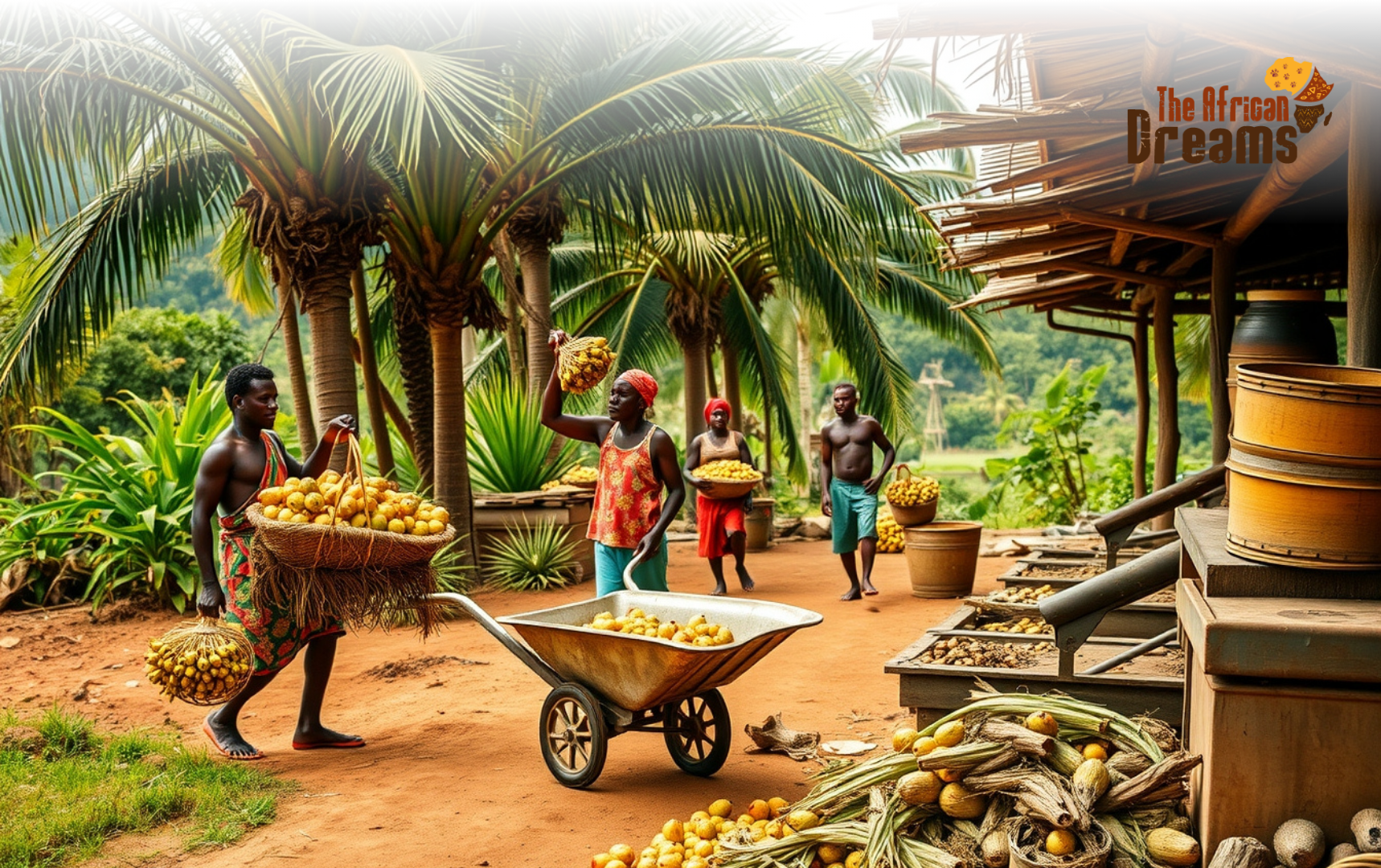
Tarina, a spirited young girl, firmly believed in the extraordinary powers of palm oil to evade trouble. When her family members chased after her, she would coat herself in palm oil and slip away effortlessly, so they could never catch her because she became too slippery. This innocent belief stemmed from Tarina’s conviction that palm oil could make anything or anyone slippery.
One day, worried about losing their home, Tarina covered the walls with palm oil. When questioned by her family, she said, “When the loan officer comes, he won’t be able to take our home because it will slip away, just like I do.”
Her family smiled sadly, knowing that palm oil couldn’t save their home. Despite Tarina’s innocent belief, they remained deeply worried about the looming threat of losing their house.
Tarina’s father, Mozi, took a substantial loan with high interest rates from the bank. His business is failing partly due to his health issues from smoke exposure in oil production, as he now battles cancer. Unable to meet loan payments, Mozi faces the risk of losing their home as per the loan agreement. Many other farmers who had hoped to scale up palm oil production are also abandoning their businesses due to financial losses, turning to other sectors for employment.
Challenges
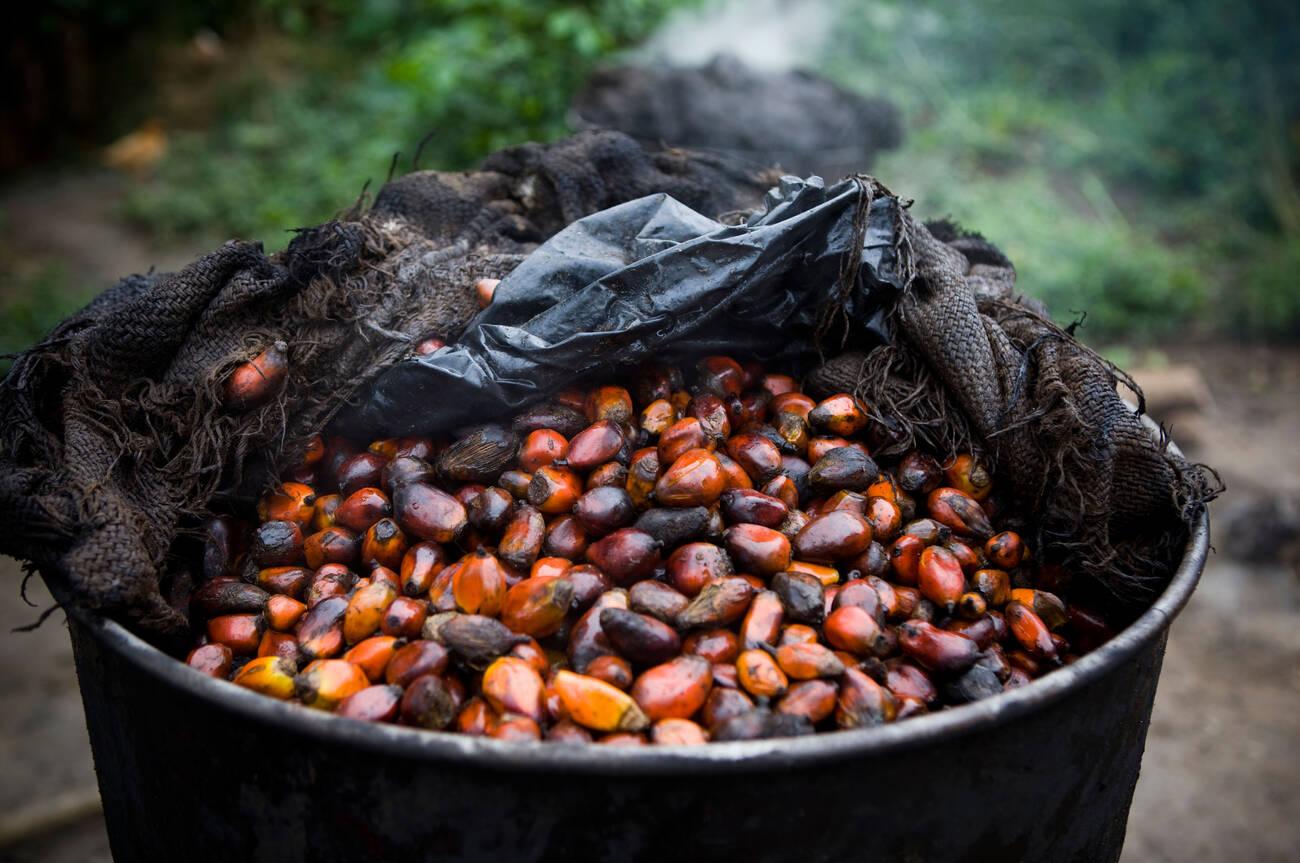
Smoke inhalation is a significant issue among Ghana’s artisanal palm oil producers. Traditional metal cooking pots and steel tanks are the main tools used by artisanal producers to manufacture palm oil. These techniques use open flames, which produce a lot of smoke. Many Ghanaian women employed in small-scale palm oil production are at risk for health problems due to smoke exposure. Conventional processing processes, which use open flames, release an excessive amount of smoke. Constant exposure to this can lead to many health concerns, including skin irritation and respiratory difficulties. Environmental pollution is caused by inadequate waste management techniques. Burning solid garbage and releasing untreated liquid waste into the environment are common human practices.
They have lagged behind due to their reliance on manual techniques and outdated machinery further hinders efficiency and productivity.. They produce palm oil using inefficient machinery, which causes processing times to be sluggish. Shortages of equipment force workers to extend hours, impacting their well-being and overall output. The sector struggles with inadequate financial facilities and underfunding. This hinders investments made to update industrial processes and boost productivity.
Progress and Solutions
The UNDP, in collaboration with MESTI and EPA, introduced energy-efficient, locally produced machinery to 11 communities, reducing processing time from two weeks to five hours and eliminating smoke. This improved hygiene and productivity for over 800 beneficiaries, mostly women. Mr. Yaw Awusi Antwi of Joe Farms invested heavily in similar technology, highlighting the potential of public-private partnerships in driving sustainable development.
Private sector investments from figures like Yaw Awusi Antwi and Appiah Ampofo, enhance production facilities. This initiative highlights the effectiveness of public-private partnerships in improving energy efficiency, public health, and environmental safety, driving sustainable development.
Despite Ghana’s status as the 33rd largest palm oil exporter, challenges persist, including the need for sustainable production methods amidst rising demand and the necessity to reduce significant palm oil imports. There are many people, like Mozi and Tarani, hoping that some proper facilities and technology will give them a better life.
In 2022, Ghana exported $68.9 million worth of palm oil. The main export destinations were Senegal, Côte d’Ivoire, and Germany. However, Ghana also imported $202 million in palm oil, ranking as the 48th largest importer.
Path Forward
Young businessman Kofi seeks to improve Ghana’s palm oil industry. His goal is to create “Green Gold Solutions” that will modernize and maintain palm oil production. Engineer Kofi is from the area. After witnessing his relatives’ suffering, he made the decision to collaborate with additional regional engineers to develop affordable, effective machinery for small-scale farmers, thereby bringing these technologies to a larger number of farmers.
He intends that GreenGold Solutions will provide farmers with guidance on how to use the new equipment and handle waste. Additionally, Kofi’s team will switch to biomass energy from open fires, reducing smoke and health risks. These modifications will increase farmer productivity and create a safer and cleaner work environment.
Kofi thinks his concept will work; therefore, he thinks the government and private investors would provide farmers who use the new technology with subsidies and loans with reduced interest rates. With financial assistance, many producers updated their operations, increasing output and quality. Financial incentives and modern technology have contributed to the area’s economic expansion by reducing imports and increasing exports of palm oil.
These offer vast opportunities for budding entrepreneurs, and in addition, they offer significant chances for investors to finance the growth of these private sectors, thereby fostering the emergence of new businesses and promoting environmentally sustainable approaches to problem-solving. Additionally, investors’ businesses will be prosperous.
Why Should You Invest
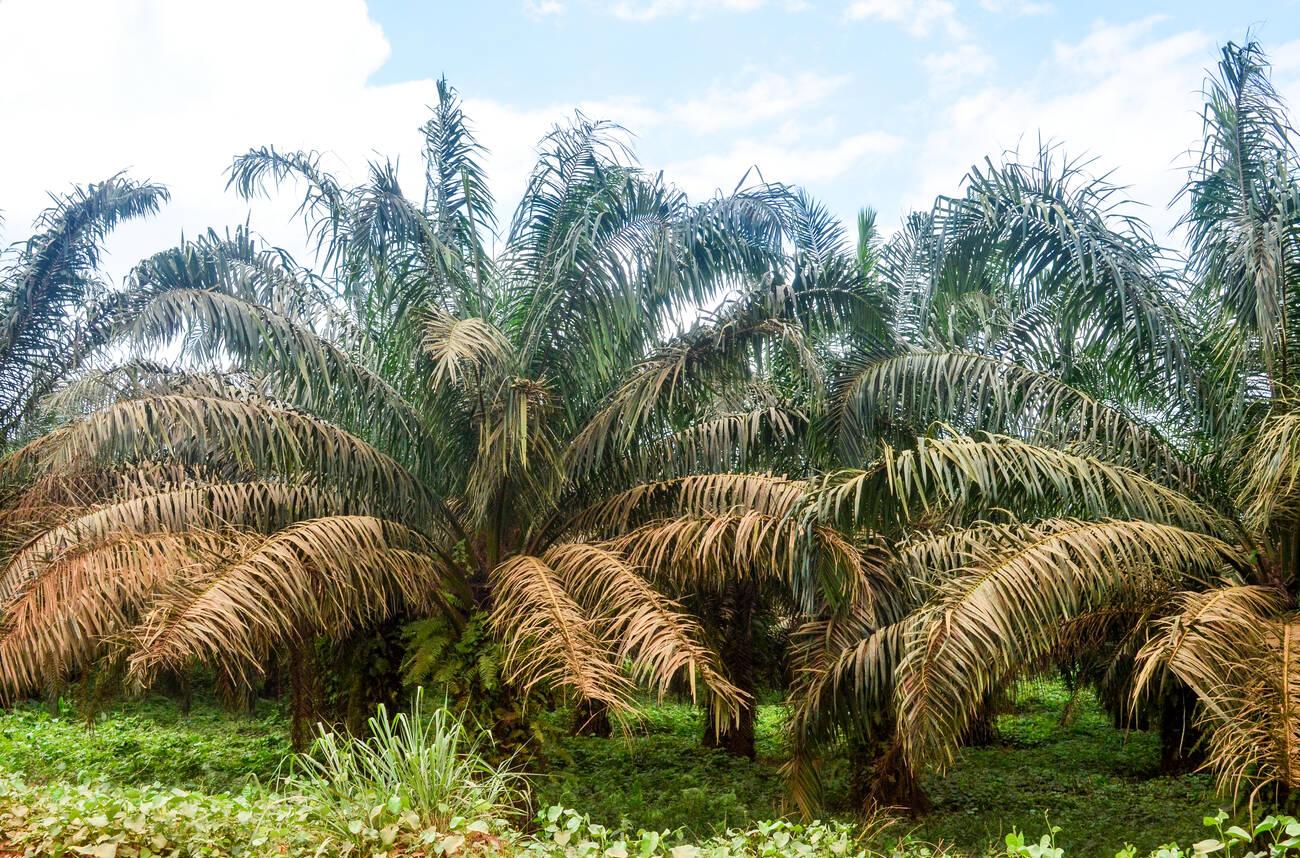
The variety, rich culinary legacy, and historical significance of Ghanaian palm oil make it unique in West African cuisine. Ghanaians have been flavoring Banga soup and boiling yam with palm oil and Kanwa salt for years. People use it in cooking, soapmaking, ceremonies, and medicine. Archaeological research shows that West Africans ate palm oil 5,000 years ago, affecting agricultural expansion and migration. European traders highly valued palm oil after the end of slavery. Small-scale and artisanal palm oil growers dominate Ghana’s palm oil output, which is crucial to rural life and economic growth.
Ghanaian palm oil is known for its history, culture, and adaptability. Many industries use palm oil, made from oil palm tree fruits. Palm oil improves the texture, taste, and appearance of margarine, chocolate, cookies, and packaged bread. Palm oil is used to condition shampoos, smooth ice cream, and refine soaps and detergents. Tinplate processing, coating iron plates, candle manufacture, and the production of biodiesel and lubricating greases are among the industrial applications of palm oil. Palm oil has many benefits, but its cultivation is environmentally hazardous, requiring prudent production to protect vulnerable environments.
Ghana is the third-largest palm oil producer in Africa, with artisanal and small-scale producers contributing 60–80% of the country’s palm oil output. In 2021, Ghana produced around 2.5 million metric tonnes of palm oil, mainly for cooking and other purposes.
Ghana produces high-quality palm oil, meeting international standards. Its rich color, flavor, and nutritional content make it desirable. Many countries import Ghana’s famous palm oil. Ghana’s main destinations for palm oil exports are Senegal ($25.5M), Côte d’Ivoire ($11.1M), Germany ($8.81M), Nigeria ($8.64M), and Niger ($4.47M).
To Sum Up
By overcoming current challenges and outdated practices, the profitability of Ghana’s palm oil industry is evident through its cultural significance, export potential, and opportunities for growth with modern technologies and sustainable practices. Investing in this sector not only supports economic development but also contributes to improving livelihoods and environmental stewardship in Ghana.


0 Comments