
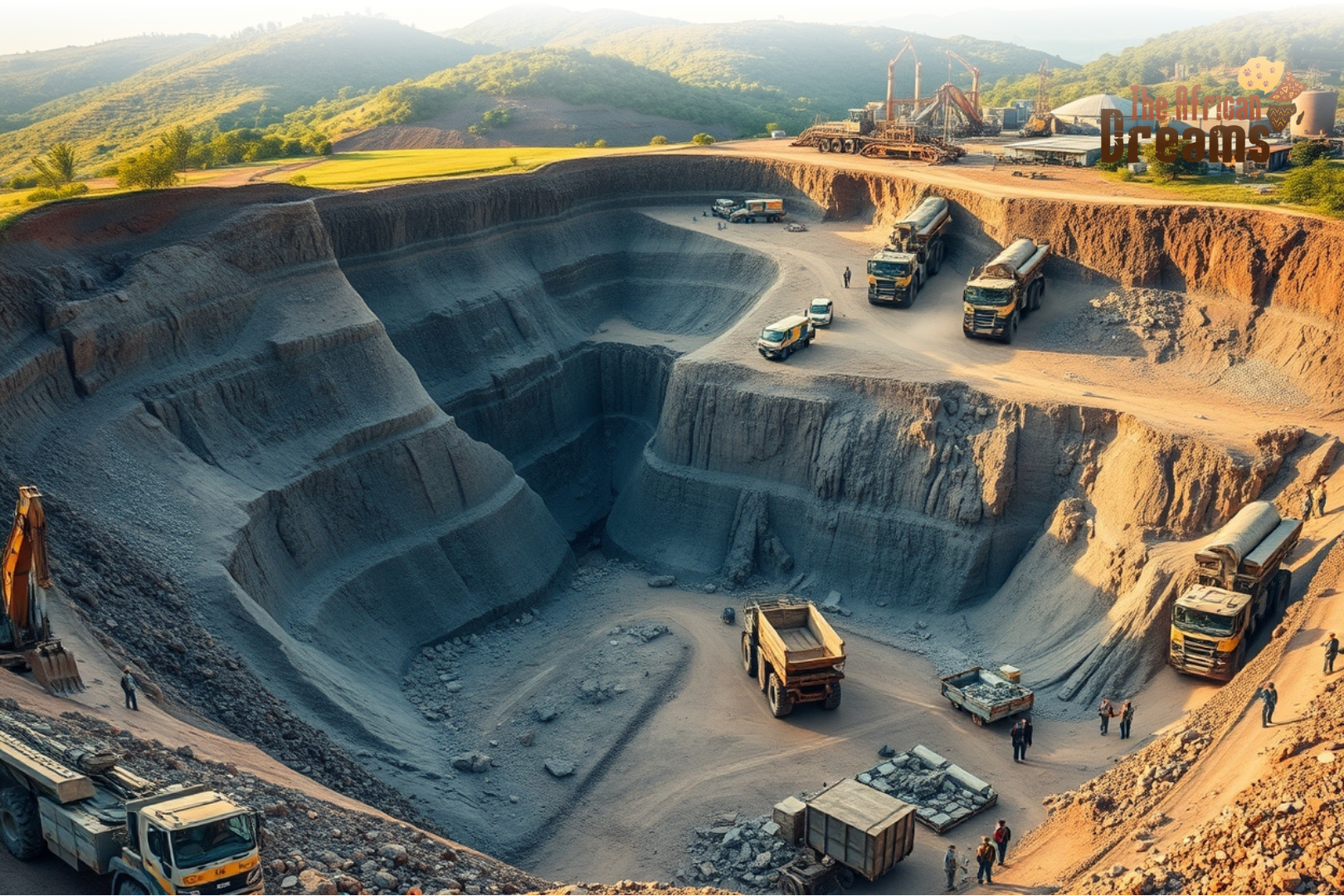
Introduction: Discover Malawi’s Mineral Sector
Imagine a country rich in business opportunities, with a vast reserve of natural resources. Like many African countries, Malawi is also blessed with natural resources, especially minerals. The country possesses resources such as rare earths, uranium, graphite, rutile, and niobium. With each passing day, Malawi’s mineral sector is developing. As the mineral sector offers many business opportunities waiting to evolve, the government of Malawi has taken many steps for its betterment. The country has undertaken several mega projects to boost the mineral sector’s contribution.
Investment in Malawi’s mineral sector can help the industry reach its full potential. Both local and global investors can look into this hidden gem for future business opportunities. This blog will provide a brief overview of Malawi’s mineral sector, government initiatives, and its future contributions.
Article Highlights
This blog will discuss
Malawi’s Mineral Sector
Potential of Malawi’s Mineral Mining Sector
Future Plans of Mine Production
Government Initiatives
Worldwide demand for Malawi’s Key Minerals
History of Malawi’s Mineral Sector
The history of Malawi’s mineral sector is relatively recent compared to its neighbors. However, it has significant potential due to the country’s mineral resources, which are yet to be explored. During the pre-colonial period, indigenous communities were engaged in artisanal mining. Primarily, they used to extract iron ore, salt, and clay for tools and local trade.
After independence, the governments focused on agriculture. A few small-scale operations in limestone, coal, and gemstones were active. Until 2006, there wasn’t much focus on Malawi’s mineral resources. Most of the mineral resources were waiting to be explored. Mining gained attention in 2007 due to the discovery of uranium at Kayelekera.
Malawi has several minerals with economic potential, including uranium, phosphates (apatite), bauxite, kaolinitic, coal, kyanite, limestone, rare earth (including strontianite and monazite), graphite, sulfides (pyrite and pyrrhotite), titanium minerals, and vermiculite. Most of these minerals were evaluated in the past by either the Ministry of Mining (through the Geological Survey Department) or private companies. However, mining these minerals was not given preference at that time.
According to Malawi’s Ministry of Mines, the country has estimated lithium reserves of 1.5 million tonnes, making it one of the world’s leading producers. Lithium is a key component in the manufacturing of batteries for electric vehicles, a rapidly expanding market.
By 2023, global demand for lithium was expected to increase by 40%, reaching 500,000 tonnes, and Malawi is ready to meet this demand.
Malawi’s extractive industry gained momentum with the commissioning of the Kayelekera Uranium Mine in 2007/2008, which is by far the largest Foreign Direct Investment (FDI) in the country. This mine holds about 51 million pounds of uranium.
Some of the largest mines in Malawi are the Kanyika Niobium Mine and the Kangankunde Rare Earth Project, which extract significant amounts of natural resources.
Types of Malawi’s Minerals
Malawi is a country rich in natural resources, particularly minerals. There is a wide range of industrial, metallic, and energy minerals, and a huge stock of Rare Earth elements in Malawi. This makes Malawi a hot cake for investors looking to invest in the mineral sector. The table below provides a brief overview of Malawi’s minerals and their locations.
|
Category |
Mineral |
Location |
|
Energy Minerals |
Uranium, Coal, Peat |
Kayelekera, Livingstonia, Ngana |
|
Metallic Minerals |
REEs, Niobium, Gold, Titanium, Iron |
Songwe Hill, Kangankunde, Kanyika |
|
Industrial Minerals |
Bauxite, Limestone, Graphite, Gypsum, Clays |
Mulanje, Malingunde, Balaka |
|
Gemstones |
Sapphires, Rubies, Aquamarine, Tourmaline |
Nsanje, Chikwawa, Ntcheu |
Opportunities in Malawi’s Mineral & Mining Sector
Malawi is planning its economic transformation, with a focus on the mining sector. Investors who are looking for long-term return on their investment can have their eyes on Malawi’s mineral sector.
1. Strategic Geographic and Geological Position: Geographically, Malawi is surrounded by Zambia, Mozambique, and Tanzania. These countries have advanced technologies and developed infrastructures for mining. This is a plus for Malawi, as it can access regional infrastructure corridors. Malawi can utilize its expertise to build its own technical knowledge. Malawi can also get connected to the Southern African Development Community (SADC) markets.
Apart from land routes, Malawi has access to ports via the Nacala Corridor. This is the easiest route for exporting from the Kayelekera mine. Malawi has access to Beira and Dar es Salaam ports.
Malawi is a member of the Alignment with the African Continental Free Trade Area (AfCFTA), the world’s largest free trade area. AfCFTA brings together 55 countries of the African Union (AU) and 8 Regional Economic Communities (RECs).
|
Factor |
Impact on the Mining Sector |
|
Strategic location in SADC |
Attracts regional investment and facilitates trade with neighboring mining economies |
|
Access to multiple trade corridors |
Reduces transportation costs and enhances export viability |
|
Rich geological profile |
Increases attractiveness to global investors seeking critical minerals |
|
High-grade mineral deposits |
Promotes Malawi as a premium supplier in global markets |
|
Geopolitical relevance |
Growing interest from the West as countries seek alternatives to China for critical minerals |
2. Unique Mineral Profile: Malawi has a very unique mineral profile. It has a rich reserve of rare earth elements (REEs), rutile, graphite, uranium, niobium, bauxite, coal, and phosphates, among others. As a significant portion of Malawi’s mineral reserves has not yet been discovered, there is a huge opportunity to explore.
3. Increased Revenue from Mineral Exports: Malawi has significant reserves of energy transition minerals (ETMs), including graphite, titanium, uranium, and rare-earth elements. The demand for ETMs is increasing globally as the world is shifting to renewable energy. According to the World Bank’s projections, the mining sector is expected to generate up to $30 billion in export revenues between 2026 and 2040. It is also projected that the annual exports will be about $3 billion by 2034.
4. Contribution to GDP: The mining sector currently accounts for 1% of the country’s Gross Domestic Product (GDP). According to Malawi Vision 2063, the mining sector’s contribution to GDP is expected to increase to 10% by 2063. Several high-profile projects have already been undertaken in collaboration with world-renowned companies to enhance the development of the mining industry. It is also targeted that the mining sector’s contribution to the country’s GDP will be 12% by 2027 and 15% by 2030.
5. Job Creation: Mega projects, such as the Kasiya Rutile-Graphite Project and the Kayelekera Uranium Project, will require a large number of human resources. From fieldwork to technical tasks, these projects will employ a significant number of local people, thereby improving the country’s socio-economic conditions.
Mining companies are focusing on hiring local workers. They are providing training to develop their skills. Companies are also encouraging the participation of women, lowering the discrimination between men and women. Mining projects will not only create employment in this sector but also create opportunities in the support sectors.
Promising Future of Mine Production
Malawi is planning its economic transformation strategy, keeping the mining sector as one of the focal sectors. Malawi is developing concrete plans to become one of the leading suppliers of critical minerals by 2040. The Malawian government’s Agriculture, Tourism, and Mining (ATM) Strategy aims to increase Malawi’s Mineral sector’s contribution to GDP.
A. Worldwide Demand for Malawi’s Minerals
Malawi has a huge reserve of some very rare minerals. This provides Malawi’s minerals a competitive advantage in the global supply chain. The demand for the minerals Malawi has is increasing rapidly. This is taking place because of the shift of the global economy toward clean energy, technology, and supply chain diversification. It is a great opportunity for Malawi to utilize this competitive advantage to become a global leader in the worldwide supply chain system.
The table below summarizes the global demand for some of the key details of Malawi’s minerals:
| Mineral | Global Demand Trend | Key Uses | Malawi Project |
| Rare Earths | Rapid growth | EVs, wind turbines, electronics | Kangankunde |
| Uranium | Rising (nuclear energy) | Nuclear fuel | Kayeleker |
| Graphite | Exploding (batteries) | EV batteries, lubricants | Kasiya |
| Rutile | Steady high demand | Paints, aerospace, welding | Kasiya |
| Niobium | High-tech growth | Alloys, superconductors | Kanyika, Wozi |
The table clearly shows the increasing global demand for the minerals Malawi has. According to recent trends, the demand is expected to increase significantly in the coming years.
B. Key Mining Projects and Investments
Several mega projects are ongoing to boost Malawi’s mineral sector’s development in 2025. We have summarized some of the high-profile projects below:
1. Kayelekera Uranium Mine: Australian mining company Lotus Resources has secured $38.5 million from South Africa’s First Capital Bank and Standard Bank. This fund will support the restart of the production of the Kayelekera Uranium Project within the third quarter of 2025. This will help Malawi to strengthen its position as one of the leading Uranium suppliers.
2. Kasiya Rutile-Graphite Project: Kasia has the world’s largest deposit of rutile and the second largest deposit of flake graphite. Backed by Rio Tinto, Sovereign Metals is developing this project, projecting an estimated revenue of $16.4 billion. The project has already attracted $665 million in development funding.\
3. Kangankunde Rare Earths Project: Indian Resources, an Australian firm, is leading this project. Kangankunde is considered one of the world’s most resourceful rare earth deposits. Already, a $13.6 million contract has been signed with Mota-Engil to boost infrastructure development and civil works. The production is expected to start in 2026.
4. The Wozi Niobium Project is a joint venture between Kula Gold and African Rare Metals, established to speed up the project’s development. According to the plan of this project, fieldwork and a $100,000 drilling programme will be started in the second quarter of 2025. This project can generate a huge amount of foreign exchange due to the increased demand for niobium in the global market.
5. Chilwa Minerals Project: Australian company Chilwa Minerals Limited is planning to invest in mineral exploration in the Chilwa Basin. They plan to start investing in this project by August 2025.
Government Initiatives
Despite Malawi’s mineral sector’s contribution to its GDP being nearly 1%, Malawi is taking several steps to improve the sector. The Government of Malawi has undertaken several initiatives to reach the full potential of the country’s mineral sector. They are trying to attract new investments to reshape the mineral industry. This will maximize the economic benefits for both the country and its citizens.
Malawi Vision 2063 (MW2063): This is a long-term mega plan for the development of Malawi. It was launched in 2020. According to MW2063, the contribution of the mining sector is expected to increase to 10% of GDP by 2063. As part of the plan, the Malawian government will establish value-added mineral processing industries.
Agriculture, Tourism, and Mining (ATM) Strategy (2020-2030): This is a medium-term plan that supports Vision 2063. This plan focuses on diversifying exports, targeting other sectors beyond tobacco and agriculture. Under this plan, the government will encourage private sector investment in Malawi’s mineral sector. This plan also includes developing institutional and legal capacity to support the operations of modern mining.
Mines and Minerals Act (2018): The Mines and Minerals Act (2018) actually replaces the 1981 law. This law introduces Mining Development Agreements (MDAs) for large projects. This law helps the government to regulate Artisanal and small-scale mining.
Mining Investment and Promotion Activities: The Geological Survey Department has increased its capacity to cover more areas under mapping. They are now publishing geoscience data so that the public can easily access it. Malawi has presented its mining opportunities at international platforms like the Indaba Mining Conference and the IMF Spring Meetings.
Malawi’s government is offering investors a range of incentives, including duty-free importation of mining equipment and a tax holiday for new investors who are interested in Malawi’s mineral sector.
Strategic Projects and Institutions in Development: In 2015, Malawi joined the EITI (Extractive Industries Transparency Initiative) to ensure transparency in both mining revenues and contracts. This will attract the investors, promising better operations and functionalities of their business in Malawi’s mineral sector.
Final Words
Malawi’s mineral sector has great potential due to its vast reserves. The demand for minerals is also increasing in the global market due to the shift towards clean energy, technological advancements, and supply chain diversification.
Malawi’s government has taken several initiatives to reach the potential of this sector. Projects such as the Kayelekera Uranium Mine, the Kasiya Rutile-Graphite Project, and the Kangankunde Rare Earths Project show the visible development of Malawi’s mineral sector. Some of the giant companies in the mining industry are also investing in Malawi’s minerals to finance the country’s high-profile projects. As most mineral reserves are still waiting to be discovered, this presents a great opportunity for investors to take the first move.
Over time, Malawi will be able to become a global giant in mineral supply. With proper government support and the implementation of ongoing high-profile projects, the Malawi mining industry will continue to grow. Mineral production will also increase, creating further business opportunities for investors.
So, investors who are looking for long-term benefits from their investments can definitely take Malawi’s mineral sector into consideration. As the mineral mining sector continues to grow, it is only a matter of time before the market expands in the near future. So, whether you are an investor or a policymaker, with proper strategy and dedication, it is possible to reshape the future of Malawi’s mining industry. It is high time for investors to invest in Malawi’s mineral sector and open a business.
To learn more about Malawi’s mineral sector, can check The Mineral Industry of Malawi: A Quick Look.





0 Comments