
Introduction
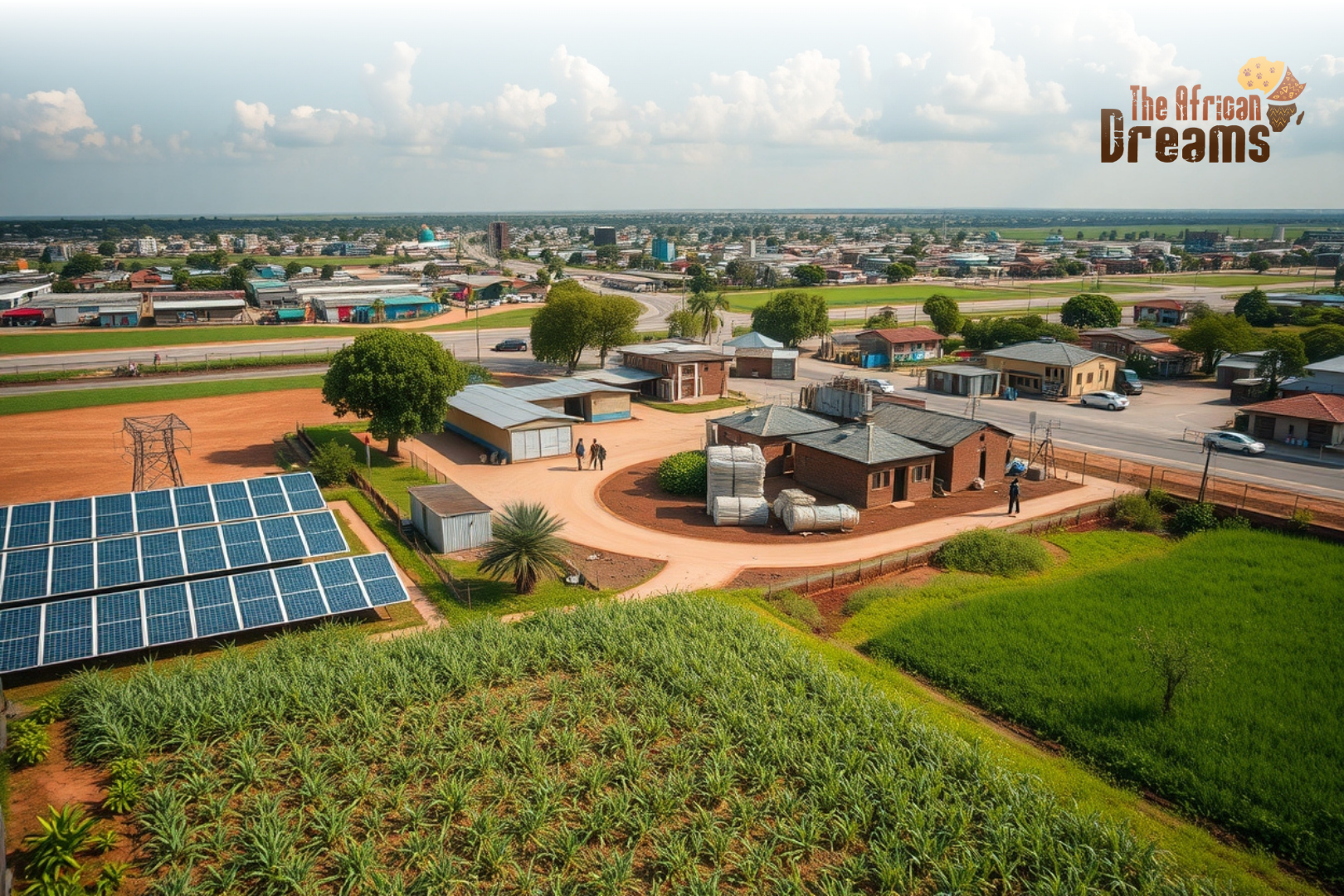
Malawi is working to create a better environment for business owners and investors in 2024. As a country in Southern Africa, it faces some challenges, such as poor infrastructure, small industrial base, and heavy dependency on agriculture. But the government is putting all efforts into trying to improve the situation by attracting both local and foreign investors. The 2024 Investment Climate Statement for Malawi, by the U.S. Department of State, is to help companies make informed decisions for their businesses with the latest information on the investment climate of Malawi.
Malawi allows and encourages investments in vital sectors like energy, farming, mining, and tourism. It has also signed agreements with other countries to ensure the safety of investors and avoid double taxation. This made it easier for businesses to operate. Recent policy reforms hopefully, will simplify the process of running and starting a business. Besides these, the government has taken steps to strengthen public-private partnerships, build better systems for investor engagement, and enhance transparency in economic governance.
This article looks at the 2024 Investment Climate Statement for Malawi, which includes Malawi’s openness to investment, its international agreements, and the industrial policies in place to support growth.
Article Highlights
1. Openness To, and Restrictions Upon, Foreign Investment
- Policies Towards Foreign Direct Investment
- Limits on Foreign Control and Right to Private Ownership and Establishment
- Other Investment Policy Reviews
- Business Facilitation
- Outward Investment
2. Bilateral Investment and Taxation Treaties
3. Industrial Policies
- Investment Incentives
- Foreign Trade Zones / Free Ports / Trade Facilitation
A. Openness To, and Restrictions Upon, Foreign Investment
Policies Towards Foreign Direct Investment
Foreigners can invest in any sector and enjoy the same benefits as local investors. There are no rules that limit business ownership, amount of investment, funding sources, or whether the products are for export or domestic use. Investors are free to dismiss profits and capital, make payments abroad, and do not need to partner with local businesses. However, on the Malawi Stock Exchange (MSE), foreign investors can only buy up to 10% of shares during a company’s Initial Public Offering (IPO) and 49% of total shares. There are no setbacks or restrictions for buying shares in secondary markets as well. Purchasing new government bonds is strictly disallowed. But foreigners can still invest in government debt.
To encourage investment, Malawi has a Cabinet Committee on Public-Private Partnerships and a 16-member Presidential Council that was established in January 2023. However, the council has only been held once.
Key government institutions that engage with investors include the Malawi Investment and Trade Center (MITC), Ministry of Trade and Industry (MoTI), Malawi Revenue Authority (MRA), Reserve Bank of Malawi (RBM), and the Public-Private Partnership Commission (PPPC). The Malawi Confederation of Chambers of Commerce and Industry (MCCCI) also represents businesses and has successfully influenced government policy in the past. Additionally, these institutions often collaborate with international partners and regional development bodies to align Malawi’s policies with global standards.
Malawi has many ways to attract investors, like Investment Forums and Trade Funds. In 2024, the Parliament passed two key laws:
- The Investment and Export Promotion Act: This act strengthens MITC’s authority, establishes a “One-Stop Service Center” for investors, and modernizes outdated regulations.
- The Special Economic Zones (SEZs) Act: This act establishes designated areas to encourage investment and outlines governance for these zones.
- Limits on Foreign Control and Right to Private Ownership and Establishment
Foreigners are encouraged to invest in almost all sectors except for areas that are considered a risk to health, the environment, or national security. There are no restrictions on capital sources, locations, or the purpose of investment, but every company must have at least two resident directors in Malawi.
The changes of land laws in 2022 introduced some new rules:
- When a land’s rental is finished, the land returns to the government. Some of this land will be managed by MITC.
- Foreign investors may use land issued by MITC, but if the land is not developed within two years, it is reclaimed by the government.
- Only Malawian citizens can be granted or purchase land.
- Converting agricultural land to urban land requires giving 50% of the converted land to the government. The government will compensate for its portion.
- Customary land (land inherited through families) is restricted to indigenous Malawians only.
These land laws try to support both investment and land protection while making sure local people can still use the land. But the wording of the laws is not very clear, which has made investors and analysts uncertain. Even experts have shared worries about the confusion. To address this, the Ministry of Lands sent draft rules to the Ministry of Justice in January 2024. However, these rules have not been officially announced yet.
Malawian citizens receive privileged treatment when the government sells assets. They can buy shares at lower prices and access easier loans. A 2017 law also states that 60% of government contracts go to native Black Malawians. An attempt in 2020 to make this rule official failed due to people opposing it in large numbers. However, a temporary clause gives native Malawians a 20% preference. In addition, Micro, Small, and Medium Enterprises (MSMEs) receive contracts for projects under a certain threshold.
Before starting a business in Malawi, foreign investors need to get an investment certificate from the Malawi Investment and Trade Centre (MITC). They also have to register with the Registrar General and the Reserve Bank of Malawi (RBM), and must invest at least $50,000. In 2019, MITC said this minimum amount might go up in the future- possibly up to $500,000, depending on the type of business- but no exact timeline has been given yet. Investors who register properly are allowed to take their profits and repay loans when they leave the country.
Other Investment Policy Reviews
In 2016, the World Trade Organization (WTO) last reviewed Malawi’s trade policy. The entire report is available and can be obtained through the WTO TPR website. Neither the OECD nor UNCTAD has directed full investment policy reviews for Malawi. However, UNCTAD carried out a Rapid eTrade Readiness Assessment in 2020, which is available on its website.
The World Bank also reviewed Malawi’s investment climate in 2016, which can be accessed through the ICA website. Since then, Malawi has made significant policy changes, but a fresh round of external reviews may be needed to reflect these updates and guide future reforms. There have been no current submissions from civil society groups on investment policy.
Business Facilitation
The MITC supports local and foreign investors through a One-Stop Center. They offer appealing services such as company registration, business licensing, immigration permits, land access, and tax incentives. More details are available on the MITC website and iGuides.
To run a business legally in Malawi, one needs to register it with the Registrar General, the Malawi Revenue Authority (MRA), and other related government offices. One can register online, but it’s often slow and may have technical problems, so going in person is usually faster and more reliable.
One also needs to get a license from the city council and register one’s workplace with the Ministry of Labor. Sometimes, health inspectors will check one’s business to make sure it meets safety standards. Malawi is working on making it easier to register a business by using digital systems. There are still some manual steps that can slow things down. Also, Malawi is not part of the Joint Initiative on Investment Facilitation for Development.
Outward Investment
Malawi does not really actively promote outward investment. The Pension Act restricts the use of pension or umbrella funds for foreign investments. However, there are no limitations on other types of funds being used for international investments. While MITC indeed does support both inbound and outbound investments, in practice, its focus is primarily on encouraging domestic business and foreign direct investment (FDI) into Malawi.
Encouraging outward investment could eventually support knowledge transfer, diversification, and global competitiveness for Malawian firms- but for now, this area remains underdeveloped.
B. Bilateral Investment and Taxation Treaties
Malawi has investment agreements with several countries. Those countries include Egypt, Italy, Taiwan, and the Netherlands. It has also signed agreements with Zimbabwe, Malaysia, and Brazil, but those are not active yet. In 2023, Malawi signed an investment agreement with the European Union as part of a group of African, Caribbean, and Pacific countries, but that agreement hasn’t started yet. One can find more details about these agreements on the UNCTAD Investment Policy Hub and the ICSID database.
Malawi is also part of some trade groups: the COMESA Customs Union, the SADC Free Trade Area, and the African Continental Free Trade Area. It has tax agreements with South Africa, Norway, Zambia, and the UK.
However, Malawi doesn’t have a trade or tax agreement with the United States and isn’t part of the OECD’s global tax initiative known as BEPS. Joining more global tax initiatives and bilateral agreements in the future could help improve Malawi’s reputation as a predictable and transparent investment destination.
B. Bilateral Investment and Taxation Treaties
Malawi has investment agreements with several countries. Those countries include Egypt, Italy, Taiwan, and the Netherlands. It has also signed agreements with Zimbabwe, Malaysia, and Brazil, but those are not active yet. In 2023, Malawi signed an investment agreement with the European Union as part of a group of African, Caribbean, and Pacific countries, but that agreement hasn’t started yet. One can find more details about these agreements on the UNCTAD Investment Policy Hub and the ICSID database.
Malawi is also part of some trade groups: the COMESA Customs Union, the SADC Free Trade Area, and the African Continental Free Trade Area. It has tax agreements with South Africa, Norway, Zambia, and the UK.
However, Malawi doesn’t have a trade or tax agreement with the United States and isn’t part of the OECD’s global tax initiative known as BEPS. Joining more global tax initiatives and bilateral agreements in the future could help improve Malawi’s reputation as a predictable and transparent investment destination.
C. Industrial Policies
Investment Incentives
The government offers various facilities, such as tax breaks and other benefits, to attract local and foreign investors in different areas of work, like manufacturing, construction, energy, farming, and mining. One can find the full list of these benefits on the websites of MITC and MRA. Companies have to talk with the suitable government office to qualify, but it usually takes time to get the actual benefits.
Sometimes, the government also vows to support or share costs for important foreign investment projects. To encourage clean energy, it has removed taxes like import duty, excise, and VAT on most renewable energy products.
Energy production in the country is considered one of the top priorities and is given lots of importance. Investors may get extra benefits by investing in this sector. The government’s commitment to renewable energy aligns with global sustainability goals and is likely to draw environmentally conscious investors seeking green market opportunities.
Foreign Trade Zones / Free Ports / Trade Facilitation
Rules for export processing zones (EPZs) were made in 1995. At first, only companies that produced goods that were viewed to be exportable could join the program. But, in 2020, the rules changed so that EPZ companies could now sell up to 20% of their products within the country.
There are currently 13 companies in the EPZ program, and 11 of them are owned by foreign investors. The law doesn’t show any unjust actions or unfairness and treats local and foreign owners equally.
In 2021, the government started working on creating Special Economic Zones (SEZs) and Industrial Parks. They picked five locations for them. The SEZ law was passed by Parliament in December 2023 and signed by the President in January 2024. Parts of the new law (sections 29 to 32) offer both tax and non-tax benefits to businesses that get SEZ licenses. These initiatives aim to enhance industrial productivity, increase exports, and create localized employment opportunities in targeted growth corridors.
Conclusion
Today, Malawi offers both opportunities and challenges for investors. Despite challenges, Malawi is making steady progress toward becoming a more welcoming and reliable destination for investors in 2024. The government of Malawi is taking vital steps to attract more substantial investments by improving laws. It also improves these laws by introducing tax incentives and protecting foreign businesses. Sectors like agriculture, energy, and tourism are the most promising, holding immense potential. That’s why industrial policies are designed to support new businesses, create jobs, and grow the economy.
While these efforts are promising, some issues still make investment harder, such as delays in government processes, unclear land ownership rules, and policy changes. However, the long-term commitment to reform and transparency shows the government’s genuine intention to transform Malawi into a great economic player in the region. Even still, many investors see Malawi as a country with immense potential for growth.
With persistent and better reforms and planning, it could become a better, more stable, and attractive place for doing business. For those who are ready to understand and work within the local context, Malawi offers meaningful and fruitful opportunities in 2024 and beyond.




0 Comments