

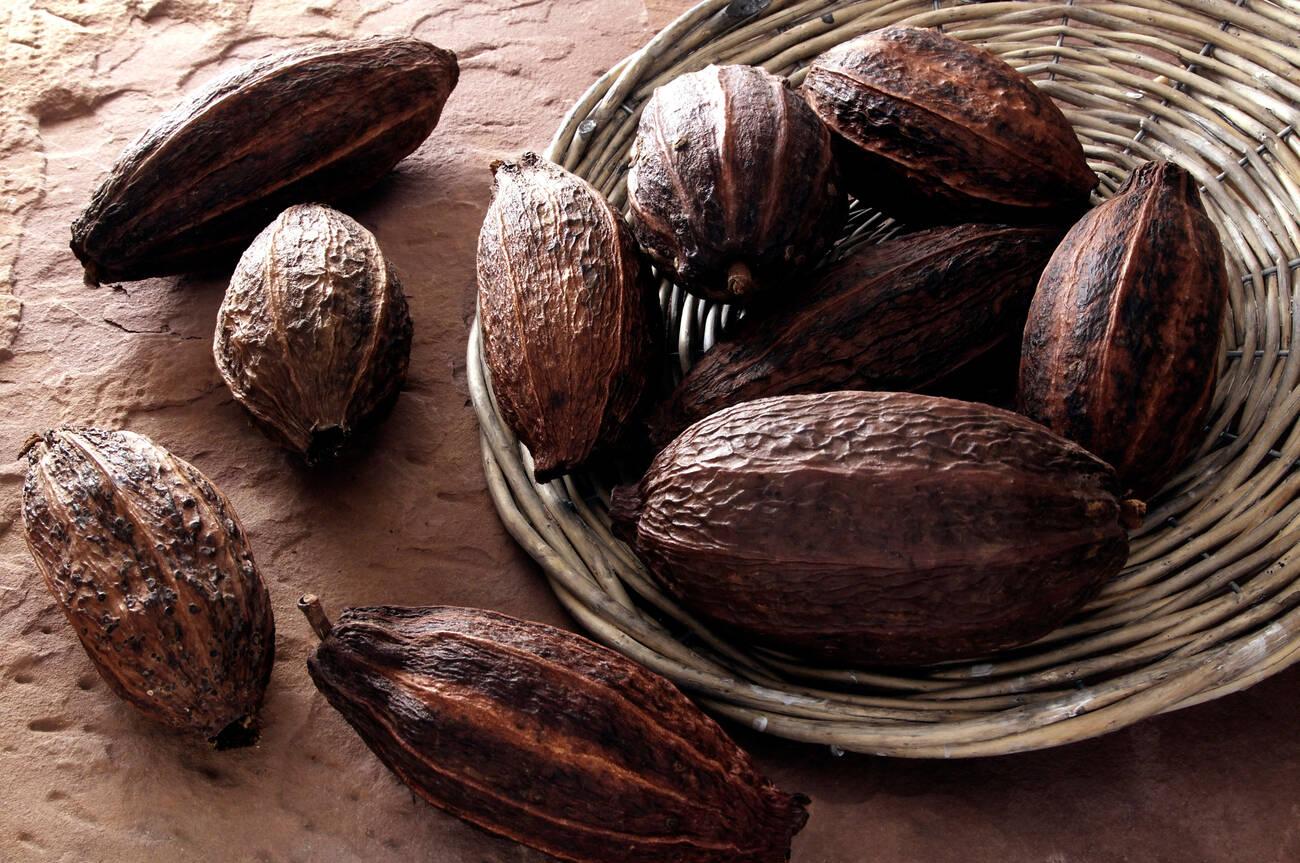
Ghana, one of Africa’s top cocoa producers and the world’s second-largest cocoa producer, accounts for approximately 15% of the world’s cocoa beans.
Cocoa, a fruit grown near the Equator, produces sweet treats. The process involves fermenting beans, sun drying them, and selling them globally. Unfortunately, many child laborers are involved in this hard-working process in Ghana.
Article Highlights
Ghana’s Cocoa Production: Ghana is the world’s second-largest cocoa producer, contributing 15% of the global supply. Between October 2022 and March 2023, 576,738 metric tonnes of graded cocoa were purchased in Ghana.
Global Chocolate Companies’ Reliance on Ghana: Top chocolate companies like Nestlé, Cargill, Mars, Mondelez International, and Hershey heavily depend on Ghana’s high-quality cocoa, with sustainability initiatives aiming to improve production and community welfare.
Economic Potential of Cocoa Farming: Ghana’s cocoa sector contributes significantly to its economy, with high export volumes and growing global demand, valued at $67.88 billion by 2029.
Children from Well-off Families
We randomly asked 10 children from a well-off family where the chocolate usually comes from. Their responses were quite funny, and some answers were: ‘from the market’, ‘from our refrigerator’,’ from money’, and ‘from Papa’s pocket’. This simple and sweet reply touches the heart and highlights a fact.
Despite chocolate being a children’s favourite, most of them are unaware of its origins. It makes sense that they shouldn’t be aware. But as an adult, do you know where chocolate comes from? Well, maybe, or maybe not.
However, cocoa, the primary ingredient in chocolate, primarily originates from Africa. With West Africa accounting for about two-thirds of its production.
Children from Low-income Families
We also asked 10 Ghanaian children employed on the cocoa farm a different question: “Do you know what can be made from this cocoa?”
The majority of them stated that they were not aware of this. Furthermore, when we offered them a piece of chocolate and informed them that you had made it, their eyes lit up. After tasting the chocolate, they were shocked and couldn’t believe these delicious things were made of cocoa.
Two Different Universes
The shocking and terrible part is that we have to distinguish between two types of children. One who eats chocolate because it’s their favorite and another who makes chocolate but has never seen or tasted it.
Each small cocoa bean tells countless stories about thousands of people. Their diligence makes our lives pleasant. In a parallel universe, one child of the same age seeks to eat to live by earning something, whereas another seeks happiness with a small piece of chocolate.

Can the Scenario be Changed?
Is there any way to improve their status and make their life easier? Can we change the whole scenario?
Indeed, a solution has the potential to alter the situation. If investors, such as small—to large-scale companies, invest more, there is a chance to improve their lifestyle.
As the demand remains the same, more investment should be made, which can enhance their lifestyle. This will ensure sufficient per capita income for each family and reduce child labour.
Higher production, fair trade, and investors’ willingness to do something for community well-being. Then, cocoa farmers can be wealthier, enabling them to enhance their welfare, provide better education for their children, and use more sustainable farming methods.
Moreover, as investors or buyers, many well-known chocolate companies do charitable things for the community’s well-being. This leads to enhanced infrastructure, services, and livelihoods. Besides, high-volume production generates more income and improves the lifestyles of farmers and their families.

The Top 5 Chocolate Companies Rely on Ghana and Their Future Prospects
Takbeer, a 7-year-old from Bangladesh, likes Kitkat, a Nestle-branded chocolate. His cousin Elnaz, who lives in New York, likes Twix, a Mars Inc.-branded chocolate.
The diverse preferences of every person are prevalent. There are many companies that have a long-established value proposition.
The five top companies depend on Ghana’s cocoa production: Nestle, Cargill, Mondelez International, Mars, and Hershey. The global cocoa and chocolate market was US$46.61 billion in 2021 and is anticipated to reach US$67.88 billion by 2029, growing at a CAGR of 4.98% during the period under review.

Nestle
In 2022, Nestle bought 254,000 metric tonnes of cocoa through the Nestle Cocoa Plan, and about 7% of that, roughly 17,780 metric tonnes, came from Ghana.
Under the Nestle Cocoa Plan, Nestle aims to source 100% of its cocoa in 2025 sustainably. The company has mapped 85% of its farm boundaries for its 110,000 farms in Ghana. Over 1.25 million indigenous forests and local fruit trees to improve climate resilience and diversify farmers’ incomes. It also aims to eliminate all forms of child labour by 2025.
Cargill
Cargill has been getting cocoa from Ghana for over 40 years and has a strong presence there. In 2017/2018, they bought 10,000 MT of certified cocoa from Ghana.
Cargill has sourced cocoa from Ghana for over four decades and created its state-of-the-art cocoa processing plant in Tema in 2008.
Cargill has completed a $13 million expansion of its cocoa processing facility in Ghana to meet the rising demand for cocoa powder from consumers worldwide. This investment not only facilitates the creation of more jobs in Ghana but also provides a higher income.
Mondelez International
Through its Cocoa Life Sustainability Programme, Mondelez International plans to increase its cocoa sourcing from Ghana to 100% by 2025.
Currently, they get 40% of their cocoa from Ghana. In 2018–2019, they paid about 18 million Ghana cedis (US$3.28 million) as a sustainability premium to 29,116 registered farmers in 334 cocoa communities in Ghana. Mars strives to achieve a sustainable supply chain for cocoa and a better future for them.
Mars
Mars is part of the Cocoa & Forests Initiative (CFI) commitments, which aim to stop global deforestation and forest degradation in the cocoa supply chain.
With an initial focus on Côte d’Ivoire and Ghana, which cultivate over 65% of the world’s cocoa, Mars is a signatory to the Cocoa and Forests Initiative’s (CFI) commitments to halt deforestation and forest degradation in the global cocoa supply chain.
The Hershey Company
Hershey has stayed true to its promise of using 100% independently verified cocoa, a goal they achieved in 2020. Hershey sources cocoa from the world’s most renowned cocoa-certifying organisations.
Hershey invests in community development, focusing on education and health programs to improve the living conditions of cocoa-farming families and reduce child labour.
By 2025, the company aims to achieve 100% sourcing visibility in Côte d’Ivoire and Ghana. To this end, it mandates its suppliers to polygon map all farms producing Hershey’s cocoa volume in these countries as part of enhanced traceability systems for deforestation monitoring.

To Sum Up
Thus, we can say that if many companies like these invest in Ghana or import Ghana’s cocoa, then they will both be beneficial. Undoubtedly, Ghana’s high-quality cocoa attracts investors. However, their modest efforts, such as community development, expanding opportunities, promoting fair trade, and providing fair wages, can significantly improve the lives of the labourers. Perhaps these tiny initiatives by investors or importers have the potential to alter the overall narrative significantly. So, let’s turn the sad chapter into a beautiful one.
0 Comments