
Introduction
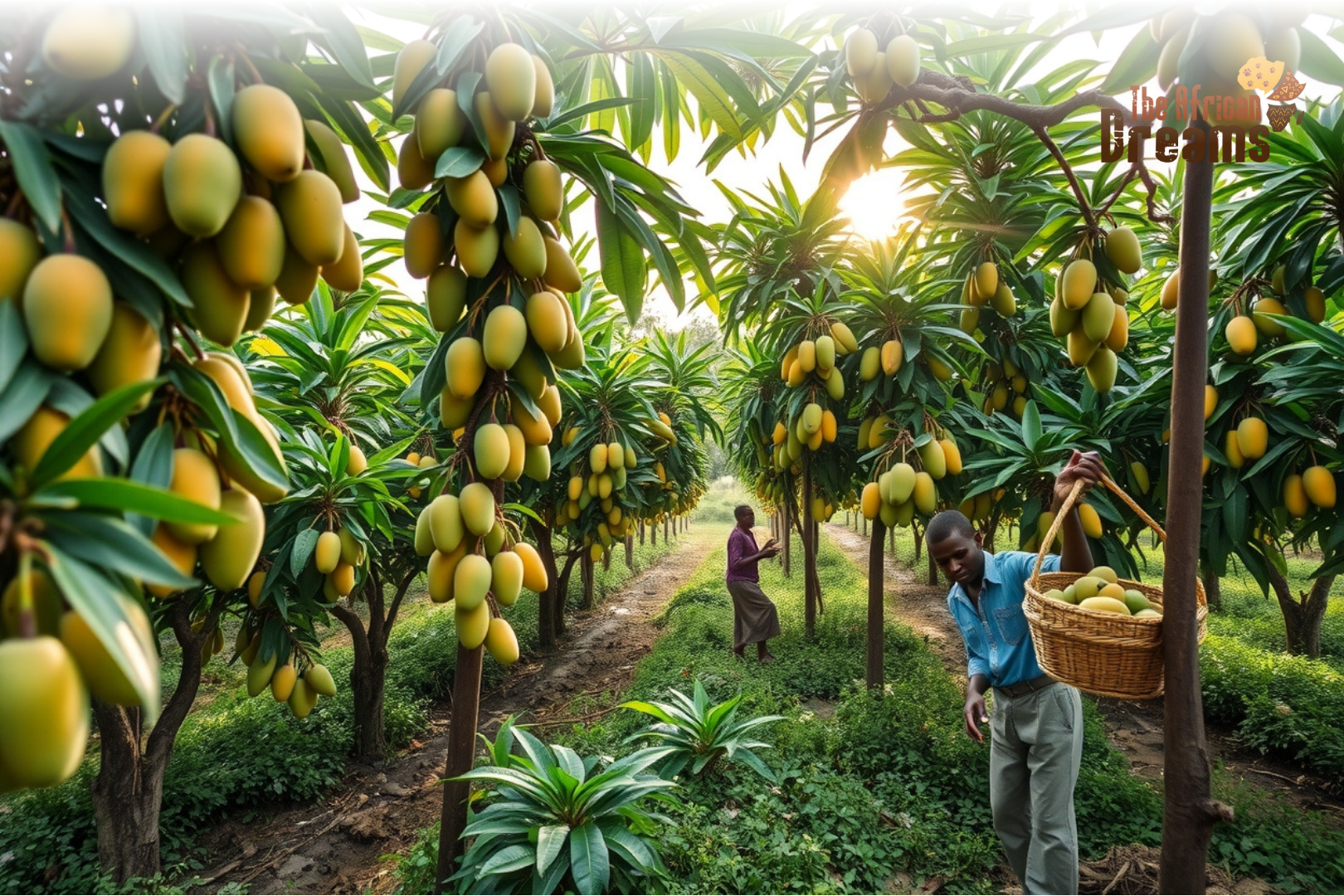
Who doesn’t love mangoes? Mangoes are enjoyed worldwide for their delicious taste and versatility and are known as the “king of fruits.” In Gambia, mangoes play a vital role in the economy. As they are renowned for their high quality in domestic and international markets. Despite many challenges, the mango industry in Gambia can thrive with proper support and investment, benefiting farmers and the economy.
Varieties of mango in Gambia
A local farmer has a mango farm in the Gambia. He has traditionally been practising mango farming for over a decade and has explained all the varieties available in the Gambia.
Additionally, he explains that the warm and humid climate provides ideal conditions for mango trees to thrive. Fertile soil in much of the Gambia contributes to the richness of the mangoes’ flavour. He has been practising sustainable farming practices that help to maintain the natural taste and quality. Most Gambian farmers have followed this tradition.
1. Keitt is large, oval-shaped, with green skin and red undertones. It is very juicy and sweet with a tangy flavor. It is excellent for eating fresh, making smoothies, or adding to salads.
2. Jurr is usually small and round and turns green to yellow when ripe. It has an intense sweetness and creaminess and a peculiar aroma. People mostly eat it fresh or in desserts, jams, and chutneys.
3. Tandugu is large, heavy, and rounded. It is sweet with a strong aroma and very good for pickling. It is mainly prepared as pickles.
4. Cherry is a small type of mango that is orange when ripe and reddish-green when unripe. It is not as sweet as other varieties but is the sweetest among small mangoes. Eaten fresh, it has many fibres.
5. Lamen is medium in size. When ripe, its skin turns from green to dark orange or red. It’s very sweet when fully ripe. Lemon can be eaten raw when ripe, but sour when unripe.
6. Haddon is small, roughly the size of Satsuma tangerines. It’s lovely and juicy. Green mangoes are mainly consumed fresh, with salt and pepper to neutralise the acidity.
Unripe mangoes also make popular condiments such as chutneys and pickles. Ripe mangoes make jam, sweets, and various sweet preparations. Fresh mangoes add a tropical twist to salads and smoothies.
Challenges Faced by Gambian Farmers in Mango Yield
Despite the promising potential, farmers need help with their daily work, impacting the production of quality fruits. There are many reasons for this problem. Such as –
1. Insect Pests: One significant issue is the damage fruit insects cause, leading to considerable losses in mango production. The damage is estimated to be around 35%. Efforts are being made to eradicate these pests, but it remains a persistent problem.
2. Climate Change: Changes in climatic patterns, such as inadequate rainfall, also affect mango production. Unpredictable weather may result in poor crop yields and damage to the mangoes.
3. Inadequate Policies and Management: More dynamic agricultural policies and management are needed to assist mango farmers with farming skills, pest control methods, and better resource utilisation.
4. Unsatisfactory Farming Equipment: Most farmers need adequate farming equipment, which can dampen the spirit of efficient cultivation and harvesting of mango fruits. This negatively affects their productivity level as it may be labour-intensive.
5. Inaccessibility of Credit Facilities: Many farmers, particularly the youths and women who are very active in mango farming, need more access to credit facilities. Financial support makes it easier for them to invest in their farms to improve production capability.
6. Market Access: Farmers experience many challenges accessing markets and prices for their produce. This is usually attributed to poor infrastructure, lack of market information, and competition from imported mangoes.
Now, it’s high time to solve these problems. But before solving them, let’s ask a farmer what they want to improve their condition.
Kazan, a farmer, said, “Now we can see a wide range of revolution in every segment and so on in the farming system. A huge lack of modern planning and equipment is causing the main problems for various reasons.”
This statement is kind of true. Based on his statement, if the problems can be divided into two segments—like modern planning and equipment—it will be easier for Gambia to get a proper solution. Modern planning can include credit facilities, more accessible market access, export facilitation, etc. On the other hand, modern equipment has farming equipment facilities, pest control systems, and climate resilience. All these significant issues should be considered first, but how?
Solutions to Revitalize Gambia’s Mango Industry
While Gambia cannot yet compete with major mango exporters like India, Mexico, or Thailand, its annual production of approximately 1,440 metric tons demonstrates its potential. However, fluctuating production levels since 2018 and difficulties faced by farmers threaten this potential.
To address the problems, Gambia needs to step up. The question begins with by whom and how. Suppose investors from outside come forward and account for these problems. Then, there is a high chance of ensuring farmers’ profitability and a fruitful business. Like –
- Implementing IPM strategies can help control pests like fruit flies and the mango sector’s biological and cultural practices.
- Additionally, by training and providing education, farmers will have the best practices for pest management.
- For climate management, efficient irrigation systems and water conservation techniques can help ensure a consistent water supply. Tropingo Foods is an example of a successful story in the mango sector.
A Success Story: Tropingo Foods
Tropingo Foods, founded by Momarr Mass Taal in 2014, has become one of the largest processors and exporters of dried mangoes and groundnuts from the Gambia. Tropingo Foods has added value by drying the local mangoes and increasing their shelf life by opening new opportunities for different markets. The company exports dried mangoes to several countries, such as Nigeria, Senegal, the Netherlands, and China.
Tropingo Foods has created employment for more than 250 women and youths. This has increased their production efficiency from manually slicing the fruits to using a slicing machine with conveyor belts. Tropingo Foods converts waste into biogas for use in its facilities, confirming its sustainability.
A Call for Investment
This successful story inspires those who want to take steps by investing in the Gambia. Gambia’s climate is undoubtedly suitable for farming. The different varieties of mangoes are all favourites. Incentivising taxes, subsidising, or providing grants for agricultural investments can improve the sector. In 2019, Gambia exported approximately 376 tonnes of mangoes.
Investors can develop an online presence through a website and social media platforms. This will help to attract international buyers and investors.
Conclusion
Gambia’s mango industry can potentially become a significant player in the global market. The foundation for success is already in place with its diverse mango varieties, favourable climate, and rich soil. However, addressing the challenges requires investments in infrastructure, modern equipment, and financial support.
Gambia also has to take into account the recent difficulties. Besides, by following this successful business model, they will indeed have extended portability. So, why wait? The time for investors to act is now. Gambia’s mango industry is ripe with opportunity—both literally and figuratively.

0 Comments