
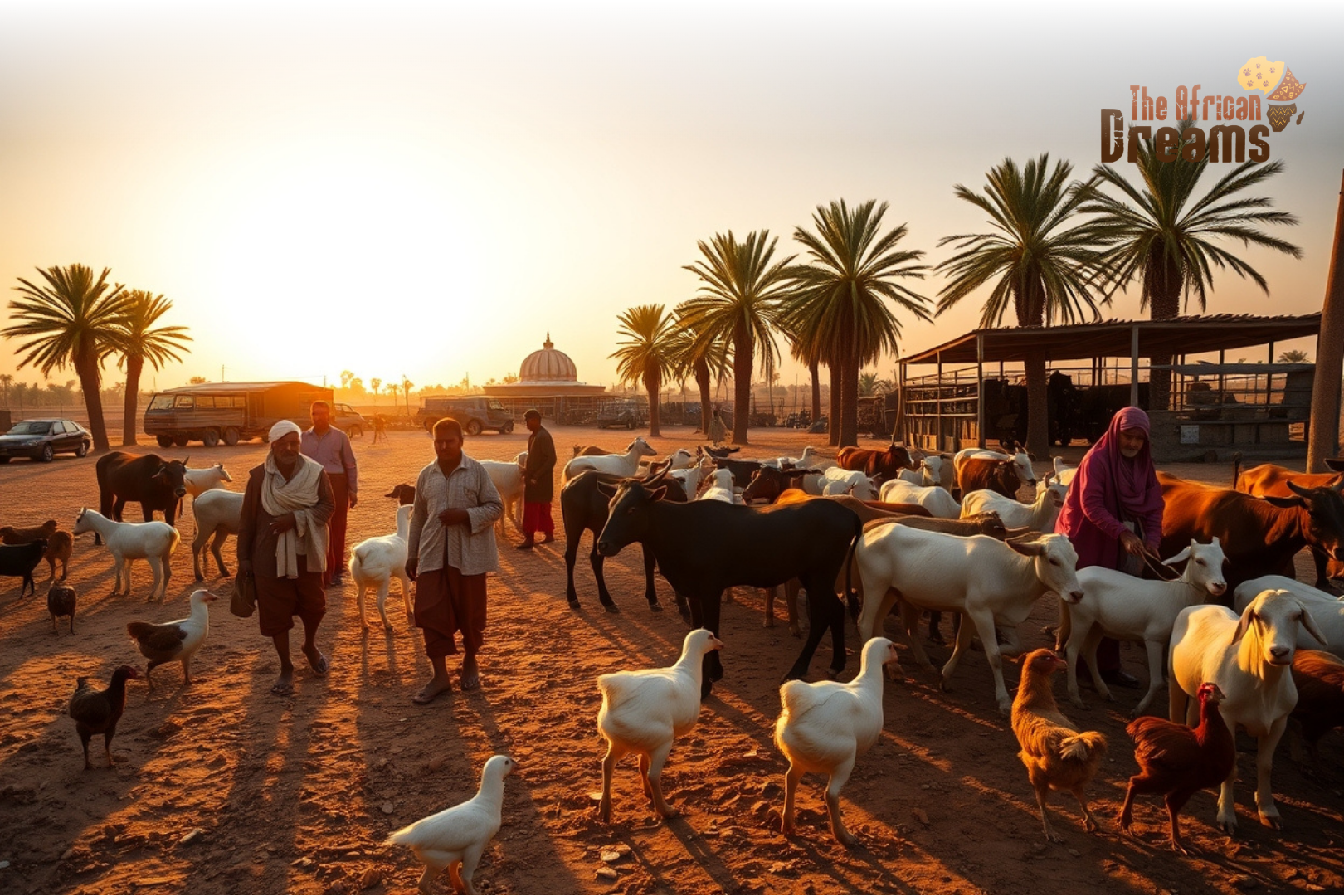
Discover Egypt’s Livestock Sector
The importance of the livestock sector is deeply emphasized in Egypt’s agricultural and rural economy. Egypt’s history dates back thousands of years, so it’s no surprise that animal husbandry has long been intertwined with Egyptian culture.
From the clucking of chickens in village courtyards to large-scale dairy farms outside Cairo, Egypt’s livestock sector is more than just a tradition. It is a living, breathing part of Egypt’s rich culture and economy. Cows, goats, chickens, etc, feed the growing population and, of course, keep the rural livelihoods afloat. It is also a kind of storehouse of opportunities for the country and the world.
Despite challenges, Egypt’s livestock sector pushes the country towards growth and urbanization. There are many kinds of opportunities in this field because of its population, potential outcomes, and its attractiveness to foreign investment. The demand for animal products continues to increase. Alongside technological advancements, there is potential to reach maximum potential.
In this blog, we will discuss Egypt’s livestock sector, including its current state, challenges, solutions, growth potential, investment opportunities, and success stories.
Article Highlights
Current State of Egypt’s Livestock Sector
Challenges & Solutions
Opportunities and Potential for Growth of Egypt’s Livestock Sector
Investment Opportunities
Success Story
Current State of Egypt’s Livestock Sector
Egypt’s livestock sector is a bit of a patchwork because of its centuries-old customs, but at the same time, it’s cautiously pushing towards modernization. Though customs can slow the process of development process, the attraction towards modernization indicates many gaps to be filled.
One of the most significant pillars of the nation’s agricultural landscape. It is essential to provide food for people, sustain rural households, and generate income throughout the country. These are the needs or fields that cannot be ignored, and Egypt is making sure to ensure this safety by focusing on the livestock sector.
Smallholder farmers produce the majority of the nation’s livestock. These people have no access to modern technology; however, they maintain productivity at a good level. Though it has some areas to improve, it indicates that the current situation is favorable for a new kind of opportunity.
Smallholder farmers are the people who keep domestic animals for milk, meat, and possibly some extra cash at the local market, rather than for show. They use age-old techniques that have been handed down through the generations. Despite their simplicity, these animals are essential for plowing fields, fertilizing crops, and paying for emergencies in addition to providing food.
On the other hand, Egypt is seeing the number of commercial livestock operations grow, especially in the dairy and poultry sectors. Commercial livestock is also improving its pace day by day and contributing an integral part to the economy. On these larger farms, the modern tools, such as better feed, vaccinations, veterinary care, and breeding, come into play.
Specifically, poultry has gained enormous popularity and is currently Egypt’s go-to inexpensive protein source. Overall, it is faster and more efficient.
Challenges Faced by Egypt’s Livestock Sector
Egypt’s livestock sector isn’t without its headaches despite its booming potential. Behind every carton of eggs or glass of milk lies a tangled web of challenges that make life tragically hard for farmers, especially for the ones who work on a small scale. Though commercial livestock operations can happen easily, when it comes to the smaller scale, it is difficult for the farmers to make their lives easier and contribute at the same rate.
1. Rising Cost of Livestock Feed: Let’s start with feed, the lifeblood of any livestock operation. Good quality feed is expensive, and Egypt imports most of it. Soybean, corn? You name it. That means when global prices go up, Egyptian farmers feel the squeeze.
As the country depends on foreign products, it has no control over the prices. When there is no control over prices, the overall sector gets impacted by it. Many can’t afford to buy enough, which leads to underfed animals, low productivity, and, in some cases, financial doom.
2. Inadequate Water Resources: Egypt’s water resources are stretched thin, and livestock farming doesn’t get top priority. In rural areas, access to clean water is patchy, and during dry spells, even keeping animals hydrated can be a struggle.
Water is not only essential for animals; of other products, it is a vital element in large-scale production. It is a huge drawback if a proper supply of water cannot be ensured. Outdated farming practices and water scarcity are additional issues in the development of Egypt’s livestock sector.
3. Poor Health Care: Health care for animals is another problem spot and a concerning matter, too. While larger farms may have a vet on speed dial, many smallholders rely on local advice, home remedies, or outdated practices. This dependence on local advice can impact the animals widely,y and that leads to different kinds of complexities.
Disease outbreaks are common, especially with poultry and cattle, and things like brucellosis or avian flu aren’t just bad for animals; they can affect humans as well.
4. Weak Infrastructure: Infrastructure also adds to the already messy mess. A lot of farmers can’t get their products to market fast enough or store them properly. Roads are poor, cold storage is rare, and basic tools like refrigeration or hygienic slaughter facilities are often out of reach.
This problem of transportation and poor infrastructure leads to a decrease in the productivity of farming. All these problems result in a spectacular combination of spoilage, losses, and low profits.
5. Knowledge Gap: A knowledge gap is another major factor that impacts Egypt’s livestock sector’s development. Many farmers aren’t trained in modern livestock management, and agricultural extension services are patchy at best.
As the farmers do not have comprehensive knowledge of Egypt’s livestock sector, it is very difficult for them to adapt to new kinds of difficulties. Without access to current info on nutrition, breeding, or disease prevention, it’s hard to move forward.
6. Lack of Policy Implementation for Small Farmers: Policies tend to favor big-shot investors, leaving small farmers with limited access to loans, subsidies, and insurance. It is a bit problematic for the small farmers to develop in this field, as they are not the primary focus of the government.
While the spirit to improve the sector is there, implementation on the ground often falls short. In the end, the farmers get the short end of the stick. Therefore, there should be a balance of both knowledge and implementation to solve this problem.
7. Others: Farmers’ limited access to veterinary services and soaring feed prices hinder the productivity of farmers. To further add to the already complicated equation, the rapid population growth and urbanization place more pressure on the sector.
The overall picture has some irregularities. The production of meat cannot keep up with demand, milk yields are low, and many animals are not raised in ideal conditions.
However, lawmakers and investors alike are starting to realize that Egypt’s livestock sector needs to change for the better. Efforts to improve feed quality, animal health, and farmer training are progressively gaining momentum.
Opportunities and Potential for Growth
1. Advanced Technology: Technology minimizes wastage, diseases from the animals, and improves the overall atmosphere for livestock. As the whole world is adopting technologies due to the new era, Egypt is no exception. By adopting all these strategies, the country can achieve more with less effort.
These modern technologies can be used in any geographical area and are designed with a focus of affordability and scalability. With the help of the government in terms of incentives or private investments, any farmer can gain necessary access to these advanced technologies and implement them in their farming process.
2. Climate: As the climate is evolving day by day, the innovations in terms of demand need to be updated. Egypt is a country that utilizes the climate, too. The government is employing necessary steps to create new kinds of innovation according to new kinds of situations.
Moreover, the location of the country is very strategic as it is situated at the crossroads of Africa, Asia, and Europe. These geographical locations help the country to do regional trade in terms of livestock products. The location is key for foreign investments to boost the possible trade in the area. As a result, the country can get economic benefits from Egypt’s livestock sector on a larger scale.
3. Local Market: It is important to understand the supply and demand of the local market for Egypt’s livestock sector. The country has a large population of 100 million people, and therefore, the demand for meat, milk, and poultry is growing day by day. Therefore, it is important to develop the sector even more.
4. Diversity: As Egypt’s geography supports a variety of livestock systems, there is a wide range of livestock products. It is important to understand that this diversity is very unique. Because of this uniqueness, Egypt’s livestock sector has more opportunities in the market.
5. Government Support and Policies: As the government actively supports livestock development through subsidies, veterinary services, and national food security programs, the country can naturally develop this sector on a broader scale.
These programs or services can increase the chance of getting more foreign investments and develop the sector on a larger scale.
Investment Opportunities in Egypt’s Livestock Sector
1. Government Funded Projects: The Egyptian Government is serious about the Livestock Sector, and therefore, it is taking every possible opportunity to develop this sector in the long run.
For example, the National Veal project is a notable project where government is funding. In this project, the government is offering EGP 9.3 billion to 44,400 farmers. The number showcases how serious the government is becoming in terms of taking proper initiatives.
2. Loans: The Agricultural Bank of Egypt (ABE) is providing loans for small-scale farmers. This is a great initiative as the details of the loan are more interesting and engaging for the farmers. The loan details are given below.
a. 5-year loans at 5% interest rate
b. Technical/veterinary support
c. Convenient repayment plans
3. Fast Processing of Taxes: Egypt is a great country to invest in because it has a very flexible tax processing timing range. The overall time taken to process the taxes from the foreign investors and the overall process is easy to finish. It makes Egypt a highly likable place for investors to invest.
Particularly, Egypt’s livestock sector involves a lot of foreign involvement. It is because there is a growing demand for livestock products. That’s why there is a vast opportunity for investors to invest in Egypt’s livestock sector.
4. Licensing Support: From an investor’s point of view, it is really necessary to get licensing support in a short time. Egypt is a country where foreign investors can register easily and get licensing support in a short span of time.
The government has digitized and simplified the licensing process, issuing thousands of licenses annually for livestock and poultry projects. The government made the whole process of licensing digitized and simple. They issue thousands of licenses annually for livestock and poultry projects.
It showcases that the government is emphasizing foreign investment more intensely day by day, which indicates a huge opportunity for investors.
5. Government Incentives for Egypt’s Livestock Sector: The government is providing necessary incentives for export, such as processed poultry, frozen meat, and feed additives, by providing facilities and opening a lot of new markets.
It is a great way by which the production can be value-added on export-oriented projects. These kinds of export-oriented projects encourage more foreign investment and opportunities to come.
To learn more about Egypt and why you should invest here, you can read Why Should You Invest in Egypt?
Success Story of Egypt’s Livestock Sector
The El Ammar company is a bright example of Livestock Investment Success in Egypt. The government and the El Ammar company signed a cooperation protocol. This cooperation protocol includes:
- 5-year loans at a reduced 5% interest rate to small farmers
- Affordable loan system
- El Ammar supplies 100 to 150 Cattle Monthly
- Gets Technical and veterinary support
This protocol is also very significant for multiple reasons.
- Aligned with national goals
- Increasing meat and dairy production
- Closing the food gap
- Economically empowering rural communities.
Final Words: Time to Invest in Egypt’s livestock sector
Egypt’s livestock sector has huge potential. It has great opportunities for investors to contribute as it is a vital part of the economy, food supply, and tradition. There are some challenges, such as high cost, water shortage, and weak infrastructure, but no great investment is of without any kind of risk. Before making an investment, it is necessary to thoroughly review the data and then make decisions accordingly.
In this case, there are a number of data points where an indication of a proper success outcome is noticeable. Increasing demand, supportive environment, strategic location, and strong local market, etc are the reasons investors should consider investing in Egypt’s livestock sector.
By taking the problems into account, Egypt can develop unique solutions using existing resources. Local and foreign investors can utilize the opportunity effectively by taking advantage of government facilities such as fast licensing, tax support, and incentives for exports.
Companies like El Ammar Company are strong examples of how progress can take place and be profitable, too. By following the current path, Egypt can easily make the livestock sector profitable for its economy.
So what are you waiting for? This is your time to consider starting a business in Egypt’s livestock sector.
0 Comments