
Introduction
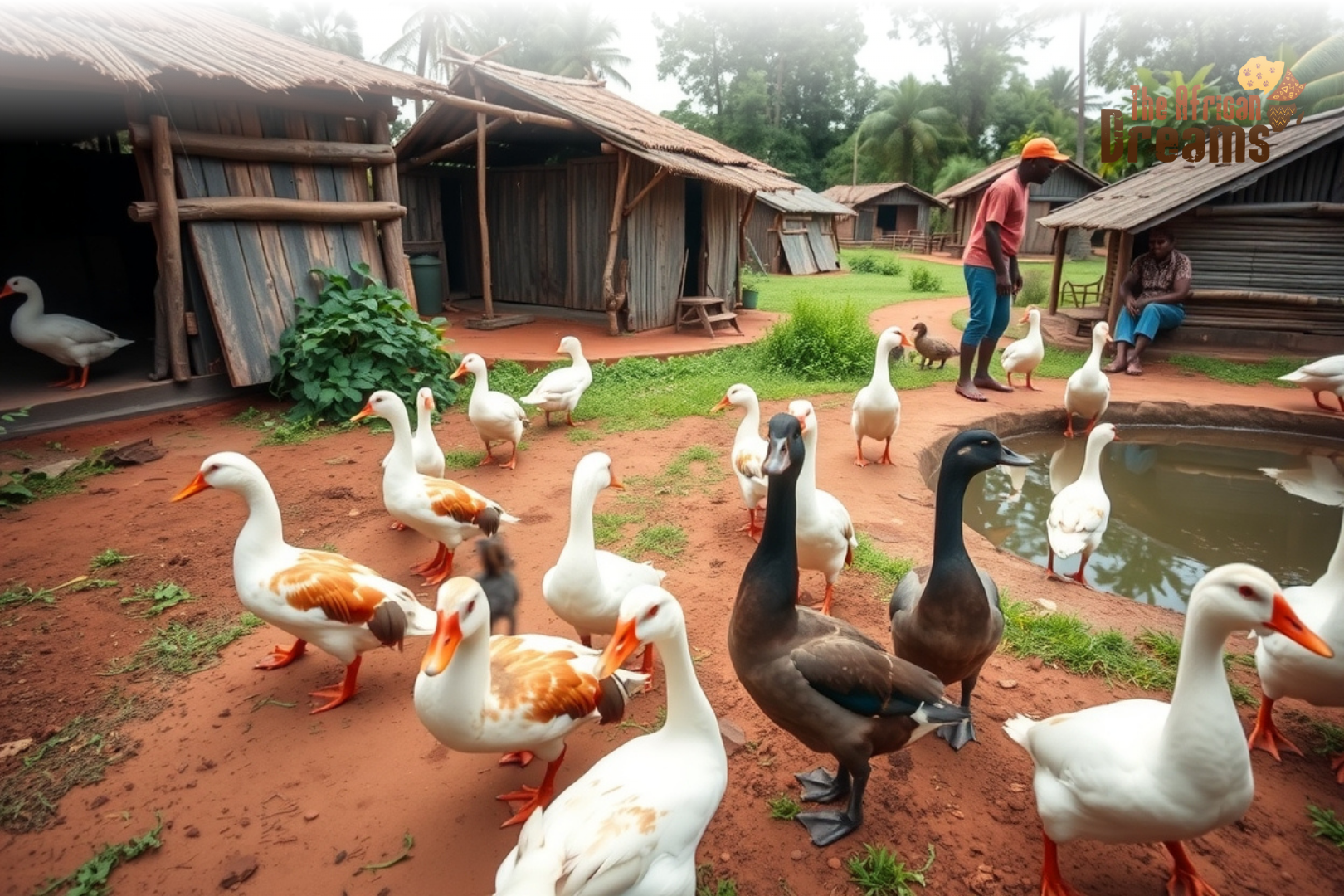
Duck farming in the Republic of Congo has become a relatively narrow market with great potential for further expansion. Given this country’s traditional forms of agriculture, its poultry industry has attracted attention due to rising domestic and international demand for duck meat and eggs. This article discusses the opportunities, challenges, and solutions for developing the duck farming sector in Congo. The focus is mainly on the Muscovy duck, an indigenous species adapted to local conditions. More farmers and entrepreneurs are recognising the profitability of duck farming. This sector is expected to play an important role in Congo’s agricultural development for food security and economic growth. This blog will discuss duck farming in Congo and its growing demand shortly.
The Challenges
In Congo, duck farming faces many barriers. The main challenge is the need for more investment in infrastructure and farming technology. Many small-scale farmers have limited access to quality feed, proper housing, and essential veterinary services—all of which are very important for increasing productivity. There is often very high mortality among young ducklings, reaching as high as 30% due to inadequate nutrition and poor management practices.
In addition, the lack of a well-organized market deters farmers from selling their products regularly, thus expanding their operations.
Another major constraint is the need for more access to capital. Most duck farmers are small-scale farmers using traditional methods of production, making it difficult for them to obtain loans or other investments. The government has made efforts to provide low-interest loans to farmers; however, more are needed to meet the increased demand from farmers interested in commercializing duck production.
Still, scaling up remains an issue without proper funding. This is even worse, since consumers need greater awareness and a stronger preference for chicken over ducks, which makes their market development even more difficult. Though duck meat and eggs are nutritious and highly demanded in some markets, they have yet to become popular in Congo. On the contrary, countries such as China and France, where duck is a dietary staple, take the biggest share of the world market.
The Solutions
Conscious of the potential of duck farming, Congolese and international partners have initiated activities to address these challenges. This is through training and education on leading practices for rearing ducks, specifically on duckling survival rates and feed efficiency. Native Muscovy ducks, hardy and adaptable to the tropics, have since become the centerpiece because they thrive in low-input conditions.
Additionally, the government has been working to expand access to microfinance and offer more affordable loans to support duck farmers, providing them with much-needed financial assistance to invest in equipment, proper housing, and quality feed.
Moreover, cooperatives have been organized to enable farmers to share resources and negotiate better input and market access. Cooperatives are also avenues through which farmers can access organized knowledge and skill dissemination and government support.
Enhancing market linkages has also been part of developing local market outlets for duck products. While more robust domestic demand is needed, export opportunities are also being explored. Countries in the major consuming regions of Asia and Europe present lucrative markets for Congo’s duck farmers.
The Implementation
These are being implemented piecemeal but effectively. The first is capacity-building training programs conducted by the agricultural extension officers, which have reached over 1,000 farmers in key regions where duck farming is most practiced. Emphasis has been placed on improving productivity through better breeding, feeding, and healthcare management. Subsidized veterinary healthcare has been provided to reduce mortality among ducklings.
Improvements in infrastructure have also been implemented to build better housing facilities for ducks. Ducks need a well-ventilated and clean environment to minimize disease spread. With the introduction of low-cost duck shelter designs, more farmers can keep healthy duck flocks throughout the year. Access to clean water is an improvement, as ducks need a lot of water for feeding and reproduction.
Farmers have overcome the market access problem by developing—or resorting to—agribusiness models focused on value-added products such as duck pâté and smoked duck meat. These products are in demand among higher-income consumers and external buyers, commanding better prices. Value addition can raise revenues by 20-30%, while potential profit margins for such specialty items can be as high as 60%.
The Results
These efforts, nonetheless, offer a satisfactory outlook in terms of returns. In fact, since the inception of these programs, Congo has shown a steady increase in duck production, with an estimated 15% more ducks reared than in all participating regions. This figure will continue to increase as more training and infrastructure expansion take place, thereby improving food security and reducing reliance on poultry imports.
Income among the duck farmers has also risen concurrently. Commercial duck farmers have recorded 30–40% income increases due to better farming practices, improved duckling survival rates, and new market opportunities.
Some farmers have even supported agribusiness activities such as agritourism, which invites visitors to experience life on a duck farm and learn about sustainable farming practices. Agritourism contributed an additional 15-20 percent to revenues in places where it has been introduced.
Equally, duck farming contributes to environmental sustainability. Ducks are known to be good foragers and pest controllers, hence reducing the need for chemical pesticides. They also have a lower environmental footprint compared to other livestock, as they can thrive on less water and feed. This has attracted the attention of eco-conscious consumers, who always opt for ethically and sustainably produced food.
Conclusion
Duck farming in Congo offers a continually improving avenue for small-scale farmers and entrepreneurs to enter this highly lucrative niche market, with strong local and international demand. Improved training, access to finance, and market development set the stage for a potentially thriving duck farming industry in the country. The Muscovy duck breed has shown great adaptability to the climatic and farming conditions of Congo, hence offering a viable and profitable farming option for many rural communities.
The potential for further investments in duck farming to reduce the country’s reliance on imports, improve food security, and provide new economic opportunities for its people is strong as the country develops its agricultural sector. With world demand for duck products—which seems to be growing in regions like Asia and Europe—the future looks bright for Congo’s duck farmers. With innovation and sustainability on board, Congo has the momentum to be in an important position in the growing global duck farming market.

0 Comments