
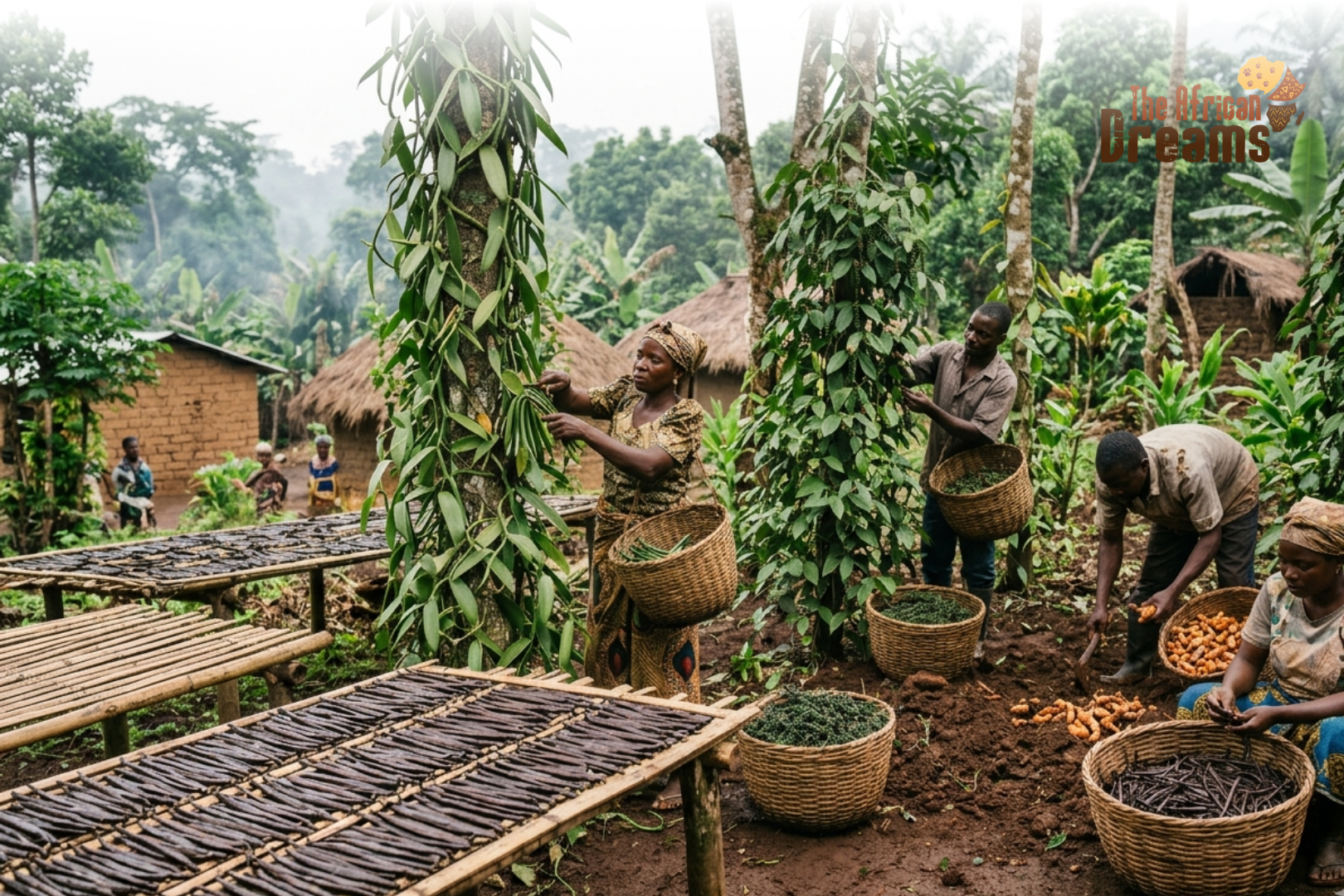
Congo’s Spice: Niche Markets with High Returns
Think of a kitchen without the pungent aroma of spices. The comforting sweet fragrance of vanilla wafting from a freshly baked cake, or the fiery kick of black pepper in a hearty stew. The spices add an unmatched zing.
Besides flavor values, spices are very important economically to many countries, especially under international market conditions, since demands for them are ever-growing. The Congo is endowed as it is with fertile soil and a favorable climate. That’s why Congo’s Spice has the potential to join the leading participants in the international spice trade.
Growing Opportunities for Congo’s Spice
There is an increasing demand from all over the world for spices such as vanilla, black pepper, ginger, and turmeric. The global vanilla market is projected to rise at a CAGR of 4.5% during the forecast period of 2021-2028, reaching over $1.95 billion.
By contrast, black pepper—being one of the most valuable spices and even sometimes regarded as “black gold”—is expected to report significant growth in the global market owing to its high consumption for cooking and health benefits. Turmeric is also finding fast demand due to its anti-inflammatory properties, especially in the health-conscious markets of Europe and North America.
The Congo has a constant temperature, rich soil, and adequate rainfall, making it ideal for the growing of spices. This is compared to other regions of the world that are generally adverse in their weather conditions.
The stable climatic conditions of Congo mean that crops like vanilla and black pepper will thrive throughout the year. It provides an opportunity for this country to diversify its agricultural output into global spice markets, where demand always outstrips supply.
Challenges Congo’s Spice Industry Face
Despite the potential for spice cultivation in Congo, there are significant challenges associated with this endeavor.
- Most farmers are smallholders in the country, based on traditional farming systems that are sustainable but usually characterized by low yields and unequal quality. The average yield for Congolese vanilla is about 200-300 kg per hectare, while other countries with more advanced agricultural sectors can easily achieve up to 800-1000 kg/ha. This disparity is largely attributed to the lack of access to modern farming techniques, quality seedlings, and fertilizers.
- Then there’s a lack of infrastructure. Coupled with the bad roads, the lack of cold storage in transportation makes matters very difficult in transporting spices from countryside farms to towns or even for export.
- Of these spices, vanilla has been said to be a very tender crop; it needs further care, so special attention should be given right from farming to being sold in the market. This means that in the absence of proper infrastructure, there is a high risk of spoilage, which reduces market values and discourages farmers from investing in the crop.
- Another challenge is the financial barriers: limited access to credit and investment by many small-scale farmers in Congo, which is important for buying high-value inputs such as seeds and fertilizers. The financial inadequacy further extends to the inability of the farmers to invest in vital farming equipment, like irrigation systems, that would lead to better yields.
- Moreover, there is a severe knowledge gap concerning modern farming practices that constrains productivity and the overall quality of spices produced.
Tapping into Congo’s Spice Markets
The global spice market, despite the growth and expansion challenges it faces, still offers reasonable opportunities for niche segments such as organic and fair-trade-certified products. Generally, consumers in developed markets show an increasing willingness to pay a premium for sustainably sourced, ethically produced spices.
Organic spices, for instance, may trigger a 20–30% higher price compared to conventional counterpart products. The main rationale behind such premium pricing is the growing consumer awareness of environmental sustainability and a preference for natural, chemical-free products. Such a trend creates an opportunity for the organic farming of Congo’s spices, supported by fair trade certification.
Therefore, Congo’s spices will have access to the upstream markets, which have a strong demand for quality spices that are ethically produced. For example, organic vanilla is in great demand in the food and beverage industries, especially for making top-of-the-line ice creams, desserts, and delicacies. Similarly, organic black pepper and turmeric are in high demand in the health food sector for their medicinal properties.
These opportunities ensure that investors who would like to enter the Congo’s spice market can contribute to the advancement of infrastructure, including cold storage facilities and improved roads, hence reducing post-harvest losses and ensuring quality production. The investment in training programs among farmers would indeed increase yield and high-quality products, hence increasing profits.
Government and Private Sector Initiatives in Congo’s Spice
The government has already grasped the great potential presented by the Congo’s spice industry. They have initiated policies that would stimulate agricultural productivity by subsidizing agricultural inputs, investing in infrastructure, and training programs for farmers.
The government’s goal is to create a more supportive environment for Congo’s spice cultivation to attract both local and international investment.
The private sector also plays a critical role in the development of Congo’s spice industry through investments by both local and international companies in spice cultivation. These companies provide quality seeds, technical assistance, and market linkages to farmers.
Some of these companies directly work with vanilla farmers to help them improve their cultivation practices to meet international quality standards. These partnerships are very important in ensuring Congo’s spices compete favorably on the global markets.
International organizations and NGOs are contributing to promoting sustainable farming practices and enabling farmers to obtain certifications such as organic and fair trade.
These processes are not only ecologically viable and socially responsible but also deliver high returns and provide better access to premium markets. Programs supported by organizations such as the International Fund for Agricultural Development help create cooperatives that enable farmers to pool resources, share knowledge, and gain better access to markets.
Success Stories from Congo’s Spice Industry
Success stories from Congo’s spice industry are already trickling out. For instance, in some areas where it has led to the adoption of organic farming by smallholder farmers, this has resulted in, and continues to yield, better-quality products.
With increased assurance of long-run contracts with international buyers, there is the added advantage of greater income stability and reduced exposure to market volatility. Their resulting partnerships have sometimes tripled their incomes, with high returns at the focus of niche markets.
Another major positive would be the huge export potential of Congo’s spice industry. Properly marketed and branded, Congo’s spice would be very popular in most global markets, especially within Europe and North America, where demand appears to be rising for both exotic and ethically sourced spices.
A reputation for high quality and sustainability would help Congo’s spice carve a name in the highly competitive global spice market. These high returns mean that investors who support the growth of Congo’s spice industry will benefit accordingly. This would mean that investors would have to invest in the required infrastructure and exposure to the best farming methods before the full potential of Congo’s spice sector could be unlocked.
The global market for spices is expected to continue growing due to consumer demand for diverse, high-quality spices. The Congo’s spice presents opportunities for investors to achieve high returns while also contributing to the country’s economic development.
Promising Future of Congo’s Spice
Congo’s spice is bound to see very impressive growth in spice cultivation. It is a potentially great contributor to the economic setup. While challenges still prevail, the opportunities commanding niche markets such as organic and Fair Trade-certified spices are so great that one should not turn a blind eye to them.
This will also enable Congo to specialize in high-value segments of the market, enhancing agriculture and improving the livelihoods of its people, especially smallholder farmers.
For investors, Congo’s spice industry offers opportunities to tap into a growing market that is at once profitable and sustainable. These activities include investments in infrastructure, training, and market development that would help Congo unlock the full value of the spice sector by creating jobs, boosting export earnings, and eventually stimulating economic growth.
With global demand for spices continuing to surge, Congo’s spice industry is well placed to emerge as a leading producer of high-value spices. This makes it an attractive destination for investors in pursuit of high returns with a positive social impact.
0 Comments