
Introduction
The African ebony, Diospyros crassiflora, is considered a jet-black, dense wood found in the dense rainforests of Congo. It is utilised in critical sectors such as the musical instrument and luxury furniture industries. Notwithstanding its valuable reputation, the exploitation to which it has been subjected has raised serious concerns about deforestation and viability. Today, recent efforts balance conservation with economic gains by ensuring sustainable harvesting practices and supporting the community. This case study describes challenges, solutions, and results of the Congolese in working for a sustainable ebony industry.
The Challenges
- For a long time now, Congo has mostly been threatened with illegal logging and unsustainable harvesting practices, especially its high-value timber such as ebony. The only challenge in trying to conserve ebony is that it is a slow-growing tree and may take more than one hundred years to mature. So, their rarity has made them targets of illegal logging, furthering deforestation and degradation of essential habitats.
- Historically, demand has outstripped supply, further exacerbated by the ecological sensitivity of ebony.
- Unsustainable logging has threatened the survival of this tree and reduced carbon sequestration in Congo forests, which are crucial to combat climate change. And, of course, local communities depend upon them for everything from timber to non-timber forest products.
The Solutions
In response to these challenges, in 2016, the Sustainable Ebony Project was developed through a collaboration between Taylor Guitars, the Congo Basin Institute (CBI), and local communities. The Sustainable Ebony Project develops a scalable model for the sustainable cultivation and management of ebony. Some of the key elements involved in this initiative include:
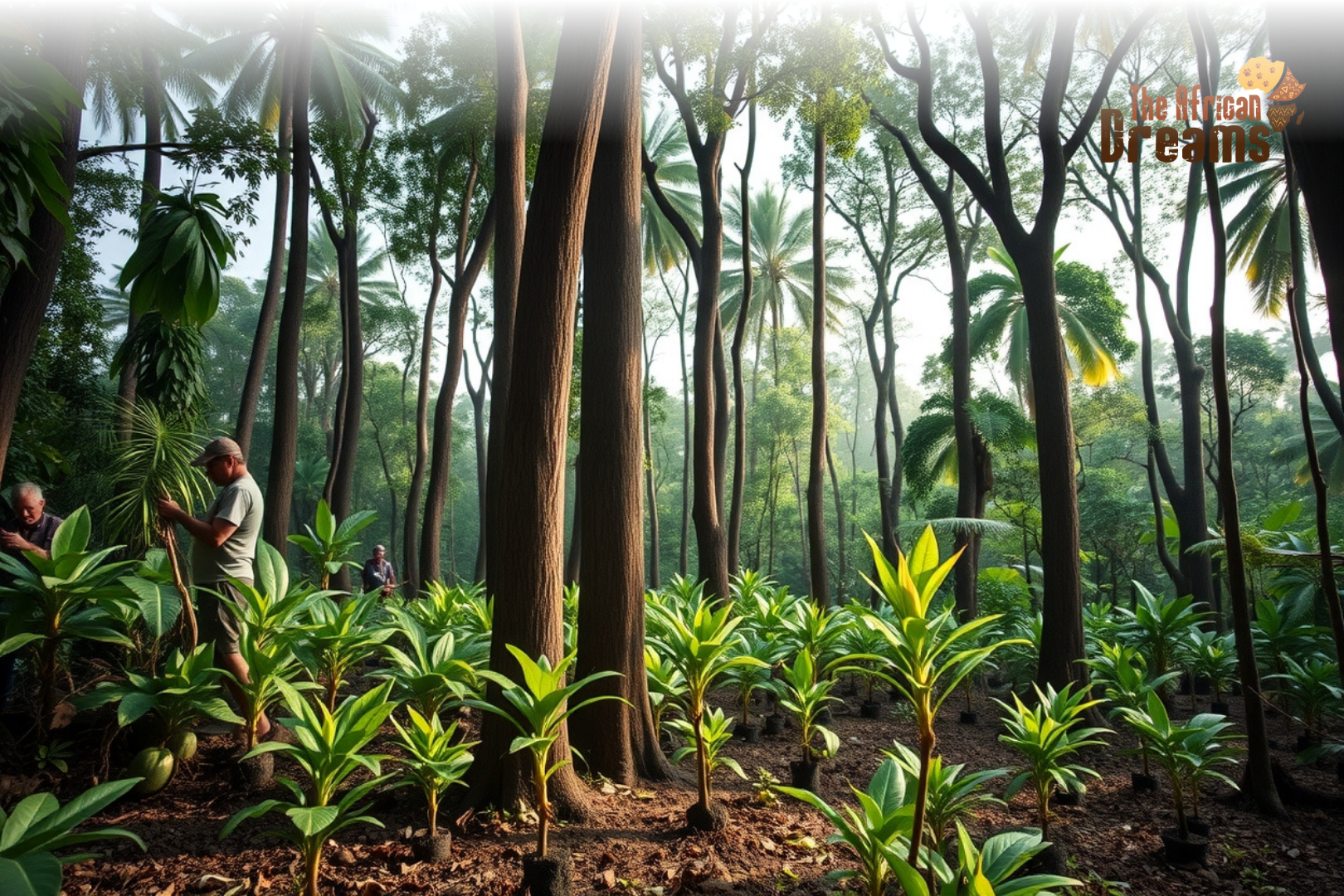
1. Community-Led Agroforestry: The project trains local communities on the skills of propagation and planting techniques. Ebony seedlings are grown at local nurseries and planted with fruit-bearing and medicinal trees in a mixed agroforestry model, enabling the inclusion of food and medicinal products as potential short-term benefits while awaiting maturity from the ebony trees.
2. Long-term Financial Incentive: As an incentive for local involvement, farmers are paid annually while tending the saplings of ebony trees for the first five years. This financial model aims at developing local “sweat equity” to commit to the trees for the long haul.
3. Scientific Research and Data Collection: CBI and UCLA researchers seek to learn about the growth patterns of ebony, optimum conditions for its propagation, and what ecological role the tree plays. These insights help in refining sustainable practices and finding suitable planting sites.
Implementation
The implementation phase of the Sustainable Ebony Project focuses on two big approaches:
1. Improved Propagation Methods: Farmers are trained to propagate ebony trees vegetatively, meaning the tree is grown from cuttings. This speeds up the growth of the ebony plant, unlike in non-vegetative propagation when seeds are planted. In addition, community nurseries are provided with the necessary tools and infrastructural means that would ensure the successful propagation of both ebony and complementary species.
2. Reduced Impact Logging (RIL-C): In practice, along with the reforestation process, Congo has also adopted Reduced Impact Logging for Climate methods in managing the available ebony stocks. This involves selecting logging methods based on having the least collateral impact on other trees. Carbon emissions can be reduced by as much as 50%. RIL-C practices also aim at narrow road construction and tree felling with care to protect the remaining standing crop and ecosystem.
Results and Economic Impact
The Sustainable Ebony Project, since its inception, has had heartening effects in fewer years. As many as 15,000 ebony trees had been planted, with survival rates exceeding 70%, which is commendably high given the harsh conditions under which they grow. Besides that, it has helped participating communities plant around 1,500 fruit trees that give them immediate returns through servings to improve food security and sell surplus fruits for better economic gains.
As a result, the financial and training-related incentives for the farmers gave them a strong sense of ownership. Due to this, farmers have become more concerned with the protection of the jatropha trees by reducing the risks of illegal logging. The inclusion of fruit and medicinal trees into the project also diversified the local economies with other streams of revenue until the ebony trees mature.
The adoption of the RIL-C practices has reduced deforestation impacts, protecting the carbon-dense rainforests of Congo and maintaining biodiversity. The establishment of timber parks at border crossings improved transparency in the timber trade, reducing illegal exports and ensuring that harvesting practices comply with sustainability standards.
A Greener Future: Growth
In future years, the Sustainable Ebony Project will scale up agroforestry efforts across the Congo Basin. Researchers work to improve propagation techniques and create seed banks to ensure genetic diversity and resilience in future plantings. New tree species will be added to community agroforests for timber and medicine, enhancing economic resilience at the farm level.
The success of the project aroused worldwide interest and started looking at possibilities for scaling up in other regions by institutions such as the Food and Agriculture Organisation, CIFOR, among others. This project has conformed to international conservation goals, such as the SDGs set by the United Nations, because the local communities can participate in decision-making and benefit-sharing.
Final Remarks
The path toward sustainable ebony harvesting in the Congo balances economic growth with ecological conservation, using an agroforestry model. Far beyond anything like a reforestation program, the Sustainable Ebony Project suggests an integrated approach toward community-based forest management. By integrating agroforestry into responsible logging, Congo is making significant strides toward preserving its forests and ensuring the long-term availability of high-value ebony. Through continued collaboration, communities, researchers, and industry partners can turn Congo’s ebony industry into an international model for responsible timber production. This effort has demonstrated that, when proper methods are used, the highly valued, very slow-growing species can be removed sustainably and generate long-term economic and ecological benefits that extend for generations.
0 Comments