
Introduction
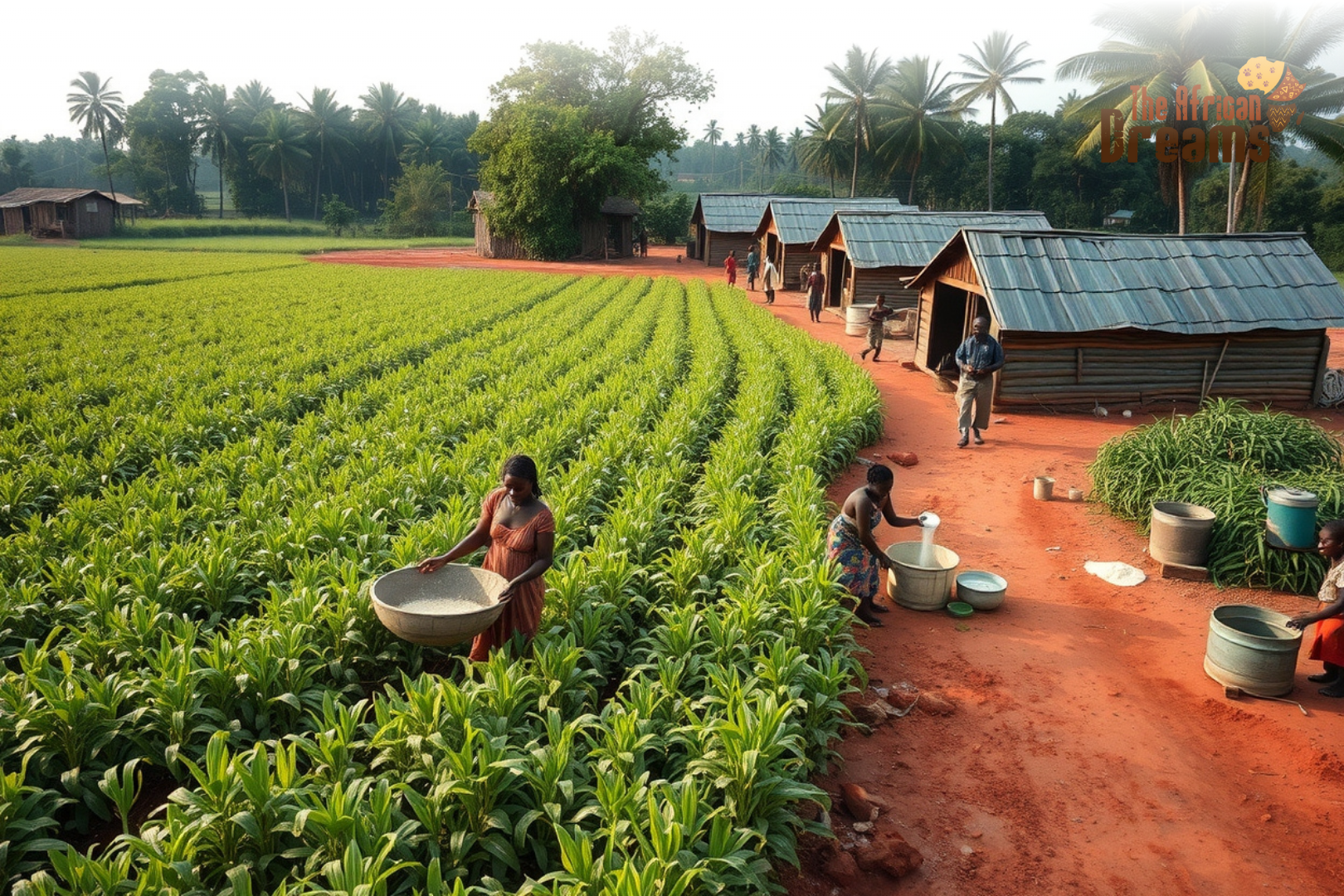
The Democratic Republic of the Congo (DRC) is a country of great potential and a diverse population. Among the vast fields and people of the country, there is one plant that is considered to be an essential part of people’s lives – cassava. This starchy tuber is not only a staple food item but also plays an important role in the economic and social life of the country.
The aim of this article is to discuss the various aspects of cassava production in the DRC for the purpose of giving a historical background, cultural importance, economic contribution, problem-solving, and predictions of the future of cassava production in the DRC.
Article highlights:
Discover cassava’s deep cultural and dietary role in the DRC, where it is consumed daily in various traditional forms like foufou and chikwangue.
Learn how cassava drives rural livelihoods, with over 29.9 million tons produced annually and millions relying on it for income.
Understand key production challenges, including pest outbreaks, poor infrastructure, and limited access to modern tools and markets.
Explore rising investment opportunities in agro-processing, mechanization, training, and export, with growing interest from NGOs and international partners.
See real impact through community success stories, such as women-led cooperatives turning cassava into a source of empowerment and education.
Historical Context of Cassava in the DRC
Cassava, scientifically known as Manihot esculenta, is a tropical plant that is originally from South America. They first arrived in Africa in the 16th century when the Portuguese merchants imported it from Brazil to the Congo Basin in 1558.
Originally developed as a famine food crop, this plant was popularly adopted by farmers for cultivation because of its versatility in terms of soil requirements and ability to withstand attacks from pests and disease, as well as drought.
Cassava was firmly established in the Congo agricultural sector by the middle of the twentieth century and took 22% of the cultivated area in 1959.
Cassava as a Dietary Staple
In the DRC, cassava is not only a food crop but a staple food crop for the population. It is the world’s largest consumer of cassava per capita, with an average of 353kg per head per annum. This is approximately equal to 145 kilograms of flour from which it is processed and known as “foufou.”
Some of the commonly consumed vegetables include cassava leaves, locally known as “saka-saka” or “mpondu”, which are rich in proteins, calcium, vitamin A, and vitamin C.
Congolese cuisine has cassava in many ways; it is usually cooked and consumed in its fermented form. These are converted into products such as “chikwangue”, which is a fermented and wrapped cassava loaf, and “cossettes”, which are sun-dried cassava pieces. These products are commonly used in daily meals and have a social representation in cultures as they are a source of food and togetherness.
Economic Importance of Cassava
Cassava has a significant position in the DRC’s economy, especially in the agricultural sector. According to the data of 2018, DRC ranked third in cassava production in the world with a production of about 29.9 million tons of cassava behind Nigeria and Thailand.
The economic values of the crop are not just in the numbers of production. Cassava farming is among the important income generating activities for millions of people in the Democratic Republic of the Congo, especially in the rural areas where most of the population relies on agriculture.
Cassava products as a cash crop source are an important source of income for many families, as they are able to sell them and cater for their daily necessities, such as school fees and medical bills.
Furthermore, cassava can be processed into other products such as flour, starch, and bio energy, which will develop other sources of income and exportation.
Traditional Farming Practices
The farming of cassava in DRC is still traditional farming, and most farmers use traditional methods. Farmers usually propagate cassava through cuttings, and the most preferred planting technique is done on flat land because it does not require much labor. Nevertheless, the traditional practices have some demerits, like poor soil fertility and limited availability of fertilizers to enhance production.
However, the following are some of the challenges facing cassava farmers: Still, cassava has the ability to grow in unfavourable conditions and requires few inputs, therefore it is ideal for smallholder farmers. Due to its ability to adapt to different climatic conditions, it is a source of food for many of the rural people.
Challenges in Cassava Production
Several challenges hinder the optimization of cassava production in the DRC:
- Pests and Diseases: Cassava is susceptible to diseases such as the cassava mosaic virus and bacterial blight, which can cause significant yield losses.
- Infrastructure Issues: Inadequate transportation and processing facilities impede the efficient movement of cassava products from farms to markets, limiting farmers’ access to broader markets and reducing potential income.
- Limited Access to Inputs: Farmers often lack access to quality planting materials, fertilizers, and modern tools. Without these, increasing productivity remains difficult.
- Market Barriers: Poor infrastructure, fluctuating prices, and lack of organized marketing systems make it hard for cassava farmers to benefit from national and international markets.
- Climate Vulnerability: Although cassava is drought-resistant, erratic rainfall patterns and longer dry spells due to climate change can still affect yields and processing conditions. (CGIAR, 2022)
Processing and Value Addition
Preparation of cassava is done manually, and it is mostly done by women in their homes in rural areas. The traditional processing techniques are roasting and subsequent fermentation of cassava to make products like “cossettes” and “chikwangue”. These methods, although culturally appropriate, are cumbersome, and most of the products developed have a short lifespan.
In an attempt to improve the quality of cassava products and make them more competitive in the market, new techniques have been adopted.
For example, the International Institute of Tropical Agriculture (IITA), with support from USAID, developed a project that sought to build and upgrade the DR Congo’s cassava value chain. This project is aimed at enhancing methods of processing, developing high-yielding and disease-tolerant varieties of cassava, and organizing a structure for the cassava value chain with the aim of increasing productivity and income of the farmers.
Health and Nutritional Aspects
Cassava is a rich source of carbohydrates, providing essential energy for millions of Congolese. Its leaves are consumed as a vegetable and are rich in proteins, calcium, vitamin A, and vitamin C, contributing to nutritional diversity in the diet.
However, improper processing of cassava can pose health risks. Cassava contains cyanogenic glucosides, which can release cyanide if not adequately processed, leading to poisoning and diseases such as konzo, a neurological disorder.
Despite interventions to provide knowledge and improve bitter cassava processing in the DRC, sub-optimal processing practices persist, highlighting the need for context-specific solutions that consider socio-economic constraints.
Cassava’s Role in Food Security
Cassava is a lifeline for food security in the DRC. In regions where food shortages are common, cassava offers a stable supply of calories and nutrition. Its adaptability to poor soils and irregular rainfall ensures that even in years of low agricultural output, cassava remains available.
During times of conflict or economic disruption, many Congolese families depend on cassava as their main or only food source.
Moreover, both the roots and the leaves can be stored or preserved for later use. This makes it one of the few crops that can bridge the gap between harvest seasons. Cassava’s resilience has earned it the nickname “the famine crop.”
Investment Opportunities in the Cassava Sector
There is a growing interest in developing cassava as a commercial crop in the DRC, and this creates significant investment opportunities.
- Agro-Processing: Cassava can be processed into flour, starch, ethanol, animal feed, and even biodegradable packaging. Investors can set up medium to large-scale processing facilities that target both local and export markets.
- Machinery and Tools: Mechanization of planting, harvesting, and processing is still low. Companies that provide affordable machinery and training can tap into a large and underserved market.
- Value Chain Integration: Integrated farming models where production, processing, and distribution are linked under one system can significantly improve efficiency and returns.
- Export Opportunities: As regional demand grows for cassava flour and starch, especially in neighboring countries with food processing industries, DRC is well-placed geographically to serve as a cassava exporter.
- Training and Extension Services: With many farmers still relying on traditional methods, investment in knowledge transfer and farmer training offers both social impact and financial returns.
- Digital Agriculture: Mobile platforms that offer real-time weather forecasts, planting tips, and market prices could help modernize cassava farming while creating scalable business models.
According to IITA, with the right investment, the cassava sector could become a strong driver of inclusive economic growth in DRC.
Success Story: How Cassava Changed a Community’s Future
In Makushila village, South Kivu Province, cassava was mostly produced for its own utilization in the past. However, in 2022, through funding from UN Women and the Ministry of Gender, a women’s cooperative known as Tuwezeshe Wanawake initiated a cassava flour processing plant.
This project was not only able to increase production quality and quantity of cassava flour but also provided employment and earnings for women. They currently supply their product to the neighboring towns and even in Rwanda.
‘For instance, before this, we could not afford to send our children to school.’
As one of the co-operative members, Alphonsine now says they can. This has made other communities to emulate them. This story indicates how valuable it is to be able to have access to tools, training, and a market in the process of cassava production.
Future Prospects and Recommendations
As the world seeks climate-resilient and food-secure crops, cassava is becoming increasingly important. In DRC, the future of cassava lies in bridging the gap between traditional subsistence farming and modern agribusiness.
Here are some critical steps to ensure cassava realizes its full potential:
- Invest in Research and Development: More funding is needed for crop improvement programs that focus on pest resistance, higher yields, and shorter maturity cycles.
- Improve Infrastructure: Better roads, storage facilities, and electricity can help move products to markets and reduce post-harvest losses.
- Develop Cooperatives: Supporting farmer groups and cooperatives can strengthen their bargaining power and allow them to pool resources.
- Encourage Public-Private Partnerships: Governments, NGOs, and businesses should work together to develop cassava clusters with end-to-end support.
- Scale Climate-Smart Practices: Promoting intercropping, soil conservation, and efficient water use will make cassava farming more sustainable.
According to Akademiya2063’s Crop Forecast Report, the DRC could increase cassava output by up to 40% in key regions if modern inputs and techniques were applied consistently. This would not only improve local livelihoods but also position the DRC as a regional leader in cassava-based agribusiness.
Final Words
Cassava is more than just a crop in the Democratic Republic of the Congo. It is a pillar of food security, a cultural heritage, and a growing economic force. From feeding families to empowering women and offering new avenues for business, cassava touches every aspect of life in the DRC.
Despite the challenges—disease, poor infrastructure, and market access—cassava continues to show promise. With the right investments and partnerships, the DRC can turn cassava into a driver of sustainable development.
The roots are already planted. What comes next is up to how the country and the world choose to support the people who grow them.
0 Comments