
Why AI in Zimbabwe is Needed
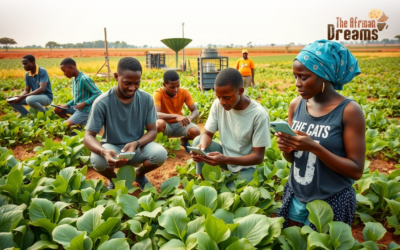
Zimbabwe is highly dependent on agriculture. It directly or indirectly sustains a significant portion of the population and plays a substantial role in the country’s economy. Millions rely on farming for their livelihood and food.
In Zimbabwe, agriculture relies primarily on rainfall, and drought frequently results in low crop yields. It affects food supply and income. Zimbabwe has fertile soil and open land but lacks access to improved tools, seeds, and water systems. Small-scale farmers use simple tools.
Today, farmers are being provided seeds, fertilizers, and training by the government and aid groups. This is where AI in Zimbabwe plays an important role in developing the agricultural sector.
In this blog, we will discuss how AI is helping Zimbabwe’s small farmers and the role of AI in Zimbabwe in modernizing agriculture.
Overview of Zimbabwe’s Agriculture
Maize, tobacco, cotton, and sugarcane are the predominant crops. Maize is the staple food, and tobacco is the principal export. Crops are produced for export on large farms.
Wheat, groundnut, and vegetables are also cultivated in small quantities. Livestock raising is also widespread, particularly for cattle, goats, and chickens.
If you’re interested in starting an agribusiness in Zimbabwe, you can explore five key business opportunities in Zimbabwe’s agricultural sector, highlighting specific examples, success stories, and the great potential for growth here Zimbabwe’s Agricultural Sector: Five Business Opportunities You Need to Know
The Role of Artificial Intelligence in Modernizing Zimbabwean Agriculture
Zimbabwe relies substantially on agriculture for its economy. It feeds, employs, and fuels many people. However, the industry faces several challenges, including poor rainfall, pests, and a shortage of modern farming implements.
Some of these problems can be addressed (or mitigated) by Artificial Intelligence (AI). AI in Zimbabwe can greatly benefit its farming.
Now, let’s discuss how AI in Zimbabwe addresses challenges in Zimbabwe’s agricultural sector.
1. AI for Weather Prediction: Another huge obstacle in Zimbabwe is the fickle weather. AI in Zimbabwe can sift through vast amounts of weather data and forecast rain, drought, or storms.
With improved forecasts, farmers can make more informed decisions about when to plant or harvest crops.
2. Smart Irrigation Systems: Smart irrigation can be used to regulate water usage through the use of AI. These systems monitor soil moisture levels using sensors and AI software.
They water when necessary, saving water and allowing crops to grow more easily, particularly in drier areas.
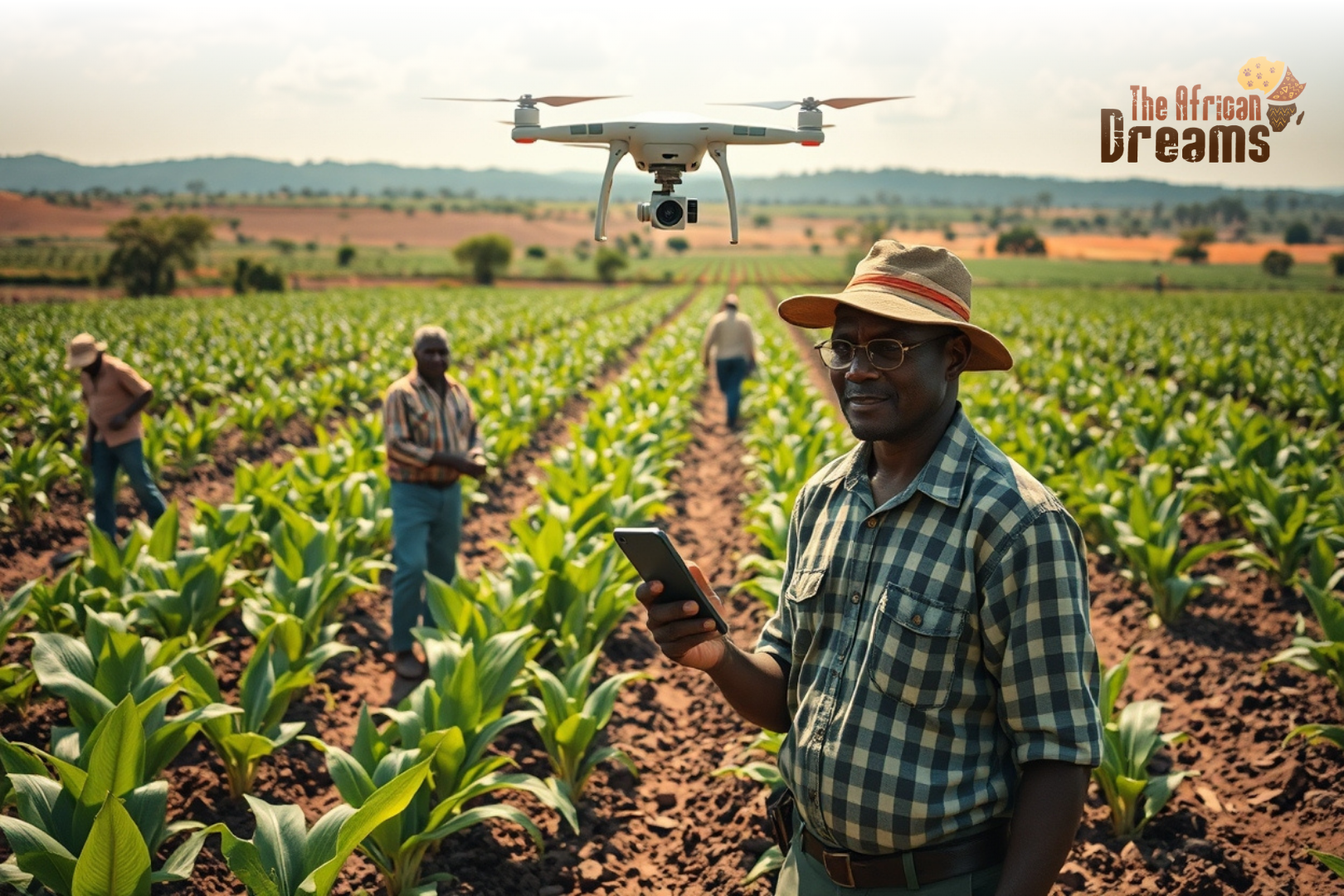
3. Crop and Pest Monitoring: Drones and apps that use AI can scan crops and detect pests or diseases early. That gives farmers time to take action before their crops are damaged.
Some AI systems can also recommend the best pesticide to apply or treatment to use, thereby reducing waste and costs.
4. Farm Planning and Decision-Making: AI tools could inform farmers about what to plant, taking into account soil quality, climate, and market demand. This enables farmers to make informed decisions, which can lead to increased income and reduced risk and build resilience against climate challenges.
5. Market Access and Price Forecasting: AI can also forecast market prices for crops. Farmers can leverage this to make informed decisions about when and how to sell their products for the best price.
AI-enabled apps can also connect farmers directly with buyers, thereby eliminating the need for intermediaries.
How AI in Zimbabwe is Helping Small Farmers
Small-scale farmers are the engine of Zimbabwe’s agriculture. They produce the vast majority of the country’s food. However, they face many challenges, including low productivity, inadequate market access, and the impact of climate change. AI in Zimbabwe is helping small farmers in many ways. Their lives are enhanced through the use of AI (Artificial Intelligence) tools.
1. Better Weather Forecasting: AI can predict the weather better than traditional methods. That way, AI in Zimbabwe helps farmers know when to plant, water, and harvest their crops. With better planning, they can avert losses from droughts or heavy rains.
2. Disease and Pest Detection: Apps and drones equipped with artificial intelligence can scan crops and spot pests or diseases in the early stages. This allows farmers to act quickly to save their crops. A few offer information on what pesticides to use and how best to apply them safely.
3. Smart Farming Advice: Some AI apps also provide personalized advice after analyzing the specific land, soil, and weather conditions on each farmer’s field. These tools enable farmers to select appropriate crops, nutrients, and farming practices. This results in higher yields and lower costs.
4. Improving Market Access: Artificial intelligence platforms enable farmers to connect directly with buyers. This eliminates intermediaries, allowing the farmers to receive fair prices. Yet AI can also predict market trends and prices, helping farmers determine the best time to sell.
5. Financial Inclusion: Artificial intelligence is enabling smallholder farmers to access loans and insurance more easily. Some AI tools analyze satellite images and data from farms to estimate a farmer’s productivity. Banks and insurers can utilize this data to offer enhanced financial services to farmers, who have long been underserved.
6. Saving Time and Labor: By making crop monitoring, soil testing, and record-keeping much faster and easier, AI tools save time and effort. Farmers can spend more time farming and making good decisions using many types of AI in Zimbabwe.
Benefits of AI in Zimbabwe for Small Farmers
AI in Zimbabwe is benefiting small-scale farmers in numerous ways. It would be called in for simplifying speeds, and if all goes well, it would do so more accurately. Here are some simple benefits:
1. Optimized Crop Planning: Using data on weather and soil, AI in Zimbabwe can help farmers make decisions around when to plant and harvest crops.
2. Pest and Disease Management: AI in Zimbabwe can identify pests and diseases early and allow farmers to respond before their crops take a major hit.
3. Soil Health Monitoring: AI solutions can analyze soil health and make recommendations on types of fertilizers that would be most effective to grow crops.
4. Smart Irrigation: Various types of AI in Zimbabwe can optimize applications to minimize the use of water, and crops get just the water they need, no more or no less.
5. Increased Productivity: AI in Zimbabwe can enable farmers to grow more with less water, fewer seeds, and less labor.
6. Market Intelligence: AI in Zimbabwe will provide farmers access to information about trends in market prices, helping them negotiate sales of crops at the right time to gain more profit.
7. Cost Advantages: AI tools will enable small and marginal farmers to lower waste and reduce farming costs.
Overall, AI in Zimbabwe helps small farmers work more efficiently, produce more nutritious crops, and make more money.
AI Technology Improving Irrigation Practices
The way farmers water their fields is being changed by AI (artificial intelligence). It helps them use water more intelligently, save money, and grow better crops. This is the easy way in which AI in Zimbabwe is improving irrigation
1. Smart Watering Systems: AI-powered systems can figure out when and how much water crops need. These systems maintain records about soil, weather, and plants. The data is then analyzed by AI, and water is dispatched only when required. This prevents overwatering or underwatering.
2. Soil Moisture Monitoring: AI in Zimbabwe uses sensors in the soil to measure the moisture content. The sensors send live data back to the farmer. Afterward, these instructions tell the farmer when to open or shut off the water. This is why it helps crops get the perfect amount of water.
3. Weather Forecast Integration: AI applications can keep track of weather forecasts and schedule irrigation appropriately. For instance, if it will rain tomorrow, the A.I. may relax its watering today. This saves water and doesn’t soak the field.
4. Drip Irrigation Control: AI can be drip irrigation-compatible. It channels water directly to the roots of your plants. It consumes less water and enables plants to grow healthier. Various types of AI in Zimbabwe makes sure that the system is functioning at the right time and at the right level.
5. Saving Water and Reducing Costs: AI in Zimbabwe for irrigation helps farmers conserve a lot of water. Less waste means lower water bills and energy costs for farms. It’s good for marginal farmers who have few resources.
6. Alerts and Reports: Various types of AI in Zimbabwe send phone alerts to the farmer. They notify farmers if there are water levels, leaks, or issues in systems. The system can also transmit weekly reports to enable farmers to have a better grasp of their water usage.
Economic Impact of AI on Zimbabwe's Agriculture
Agriculture is a key component of Zimbabwe’s economy, contributing about 17% to the country’s Gross Domestic Product (GDP) and supporting more than 60% of the households. The sector is not without its challenges, though, as volatile weather conditions and outdated farming remain issues.
Artificial intelligence or AI in Zimbabwe is poised to be a game-changer, as it supports improved productivity and robustness.
1. Boosting Agricultural Growth: Zimbabwe’s agricultural sector is expected to be a principal beneficiary of AI adoption. Agriculture is also expected to rise by 12.8 percent after falling 15 percent in 2024. This growth is driven by enhanced productivity with AI-supported technology.
2. Enhancing Productivity and Efficiency: Farmers can utilize the power of AI-based solutions, which provide predictive analytics and satellite-based crop monitoring, enabling them to make data-backed decisions.
They maximize the use of irrigation, fertilization, and pesticides, thus achieving good harvests and conserving resources. For example, agricultural drones equipped with artificial intelligence or advanced types of AI in Zimbabwe can monitor crop diseases and take timely measures.
3. Economic Diversification and Export Growth: AI in Zimbabwe in its agriculture diversify agricultural exports. For the horticulture industry alone, exports of over USD 60 million were recorded, thanks to the use of AI tools, which helped improve the quality and yield of crops. This diversification helps create foreign exchange reserves and reduces trade imbalances.
4. Job Creation and Rural Development: AI in Zimbabwe is fostering job creation in rural areas. New roles in drone operation, data analysis, and agri-tech development are emerging, providing employment opportunities and helping to reduce unemployment rates. These developments contribute to rural economic growth and poverty reduction.
5. Access to Credit and Financial Inclusion: AI in Zimbabwe is enabling alternative credit scoring to boost financial inclusion. Examining their mobile money and farming data, AI models determine whether farmers who lack traditional collateral are creditworthy enough to access loans and insurance.
Future Outlook: Scaling Up the Use of AI in Zimbabwean Agriculture
Agriculture in Zimbabwe is going high-tech with Artificial Intelligence (AI) at the center. The entrepreneur’s endeavors, such as the 2021–2025 National AgriTech Strategy, work to digitalize farming and drive productivity through AI integration.
Government Initiatives and Policies: AI in Zimbabwe
The Ministry of Agriculture is using AI in Zimbabwe to enhance crop monitoring, natural resource management, and decision making. Initiatives such as the FAO-EOSTAT, a project funded by the African Development Bank, are applying geospatial technology and AI to deliver actionable information on the state of soil health and crop condition, paving the way towards informed decision-making.
Expansion of AI Tools and Platforms
AI-powered platforms are being developed to assist farmers in various aspects:
1. Crop Health Monitoring: Satellite imagery and drones are utilized to detect early signs of diseases and pests, enabling timely interventions.
2. Precision Irrigation: AI systems analyze soil moisture levels and weather forecasts to optimize water usage, conserving resources and improving yields.
3. Market Access: AI in Zimbabwe platforms connect farmers directly with buyers, reducing reliance on intermediaries and ensuring fair pricing.
Capacity Building and Digital Literacy
To ensure the effective adoption of AI, the government is investing in training programs for farmers, extension officers, and young people.
The ‘Digital Champions’ initiative aims to build local capacity by training individuals who can then educate their communities on digital agriculture tools.
Challenges in Adopting AI in Zimbabwe
Despite the progress, challenges such as
- Limited internet access,
- High technology costs, and
- A shortage of skilled personnel persist.
Solutions
Addressing these issues requires:
1. Infrastructure Development: Improving internet connectivity and providing affordable access to digital tools.
2. Policy Support: Implementing policies that encourage investment in AI technologies and support smallholder farmers.
3. Partnerships: Collaborating with international organizations and private sector partners to share knowledge and resources.
Final Thoughts: Future is for AI in Zimbabwe
The future of AI in Zimbabwe’s farming and agriculture holds great promise. More farmers are using mobile phones and gaining internet access, which makes it easier to use AI tools. These AI tools help with weather updates, planting advice, pest control, and market prices.
When more farmers can understand and follow advice by using AI in Zimbabwe, productivity and profitability, both will increase. This results in higher crop yields and reduced waste. Farmers are also able to prepare for the changes in climate and control their crop production with less damage and save energy and efforts.
With the help of advanced technologies, AI, and better organization, Zimbabwe’s agriculture can better develop and become stronger. That’s why scaling up AI in Zimbabwe is important.
Scaling up AI in Zimbabwean agriculture holds the potential to revolutionize the sector, enhancing productivity, sustainability, and economic growth. With continued investment in infrastructure, education, and policy support, AI can empower farmers, transform agriculture, and contribute to the nation’s development goals.

0 Comments