
Introduction
On the rich soils of the Congo Basin, giant trees and everything from lowland gorillas to forest elephants grow. But beneath them, one of the tiniest but most powerful crops in the world is growing: cacao beans. The beans are a raw material for chocolate and might transform the lives of many farmers in the Republic of Congo. The global demand for chocolate keeps rising, so Congo is pushing to grow its cocoa industry. If managed and invested wisely, and with sustainable practices, the industry still has the potential to be one of the important players on the global map, delivering economic returns to the country and its people. In this blog, we will talk about the opportunities in Congo’s cocoa industry.
Congo’s Cocoa
Cocoa, the so-called “brown gold,” has gained the attention of the multi-billion-dollar chocolate industry. The global demand for chocolate is expected to increase by 5% annually due to increasing consumption in emerging economies. The increased demand for dark chocolate, which contains a larger share of cocoa. Suitable for such cultivation owing to the correct climate and soil nature, the Republic of Congo may become one of the main producers of cocoa beans.
The Congolese cocoa sector, despite this enormous potential within reach, remains in its infancy due to limited infrastructure, low productivity, and a total lack of investment. This article discusses cultivation, chocolate production, and other opportunities in the Congo cocoa industry to illustrate how it can tap into this “brown gold.”
The Growing Need for Cocoa
The cocoa marketplace is in very high global demand. The cocoa market is expected to grow to $14.6 billion by 2025, up from $10 billion in 2020. This is attributed to exponential chocolate consumption in Asia, chiefly in China and India, and high preference for dark chocolate in Europe and North America. Dark chocolate contains a higher percentage of cocoa. Therefore, increased demand for dark chocolate would also mean more demand for the cocoa bean.
With its tropical climate and rich soil, Congo is well-placed to benefit from this expanding market. Congo’s cocoa trees are of a variety that does especially well in warm, humid conditions found around the Congo Basin, a region of consistent rainfall and even year-round temperatures; these conditions are abrasive for high-quality cocoa beans, which are sought after by chocolate manufacturers globally.
Nevertheless, with such favorable conditions, the growth of the cocoa industry in Congo remains low. The country currently produces less than 1% of the world’s total, whereas major producer countries include Côte d’Ivoire, Ghana, and Indonesia. This situation arises as a result of low production emanating from limited infrastructure, poor yields, and lack of access to markets. However, with the right impetus and investment in place, Congo has the potential to increase its output manifold and become a major player in the global market.
Economic Impact
In addition, cocoa farming provides disproportionately many economic benefits, particularly to the rural communities in Congo. Most of the country’s cocoa is grown by small farmers who generally own less than five hectares of land. For these farmers, cocoa is a significant source of income. Due to low productivity and fluctuating prices, many cocoa farmers barely make ends meet.
Improved productivity and profitability in cocoa farming will bring transformative change to rural communities in Congo. According to the ICCO, better methods and quality seeds can raise yields by as much as a factor of 50%. This will not only increase farmers’ incomes but also create more jobs in the countryside, thereby reducing poverty and enhancing economic stability.
In addition, cocoa farming has the potential to contribute to the country’s national development through export earnings. At present, cocoa exports are a minor affair in Congo, but with much-improved production and access to international markets, the commodity could become an important source of foreign exchange. In countries like Côte d’Ivoire and Ghana, for instance, cocoa exports constitute a large share of their national income, and there is no reason why Congo could not follow suit.
Sustainable Practices: Saving the Environment While Increasing Yields
With the whole world becoming more conscious of the environmental effects of agriculture, the pressure is on the cocoa industry to be more sustainable. In Congo, land and valuable forests are highly threatened, making sustainable cocoa farming not an option, but a must.
Agroforestry-classically integrating cocoa trees with other crops and native trees-is one of the fundamental strategies for sustainable cocoa production. This supports the ecosystem’s biodiversity, improves soil health, and reduces chemical fertilizer and pesticide use. It also opens up extra income possibilities for farmers through the opportunity to harvest the additional crops that grow among the cocoa.
Further, sustainable cocoa farming will boost resilience against climate change. As temperatures rise and rainfall becomes more unpredictable, diversification with shaded cocoa has been found to be in a significantly enhanced position for resistance to such weather changes. This will not only protect farmers’ livelihoods but also ensure a stable supply of cocoa beans to the world market.
Equally essential are the schemes for sustainable certification, such as Fairtrade and Rainforest Alliance. These really help ensure that environmentally friendly practices in cocoa farming are significant, with cocoa production under strict environmental and social standards, enabling farmers to access premium markets and secure better prices for their products.
Investment Opportunities
All these points point to a bright future for the Congolese cocoa industry, full of exciting investor opportunities. Demand for sustainable cocoa is growing in world markets, and Congo has every reason to be well-placed to meet that demand. But reaching its full potential will require heavy investment in infrastructure, technology, and training.
One of the most important areas requiring investment is the cocoa value chain. Presently, most of Congo’s cocoa beans are being exported with very limited value addition. Investment in processing facilities would enable Congo to extract a greater share of added value from this industry. For example, it would allow Congo to manufacture chocolate bars and cocoa butter, products that command much higher prices than raw beans, by simply establishing grinding and chocolate-making facilities within the country.
Investment in logistics and transportation is necessary in order to bring the cocoa of Congo to the market. Most of the cocoa-growing areas in the Congo are remote and usually have no proper roads, ports, or storage facilities. This would improve infrastructure not only to reduce the cost of getting cocoa to market but also to minimize post-harvest losses, which in most cases reach high levels.
One way of attracting the much-needed investment is through public-private partnerships. In collaboration with companies and organizations from around the world, Congo can access expertise and resources that will create a sustainable and profitable industry. Such partnerships go a long way in reducing the risks associated with political and economic instability, which is usually the Achilles’ heel of investors in Congo.
Bright Future: From the Cocoa Bean to Chocolate
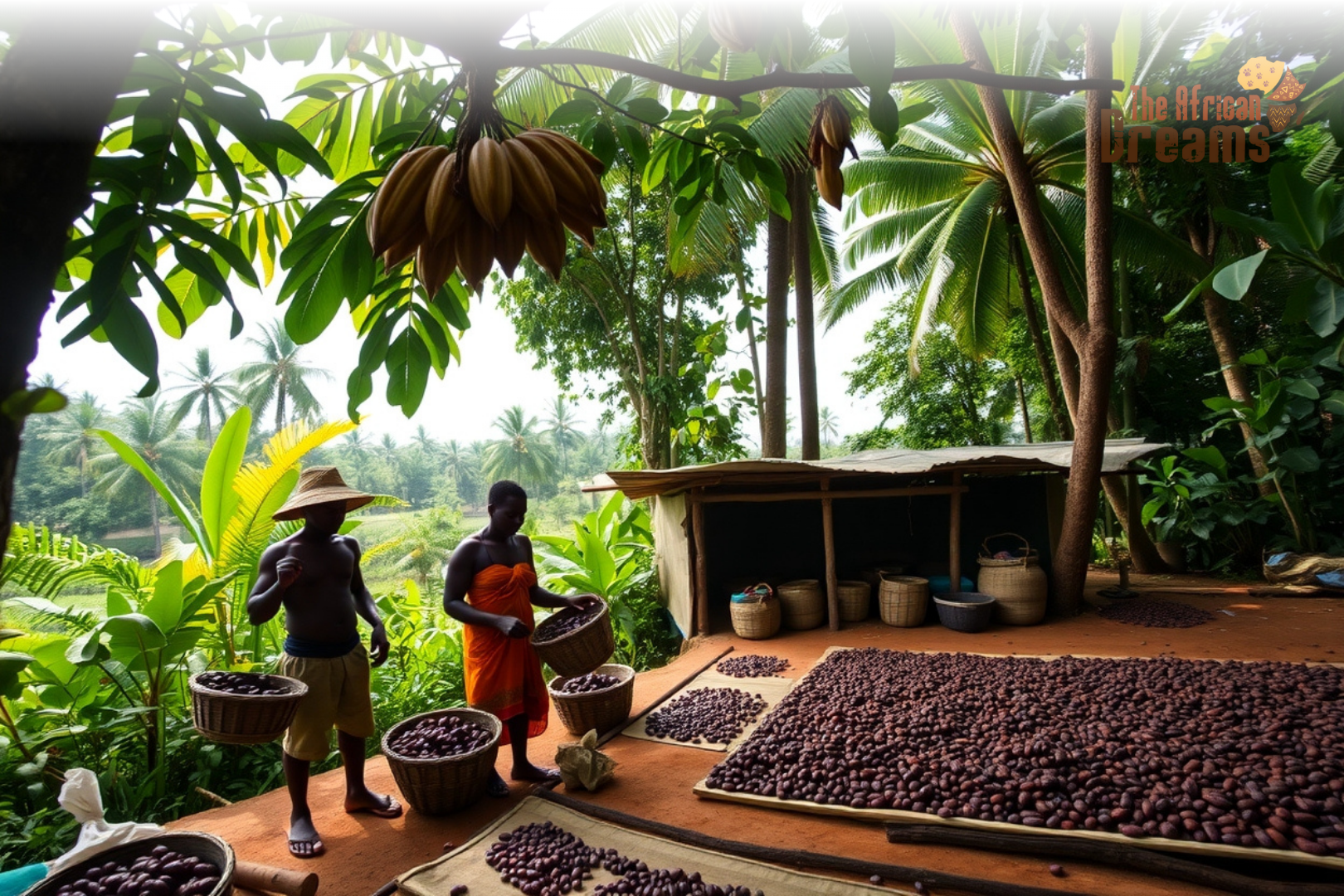
This journey of beans to chocolate is a multistage, value-addition process at each step. It starts with the cultivation and harvesting of the pods, which are carefully monitored throughout their ripening cycle. The beans inside these pods begin the important processes of fermentation and drying, developing the rich flavor that characterizes high-quality chocolates.
The beans are commonly dried and exported to processing facilities, where they are roasted and ground into a product called cocoa mass. The mass then undergoes pressing to produce cocoa butter and cocoa solids, the major components of chocolate. The proportions of cocoa butter and solids vary according to product requirement; these ingredients, with added sugar, milk, and other components, combine to make chocolate.
But, with investment in the full cycle- from cultivation through chocolate production- Congo could become one of the leading countries in the production of chocolates in the world. This offers far more than economic benefits, as Congo could even boast a rich heritage and culture through preparation and production in return for superior, sustainable chocolate products.
0 Comments