
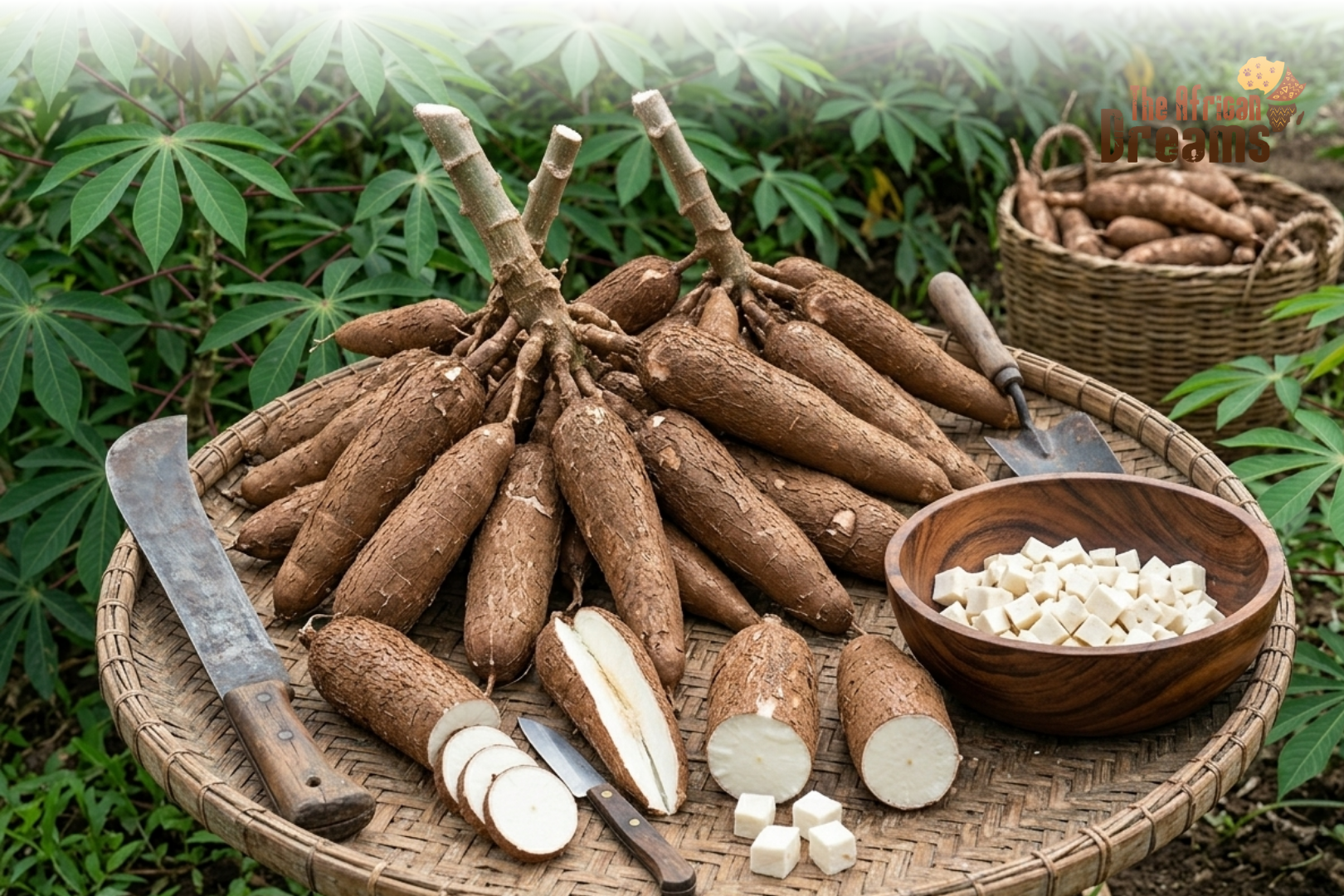
Uganda is among the leading cassava producers in Africa. It is important for the country’s food security and economy. Cassava is the second most important staple food after bananas. These crops are produced mostly in the eastern and northern provinces. This is an all-purpose crop and supplies the human diet with carbohydrates. It withstands unfavourable climate conditions and is vital for millions of people in Uganda.
In addition to its relevance in food security, there are economic connections to cassava production. The crop is in high demand for its by-products, including starch, flour, and bio-ethanol. It is suitable for a wide variety of uses in the local and international markets. Therefore, the cassava industry offers vast potential and benefits for Uganda. Farmers increased their agricultural production and offered cassava by-products to the global market.
However, several challenges, including supply chain problems, are faced in Uganda’s cassava industry. This is characterised by inefficiencies, diseases, and value addition, which is closely linked to limited or no addition. These challenges must be addressed to realise the full potential of cassava production. But with the right investments and the proper use of technology, significant improvement could be made in this crucial sector. This blog discusses the Cassava industry in Uganda and its impact.
The Challenges
The cassava industry has great potential in Uganda as a cash crop. There are major challenges that would slow down its expansion. The biggest concern is that the supply chain is currently not operating. Another issue arising from the nature of cassava. It should be processed as soon as possible after harvest. There is limited access to proper processing facilities. In most cases, the farmers’ yields are dumped. As a result, we can see massive post-harvest loss.
Another emergent and significant threat is diseases. These include Cassava Brown Streak Disease (CBSD) and Cassava Mosaic Disease (CMD). These diseases greatly reduce cassava yields and lead to poor-quality roots. These are unsuitable for processing into more attractive products. This relates to diseases that affect planting materials. Farmers still use low-yielding and disease-prone planting materials.
Another challenge affecting the establishment of the cassava industry is financial constraints. Many smallholder farmers cannot afford some essential inputs, such as fertilizers and improved planting materials. Thirdly, the farmers and producers face access to financial credit, which in turn hampers their capacity to invest. These financial constraints, with poor market access, lead to instabilities in the farmer’s income. Thus reducing their willingness to increase production.
The Solutions
There are available resources to overcome the challenges of the Ugandan cassava industry. Several strategies have been developed to increase cassava yields. One has been the development of disease-resistant varieties. These are NASE 14 and NASE 19, through undertaking initiatives such as CAVA II. These improved varieties have significantly increased productivity and reduced the risk of crop failure. That has also ended the impact of CBSD(cassava brown streak disease) and CMD (cassava mosaic disease).
Another important solution is the application of contemporary processing technologies. These include raised, metallic sun-drying racks that improve post-harvest processing and the quality of processed cassava products. For instance, farmers who implement these technologies can dry their cassava quickly. Compared with other traditional methods, the end product is of higher quality and more marketable.
Another source of support for Uganda’s cassava industry is private-sector investment. This has led companies such as Pura Organic Agro Tech Ltd. to invest in processing facilities. Thus, cassava enters the market by processing the raw material into high-value products such as tapioca starch and cassava flour. These investments help boost Uganda’s local economy while also marketing the country as a supplier in regional and international markets.
The Implementation
The solutions to strengthen the Ugandan cassava industry have involved several approaches. To address the constraints in the supply chain, farm establishments, and processing. Here’s how these solutions were put into practice:
1. Distribution of Disease-Resistant Varieties:
Superior genotypes such as NASE 14 and NASE 19 were delivered to farmers via projects, such as CAVA II, across Uganda. Some of these varieties are resistant to Cassava Brown Streak Disease (CBSD) and Cassava Mosaic Disease (CMD), increasing yields while reducing losses.
Today, farmers in the Ngora District, such as Mr. Okiror Gilbert, have embraced these improved varieties to increase cassava root production for the processing plant.
2. Adoption of Modern Processing Technologies:
Other advanced drying equipment, such as metallic elevated sun-drying racks and solar driers. These are adopted to cut post-harvest losses in cassava and enhance the quality of cassava flour. These technologies enable rapid drying, resulting in high-quality products that meet local and international market requirements.
Koloin Agro-Processors, operated by Mr. Okiror Gilbert, ensured the structure of the raised drying racks. This makes it possible to dry cassava for 3-4 hours and make flour of the required quality.
3. Engagement with Private Sector Investments:
Few processing firms have large-scale processing centers. Thus, ensuring the cassava farmers have a ready market through companies such as Pura Organic Agro Tech Ltd. These companies offer services such as technical support in growing cassava. Supply of disease free cuttings, and contracts for the purchase of cassava roots to be used in processing into value added products.
The investment by Pura Organic Agro Tech Ltd in Uganda has a nucleus farm, and an outgrower scheme that sources 85% of raw cassava from local smallholder farmers who, in turn, receive technical support and market from the company.
4. Training and Capacity Building for Farmers:
A variety of training sessions were organized to teach farmers on proper spacing, weed control, and proper harvesting methods. These programs were crucial in boosting productivity and ensuring the viability of the cassava supply chain.
The CAVA II project implemented farmer-to-farmer training sessions. Whereby experienced farmers, like those from Soroti District, transferred knowledge to other farmers about better practices. That helped increase yields and the quality of cassava.
5. Formation of Farmer Savings Clubs:
Savings clubs were created to enable farmers to pool their funds and buy farming inputs and technologies in a single purchase. These clubs also offered credit to farmers, helping them get the required inputs that would otherwise be financially impossible.
In Ngora District, farmers formed groups to borrow funds collectively to buy disease-free planting materials and to fund processing technologies, raising their productivity and incomes substantially.
Such strategic interventions have dramatically shifted the cassava production and processing in Uganda. From low yields and inferior quality to higher yields and higher-quality products that drive economic returns for farmers and investors.
The Results
Using the above highlighted solutions has improved the cassava industry in Uganda. Those farmers who used disease-resistant varieties, such as NASE 14 and NASE 19, yielded up to 30 tons per hectare, against the country’s general yield per hectare, which ranges from 10 to 15 tons per hectare. This has not only improved food output but also the farmers’ incomes. Thereby increasing investment in farms.
Other technologies have also played a significant role in the development of processing technologies. For example, Koloin Agro-Processors uses raised drying racks and has reduced cassava drying time to 3-4 hours from several days. It enhanced the quality of their product and enabled them to access the premium markets. Also, sign contracts with larger buyers, such as breweries, for high-quality cassava flour.
Investments by the private sector have also played a role in further enhancing the supply chain. Through this involvement, Pura Organic Agro Tech Ltd has helped to ensure a stable supply of cassava. It improved the income status of many thousands of smallholder farmers. Currently, the company’s processing plant is fully utilized. Cassava products are sold throughout the region. Providing a significant boost to Uganda’s agricultural gross domestic product
These findings present evidence of positive impacts. Targeted areas of cassava production helped smallholder farmers and other economic players.
Conclusion
Currently, Uganda’s cassava industry has expanded due to the use of tolerant varieties. Also, improved processing technologies and the private sector’s key investments helped. These efforts have boosted the production rates. Raised quality standards and facilitated market opportunities for farmers and the overall economy.
Moving forward, emphasis on innovation, farmer training, and value addition will help maintain this growth. This is a unique example of how proper support and investment in a cassava-intensive country such as Uganda could significantly increase the exportation of cassava products and boost food and economic security in the region.





0 Comments