
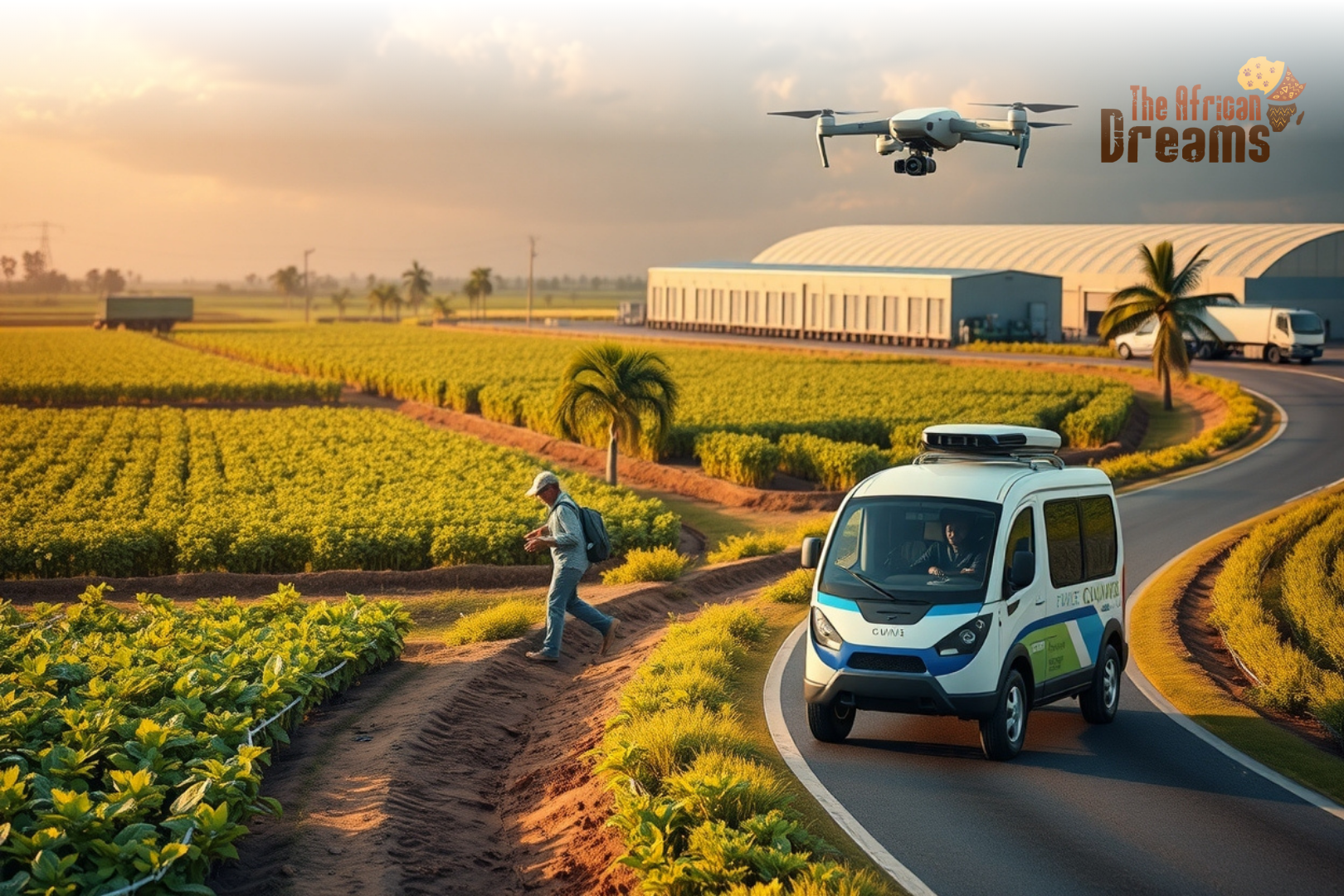
The agricultural sector in Mozambique is likely to undergo a major revolution driven by biotech solutions. Agriculture contributes an important share of the country’s economy, yet Mozambique faces many challenges, including inefficient supply chains and inadequate market access for smallholder farmers. Advanced technologies such as artificial intelligence, blockchain, and autonomous transportation promise to solve these perennial problems. This blog, therefore, discusses the prevailing scenario, state of the art, and real outcomes of investing in bio-tech for agri-logistics, all of which combine to make an excellent case for prospective investors.
Article Highlights:
Smart Warehousing and Real-Time Monitoring Systems: Increase in efficiency and improved customer satisfaction.
Cost drops in autonomous vehicles and military systems using blockchain technology.
Economic and Social Gains: There have been significant improvements in infrastructure, leading to greater market access.
Strategic Frameworks: The suggestions and guidelines are provided by organisations such as the FAO to support sustainable improvements in agriculture.
Investment Return: High returns from successful AgriTech as a startup.
Technology in Agri-Logistics: A Promise
Almost 80% of Mozambique’s population is employed in the agricultural sector, which already benefits from smart warehousing and real-time monitoring systems. Technologies such as AI and IoT enhance storage and transportation optimisation, reducing waste during transportation and improving the quality of delivered products. Today’s monitoring sensors and GPS tracking devices ensure that products reach markets in the best possible condition.
Furthermore, it has been advocated that the introduction of drones and self-driving trucks will change the face of how delivery services are offered. These technologies, in addition to easing operational costs, accelerate the distribution chain, thereby enabling farm products to be delivered on time and of appropriate quality to clients’ premises.
Economic and Social Enhancements
The strategic investment in infrastructure, such as World Bank initiatives along the Zambezi Valley and Nacala Corridor, has really improved the lives of many people at the local level. The enhanced road network and improved water distribution networks have significantly increased market accessibility to farmers, thereby enhancing their potential for sustainable incomes. In excess of 200,000 people have benefited from these improvements, a large proportion of whom are women, hence improving gender equity in the area.
Role of Technology in Addressing Post-Harvest Losses in Mozambique
Post-harvest losses remain a critical concern in Mozambique, with up to 30% of produce lost before it ever reaches the market due to poor storage and handling practices. Advanced structures, such as storage in controlled atmosphere warehouses and real-time monitoring systems, ensure the best conditions for specific crops and diminish potential spoilage. IoT sensors monitor data such as humidity and temperature, providing real-time information that farmers can act on to make informed decisions about achieving desirable conditions that will keep their harvest in the best condition.
Aiming for Bigger Crop Yields in Mozambique by Applying Big Data Analytics
The Smart Farmer: How artificial intelligence and data analytics are altering crop management. These technologies use historical data analysis, real-time monitoring of weather patterns, and current soil health conditions to provide accurate recommendations for planting, irrigation, and fertiliser applications. Using such a data-intensive approach, farmers will be motivated to make the most of what they can do with the resources available, ensuring more sustainable agricultural practices.
Harnessing Global Innovations
This is what agritech startups across Africa are currently teaching Mozambique: Thrive Agric and AgroCenta—empowering farmers with platforms that put them directly in touch with much larger markets, in return for fair compensation for their produce. This not only augments the local economy but also increases international investors’ interest in sustainable, profitable opportunities.
Case Studies of Successful Agritech Models
- Thrive Agric (Nigeria): Thrive Agric utilises a crowd-farming model that links farmers to investors, focusing on providing farmers with capital from input prices, technical support, and market access. These look to Ampere the farmer to maximise production and profitability. They’ve supported cultivation on over 127,000 acres of farmland and the raising of over 2.6 million birds.
- AgroCenta (Ghana): AgroCenta provides a link for smallholder farmers to more markets at competitive prices for the purchase of their produce. AgroCenta’s startup is thus distributed more widely across Ghana’s central and western regions, covering every district in the country and 15 communities.
Strategic Frameworks and Support by FAO
The FAO has been valuable in laying down strategic and related frameworks aligned with Mozambique’s agricultural goals. The Country Programming Framework shall contribute to better production, nutrition, environmental safeguarding, and quality of life by focusing on prioritised program areas. This framework will help create a resilient and efficient agricultural sector that can adapt to challenges from climate change and the global market.
Investment Appeal
It’s not just the investment in agri-logistics technology in Mozambique; one is looking to create a proper ecosystem that is robust enough to sustain economic growth and development. Success stories of agritech start-ups with high ROIs set an example of how one can make money engaging in that space. This would also offer investors an opportunity to participate in this growth story, which is bound to deliver substantial economic benefits for the greater good.
Transverse Implications in Agri-Logistic Investment
Such investment in agri-logistics technology underscores the importance of events that influence Mozambique’s economic stability and growth. By bettering logistics in farming, the efficiency of food distribution will improve, while carbon emissions will be reduced compared to traditional agriculture. It is through the embodiment of technology-driven solutions that businesses will strike this tricky balance of profitability and sustainability, leading the way toward a more ecological future for all.
However, better logistics is not the only role that technology can play in an agricultural setting; it can also enable data-driven decision-making, which might include higher crop yields, reduced water and pesticide use, and even weather forecasting. These are significant advances for a country like Mozambique, which is highly vulnerable to the vagaries of the climate and where agriculture is the basis of survival for the vast majority of people living in rural areas.
Improving Local Economies with Agri-Tech in Mozambique
It should be remembered that agri-tech not only revolutionizes logistics, supply chains, jobs, and skills but also boosts local economies. The technology shift is liable to change required skills, opening the possibility for training and development, which will place the satisfied local workforce at the required level for international standards. This is an attractive feature of agri-tech investment, offering long-term benefits for workforce capability and economic diversification.
Conclusion
This is the moment when Mozambique’s agricultural sector is on the edge of a transformative take-off, propelled by technological innovation in agri-logistics. More particularly, it represents potential investors’ participation in a growth story that offers high economic, social, and environmental returns. The inclusion of AI, IoT, and blockchain technologies in farm practices offers a promising pathway to revolutionize agriculture.


0 Comments