

Introduction
Malawi’s formal sector has slowly gotten used to adopting new technologies and skills lately, improving productivity, efficiency, and competitiveness. Technology adoption in Malawi’s formal sector is mostly done by digital tools, mobile banking, cloud services, etc. But many firms still face challenges such as poor internet connectivity, high costs, and reduced use of digital skills. Small and medium enterprises (SMEs) often struggle more than large companies. Even though some sectors, such as finance, telecoms, and retail, have seen faster change, most others are still behind. Government efforts, such as the Digital Malawi Program and the creation of Innovation Hubs, are showing positive signs. But without stronger support, many businesses will remain slow to adopt tech. The progress is clear, but unequal.
To fully benefit, Malawi must address the key problems stopping firms from going digital. The article discusses technology adoption in Malawi’s formal sector using data from the Firm-level Adoption of Technology (FAT) survey and the method proposed by Cirera, Comin, and Cruz (2020). This analysis looks at the current tech use in firms, what holds them back, and how smart investment can turn challenges into growth opportunities.
Article Highlights
1. Challenges to technology adoption
Perceived barriers to adoption
Financial Constraints
Firm Capabilities
1. Management quality and skills
2. Awareness, information, and overconfidence
Access to international markets and competition
Access to government support
Summary on barriers and drivers
2. Technology and employment
Challenges to Technology Adoption
Perceived Challenges to Adoption
A recent survey asked managers to say the three most primary challenges to the adoption and use of technologies. These were grouped into five categories: lack of capabilities, finance, lack of demand or uncertainty, costly government regulations, and poor technology enabling infrastructure (electricity, internet, etc.).
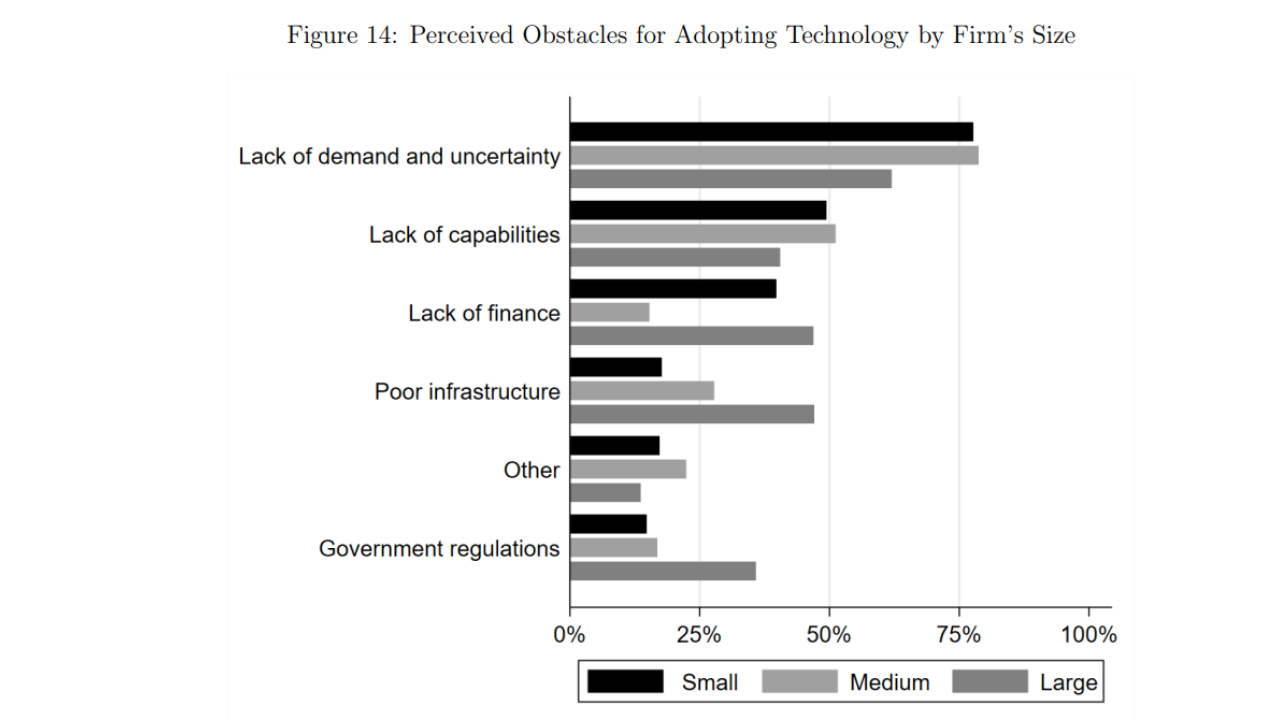
The figure above shows the share of firms reporting the main obstacles by size group. In Malawi, lack of demand, uncertainty, and lack of capabilities emerged as the most common challenges. Around 75% of small and medium firms have identified a lack of demand and uncertainty as one of the three most significant barriers.
Lack of demand and uncertainty reflected hesitations and doubts about the returns to investing in the technologies sector of Malawi, and whether customer demand justifies the cost. Lack of capabilities also refers to a firm’s shortage of knowledge about which technologies exist and its inability to acquire the skills to use them. Especially, there’s little difference between small and medium firms, implying similar changes across the parties. But larger firms perceive the lack of finance and poor infrastructure as more relevant challenges. For investors, understanding these limitations offers insight into areas where targeted support and capital add significant value in Malawi’s tech adoption landscape.
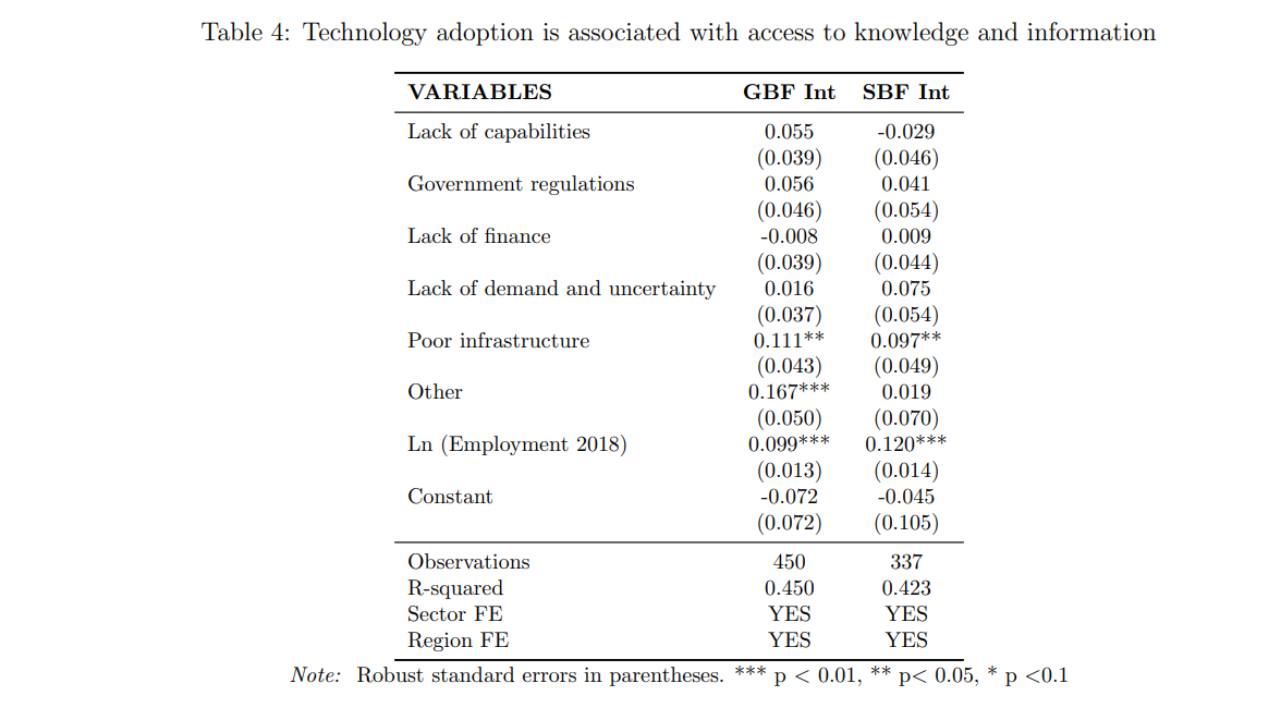
Based on data from the Firm-level Adoption of Technology (FAT) survey, a linear regression model was employed to formally examine the relationship between the extent of technology use and perceived obstacles, while controlling for firm size, sector, and region (as shown in the above table). The results indicate that firm size is strongly and positively linked with technology adoption. Notably, none of the identified barriers show a negative and statistically significant association with adoption. Instead, there is a positive and significant correlation between poor infrastructure and both technology indexes. The table also reveals a positive relationship between other obstacles and the GBF index at the intensive margin. Overall, a substantial portion of the technology index remains unexplained, likely due to the generally low quality of these perceived barriers.
For policymakers, the data on the factual elements that determine the lack of adoption is crucial for setting policy priorities. This includes areas that need further experimentation through evaluations to provide more solid evidence of effective interventions. However, perceived obstacles do not necessarily reflect the most critical issues faced by firms, as firms may be unaware of gaps in their knowledge. Therefore, the survey explores these challenges using factual information.
It categorizes them into three primary groups:
i) Financial constraints
ii) Information and knowledge
iii) Access to market and competition, which is linked to uncertainty of demand and consumer preferences.
1. Financial Constraints
Previous studies suggest that an inefficient financial system may reduce firm-level technology adoption within a country, even when a technology is profitable. For instance, Midrigan and Xu (2014), using a model of establishment dynamics with producer-level data, found that financial frictions distort firm entry and technology adoption decisions, leading to lower overall productivity.
Cole et al. (2016) showed a dynamic state model to explain how efficient the financial system is. In conjunction with available technologies, it determines which technologies firms adopt across countries. Similarly, other studies found suggestive evidence that improvements in local financial systems positively influence firm-level technology adoption in countries such as Russia (Bircan and De Haas, 2019) and Ethiopia (Abate et al., 2016) in the agriculture sector.
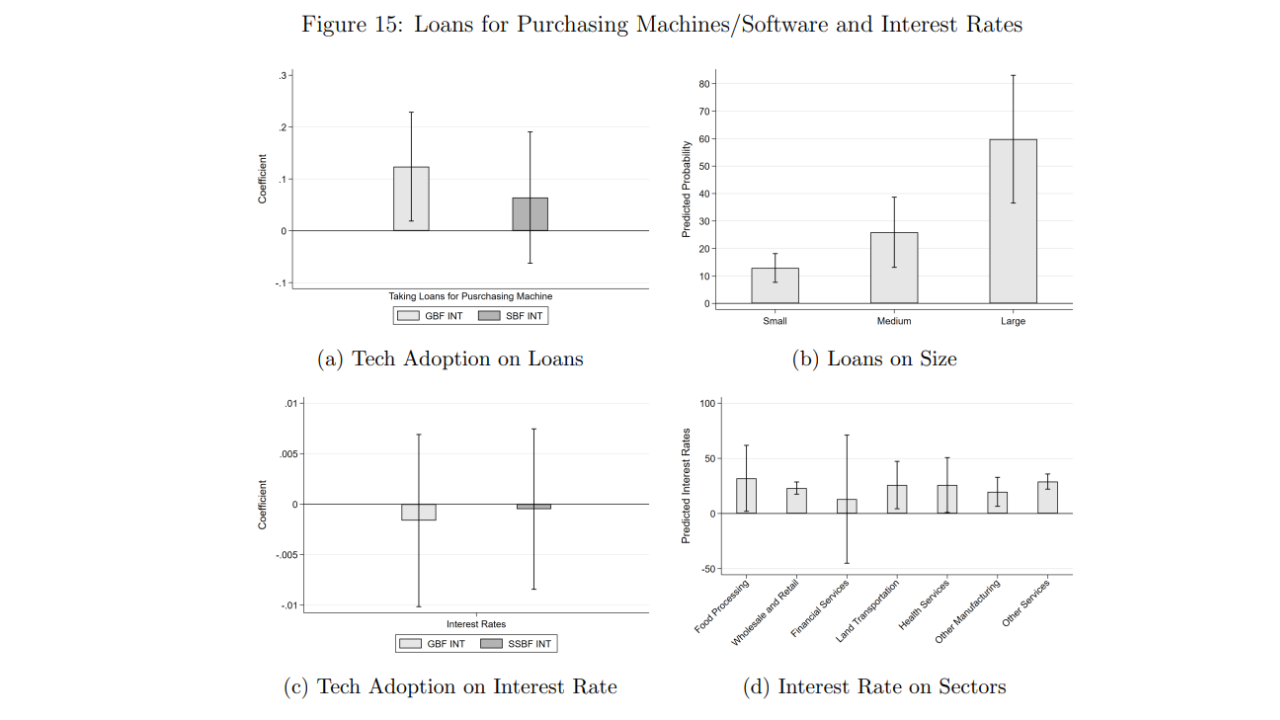
The above figure panels (a) and (c) present the predictions of our measures of financial access, whether firms took loans and at what interest rate on the different technology indexes, along with the financial access variables in panels (b) and (d), by firm type. Taking a loan to purchase machinery is significantly associated with a 0.12 increase in the GBF index and a 0.04 increase in the SSBF index.
However, the coefficients for the interest rates paid on existing loans are not statistically significant. Figure 15 panels (b) and (d) show predictions for the two variables by firm size and sector, controlling for other factors. Small firms have less than 15% probability of having a loan, compared to 60% for large firms. By sector, and after controlling for other factors, food processing and other services firms face slightly higher interest rates, though sectoral differences are minimal.
1. Firm Capabilities
A. Management Quality and Skills
Firms’ capabilities and technology adoption are closely linked to the human capital of both workers and managers (Caselli and Coleman, 2001; Riddell and Song, 2017; Comin and Hobijn, 2004).
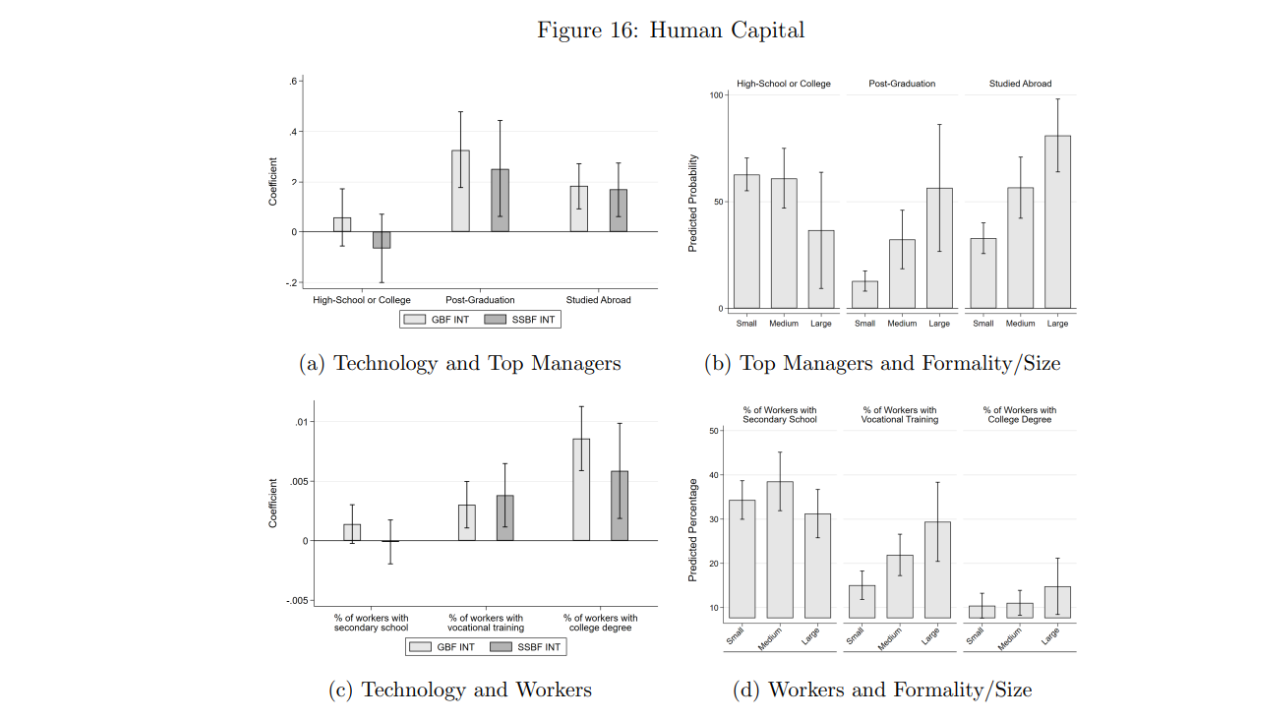
The above figure shows the results of a similar analysis, focusing on the relationship between human capital and technology use. Panels (a) and (c) show how managers’ and workers’ human capital are related to technology adoption. Having a manager with a high school or college degree does not show a huge impact. But, having a postgraduate degree is linked to an increase of 0.32 in GBFs and 0.25 in SBFs. Managers who studied in other foreign countries also have a positive impact on technology adoption for both GBFs and SBFs, with the effect ranging from 0.16 (for SBFs) to 0.18 (for GBFs). In comparison, having more workers with secondary education does not affect technology use as much, but a higher percentage of workers with vocational training or a college degree is linked to better GBFs and SBFs.
Panels (b) and (d) show that large firms are more likely to have top managers with at least a postgraduate degree and those who studied abroad. For small firms, the chance of having a manager who studied abroad is under 40%, while in large firms, it’s nearly 80%. Small firms are also less likely to have a larger share of workers with a college degree, although the difference compared to large firms is relatively small.
The use of formal incentives and performance monitoring is positively linked to technology adoption. Innovation and technology adoption are often driven by incentivized workers. The World Management Survey (WMS), introduced by Bloom and van Reenen (2007, 2010), has greatly advanced the comparative analysis of management practices and their impact on productivity and innovation. The FAT survey allows us to examine the relationship between managerial capabilities and technology adoption. The survey measures whether firms use formal incentives and how many performance indicators they track.
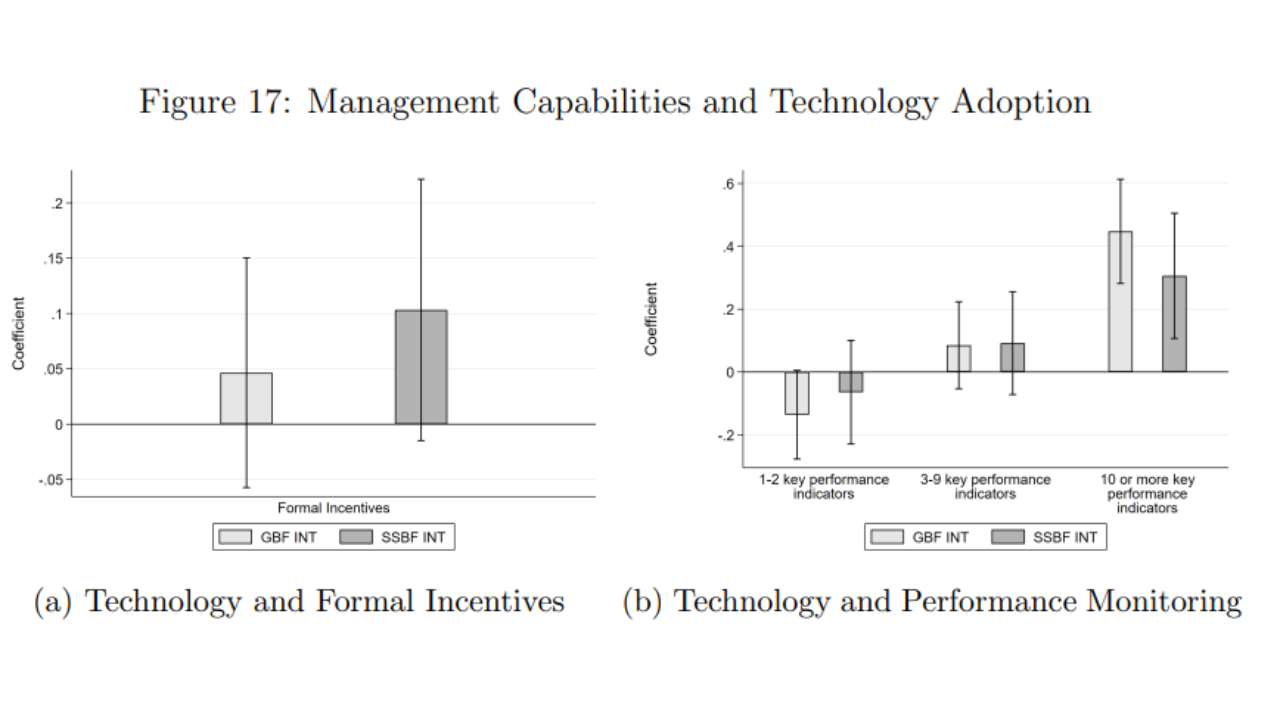
The above figure suggests that while not statistically significant, firms using formal incentives show higher GBFs and SBFs indices. Panel (b) indicates that more key performance indicators are linked to higher adoption, with 10 or more indicators increasing the GBFs by 0.44 and SBFs by 0.30.
B. Awareness, Information, and Overconfidence
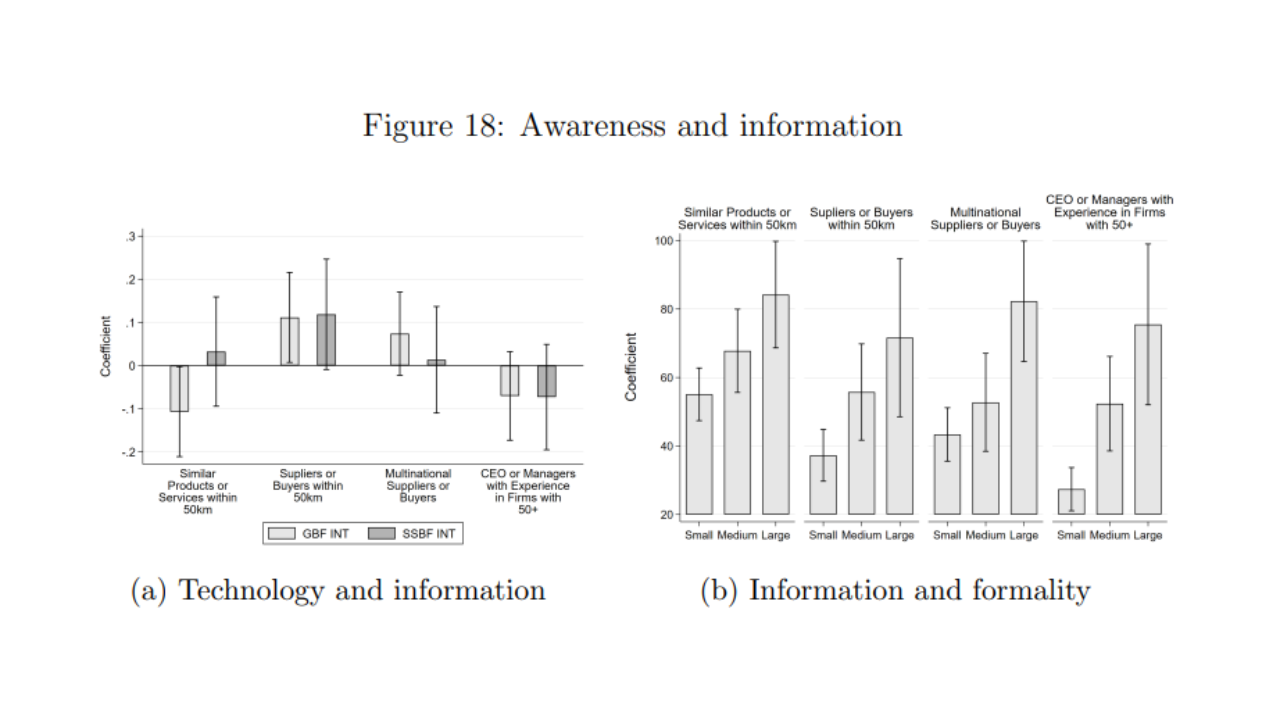
The figure below explores how firms access technology-related information by firm size. Panel (a) shows that better access to information links to higher technology adoption, though most results aren’t statistically significant. Panel (b) presents predicted probabilities for different information sources by size group.
Larger firms benefit hugely from knowledge exchange with MNEs and other firms, as they are usually located near others offering related products or services (e.g., Foster and Rosenzweig, 1995; Bandiera and Rasul, 2006; Conley and Udry, 2010) and engage with multinational firms (Alipranti et al., 2015). They’re also more likely to have top managers with experience in large firms, under 30% for small firms, and up to 75% for large ones.
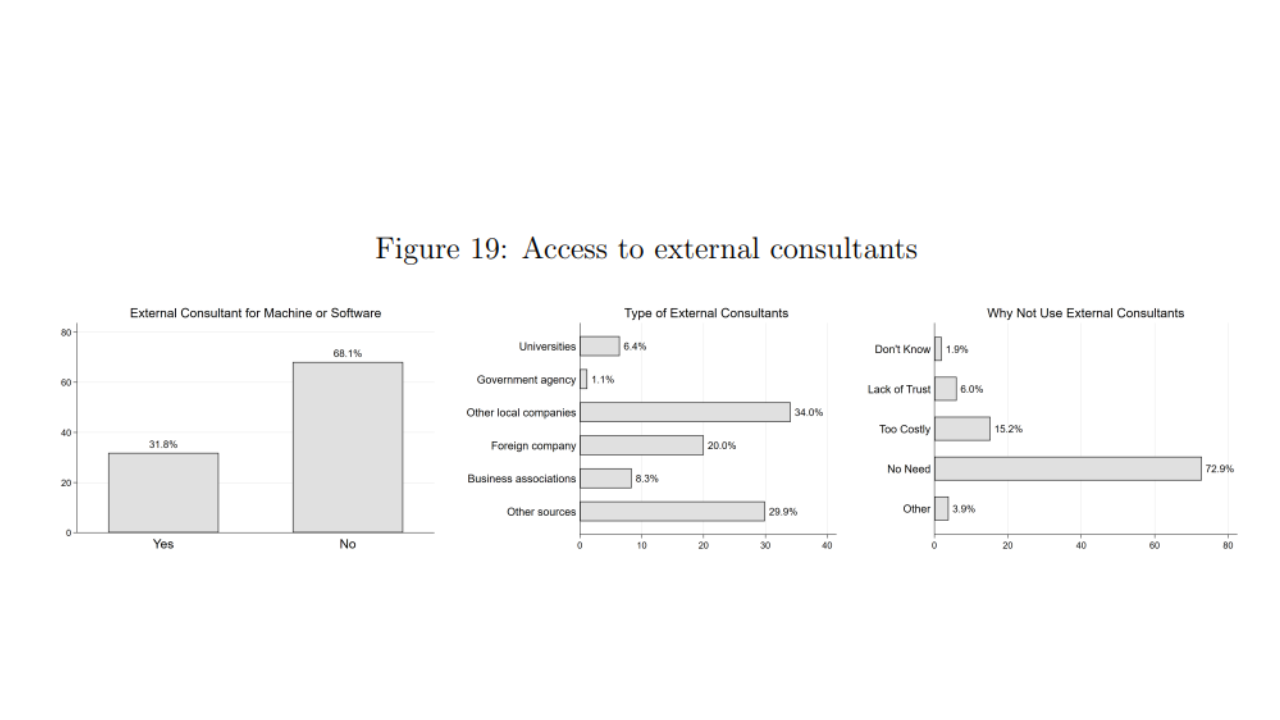
Looking at other sources of external information, the use of external consultants remains low in Malawi. However, larger firms are more likely to engage consultants for technology-related matters, such as adopting new machines or software. Shin (2006) found that consultants play a key role in helping small businesses adopt IT technologies, especially when managers lack technical skills.
Similarly, Comin et al. (2016) show that firms may also turn to public organizations with prior tech experience for support. Roughly one-third of firms in Malawi use consultants when buying machines or software ( from the figure below). The type of consultant also differs: around 34% rely on other local companies, while only 6.4% work with universities, highlighting a gap in university-firm collaboration. Just 1.1% of firms reported using government agencies. Among those not using consultants, 72.9% said they had “no need”, while 15.2% cited high cost as a barrier.
A key reason firms don’t adopt advanced technologies is willingness, often influenced by overconfidence. The FAT survey asked firms to self-assess their technology levels (scaled 1-5), comparing themselves to national firms and global leaders. These responses were then compared with actual technology indexes.
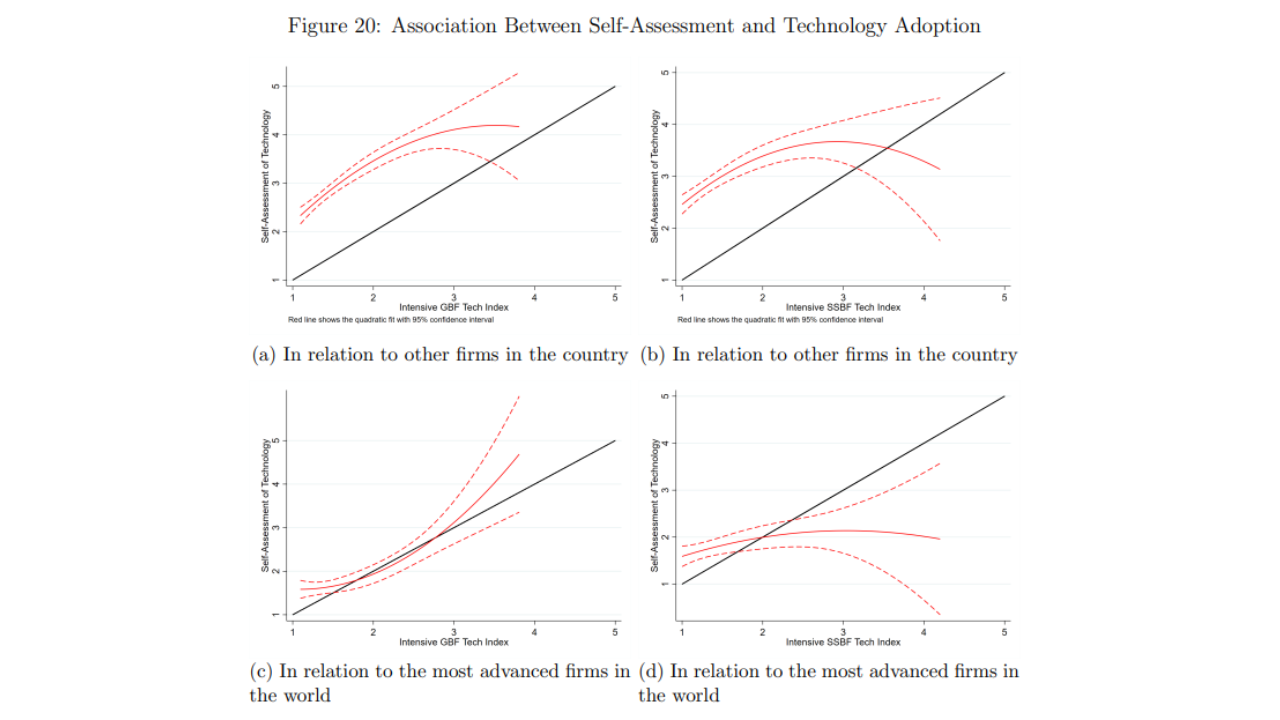
The above figure shows this across four panels: Panel (a) and (b) compare self-assessment with national peers; Panel (c) and (d) compare with global leaders. The 45 degree line marks where perception equals actual tech use. Most firms fall in the upper triangle, indicating overconfidence their self-rated level is higher than their actual adoption. This is more common in comparisons with national firms, especially among those scoring below 3.2 on the SSBF index. Such overconfidence can be a barrier to adopting more advanced technologies.
3. Access to International Markets and Competition
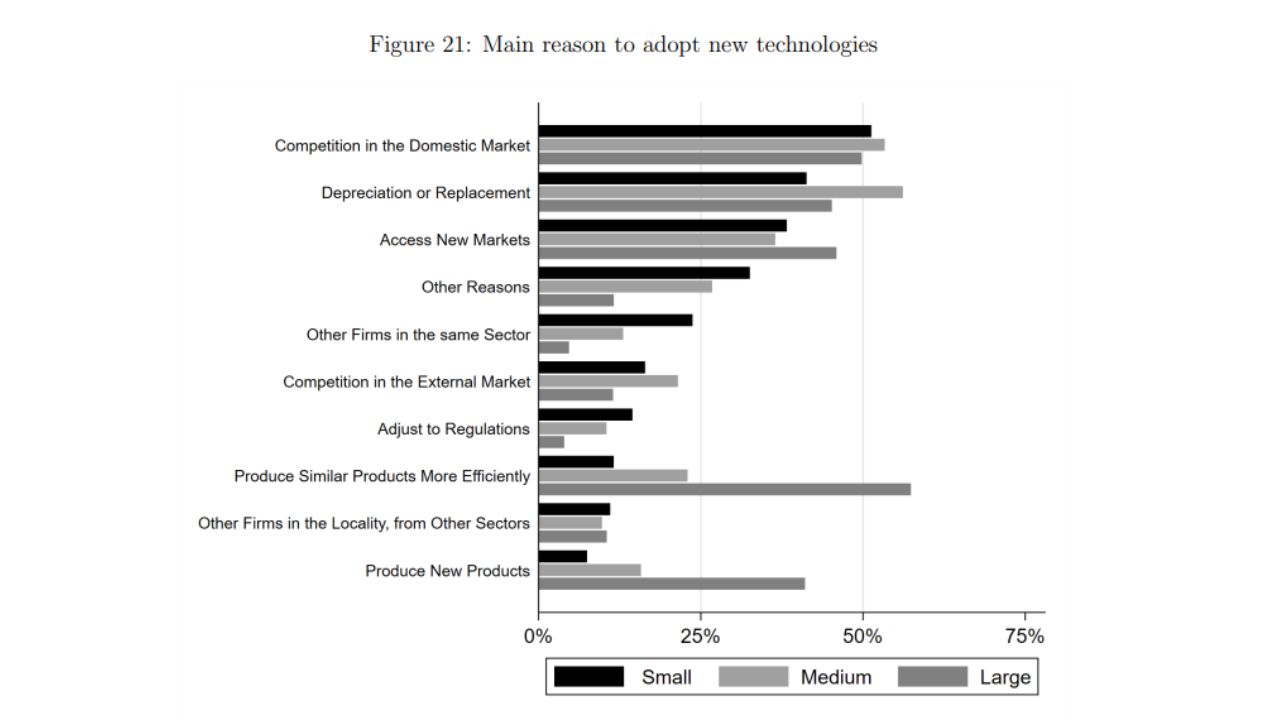
The survey asks managers to identify the three key reasons for adopting new technologies. The following figure presents the main reasons by firm size. Around 50% of firms cite “competition in the domestic market” as the primary driver, followed by depreciation or replacement. This aligns with prior studies suggesting that competition influences technology adoption at the firm level (Milliou and Petrakis, 2011).
Small firms are more likely to mention “adjusting to regulations” as a key factor, while over 50% of large firms report that their primary reason is to “produce similar products more efficiently.” Additionally, producing “new products” is a more significant factor for large firms than for small and medium-sized ones.
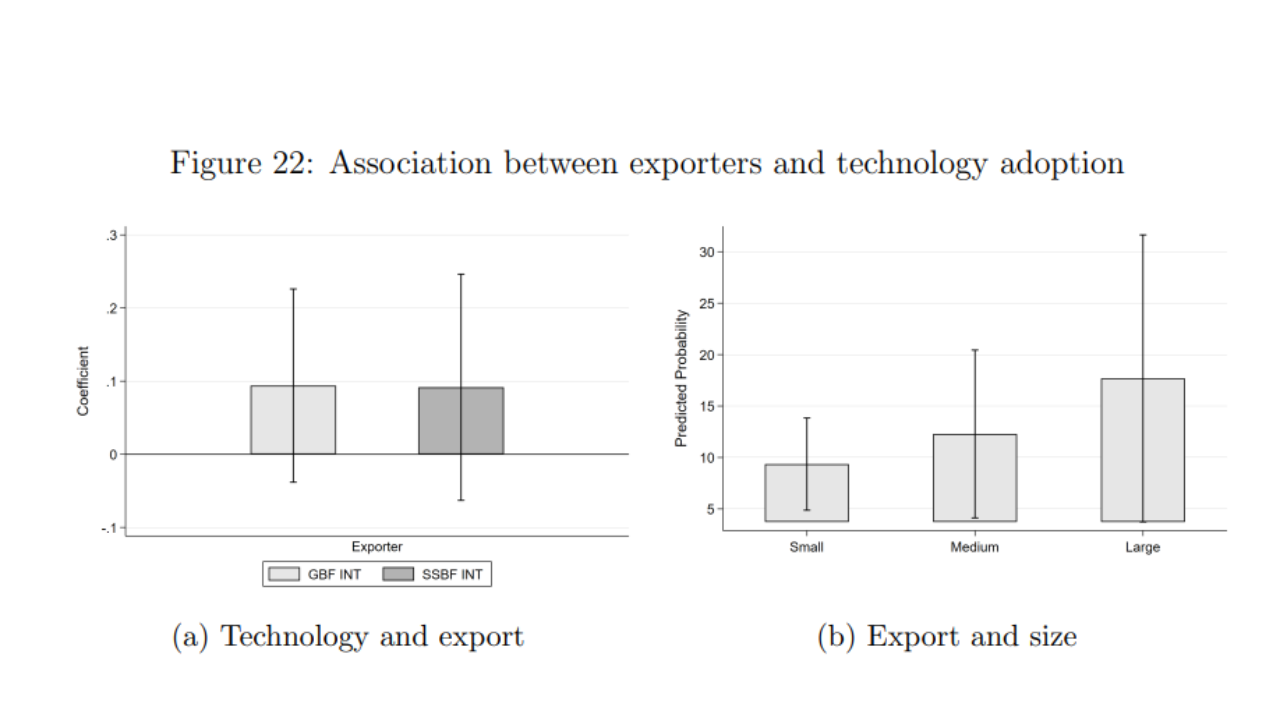
Access to international markets is another important part of the process of technology adoption. It can increase competition and give different learning opportunities that positively impact technology use. The figure below (Panel a) shows the relationship between trade status and technology adoption indices. Exporting is associated with higher levels of GBFs and SBFs, though the coefficients are not statistically significant.
Larger firms are more likely to export, aligning with trends observed globally (Comin and Hobijn, 2004; Hobday, 1994; Rasiah and Gachinco, 2005). But less than 10% of small firms export, while the likelihood rises to 17% for large firms. This suggests that the export benefit is mostly seen in larger firms.
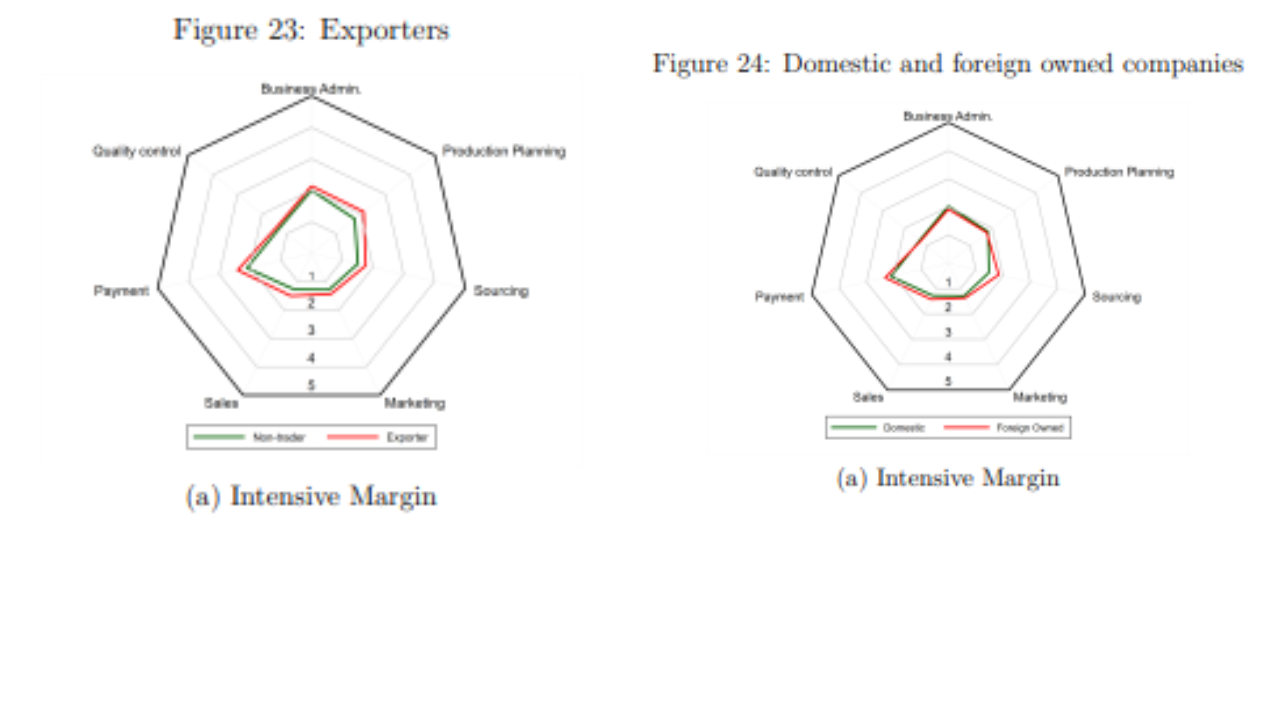
The figure on the right compares GBFs for exporters versus non-exporting firms, showing that exporters tend to use more advanced technologies, though the difference is modest.
The survey also decomposes the technology index between domestic and foreign-owned companies (those with more than 50% foreign ownership). Interestingly, despite previous findings that firms with managers experienced in MNEs tend to have larger technology indices, the differences between domestic and foreign-owned companies are small.
Government Support in Technology Adoption in Malawi
Large firms in Malawi benefit more from government programs or subsidies.
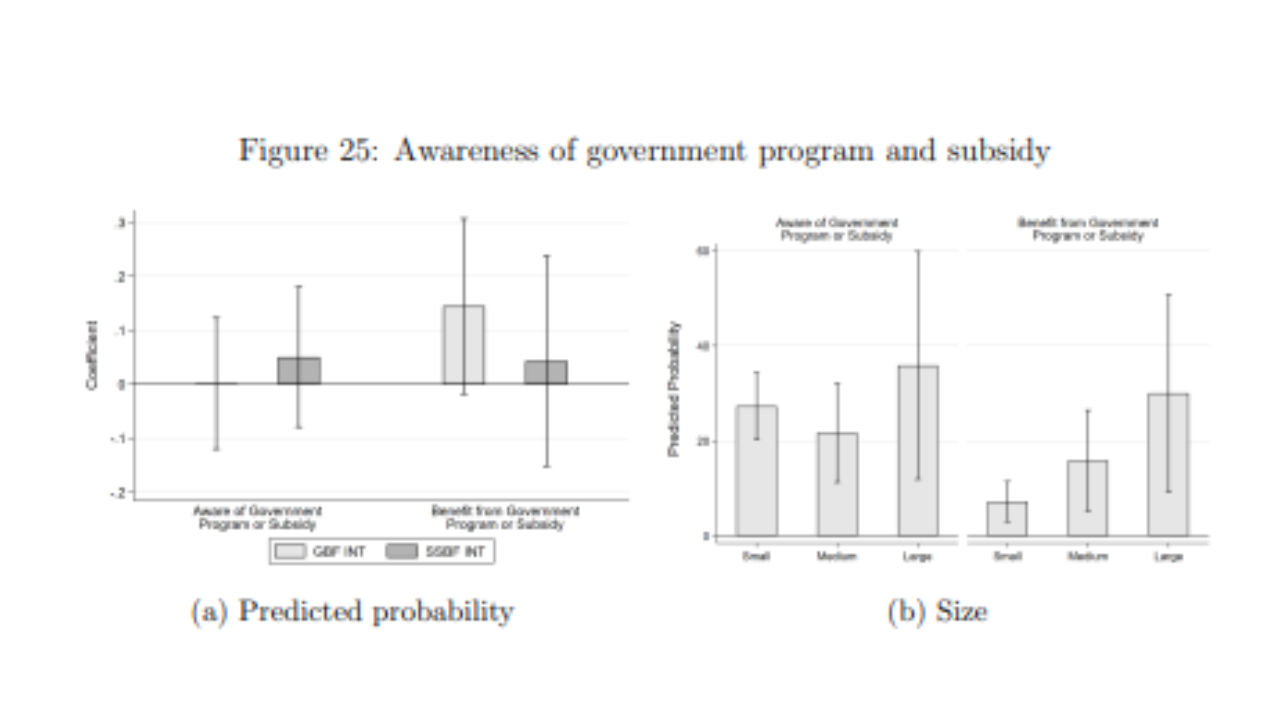
Panel (a) in the above figure shows the predicted probability of being aware of or benefiting from government programs, while Panel (b) describes this by size group. Panel (a) suggests that the association between awareness or benefit of subsidies and technology adoption is not statistically significant. But larger firms have a much higher probability of being aware (35%) or benefiting (30%) from government support, while fewer than 10% of small firms do. These results mark the need to better disseminate government programs, especially for medium and small firms in Malawi, to support technology adoption.
Summary on Challenges and Drivers
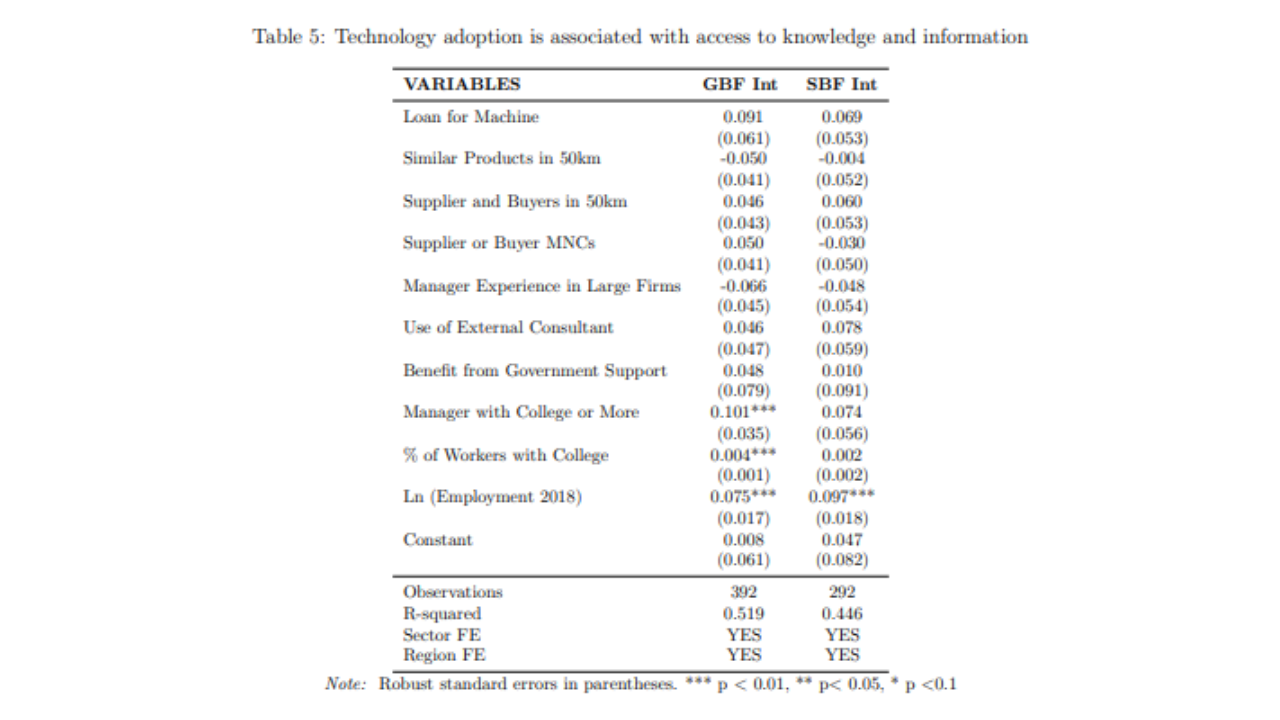
As the final step, the survey incorporates the discussed elements into a regression framework to examine which variables are most closely associated with technology use. The table below shows the results for two technology indices, controlling for size, sector, and regions, using only factual variables. Technology adoption is significantly and positively linked to having managers with a college degree or higher. However, while both coefficients are positive, managers’ education is only statistically significant for the GBF’s index. Overall, technology use in Malawi remains difficult to explain, with these variables accounting for only one-third of the total variance in technology adoption.
Technology and Employment in Malawi
In a final report, the survey shows how technology adoption leads to an impact on employment decisions. When firms acquire new machines, equipment, or software, 48.7% report no change in the number of workers, while about 33% offer training to existing staff to adapt to the changes, as shown in
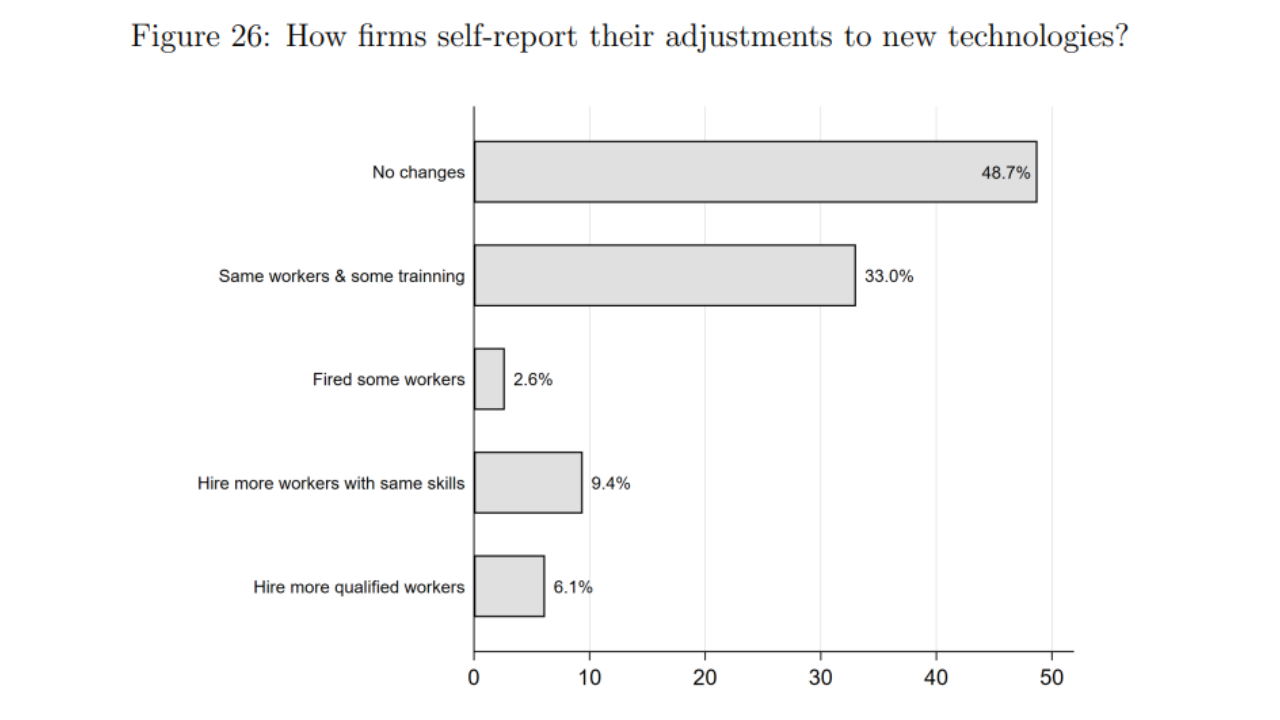
the figure below.
Interestingly, only 2.6% of firms lower their workforce. This suggests that job displacement due to technology is limited. Instead, 9.4% of firms increase employment for workers with similar skills, and 6.1% bring in better workers, marking that technology adoption may lead to employment growth in some cases.
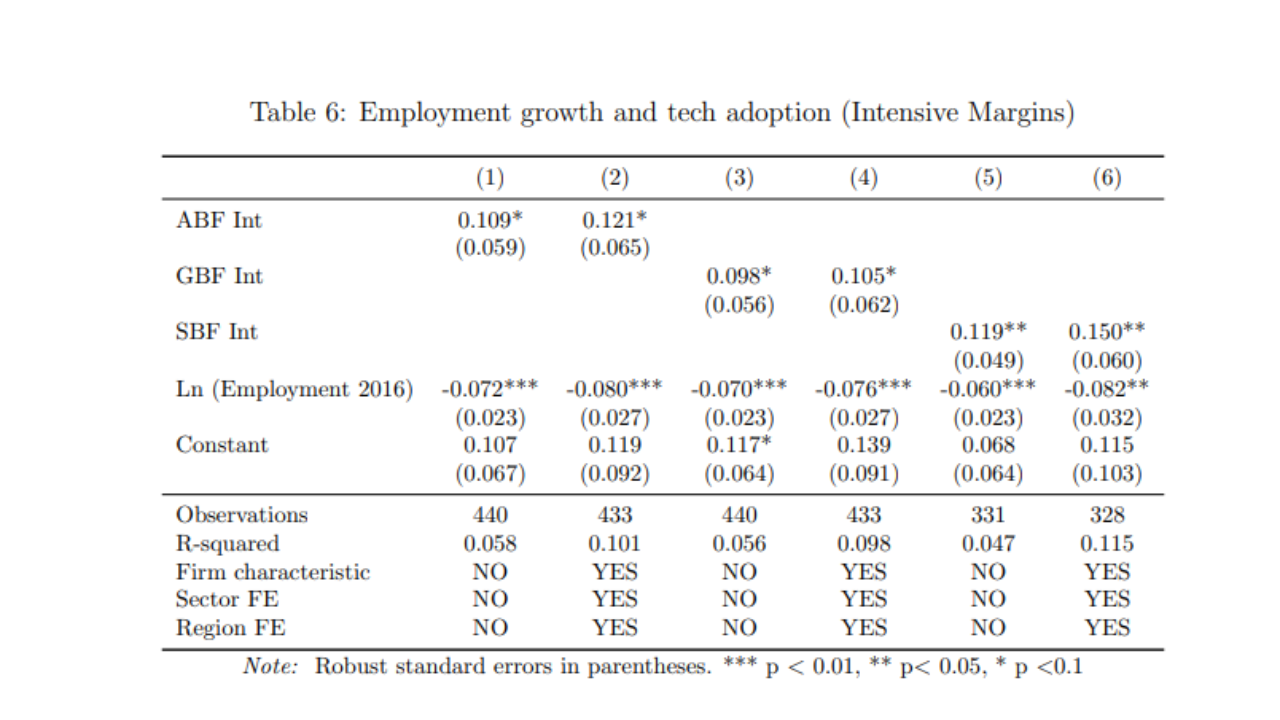
The survey also examines the link between employment growth and advanced technology use. The above table shows a positive and significant association between technology adoption and employment growth from 2016 to 2018, after controlling for firm size, age, sector, region, foreign ownership, and export status. The effect is stronger for SBFs than GBFs, suggesting that increased usage of technology, rather than just adoption, drives growth. While most business functions show positivity, many results are not statistically significant.
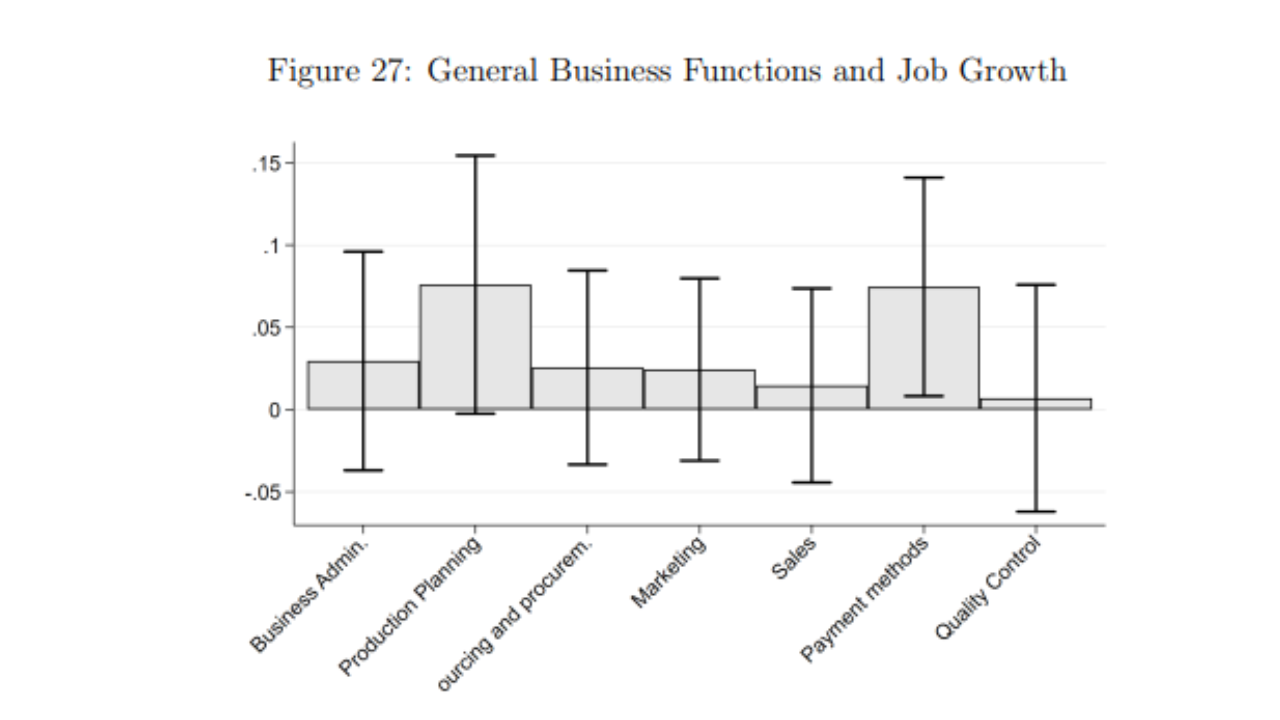
The above figure illustrates these trends across specific functions.
The association is stronger and more precisely estimated for advanced digital tools used in payments and production planning (e.g., ERP systems). To explore the skill-biased technological change, the survey compares firms’ skill composition from 2016 to 2018. Using the share of high-skilled workers (managers, professionals, technicians) as a proxy, Table 7 shows a positive, though not significant, link between changes in skill intensity and both ABFs and GBFs. Interestingly, SBFs show a negative correlation, suggesting that firms with higher SBF use may have added more unskilled workers rather than fewer. This is not causal, but it has important implications for tech-driven job growth patterns.
Final Remarks
Technology Adoption in Malawi has just started. The country’s journey into the digital world has also begun—but it’s still growing. Some firms are thriving thanks to tech, using it to grow, hire, and compete. But many others are stuck, not because they don’t want to change, but because the tools, training, and support simply are not adequate. The gap between leaders of the digital world and those left behind is widening and becoming increasingly difficult to address. That’s a risk for the whole economy of Malawi. Still, there’s reason to be hopeful. Government programs, donor support, and local innovation hubs are all helping push things forward.
What’s needed now is consistency of practice, better internet, affordable tools, improved infrastructure, and real support for everyday businesses. If Malawi gets that right, the impact could be huge. More jobs, more innovation, and stronger, more resilient firms. The opportunity is here. The next step is to make sure everyone can take it—no matter their size, sector, or location.






0 Comments