
Introduction
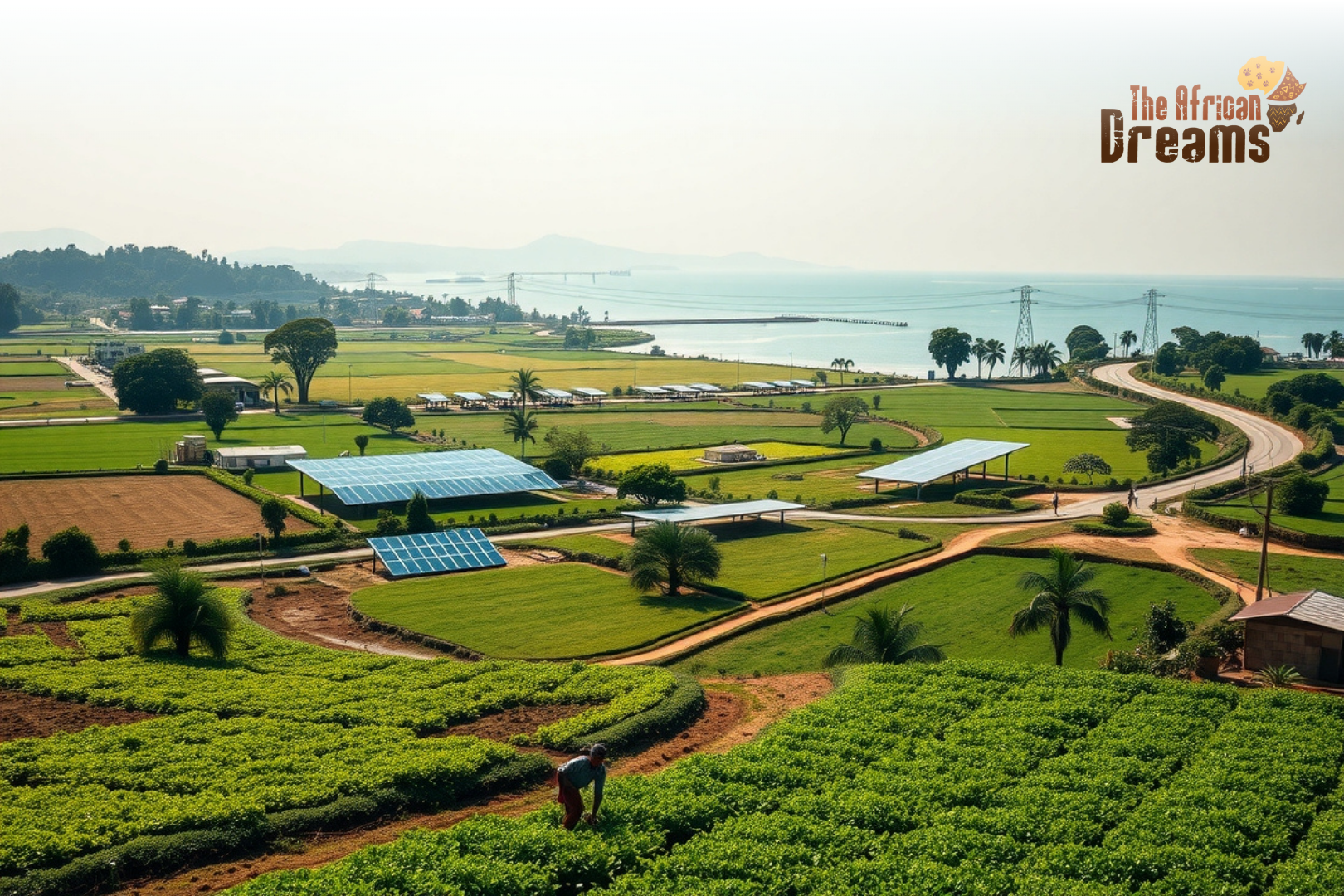
Malawi is a country in South-eastern Africa with a rich biodiversity, natural beauty, and a rich legacy in culture. However, the country is famous not only for its natural beauty but also for its future economic and investment opportunities. These opportunities will make Malawi a target for investors to achieve the most effective outcomes from its untapped potential.
In 2023, Malawi received foreign direct investment of 203.25 million US dollars, a 2.28% increase from 2022. Even in 2025, foreign investors were keeping a keen eye on Malawi for further investment opportunities.
But what is the reason behind so much interest in a country that is landlocked? And what are the possible outcomes or opportunities that make this place so attractive to investors? This blog will discuss the reasons for investment in Malawi and its several sectors to invest in.
Article Highlights
1. Overview of Malawi’s business sector
2. Reasons to invest in Malawi
3. Sectors for investment, including agriculture, energy, and tourism.
Overview of Malawi’s Business Sector
Imagine you are an investor and discover a place where no major conflicts have occurred. The place is also generally peaceful and democratic. You can also guess that other investors like you are interested in this land because of its hidden potential. So, the place, Malawi, looks like a jackpot to you as it attracts investors who want to invest with the least loss and the most profit.
Agriculture is the sector where most people work and depend on in Malawi. On the other hand, the government of Malawi is also working to diversify the agriculture sector with other sectors such as mining, energy, and digital infrastructure to unlock the full potential of this land.
The African Development Bank estimated that Malawi’s economic growth rate would be 3.8% in 2025. This statistic shows that the overall momentum of Malawi will increase even more soon by involving all sectors, such as agriculture, mining, energy, and digital infrastructure.
In business, we know that where there is a problem, there is a hidden opportunity. In the case of Malawi, there are also difficulties, such as underdeveloped infrastructure, fuel poverty, and too much reliance on rain for agricultural development.
Investors can convert these problems into vast opportunities, and a considerable amount of investment is needed to solve these problems. International investors can get involved and provide the capital, technology, and innovation to resolve all the potential problems from a long-term perspective. There is a huge loophole, and this loophole is the opportunity that investors are watching closely to solve in an effective and efficient manner.
Reasons to Invest in Malawi
There are many reasons Malawi is gaining popularity in the market.
1. Location: The location of Malawi is very strategic because it is in Sub-Saharan Africa and shares borders with Tanzania, Zambia, and Mozambique. The location allows Malawi to function as a connection between the Southern African Development Community (SADC) and the Common Market for Eastern and Southern Africa (COMESA) member countries. Here, investors can get access to not only Malawi but also other countries, as Malawi is the connector of those countries.
Because of this, investors can get a trade route that can give them access to the vast regional market and its opportunities. This indicates that this location is ideal for investment companies in multiple sectors, such as manufacturing, agribusiness, and distribution.
2. MITC: Malawi operates the One-Stop Service Centre through the Malawi Investment and Trade Centre (MITC). MITC helps investors get all necessary investment- processing requirements under one roof in just under 10 days. This streamlined investment establishment procedure enables investors to be more interested in business, making the process less complicated.
3. Government Support: Another reason to invest in Malawi is because of its market-determined interest rates and floating exchange rate. The government also supports private sector growth and development.
Collective efforts, including reforms, strategic co-investments, and turn-key projects, inspire both the local and foreign investors.
4. Trade Agreements: Malawi is also a signatory to many multilateral and bilateral trade agreements as part of its trade policy. These provide preferential access to world markets under COMESA, SADC, EU, and AGOA, which is another reason for investors to start business here.
5. Upward Trend: Malawi’s potential opportunities for investment abound, particularly in the following sectors: agriculture, energy, mining, manufacturing, infrastructure development/ICT, Tourism and finance are also other reasons for investors to establish a business here.
Let’s also not forget that the country has been showing an upward trend in economic growth since 2007.
6. Political Stability: Malawi has no history of civil war and has a vibrant democracy. The political stability of this country makes it less complicated to operate a business. This is why Malawi has seen a great infrastructure development in the last ten years in sectors such as transport, property development, and ICT.
7. Skilled Workforce: Malawi’s skilled, large, highly educated, hardworking, trainable English-speaking workforce is also another key to success. They are trained within the country and in institutions around the world to assist the investors in local and foreign business.
8. Attractive Package: Malawi also offers an increasingly attractive destination for foreign investors, with competitive investor tax incentive packages. The country is party to investor protection agreements and is becoming the most competitive place to do business in the region.
Therefore, the investment is made by the investors in one country only, but the investors can get proper access to their large-scale investment in a broader region. This also means the return on investment in creating outcomes or opportunities is the highest compared to other countries in that region. This is why Malawi is in a strategic position, and investors are eyeing it.
Agriculture
The agricultural sector of Malawi has great potential. There are many reasons why the agriculture sector can develop in Malawi, such as the area’s climate, fertile land, big water sources, a vast number of farmers, and a large area.
Natural conditions are a major reason investors are looking into Malawi. There are other African areas where you can have different advantages, such as fertile land and large water sources. However, the natural conditions are not up to the mark there, and growing agribusiness is almost impossible if there are frequent natural disasters in the area. But in Malawi, this area is blessed with natural conditions that shorten half the complexities an investor faces in agribusiness.
Also, soil fertility is another aspect that makes Malawi unique, especially in the central and southern regions of the country. The country has water sources such as Lake Malawi and other river systems, so it has a massive irrigation potential.
Another important aspect is that 80% of the population is engaged in farming, and the government is trying its best to commercialize agriculture. There is already enough labor force, so policies are needed to support private sector-led growth.
Though agriculture contributes 25-30% of Malawi’s GDP, agribusiness is a major potential that needs to be explored on a larger scale.
The steps taken by the government, such as the Malawi 2063 vision, National Agricultural Investment Plan (NAIP), and support from reputed organisations such as IFAD, World Bank, and USAID, create a durable foundation for further development in the agriculture sector. These organisations are providing opportunities such as funding, insurance schemes, and public-private partnerships (PPP) on a larger scale.
It is also important to consider the problems, as it can make an investor aware of both the positive and negative impacts a decision creates.
1. Firstly, rural roads and inconsistent power supply make agricultural development slow and steady. In remote farming areas, these problems can greatly impact the given investment.
2. Secondly, policy shifts are another problem that seems problematic in this area in terms of agribusiness. Processing incentives is delayed, and policy inconsistencies make the overall process more difficult for investors.
3. Thirdly and finally, Malawi’s land is under customary law, so land tenure is a sensitive topic in Malawi. In conclusion, these problems can work as opportunities, too, but a comprehensive understanding is essential to solve them.
Energy Sector
The energy sector is another sector that has immense potential in Malawi. As Malawi is a country with a power shortage, this problem needs to be solved as quickly as possible. For this reason, the government is taking initiatives such as the Kholombidzo Hydro Power Project, where 400 million dollars are being spent. This investment will change the energy sector in Malawi. Other power forms, such as solar power, wind, thermal, and biogas, also have a lot of potential in Malawi.
There is a massive demand-supply gap in Malawi’s electricity supply. Malawi has the lowest electrification rate in Sub-Saharan Africa. Households, manufacturing, and the ICT sectors strongly demand electricity. All these sectors are impacted by only one principal factor, and that is electricity. If any investment with proper planning and implementation kicks off in Malawi, the supply-demand gap will soon be bridged by the investors.
Moreover, Malawi has abundant renewable energy resources, such as Hydropower potential, high solar iradiance, unexplored wind, and biomass, that can be utilized properly in the future if proper investment is made.
In addition, regulatory reforms are taking place, such as the Energy Sector Reform Support Project (ESRSP) and Power Purchase Arguments (PPAs), taken by reputed organisations such as the World Bank and ESCOM.
However, many challenges, such as grid instability, tariff setting, PPA negotiations, and the risk of a single buyer model, can make it difficult for investors to get effective results.
Investors are advised to target Solar mini-grids, rural solar startups, and PPP projects in renewable energy, where entry is easy and the risk is also less. Entry here is easier than in large hydro or grid-scale investments.
Tourism
In Africa, there are many ways in which tourism can be scaled up, but there are many constraints, too. Many countries are out there, such as Kenya, Tanzania, South Africa, etc. However, Malawi is exceptional because of its picturesque beauty, a blend of colors in nature, and diversity of culture. It is not only the beauty of the place but also many other factors, such as hospitality, tropical wildlife, and untouched ecological reserves, that make the whole place different from other countries. Malawi is known as “The warm heart of Africa” because of its natural beauty and characteristics.
Investors are interested in Malawi for many reasons, such as its underserved market, ecotourism trends, government incentives, and strategic position.
The hotel capacity is minimal, which can allow investors to bridge the gap between supply and demand. To develop the tourism sector more intensively in Malawi, it is essential to build more resorts and hotels outside the cities than Lilongwe and Blantyre.
In this modern time, Sustainability and authenticity are the most important and major factors in the global travel industry. Malawi’s natural setting is untouched, and it is community-based, so its low carbon footprint aligns perfectly with this updated trend.
Another matter to keep in mind is that, as a regional connector between Tanzania, Zambia, and Mozambique, Malawi is well-positioned and situated where tourism can be developed even more, especially for nature and adventure travel. As a foreign tourist, you can find it convenient and easy to refer to this country as a connector for traveling within the African area.
With all these huge advantages, investors can easily determine the gap between supply and demand, make a plan to fill the demand through their potential investments, and calculate how the profit rate can be returned at the same time.
There are many cons as well, such as poor transport infrastructure, limited international flight connectivity, and less global brand visibility.
1. For example, poor rural road access is a major problem in Malawi. Here, investors can look for ways to invest in opening tourist shuttle services, off-road tour vehicles, and eco-lodges with private transport options.
2. An investor must look at problems from the perspective of solving them and creating all sorts of opportunities for them. This approach involves taking problems as opportunities and converting them into opportunities, which can make a huge difference in terms of investment and the return on investment.
Final words
It is evident that every investment opportunity in Malawi has its pros and cons, and Malawi is working to improve the situation. From a global perspective, Malawi is a very lucrative place to invest in because of its return. However, an investor should keep a keen eye and make their moves in a strategic way rather than following the trends.
Investing by following the trends is an approach that can be proven as a false move, and it is also an approach that can be proven wrong by modern investing approaches. Therefore, an investor should look into the future and think from a broad perspective to solve the problem and invest effectively. This is the only way to get the most returns from an investment and prolong the impact created by it. Along with public-private partnership, strategic planning, and community support, Malawi’s economy will surely grow.




0 Comments