
Introduction
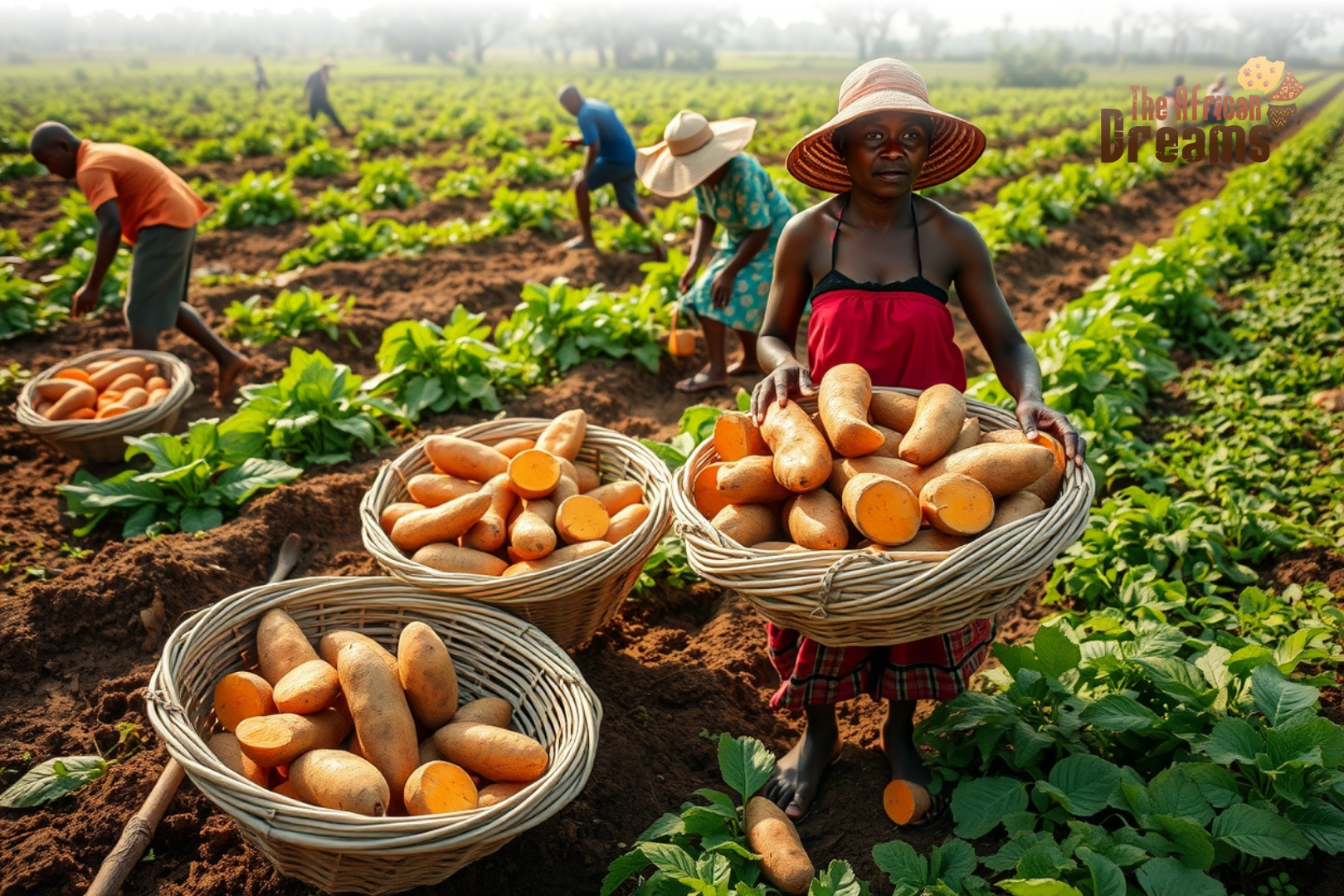
Sweet potatoes are widely harvested for their nutritional benefits, but are slowly entering the ” superfood ” league in both local and international markets. Sweet potatoes represent huge potential to address food security and economic growth in the Republic of Congo. Usually grown by smallholder farmers, sweet potatoes have been increasingly promoted for their versatility, health enhancements, and potential as a cash crop. This article outlines opportunities, challenges, and solutions for the Congolese sweet potato industry, showing just how this so-called superfood is winning its place on local tables and in international markets.
The Challenges
Among the challenges facing the agricultural sector in Congo is that the sweet potato industry also faces several significant challenges.
1. One major issue is related to infrastructure: poor access to roads and storage facilities makes access to urban markets or export points for the respective farmers nothing but a nightmare. This leads to estimated post-harvest losses as high as 30% of the crop during transportation and storage.
2. In addition, because of limited access to modern farming techniques and high-quality inputs, yields remain low compared to potential.
3. Others include poor market organization. The small-scale farmers lack proper networking with larger markets, limiting their incomes. This root crop is mainly locally consumed, though it has a wide commercial value that needs to be resourcefully captured due to poor infrastructure in processing. In addition, competition from other countries—for instance, Uganda and Ethiopia, being the major sweet potato-producing countries—presents pressure on Congo to enhance its productivity and competitiveness for the market.
The Solutions
A few initiatives were undertaken in Congo to address these problems. The regimes, along with international development organisations, have taken initiatives to enhance the agricultural productivity and connectivity of the market. Training programs have been conducted to enable farmers to use better farming techniques regarding crop rotation, improved varieties of seeds, and efficient mechanisms for water management systems.
Another productivity-enhancing factor is the propagation of climate-resilient varieties of sweet potatoes, such as OFSPs. These varieties are rich in beta-carotene, a precursor to Vitamin A, and are resistant to pests and variable weather conditions, hence ideal for Congo’s tropical climate.
Besides, investment in processing and storage facilities is emphasized to cut post-harvest losses. With improved storage, farmers can sell their sweet potatoes at more opportune times in the market and are not forced to sell immediately at low prices. There is also a growing drive to develop added-value products, including sweet potato flour and chips, which both local and international consumers relish.
The implementation
Initiatives have begun to be implemented, with a number of these taking the form of pilot programs already. Agricultural cooperatives have been formed that enable farmers to pool resources, hence increasing their bargaining power. These cooperatives are very important in granting members access to credit, quality seeds, and agricultural inputs at lower costs.
The export strategies are being explored in detail so that no loopholes are left to generate revenue from the lucrative international sweet potato market. For instance, it is anticipated that the global sweet potato market, projected at $34.98 billion for 2023, will reach $56.17 billion by 2031, growing at a CAGR of 6.4% during the period, because consumers increasingly opt for healthier and plant-based food.
The demand for sweet potatoes is growing across the world, and Congo is preparing to be a major player in exportation to Europe and Asia, whose markets are hungry for organic and sustainably sourced foods.
At the local level, the quest for food security is also growing. Sweet potatoes are a staple food for many households in the Congo, and their rich content makes them an excellent choice in the fight against malnutrition. The government, having taken notice, has started to incorporate farming of sweet potatoes into the overall Mauritius national food security initiatives.
The Results
The early days’ results are now promising to boost the sweet potato industry in Congo. The production of sweet potatoes in Congo was 9,190,000 kg in 2022, while in its minor, Congo has slowly become an upcoming actor on the global scene.
However, this only accounts for a meagre 0.01% of world production and therefore contributes extensively to open room for development. The new farming methods introduced through these training programs have achieved yields of 5-10% in areas that the training has been able to reach.
Increased income for farmers engaged in sweet potato production is also now realized. In addition, with better access to markets, accompanied by value addition through processing, profits for farmers have increased by 20–30%, especially where orange-fleshed sweet potatoes are promoted for their nutritional value.
Besides, sweet potato exports are also going upwards. Although still small, exports are likely to increase as Congo develops its processing capacity and secures trade agreements with regional neighbours and international buyers.
Conclusion
The sweet potato industry in Congo is at a crossroads. With the world’s rising demand for superfoods and sweet potatoes now recognised as one of the key contributors to global food security, Congo can establish itself in this expanding market. With strategic investments in infrastructure, market access, and farmer training, Congo can seize this growing global demand for healthy, versatile crops.
The sweet potato industry, therefore, will be able to become one of the strong points of Congo’s agricultural economy with increased adoption by farmers of improved farming techniques and the putting in place of the country’s processing capacity. As both a local consumption and export crop, sweet potatoes would be among the superfoods that could spur economic growth and enhance food security in the Republic of Congo.


0 Comments