
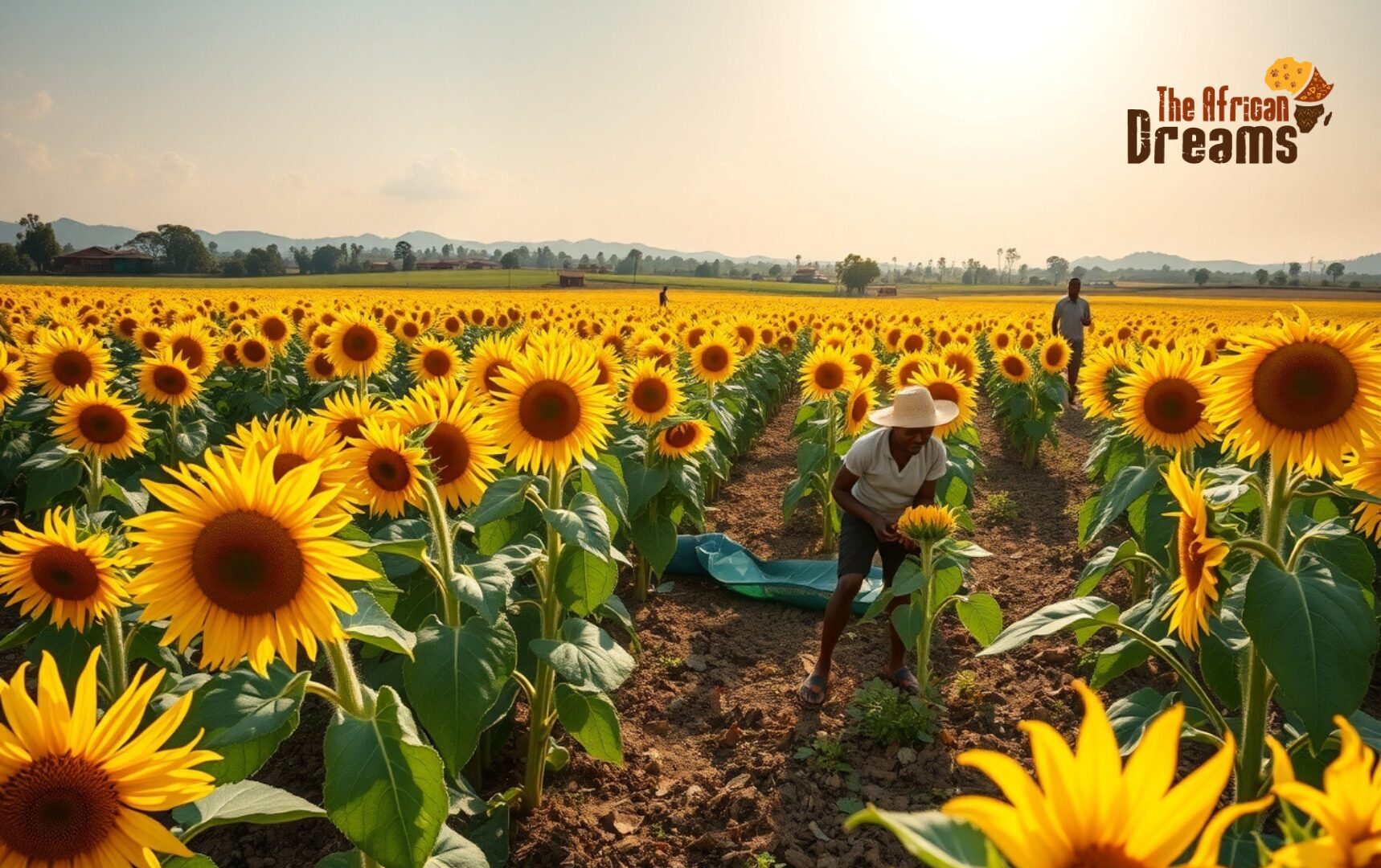
Uganda’s agriculture sector contributes 24% of the country’s GDP. It employs over 70% of the population. Sunflower cultivation is significant among the many crops grown, especially for oil production. Northern and eastern Uganda, with their favorable climate, have become major sunflower-growing areas. Sunflower seeds have a high oil content, which makes them a vital crop for the vegetable oil industry.
The annual vegetable oil consumption is high, estimated at 480,000 metric tons. Of these, only 80,000 metric tons are produced locally. This production-to-demand ratio indicates the economic opportunity to expand sunflower cultivation. In recent years, government interventions have been directed at increasing domestic production. This will lessen dependence on imports.
Uganda spends over USD 370 million annually on imported vegetable oils. The potential for growth in this sector is immense. This is due to the increasing demand for sunflower oil. Sunflower oil production meets the country’s oil demands. It can provide jobs for thousands of smallholder farmers. This makes sunflowers an essential part of Uganda’s agricultural future.
The Challenge
One difficult challenge facing sunflower farmers in Uganda is poor seed quality. Many farmers still rely on open-pollinated seed varieties, which produce lower yields and have less oil content compared to hybrid seeds. Hybrid seeds, such as Hysun 33, can double yields. But they are expensive, too—about UGX 90,000 per acre—making them inaccessible to many farmers. This lack of access to high-quality seeds has resulted in lower productivity.
Although sunflowers are most commonly grown in northern Uganda, they face many climate issues. With unpredictable rainfall and extended drought periods, farmers have experienced reduced yields. Sunflowers are highly sensitive to moisture stress. Drought can severely limit production, pushing many farmers to abandon the crop during dry spells.
Inadequate infrastructure also affects the sunflower oil industry. Most small-scale processors face problems with insufficient storage facilities, which result in post-harvest losses.
Furthermore, inconsistent power supply in rural areas drives up operational costs. This makes it difficult for processors to run efficiently . These challenges may be less severe than seed quality and climate issues, but they constrain the sector’s growth.
The Solution
The introduction of hybrid seeds is one key solution to improving sunflower cultivation. The government has been distributing better sunflower seeds like Hysun 33 and Aguara 6. One of those initiatives is the National Agricultural Advisory Services. These hybrid seeds offer better oil content and improved resistance to diseases. They double yields for many farmers. The government and its partners have worked on making these seeds more accessible.
Public-private partnerships have been crucial in Uganda. They are improving the productivity and market access of sunflower farmers. Many programs, such as the Vegetable Oil Development Project (VODP), provide farmers with training and technical support. Mukwano Group also collaborates with NAADS. They set up direct links between farmers and processors. This reduces inefficiencies, ensuring fair market prices for farmers’ produce.
Efforts to address climate variability include promoting climate-smart agricultural practices. Farmers are encouraged to use modern crops and engage in early planting. They will adopt methods like mulching and crop rotation. These practices help decrease the effects of bad weather and ensure stable yields. They improve farmers’ resilience in the face of climate challenges.

Implementation
The successful implementation of sunflower cultivation initiatives in Uganda relies on many things. Such as the combination of government support, public-private partnerships, and farmer engagement. The implementation process includes several key steps:
● Seed Distribution:
The government has distributed 76 tons of sunflower seeds to farmers in many regions. Such as Lira, Kole, and Dokolo. The seeds include high-yield varieties such as Hysun 33 and Aguara 6. They have been shown to double production and increase oil content. The seeds are affordable for smallholders because the farmers cover 30% of the cost.
● Training and Extension Services:
Through company partnerships, farmers receive technical support on best practices. Training covers essential techniques such as early planting, crop rotation, and mulching. It increases yields and decreases losses. Extension services also include pest control and correct post-harvest handling. They reduce spoilage and improves the quality of seeds sent for processing.
● Climate-Smart Practices:
It encourages farmers to adopt climate-resilient practices, including water conservation techniques. These techniques help keep soil moisture and rescue crops from drought stress. It allows farmers to maintain stable yields even in challenging weather conditions.
● Cooperative Models:
Aggregating produce for better market access is one of the roles that farmer cooperatives play. Smallholders market their sunflower seeds in bulk with the help of the Kyempara Farmers Cooperative Society. It makes for better prices and also reduces individual transportation costs. This collective model also allows farmers to share resources like storage facilities, which reduces post-harvest losses.
● Processing and Infrastructure Support:
Private companies have invested in processing facilities directly linked to farmers. These partnerships ensure a steady demand for sunflower seeds and allow processors to work more efficiently. Thus, farmers benefit from a guaranteed market.
This comprehensive approach ensures that the entire value chain is supported, leading to better outcomes for all stakeholders.
The Results
The implementation of improved sunflower cultivation practices in Uganda has shown positive results. One of the most notable outcomes is the increase in sunflower production. In northern Uganda, sunflower production has expanded to over 5,000 acres. Yields has reached 1,000 kg per acre—double the national average. These improved yields have helped meet the growing local demand for vegetable oil. It is reducing Uganda’s reliance on imports.
Farmers who use hybrid seeds and climate-smart agricultural practices have been earning more because of higher productivity. Participation in cooperatives has also given farmers better access to markets. This allowed them to sell their produce in bulk and receive fairer prices. The consistent demand from processors has further strengthened the sunflower value chain, providing farmers with a stable market and timely payments.
The ripple effects of these improvements have created many job opportunities. Over 30 direct jobs and more than 5,000 indirect jobs have emerged boosting local economies. Overall, the interventions have improved the livelihoods of sunflower farmers. It has contributed to the country’s agricultural and economic development.
Conclusion
In the last few years, sunflower cultivation in Uganda has been quite successful. The government, private sector, and smallholder farmers have made good combined efforts. Thanks to government initiatives, farmers’ incomes have improved, and economic growth in the sunflower oil industry has proved possible.
Looking ahead, Uganda’s sunflower oil industry’s future appears bright. Continued investment in this sector will be crucial to sustaining this momentum. There is also potential for further expansion into export markets. Uganda is working to reduce its reliance on vegetable oil imports. With proper support, the sunflower industry can become a key to oil production. It can provide sustainable livelihoods for thousands of Ugandan farmers.
Reference:
- NTV SEEDS OF GOLD: Sunflower farming
- Sunflower Uganda Climate Change Risks and Opportunities
- Uganda: Brightening Farmers’ Incomes With Sunflower
- OVERCOME CLIMATE CHANGE DAMAGES ON SUNFLOWER SEED PRODUCTION TO BOOST SUSTAINABILITY AND LOCAL FARMERS LIVELIHOODS
- NAADS distributes 76 tons of sunflower seed to farmers in Northern Uganda to boost Oil Crop production
- Opportunities and Challenges in Uganda’s Vegetable Oil Industry

0 Comments