
Introduction
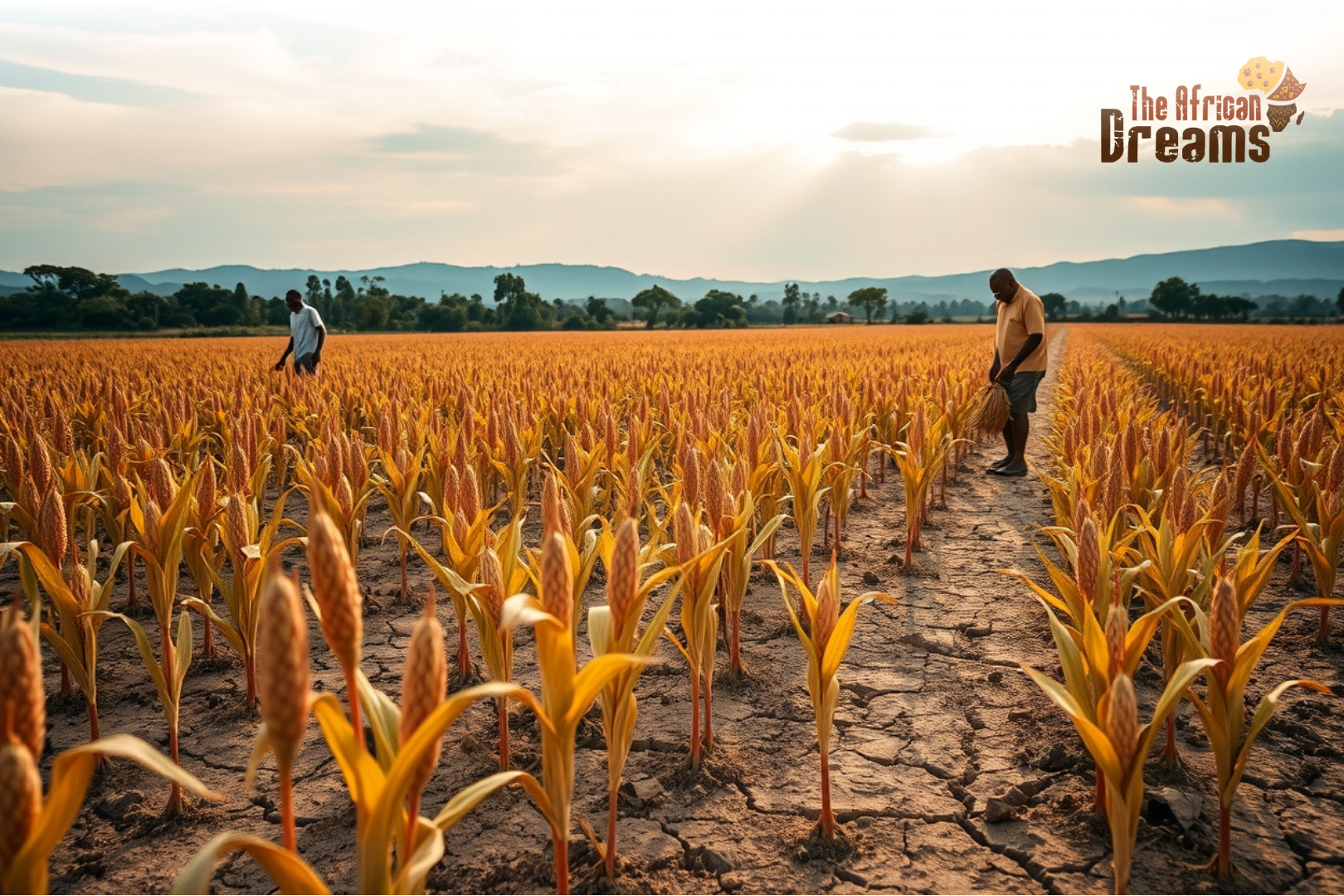
As the climate crisis worsens, the Democratic Republic of the Congo will face serious challenges to agricultural productivity. Rising temperatures, erratic rainfall, and degradation of the soil make food security and rural livelihoods precarious. Of the different solutions that may be considered, one ancient grain stands tall: sorghum. This hardy crop is resistant to drought and heat, thus giving Congolese farmers a vital lifeline. The case below will discuss a situation in the Congo where sorghum is used to improve the current resilience, food security, and create economic opportunities.
Key Benefits of Sorghum
1. Drought and Heat Tolerance: Sorghum has an extended root system that makes its capability to thrive in arid conditions much greater, and it utilises water more efficiently than many staple crops. It can also resist extremely high temperatures of plus 38 degrees Celsius, making it resilient to the increasingly hot seasons of Congo.
2. Nutritious: Sorghum is a nutritional food grain rich in proteins, vitamins, and minerals. It provides an important source of food and nutrition for communities facing widespread food shortages.
3. Diversity: The usefulness of sorghum extends beyond the plate. It can provide animal feed, biofuels, and brewing—a wide range of sources of income open to farmers.
The Challenges
Congolese agriculture is highly dependent on crops such as maize and cassava, which are turning out to be increasingly vulnerable to climatic stress. This, in addition to increased frequencies of droughts and lengthy dry seasons, reduced yields, and food supplies became disrupted. Rainfall in most parts of the country has become unpredictable; this makes traditional crops water-stressed and prone to insects. This threatens a community of over 60% dependent on subsistence farming for survival.
Another compounding problem is that crops such as maize, sorghum, and millet are commonly afflicted with a parasitic weed known as Striga, which usually causes heavy yield loss. In all high-stricken areas by this plant parasite of Striga, the yield for staple crops such as maize has always come out to be too poor, so smallholder farmers have a limited choice.
Moreover, unsuitable agricultural practices and deforestation contribute to land degradation, further reducing arable land and crop production.
This is further compounded by a lack of access to climate-resilient seeds, modern farming techniques, and finance. The smallholder farmers are integral to the agricultural economy of Congo, but access to resources and the ability to apply locally relevant innovation, owing to enabling policies, remain critical limitations for them.
The Solutions
In addressing such challenges, the government of the Congo, together with international organisations dealing in agriculture, has begun to turn to sorghum. It is a drought-resistant and heat-tolerant crop whose uses range from food to fuel. Its aptitude for survival in harsh conditions makes sorghum find its application in ideal areas that have been hit by low water supplies and increased temperatures.
Implementation
Research programs started, aimed at enhancing the resistance and productivity of sorghum. The Striga-Smart Sorghum for Africa is one such program, where, through gene-modification techniques, they are coming up with varieties resistant to the Striga weed. This project is a multi-institutional team across Africa working out a solution for this problem of Striga infestation, along with enhancing sorghum’s resistance against other abiotic stresses.
Scaling of Improved Varieties: Improved varieties were scaled through demonstration plots with the support of organisations like AATF, Corteva Agriscience, and training in integrated pest management, water conservation techniques, and sustainable farming practices.
Partnerships with Research Institutions: The Donald Danforth Plant Science Centre and other national agricultural bodies were very instrumental in furthering genetic research. Their research explored the examination of drought-tolerant genes and an increase in water use efficiency in sorghum. This contributed to developing robust varieties that would adapt better to the arid and semi-arid conditions in Congo.
Results and Economic Impact
Investments in sorghum have returned promising results across Congo. The improved variety of sorghum has increased yields in these regions by between 30 and 50%, even in areas that are usually prone to drought conditions. This has improved the yields and translated into giving the vulnerable communities better nutrition and value.
In addition to that, the high content of iron in sorghum combats micronutrient deficiencies among children in rural areas.
Social and Economic Benefits
Besides its food security importance, sorghum presents some serious economic opportunities. Farmers have found that the low input requirements for sorghum make it the cheapest crop, really saving them some water and fertilisers. Many smallholders have added sorghum to the different crops they normally grow and reduced the risks of monocropping, increasing their incomes in the process.
Cereals & Grains Association
Sorghum opens new market avenues for its biofuel and animal feed value. Currently, researchers are studying sorghum hybrids that are exclusively designed to fit the needs of bioenergy—a new avenue for agro-industries and a source of employment in rural areas. The Global Conference held in March 2023 brought into focus the role of sorghum in mitigating carbon emissions, besides supporting sustainable agriculture, hence strengthening the case as a climate-smart investment.
Future and Long-term Sustainability of Sorghum
With the government increasing its efforts in agricultural policies with public-private partnerships, the future of sorghum in the Congo looks great. Research is continually being carried out to enhance its nutritional value and make it resistant to some pests, like the Fall Armyworm.
Another area where scientists are looking at improvements includes using synthetic biology to enhance water-use efficiency and soil health benefits of sorghum.
The idea is that new regional biohubs for research and development, with the ISAAA AfriCenter, should provide a catalyst for innovation and local capacity building. The biohubs would be designed to serve as training centres for farmers using the tools and knowledge necessary for the long-term sustainability of sorghum production.
Final Remark
The adoption of sorghum in Congo is an example of investment in climate-resilient agriculture. Indeed, the successful introduction of improved varieties of sorghum proved that timely intervention with regard to the impact of climate change can be assuaged and new economic avenues opened. As the potential of sorghum is being tapped into in Congo, food security and nutrition are being strengthened; it enables the smallholder farmers, too. While climatic changes continue to threaten traditional crops, the hardiness of sorghum beckons a ray of hope toward a more secure and sustainable future. With continued support by research institutions, the private sector, and the government, Congo stands a better chance of doing well in this vital crop.

0 Comments