
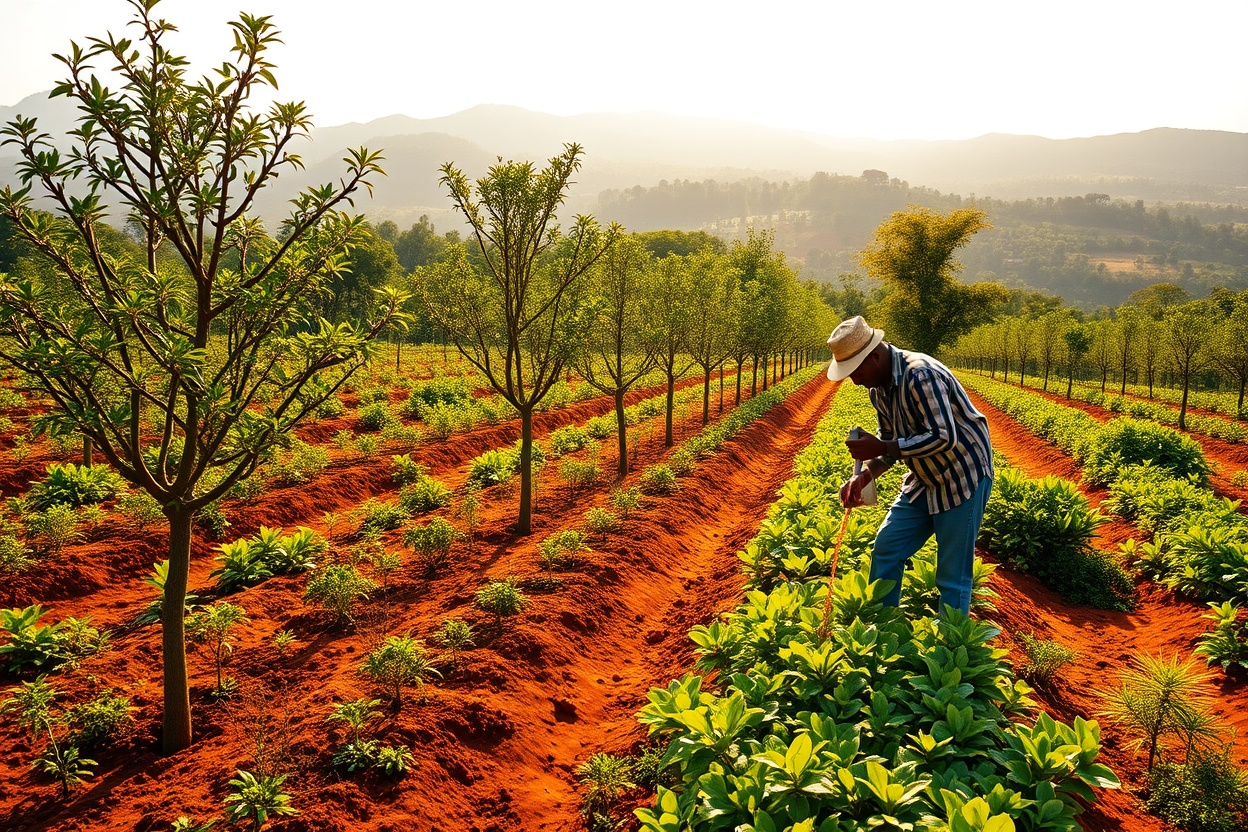
Introduction: Sandalwood Cultivation in Congo
The paper discusses the prospects of sandalwood cultivation in Congo from both economic and ecological standpoints. Sandalwood is a tree derived from aromatic wood and is highly valued for its essential oil, promising various Eucalyptus-type avenues in international cosmetics and pharmaceutical preparation markets.
However, challenging environmental restrictions and threats due to slow growth present obstacles to its sustainable cultivation. This case study probes these challenges, puts forward feasible solutions, and looks into economic opportunities that can be reaped by the region from sandalwood cultivation in Congo.
Challenges in Sandalwood Cultivation in Congo
1. Various obstacles exist to sandalwood cultivation in Congo, including the fact that the tree is semi-parasitic and always needs a host plant when growing. This will complicate any cultivation when compared with most other tree species.
2. Another problem with sandalwood is that it grows relatively slowly. The tree may take many decades to attain full maturity. In other areas, overexploitation of the species is threatened by illegal felling brought about by high demand for the tree’s very valuable oil-rich heartwood. If left uncontrolled, Congo faces similar risks, threatening the very natural populations and the tree’s potential as a sustainable economic resource.
3. Environmental factors also complicate the cultivation of sandalwood. It requires well-drained soils and semiarid conditions with specific host plants for optimal growth, as in African regions such as Kitui County in Kenya, where diverse species include Acacia and Croton as compatible hosts for the development of sandalwood. It is vital that Congo responds to these environmental and biological requirements through a suitable cultivation strategy if it is to have a viable sandalwood industry.
The Solution
The introduction of appropriate, well-researched agroforestry practices is the way to achieve sustainable sandalwood cultivation in Congo, as observed in other African countries. In Kenya and Uganda, for example, researchers have identified suitable host plants that support sandalwood, including Acacia kirkii, Croton megalocarpus, and Euphorbia species. A similar approach in Congo with trials on appropriate host plants would be great support for the semi-parasitic nature of the tree and help in its successful growth.Secondly, investment in the infrastructure for the sandalwood seedlings at the nursery stage is very crucial. The seeds have meager germination rates naturally, usually less than 20% viability in most situations. Specialized techniques, including scarification methods and controlled greenhouse conditions for raising the seedlings, may improve survival rates and enhance the reliability of this crop. For example, KEFRI has developed effective propagation through air-layering and scarification of seeds, enhancing chances for the establishment of sandalwood and reducing reliance on natural populations.
It would achieve the scaling of this initiative with collaboration from local farmers and conservation groups. The regional partnerships share knowledge, create jobs, and have community involvement that develops sustainable means for a nondestructive industry to support the principles of conservation.
Congo can plant sandalwood on farmlands or in community forest plots and make some economic value available to its rural population by giving incentives for the sustainable production of this high-value crop.
Implementation
Many successfully evolving initiatives of sandalwood cultivation in Congo require concerted actions at many levels.
1. Host Compatibility and Soil Requirements: Research the type of soil that would be ideal for sandalwood and whether the utilization of different host plants could be tried in combination with Congolese-based wood plantations. In consonance with what is happening in Kenyan plantations, Congo could similarly conduct field trials performed with host plants such as Acacia and Croton spp for compatibility with the local climate. Planting these host species at the initial planting stage, then scaling it up on the entire plantation area, will be imperative.
2. Specialized Nurseries and Seedling Programs: Sandalwood is difficult to propagate, with limited seed germination rates. Area-controlled environment nurseries for optimal germination and early growth would significantly enhance the success of this crop. In Kenya, for example, several thousand seedlings per year have been reared in nurseries through experimental research programs. Extensions of such intensive nursery programs in Congo would go a long way toward improving the seedling supply that would complement the establishment of initial plantations.
3. Community Training and Capacity Building: Training provided to local communities in sandalwood cultivation in Congo for sustainable purposes would give them a stake in the venture. The main aspects of training would involve the collection of seeds, the management of host plants, and the management of pests.
In Kitui, Kenya, community training programs received farmer involvement through the provision of proprietary skills necessary in farming the plant material, therefore creating new sources of income while encouraging conservation. In Congo, the building of capacities in rural farmers could allow a decentralized network of sandalwood growers to be part of a much larger, community-based business.
4. Policy Support and Protection Measures: Clear policies should be laid down that will prevent the over-exploitation of sandalwood at its early stage of cultivation. Regulations that favour only legally sourced sandalwood, along with restrictions on the export of raw materials, would protect against illegal harvesting while ensuring maximum benefits to local industries. Incentives in the form of a tax break or subsidies for agroforestry could attract farmers to invest in sandalwood, while stringent penalties against illegal logging can help preserve natural sandalwood populations.
5. Market Development and Export Readiness: Developing connections with global markets for sandalwood oil and wood products would maximize the value of Congo’s sandalwood. Such deals with global cosmetics and pharmaceutical companies can provide secured contracts for sustainably sourced products by tempting local producers to maintain high environmental standards. Certified organic or sustainable labels can be developed to attract better-paying markets further and position the Congolese sandalwood industry to appeal to eco-conscious buyers.
The Results
As many other regions have already demonstrated, sustainable sandalwood cultivation in Congo has very important complementary economic and environmental benefits associated with its development. Growing the tree for its wood may mean that sandalwood will become significant for rural communities in Congo as an income source, creating employment in the nurseries, tending the plantations, and preparing the wood. If well managed and utilized, it could turn underutilized lands into productive assets for local economies.
Increasing investment in sandalwood would also advance biodiversity in Congo. Plantations of sandalwood, with interplanting of native tree species, improve soils, enhance biodiversity, and are used to form beneficial microclimates. Such agroforestry can buffer against deforestation and reinstate ecologically functioning states that are favourable for species dependent on mixed forests.
While the demand for sandalwood is growing around the world, it is offering Congo an excellent opportunity to enter high-value aromatics. Meeting international sustainability standards and ensuring transparent sourcing would make Congo a strong player and a reliable supplier in the global trade of sandalwood. This will also accurately assimilate the country’s economic objectives with environmental responsibility.
Final Remarks: Promoting Sandalwood Cultivation in Congo
The high possibility of sandalwood cultivation in Congo is both a challenge and an opportunity to develop its industry using sustainable practices that protect natural resources and make a genuine contribution to significant economic growth. With careful planning, research, and commitment from the community, sandalwood cultivation in Congo can serve as a model for environmentally friendly, high-value forestry in Africa.
In short, the Congolese sandalwood industry can offer transformational benefits; hence, with proper investments and sustainable strategies, this aromatic treasure promises a prosperous future that somehow will balance conservation with economic development, marking a positive step toward sustainable resource usage in Central Africa.
0 Comments