
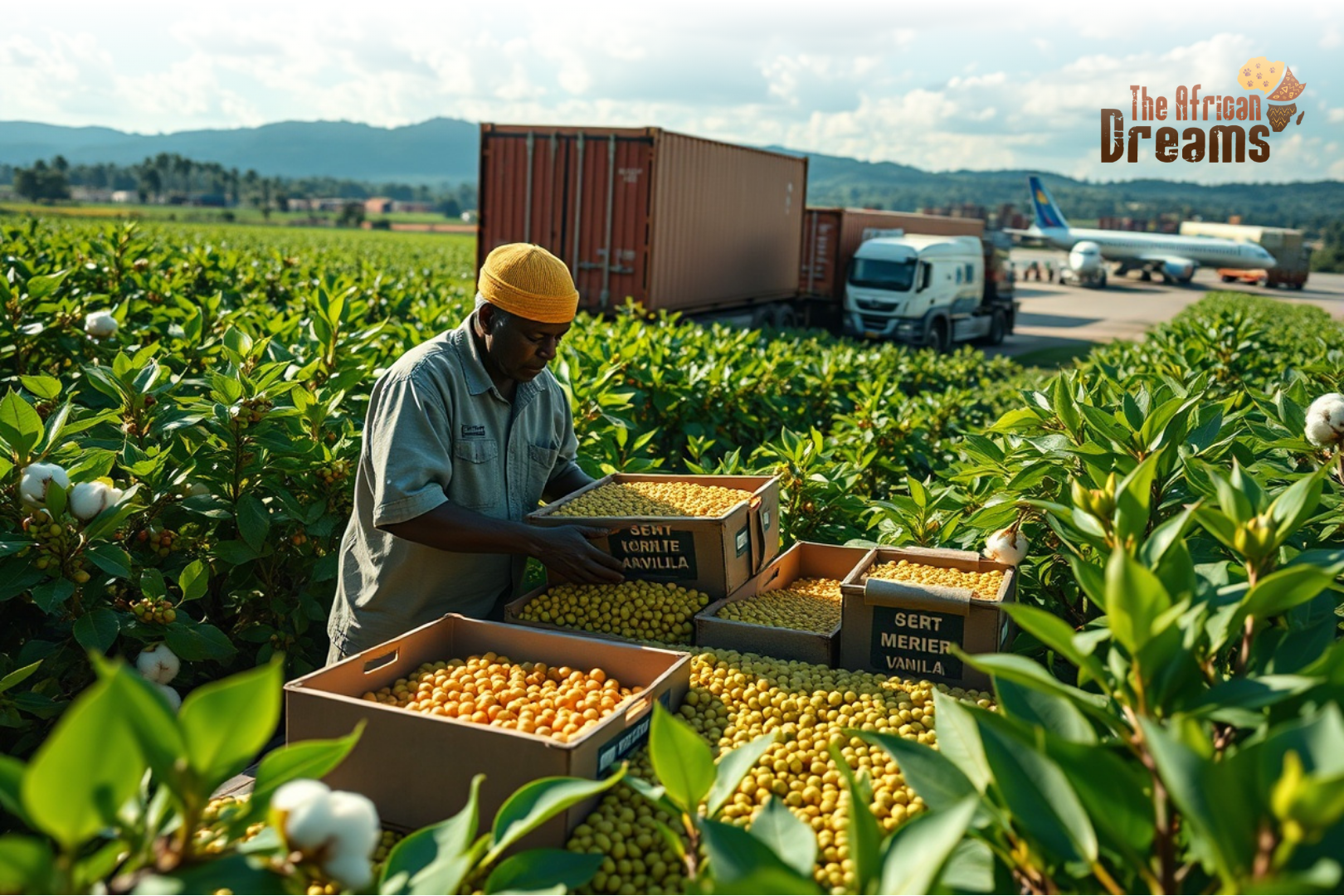
Introduction: Uganda’s Agricultural Exports
Uganda’s agricultural exports are at an exciting point where they are working to make a big impact in international markets. As developed countries move towards technology-focused industries, Uganda is stepping in to fill the need for farming. Uganda provides food and products to countries focusing on digitalization. They can leverage regional markets and use trade agreements to access foreign markets. To increase profits from international markets, they need to leverage their heritage in agricultural commodities.
But how will Uganda get its products to buyers in other countries? How can they sustain a reasonable price and offer good-quality products for Uganda’s agricultural exports? Let’s explore how Uganda’s agricultural exports can attract foreign markets and establish its presence in the game.
Article Highlights
Uganda’s agricultural export sector is rich in products that the global community enjoys.
Country-of-origin marketing and quality certifications will help Uganda attract more international markets.
The country needs to overcome its trade barriers and inefficiencies in international trade to improve Uganda’s agricultural exports.
Digital marketing and E-commerce sites open up new avenues to explore for agricultural commodities.
Uganda’s Agricultural Exports: Current Scenario
Uganda’s whole economy is based on farming, so it can compete with other countries with its agricultural products. For example, in 2022, agriculture accounted for 23% of GDP and one-third of total export earnings. The numbers are similar in 2024 as well. Over 70% of the total population depends on agriculture directly or indirectly.
The main traditional cash crops are coffee, tea, cotton, and tobacco. Coffee is the country’s highest revenue-generating crop, but it has seen a decline in recent years. Farmers are switching to cotton production because of its easier export conditions. The value of coffee exports in recent years has been around 500 million USD, but this is not even reaching its full potential.
Other export crops are cocoa, sugar, fruits, and vegetables. Uganda has also dived into fish product exports. Fish sausages go wild in foreign markets. It catches more than three times the price of raw fish exported from the country. Fish processing has become very popular. These exports are not limited to the neighboring countries.
Uganda’s agricultural exports reach multiple international markets. The country has access to the most sought-after destinations like the UAE, India, Hong Kong, Kenya, Italy, and the European Union markets.
Challenges in Uganda’s Agricultural Export
There are, however, lingering issues for the country in maximizing Uganda’s agricultural export potential. Here is a list of all the challenges that the farmers face
- Scarce availability of farming technology and inputs.
- Unpredictable weather patterns and climate change.
- Inadequate support services are built around the agriculture sector.
- Trade barriers, corruption, and high transport costs.
- Tariffs on basic foodstuffs like flour, sugar, and oil.
- Smallholder farmers are deprived of current market information.
Uganda’s Agricultural Exports: Marketing Strategies to Access Foreign Markets
How do Uganda’s agricultural exports intend to tackle all the challenges and gain more access to foreign markets? Uganda already has a good name in these markets, and its products are good enough to compete here. But what they need is a specialty product. The Arabian coffee that Uganda’s farmers are so proud of is not even a native variety. These hybrids are sore spots in Uganda’s agricultural export scenario.
However, there are ways the country can counter this. Let’s discuss the potential ways of marketing to gain improved access to foreign markets.
1. Country of Origin Marketing
The most important priority for Uganda’s agricultural exports right now is establishing a country-of-origin brand for its products. This can enhance the value of Ugandan agricultural products. They are already trying to get a certification for Uganda cotton. With this, they will be able to charge higher prices in the international markets. To quote industry experts, “Branding will increase the value of Ugandan cotton. It will enable Uganda to market its cotton differently”.
They are also trying to obtain intellectual rights for sesame and vanilla. Uganda will get collective marks for cotton and vanilla and a trademark for sesame. Just imagine Uganda trademarking sesame in the markets. The WIPO, or World Intellectual Property Organization, is trying to promote business development. As a developing country, Uganda should seize this opportunity to use IP tools and branding strategies.
2. Quality Certifications
Uganda’s agricultural exports’ current goal should be to attain certifications. International markets will already vouch for the quality of Ugandan commodities. But that is not enough. Uganda needs to increase the number of product certifications to ensure its products are widely accepted.
The Phytosanitary and Quarantine Inspection Services (PQIS) handles most certifications for exporters and importers. But this is just the standard export-quality certification. Uganda needs to go beyond and get a competitive advantage. Hence, more than passing the export quality mark is required.
Here are some certifications that Uganda needs to improve and acquire, and how they will help Uganda’s agricultural exports access more international markets:
a. HACCP (Hazard Analysis and Critical Control Points): Certification to export processed foods to the EU and US.
b. ISO 22000 and ISO 9001: These are not common in the agriculture sector of Uganda. They need widespread adoption to increase Uganda’s global competitiveness.
c. USDA: This is crucial to access US-based organic and fair trade markets.
d. Kosher and Halal: These certifications are important for access to Jewish and Muslim markets in various regions.
Uganda’s agricultural export sector still has a way to go before it becomes universal. It needs to further diversify its agricultural portfolio to obtain the certifications required for access to these major markets.
3. Digital Marketing and E-commerce: Kudu Platform
Uganda also has access to new avenues with the digital revolution. Electronic marketing platforms are the norm right now. A prime example of this is the Kudu trading platform. It works like an auction-style digital clearing house for agricultural commodities.
The Kudu platform has received wide acceptance in the region. During a three-year intervention, Kudu saw 23,768 offers to sell posted by over 4,000 unique users, totaling USD 42.00 million in asks. 30,499 bids were posted by nearly 3,000 unique users, amounting to USD 65.00 million in potential purchases.
Apart from this, social media marketing is gaining traction in international trade. The wholesale of goods is a key aspect of Uganda’s agricultural exports. Farmers can showcase their products on social media sites like Facebook, IG, and X.
Mobile applications are also game-changers in Uganda’s agricultural exports. Apps like Agromarket Day and Farm Kiosk allow smallholder farmers to market and sell their produce directly from their farms. As these technologies become more accessible to the general populace of farmers, their days of worrying about profit-sapping middlemen will be over.
Uganda’s Agricultural Exports: Attracting Foreign Markets
To fully realize Uganda’s agricultural export and its potential, the country needs to tap into every possible international market. And the efforts to do so have a strong impact on the economy.
By focusing on these areas of improvement and reducing trade barriers, Uganda can unlock new avenues for trade. The regional and international trade agreements need to be strengthened for this to work.
Along with these internal issues, like corruption and bureaucratic inefficiencies, need to be dealt with. Only then will any marketing tactics be effective in attracting foreign markets for Uganda’s agricultural exports.






0 Comments