
Introduction: Aquaculture in Congo
Aquaculture in Congo is increasingly developing the vision for tilapia and catfish farming to ensure food security and economic development. Although fish consumption is still very high among Congolese people, the country relies on imports that satisfy the ever-growing demand. This reliance pressures the economy and deprives local fish farmers of opportunities. This case study describes the challenges faced by aquaculture in Congo, the innovative solutions put in place, and the impacts achieved through investments in tilapia and catfish farming.
The Challenges in Aquaculture in Congo
Aquaculture in Congo faces many constant challenges.
1. The most identified problem is related to the country’s lack of fish production. The country’s inland fisheries could produce only a portion of the requirements, while nearly 50% of all fish consumed in the country needs to be imported. China, Uganda, and other neighboring countries occupy an important place among the chief fish imports, which results in huge trade imbalances.
2. The second significant challenge revolves around the quality of infrastructure. Most small-scale fishermen have meager resources for storage facilities and appropriate transport systems. Under such circumstances, many farmers resort to smoking their catch traditionally, which reduces its market and nutritional value. Moreover, local farms fail to expand and gain productivity since most of them lack modern aquaculture techniques.
3. The other constraint to development is access to finance. Most small-scale farmers cannot easily get loans for investment in better facilities and expansion. Insufficient funding is one factor that prevents them from learning or adopting innovative farming techniques such as cage culture and more sophisticated breed improvement techniques.
The Solution
In an attempt to alleviate these challenges in aquaculture in Congo, the government of Congo initiated a series of aquaculture sector improvement projects with the involvement of international agencies like FAO and IFAD. The major initiatives included the identification of the tilapia and African catfish as priority species for farming. Both species are in high demand and can be raised in Congo’s freshwater bodies.
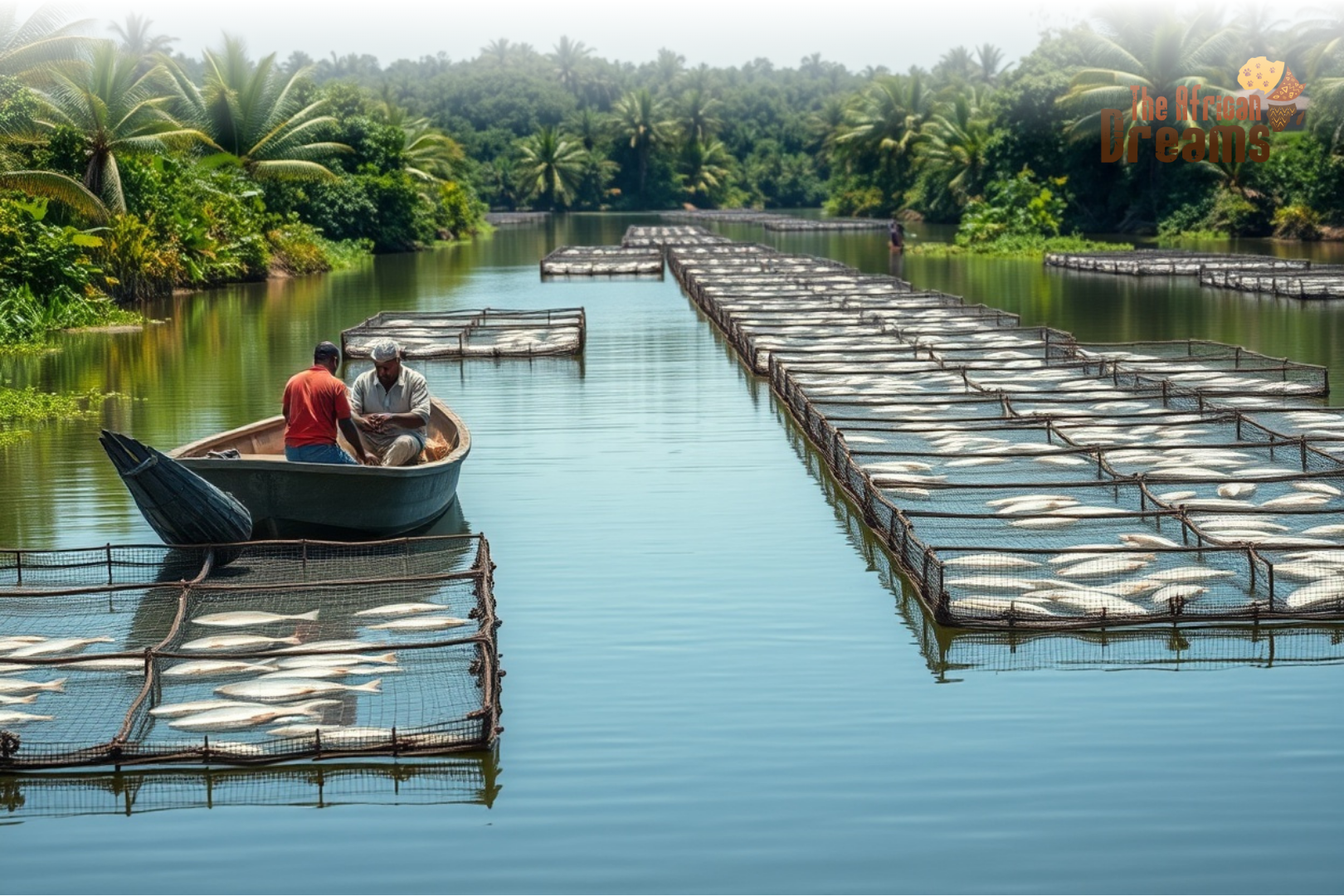
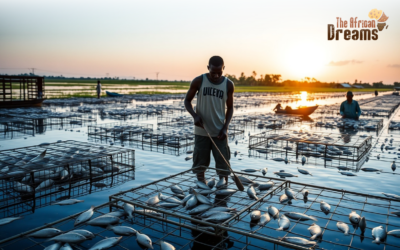
These efforts have, to this date, been championed by cage farming. Through the installation of floating cages in lakes and rivers, farmers are able to raise fish with much efficiency. This mode allows for better observation of water quality and health conditions for the fish; therefore, better yields are realized with losses minimized.
The farmers are also being empowered through training programs. Technologies for African Agricultural Transformation is one of the organizations at the forefront of hands-on training for small-scale farmers. Such training programs focus on modern techniques in fish breeding, feed management, and disease control.
Implementation
These were achieved through strategic partnerships with private enterprises and international investors. One example is the partnership between Agro World Group and BioMar, the global leader in aquaculture feed supplies. They partnered in the development of the first-ever commercial-scale cage fish farm in the River Mboualé. The venture started with 20 grower cages, along with a focus on producing quality tilapia and African catfish.
Quality broodstock and value-added fish feed were major components of the success in this project. Carefully transported from Cameroon in a healthy status to Congo, the imported fry survival rate was almost 100%. BioMar’s feed formulation for specialized species optimized the growth of the fish stocks from their juvenile stages in healthy conditions.
Another major thrust of the intervention was enhancing local feed production. Since feed is one of the high-cost investments in fish farming, making cheaper but nutritious feed available was in order. In collaboration with the International Institute of Tropical Agriculture, local feed mills were established to develop affordable feed formulations using local ingredients such as maize and soybean.
The Results: Improvements in Aquaculture in Congo
Results from such investments in the region have shown promising results in aquaculture in Congo. In fact, farmers said their fish production increased due to new cage farming with improved feed. Youths trained in mono-sex tilapia production at Lake Kivu increased their harvest from 800 kg to over 3.3 tonnes per cage.
These improvements in agriculture translated into major increases in the incomes of farmers, now able to reinvest in their farms and expand their businesses.
The complete introduction of all-male tilapia, which has faster growth rates and requires less feed, did even further to each of these efficiency gains. This technique proved rewarding not only in the increases in yield but also in reducing environmental impacts due to waste outputs from the feed.
These aquaculture programs, on a larger scale, had ripple effects within the local economy. Success at commercial fish farms and growth in small-scale aquaculture ventures reduced the country’s dependence on fish imports, saving considerable foreign exchange costs. In addition, these opportunities opened employment avenues, most of which were supposed to be for the youth, thereby alleviating high unemployment ratios in the countryside.
Final Remarks: Growing Aquaculture in Congo
The transformation in aquaculture in Congo from a backward industry to one of growth indeed shows that investment with strategic partnerships could have transformative potential. Indeed, to date, Congo’s tilapia and catfish farming has made the country quite successful in reaching its self-sufficiency goals in fish production. This success story underpins investments in sustainable practices, training programs, and improved farming techniques.
Going forward, this growing sector of aquaculture in Congo needs to be supported through continuous upgrading of policy frameworks and public-private collaborations. With these natural resources and the learning from these successful interventions, Congo can achieve not only meeting its internal fish demands but also positioning itself as a regional aquaculture hub in Central Africa.
0 Comments