
Introduction: Rwanda’s Floriculture
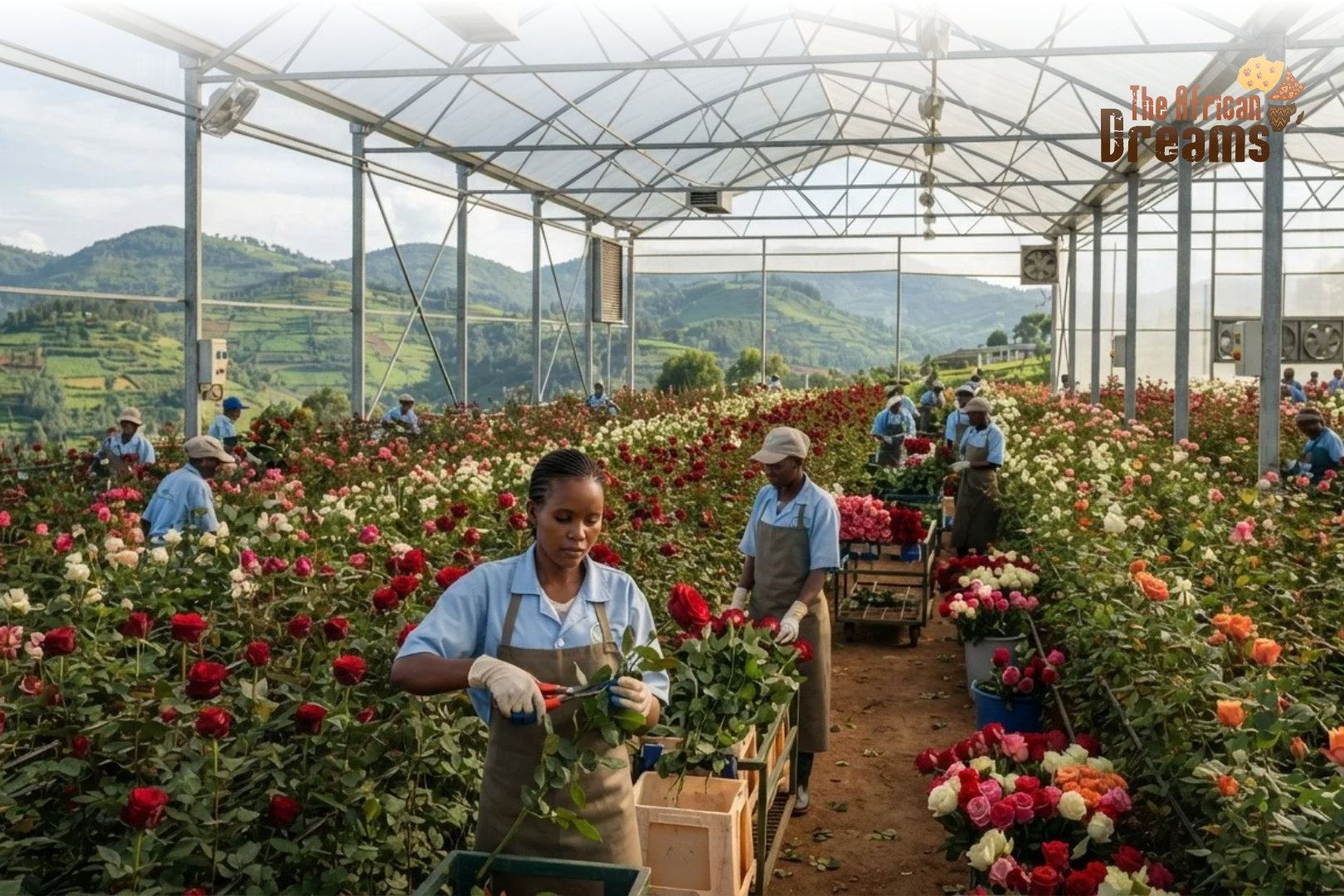
Rwanda is known as the ‘Land of a Thousand Hills’ due to its rich tourism and agricultural sites, but it also has another specialty and a significant industry. This is none other than Rwanda’s floriculture industry. The most surprising thing is that people are now switching from farming to the floriculture industry, as it offers a chance for a higher income.
Many real-life successful stories have emerged from this growing floriculture industry in Rwanda. A farmer who has worked in the potato industry for 15 years has now switched to the floriculture industry due to the high income. Other farmers are inspired by this story. They want to be a part of this industry. Although challenges remain, there is still a path to tremendous opportunities. People are welcoming investors to help change the industry’s path and solve existing challenges. This article focuses on Rwanda’s floriculture industry.
Article Highlights
Rwanda’s floriculture industry began in the early 2000s and gained momentum after 2014 because of government support and increasing exports. In 2018, over 8.5 million flower stems were shipped, primarily to the Netherlands.
Rwanda’s ideal climate, high altitude, and fertile volcanic soils create the perfect conditions for cultivating roses and summer blooms.
Bella Flowers, a key player supported by the government, exports over 30 metric tons of roses each week. This sector provides employment, especially for women and young people, and also generates millions in revenue.
Sustainable practices and government incentives are attracting global investors for more rapid growth.
Rwanda is expanding its exports to markets across Europe, the Middle East, and Africa, as demand continues to rise.
There are opportunities for investment in areas like training, logistics, pest management, and obtaining necessary certifications.
The Origin and Growth of Rwanda’s Floriculture Industry
Rwanda’s floriculture industry began its journey in the early 2000s, when the Rwandan government highlighted the importance of focusing on the floriculture industry in addition to the farming industry. This sector has been identified as promising by the government’s forecasts. Things began to shift in 2014 when the government started paying closer attention to this sector. With a baseline figure of 8,500,000 flower stems harvested in 2018, mainly exported to the Netherlands, the government quickly recognized the significant export potential of flower farming in Rwanda.
Rwanda’s Ideal Conditions: Rwanda is home to a variety of both export-grade flowers and native ornamentals. Besides, this country has favorable conditions. Its temperate climate, high altitudes, and fertile volcanic soils are ideal conditions for flower cultivation, especially for roses and summer flowers.
Types of Flowers Grown in Rwanda: While flower exporters primarily focused on roses, many summer flowers were grown locally but sold mainly within the domestic market. Roses are primarily cultivated for the European market. Notably, these are premium intermediate-standard roses from Gishari Flower Park. There are many Summer Flowers, such as:
| Agapanthus (in blue and white) | Mollucella |
| Tuberose | Craspedia |
| Eryngium | Ami Visnaga |
| White Arum | Crocosmia |
| Ornithogalum (Ornis) | Arabcum |
| Buplerium | Carthamus |
Indigenous and Ornamental Flowers are also found here. These are used locally and for niche export markets, including Zantedeschia (Calla lilies), Papyrus, Common Lantana, Golden Dewdrops, Prickly Pear, Chinese Hibiscus, and Red Ginger, among others.
Flower Farming Hubs in Rwanda: These are mainly located in Gishari (Rwamagana District) and in the Musanze, Nyabihu, Rubavu, and Rulindo districts, which are Ideal for summer flowers due to their altitude, climate, and skilled growers.
Cultural and Local Uses of Flowers: These flowers are not only a symbol of gifts; now, Flowers from Rwanda serve a dual purpose, catering to both local needs and international markets, with a particular focus on exports to Europe.
Rwanda sends most of its roses and select summer flowers to the Netherlands through the Aalsmeer Flower Auction, the world’s largest flower auction. Additionally, some of these flowers are being tested in the Middle Eastern and regional African markets.
In 2018, Rwanda exported over 8.5 million flower stems, and it planned to increase that number. Rwandan flowers have various uses. Roses and summer flowers make their way into supermarkets, florists, and online shops across Europe. They’re often used for bouquets, weddings, and various events, especially during busy times like Valentine’s Day and Mother’s Day.
Besides, there is a local use. In Rwanda, summer flowers such as Agapanthus and Tuberose are favorites for ceremonies, religious events, and home décor. Native flowers, such as Zantedeschia and Papyrus, are also cherished for their cultural significance and landscaping value.
New niches and Sustainable markets have been invented. Rwandan flowers are gaining popularity in eco-friendly markets due to their minimal use of pesticides and the adoption of sustainable farming techniques. Some exporters are even looking into carbon-neutral certification to attract environmentally conscious buyers.
As there is high demand and considerable possibilities for achieving a beneficial impact on the economy from Rwanda’s floriculture industry, several government projects are now serving as a significant source of income for many livelihoods. Following the 2014 initiative, the government primarily began to privatize its enterprises, including Bella Flowers.
Bella Flowers: Bella Flowers was founded to lead Rwanda’s entry into the global flower industry. It operates under the National Agricultural Export Development Board (NAEB) and is situated in Gishari, Rwamagana District, approximately 65 kilometers from Kigali International Airport, making it ideal for efficient export logistics. The farm spans a total of 100 hectares and focuses on intermediate-standard roses, cultivating over 18 varieties, such as:
1. Athena, Magic Avalanche, Yelloween, Moonwalk
2. High & Magic, Tacazzi, Nicoletta, Deepwater
3. Revival, Bellerose, Sobet Avalanche, and more
The organization produces between 30 and 32 metric tons of roses each week and exports to the Netherlands, the UK, Germany, South Korea, Japan, and several African countries. The goal is to reach an impressive 50 million stems per year within the near future. Bella Flowers employs more than 900 individuals, primarily from the local Gishari community, providing stable income and particularly empowering women and youth. Since its launch, it has generated over Frw 10.3 billion in flower sales.
A farmer from this organization stated-
“I have been working on my potato farms, but every time I miserably failed due to pesticide problems. After that, I decided I won’t do anything alone. Firstly, I will engage with any organization that offers training and education. And then I got to know about Bella. Now I am happy to feed my family, and my daughters can go to school without worrying about the tuition fees.”
Current Challenges in Rwanda’s Floriculture Industry
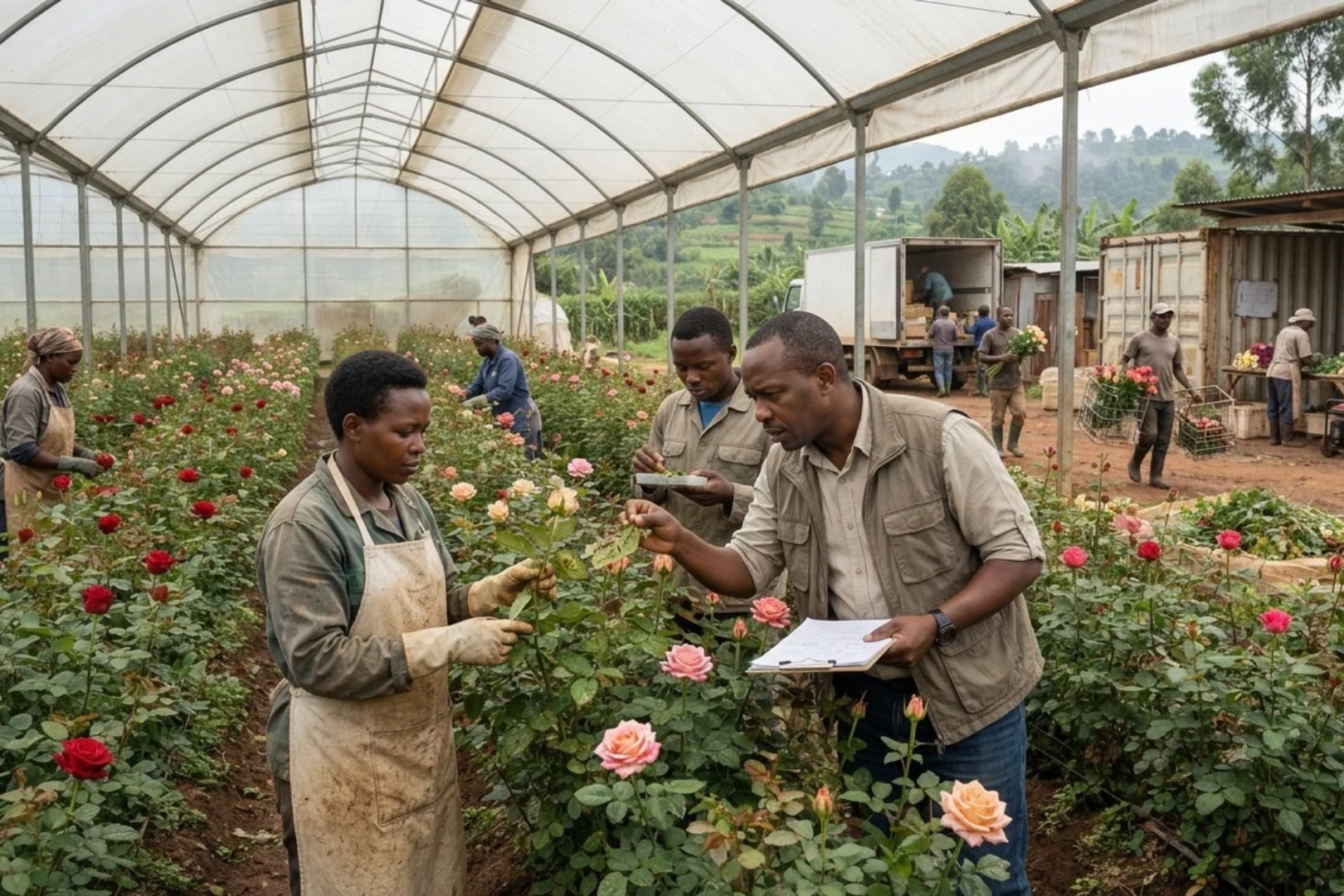
Although significant growth and numerous initiatives are offering lucrative opportunities, some ongoing challenges persist to hinder this industry. Such as –
1. Cold chain limitations: Although Kigali International Airport has made strides in upgrading its facilities, its capacity for cold storage and handling still lags behind that of Kenya and Ethiopia.
2. Limited skilled labor: A noticeable shortage of trained agronomists and floriculture experts exists, particularly in rural areas.
3. Pest and disease management: Many farmers lack access to effective pest management strategies, resulting in either significant yield losses or excessive chemical use.
4. Access to finance: Smallholder farmers and cooperatives often struggle to obtain affordable loans for infrastructure and essential inputs.
5. Certification hurdles: Complying with EU standards (like GlobalGAP and MPS) demands investment that many producers simply don’t possess.
Strategic Solutions to Improve Rwanda’s Floriculture Industry
To address these issues, investors can play a crucial role. Taking strategic decisions to solve these problems might help, such as
1. Investors can establish a training hub or fund floriculture educational programmes.
2. To address the problem of cold chain limitations, they can build a cold storage hub, invest in refrigerated transport fleets, or even partner with logistics firms to create shared cold chain services for smallholders.
3. Introduce integrated pest management (IPM) systems and eco-friendly inputs.
4. Partnering with agri-tech startups to develop real-time disease monitoring is another solution.
5. Partnering with NGOs or trade bodies to subsidize certification costs or providing technical assistance and funding for group certification programs will help eliminate standards compliance problems.
But the question that arises is why investors should play this role, and why they should invest in Rwanda’s floriculture industry.
Why Investors Should Consider Investing in Rwanda’s Floriculture Industry
The demand for flowers in Rwanda is increasing, both domestically and internationally. This expansion is driven by innovative policies, shifting consumer tastes, and a perfect climate for growing flowers. Europe is at the forefront of this trend, particularly in countries such as the Netherlands, Belgium, and Germany, where Rwandan roses and summer blossoms are highly valued for their exceptional quality and eco-friendly practices.
In the 2020-2021 fiscal year, Rwanda exported approximately 1.19 million kilograms of flowers, generating around $7.9 million in revenue. This marks a remarkable increase, with revenue surging by 96.6% and volume up by 58.7% compared to the previous year. Almost 90% of these flowers are sent to the Netherlands, while the rest are distributed to France, Germany, and Japan.
The government is encouraging investors to take innovative steps, enabling Rwanda’s floriculture industry to flourish further. The government hosts investor roundtables, arranges site visits, and leads international trade missions to attract global participants. Ornamental horticulture is officially recognized as a priority export sector, which means that investors enjoy perks like expedited approvals, tax breaks, and streamlined customs procedures.
Final Word: Growing Rwanda’s Floriculture Industry
Rwanda’s floriculture industry presents a vast, untapped opportunity for investors and the government, encouraging new investors to come forward. The number of exports and production demonstrates the significant contribution this industry makes and its potential to become a major player in the future.
Additionally, there is an ongoing demand from foreign countries. In a nutshell, investors should take the step to grow Rwanda’s floriculture industry and start something new for the country’s well-being.
FAQs (Frequently Asked Questions)
1. Why is Rwanda’s floriculture industry growing?
The growth of Rwanda’s floriculture industry can be attributed to government support, favorable climate conditions, rising global demand, and its higher profitability compared to traditional agriculture.
2. What types of flowers are grown in Rwanda?
Rwanda primarily grows roses (mainly for export), summer flowers like Agapanthus and Tuberose, and native ornamental plants like Zantedeschia (Calla lilies) and Papyrus.
3. Where are most flower farms located in Rwanda?
Key districts for flower farming include Gishari in Rwamagana, as well as Musanze, Nyabihu, Rubavu, and Rulindo.
4. Who are the main buyers of Rwandan flowers?
The Netherlands is the top buyer, primarily through the Aalsmeer Flower Auction, with other significant markets including Germany, Belgium, France, Japan, and various Middle Eastern countries.
5. What is Bella Flowers, and why is it significant?
Bella Flowers is a government-supported business that leads the charge in Rwandan flower exports. It cultivates over 18 varieties of roses, employs more than 900 people, and serves a global market.
6. What are the main challenges in Rwanda’s floriculture industry?
Significant challenges include limitations in cold chain logistics, a lack of skilled labor, managing pests and diseases, limited financing options, and complications surrounding certification processes.
7. How can investors contribute to this industry?
Investors can make a difference by establishing cold storage facilities, backing training initiatives, promoting sustainable practices, and assisting in the certification process.
8. Why should foreign investors consider Rwanda’s floriculture sector?
This sector boasts high return potential, increasing international demand, government incentives, and an untapped market that’s ripe for innovation and growth.

0 Comments