
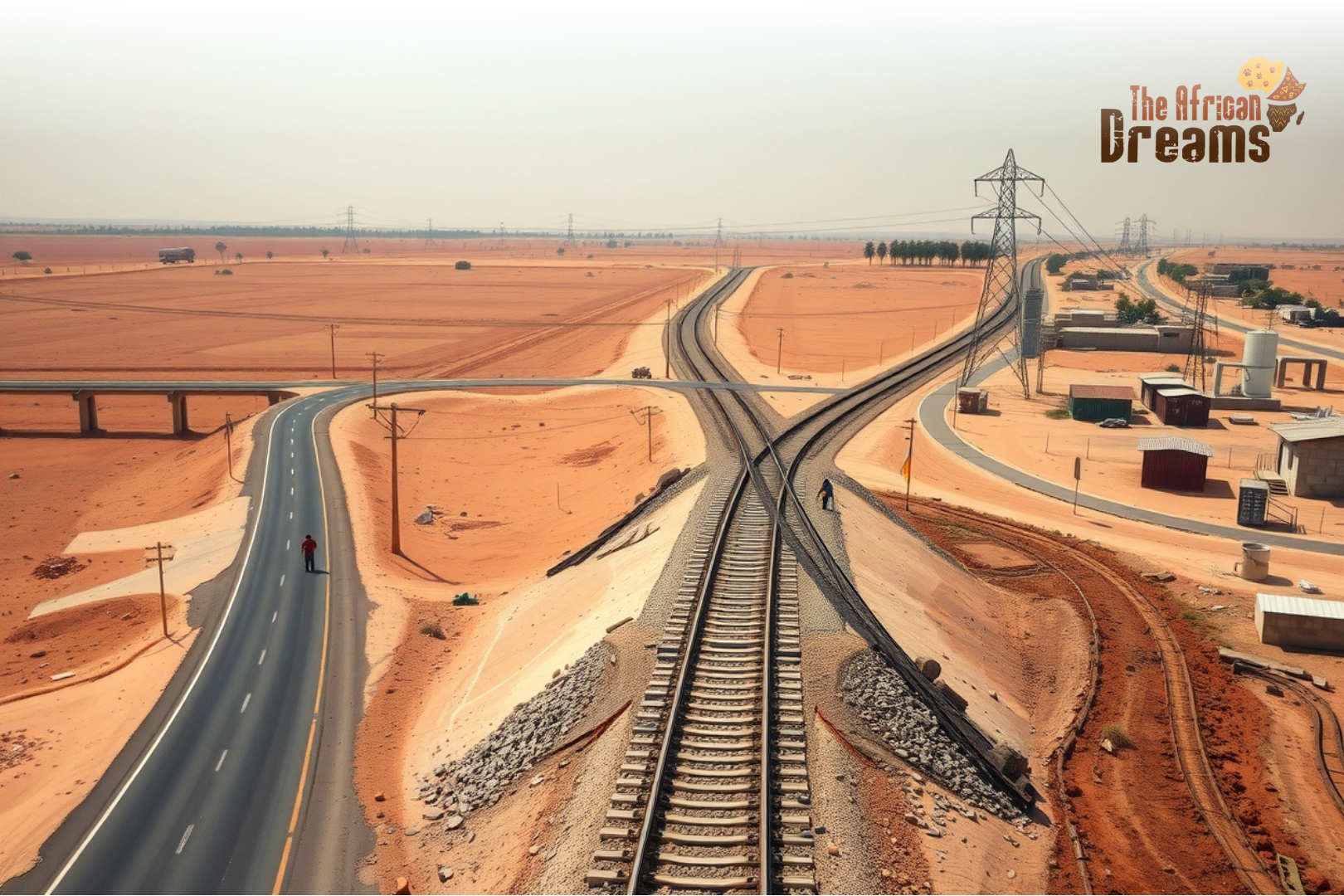
Sudan is a country immensely blessed naturally, right in the heart of Africa. Still, it has barely managed to progress beyond its underdeveloped status. Infrastructure plays a key role in Sudan’s economic development. It is the foundation for improvements in productivity and social conditions. Decades of conflict and underinvestment have left Sudan with the lowest infrastructure densities in the world. Therefore, appreciating the welfare impact of infrastructure development and its potential becomes very important for Sudan. In this blog, we will discuss this shortly.
The History of Conflict and the End
The infrastructure narrative of Sudan is inseparable from its conflict history. The decades-long civil wars have killed millions and destroyed the nation’s infrastructure. The roads, railroads, and bridges that remained were damaged, and what remained deteriorated through lack of maintenance. The result was a nation that had isolated itself from the world. Sudan’s people are leading lives in huge pockets of poverty and a lack of economic inclusion.
Reconstruction began in the early 2000s and took more than a decade to complete due to ongoing precariousness and limited resources. The signing of the Comprehensive Peace Agreement (CPA) in 2005 provided a way forward for peace and reconstruction. Yet the obstacles remained vast. Building infrastructure still took not only money but peace and good governance.
Infrastructure as Bottleneck
Even in 2024, infrastructure remains one of the most critical obstacles to economic development today. A mere 2% of the country’s roads were paved. Thus, travel during the rainy season is almost impossible. The once-thriving rail network now has only one line connecting Babanusa to Wau. River transport, a missed opportunity for economic growth, is hindered by silt and a lack of navigation tools.
Only 1% of Sudan’s population uses electricity, with per capita consumption at only 80 kWh per year. The unreliable power supply limits the quality of life and chokes economic growth. Businesses rely on expensive, inefficient diesel generators to operate.
The Economic Impact
Sudan’s economy is significantly affected by its infrastructure. The World Bank estimates that poor infrastructure causes a loss of up to 2% in economic growth per year. This is especially clear in the 80% of workers who work in agriculture. Bad road systems prevent farmers from promoting their goods. Hence, they suffer a huge loss due to post-harvest damages and losses.
On top of this, transportation costs are very high in Sudan. It drives up the cost of doing business overall and is less appealing to local and foreign investors. This exacerbates poverty and becomes a bottleneck for creating jobs, a major problem, especially in low-income rural areas.
Now, it is essential to have a proper infrastructure development roadmap in this era.
Infrastructure-Driven Development Roadmap
While this is a tall order, the power of infrastructure to propel Sudan’s economic development simply cannot be overstated. The Infrastructure Action Plan for Sudan was prepared by the African Development Bank Group as a comprehensive road map to transform and modernize this country’s critical infrastructure over 10 years. The plan has stressed the need for new infrastructure and how to rehab and sustain existing assets.
1. National Transportation: Connecting the Nation
A central part of the IAP is to establish an interconnected system for transportation. This giant project deals with the rehabilitation of main roads and bridges, and the addition of a railway network update in some densely populated regions. They will connect various regions in the nation, thereby easing the transportation of goods and people. It will reduce movement costs and create more economic opportunities.
The reopening of the rehabilitated Wau-Babanusa railway line will help increase trade between Sudan’s central and western regions. In the same way, better rural roads will ensure farmers can reach markets with ease, minimizing post-harvest losses and enhancing their incomes.
2. Power: Lighting Up Sudan
Another crucial area to tackle is the power sector. The IAP suggests increasing both conventional and renewable electricity generation in Sudan. This involves erecting small hydropower dams that fit well with Sudan’s landscape and with the country’s growing solar and wind energy activities.
In turn, improved access to electricity will be a catalyst for economy-wide impacts. Such a project, it said, aimed at improving the quality of life for millions in Sudan will also reduce costs to do business and make Sudan a more competitive and attractive destination for investment. It could be very beneficial down the road for Sudan’s economy (by reducing its reliance on oil and agriculture).
3. Water: The Essential Resource for Sustaining Life
Another area where Sudan is so far behind is in the provision of clean water and sanitation. While only 27% of the population has improved water services, and just 16% have any form of sanitation. This poses an extreme public health risk, especially in rural areas with a high prevalence of waterborne diseases.
The IAP describes several measures to improve water and sanitation infrastructure, such as constructing new water treatment plants or rehabilitating existing ones. These are, however, expected to decrease the prevalence of water-related diseases, improve public health, and enhance workforce productivity, leading to economic development.
What Lies Ahead: Challenges and Risks
The advantages of building infrastructure in Sudan are obvious, but development will certainly not be easy. The first and most significant part is financing. The IAP price tag is a whopping $7.5 billion, with more than half expected to be paid by Khartoum itself. With Sudan’s strained budget and declining oil revenues, it will be challenging to raise the necessary funds.
The challenge is governance; it’s a major one. Delivering top-quality infrastructure is contingent on the effectiveness of state institutions and processes. This ensures that projects are completed on time, within budget, and to the highest standards. Nevertheless, the IAP’s success is at risk from Sudan’s history of corruption and poor governance.
Lastly, one cannot neglect the high-protection part. Infrastructure development will always be a risky, difficult mission to accomplish so long as the country is rife with conflict and instability. Peace and stability are indispensable conditions for carrying out any infrastructure project fully.
The Future of Sudan in Construct
Sudan stands at a crossroads. Its infrastructure is in poor shape, and the country faces several complex challenges. Thus, this has proven to be a significant constraint on its economic development.
On the other hand, infrastructure has a huge potential to drive growth and transform the lives of millions of Sudanese. While the Infrastructure Action Plan provides a roadmap to unlock this potential, it will only succeed with buy-in from the Sudanese government, continued support from the international community, and the navigation of several challenges that lie ahead. Then Sudan will turn its infrastructure from a blockade into an economic enabler, opening the door to great changes.


0 Comments