
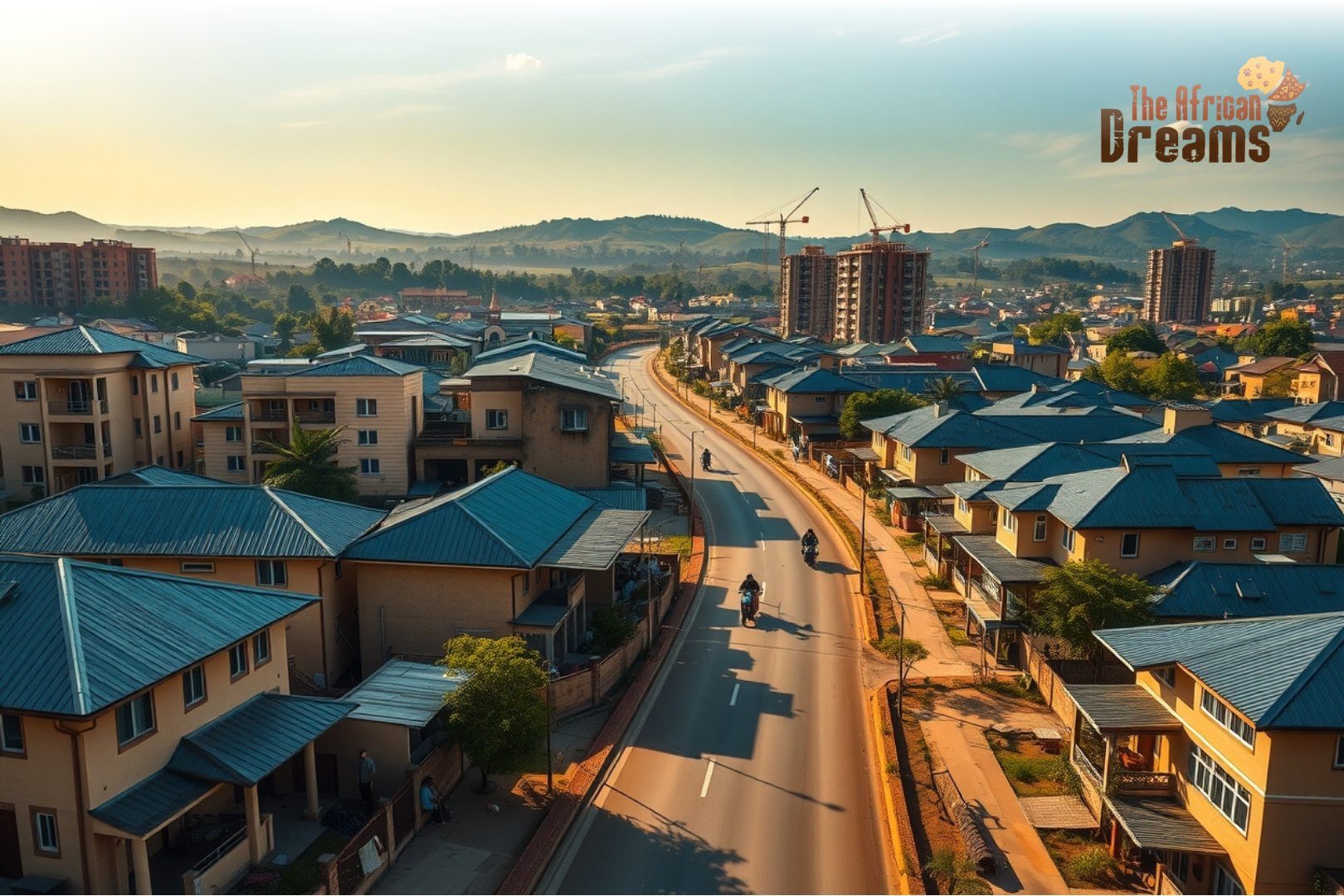
Introduction
Let’s talk about something that’s changing quietly but powerfully—real estate in Uganda.
People across the country are waking up to new possibilities. Families are moving out of overcrowded neighborhoods. Young people are starting to dream bigger—not just about careers, but about owning land. Investors are looking closely at Uganda and asking, “What’s the next big move here?”
Uganda is growing fast. Cities like Kampala, Gulu, and Mbarara are getting busier. People are moving in. And they all need places to stay, work, and build their futures. That’s why real estate is becoming such a big deal. It’s not just land anymore—it’s opportunity.
You’ll hear stories everywhere: a teacher building a small rental near her hometown, a mechanic buying a plot after years of saving, a nurse working abroad, sending money home to build something she can return to.
This isn’t just about buildings or property prices. It’s about people getting a better life. It’s about jobs. About dignity. About security.
And what’s exciting is that real estate is no longer a topic only for the rich. It’s part of everyday talk. It’s in casual chats at cafés, during boda rides, in group savings meetings.
This movement isn’t loud. It’s steady. It’s real. Uganda is being built—slowly, home by home, plot by plot. And at the heart of it all is real estate.
So, when we talk about real estate in Uganda, we’re really talking about hope. About progress. And about a future that’s being shaped by the people, for the people.
Article Highlights
Real estate plays a vital role in Uganda’s economy, contributing significantly to GDP and providing employment across multiple sectors.
Uganda is facing a housing shortage of over 2.4 million units, creating urgent demand for affordable, well-planned housing solutions.
Planned developments like Akright and Nakawa–Naguru are reshaping cities with better infrastructure, organized layouts, and community-focused design.
With rental yields averaging around 8% and growing land values, real estate offers attractive returns for both small and large investors.
Ugandans abroad now contribute up to 40% of property investments, fueling growth through remittances and family-driven construction projects.
Real Estate's Contribution to Uganda's GDP
Let’s break it down in a simple way. Real estate is helping Uganda grow, quietly but powerfully. You might not notice it every day, but it’s playing a big role in how the country earns money and creates jobs.
Every time a house or office is built, a chain reaction starts. Builders, plumbers, electricians, and painters get work. After that, caretakers, cleaners, and agents come in. Even small shops nearby get busier because more people move in. That one building helps many people earn a living.
Now let’s look at the bigger picture. The services sector is a big part of Uganda’s economy. In the 2023/24 financial year, services made up around 43.1% of Uganda’s total GDP. And real estate was one of the top contributors in that sector. That’s huge. It means this sector isn’t just about land or buildings—it’s a real engine for the economy.
And that engine keeps pulling more things along with it. When someone builds, they buy cement and bricks. That helps hardware stores. They take out loans—that helps banks. They pay land fees—that helps the government collect taxes. One plot of land creates movement all around it.
This is why more people—whether they’re business owners, civil servants, or people living abroad—are thinking about investing in land or houses. Because real estate doesn’t just sit there. It grows in value. It supports families. It builds neighborhoods.
It might not always make headlines. But if you look closely, you’ll see real estate is helping Uganda grow, bit by bit, brick by brick.
Addressing Uganda's Housing Deficit
Let’s be honest—finding a decent place to live in Uganda isn’t easy for most people. You don’t need stats to see it. Just take a walk through the outskirts of Kampala or any growing town. You’ll see it in the crowded rooms, in unfinished houses, in families renting spaces too small for them.
But the numbers are still important. Right now, Uganda needs around 2.4 million more houses. And that gap keeps growing every year—by about 284,000 homes (Ministry of Lands). That’s a huge backlog. And it’s only getting worse.
The reason? Too many people, not enough homes. Cities are filling up fast. This is due to the fact that most people are migrating from rural areas to urban areas in search of better job opportunities and schools. But when they get there, they meet high rents that they cannot afford to pay. It has even become costly to buy the piece of land. For the majority of families, owning a proper house remains a dream.
Let’s break it down. A basic, formally constructed home in Uganda costs about UGX 183 million (roughly $48,000). But here’s the tough part—96% of Ugandans can’t afford that price. So people either rent tiny rooms or build with whatever they can get, often without proper plans or safety.
Still, there’s some good news. The government and private developers are starting to work on affordable housing projects. Banks are offering better mortgage plans. Some builders are creating smaller, low-cost homes meant for middle- and lower-income earners.
It’s not perfect. But it’s a start.
Because at the end of the day, housing isn’t just about walls and a roof. It’s about comfort, safety, and peace of mind. It’s the foundation for everything else—health, education, even ambition. When people have a home they can rely on, everything else becomes possible.
The Rise of Planned Communities
Cities in Uganda are not just getting bigger—they’re changing how they grow. For many years, people built homes however they could. No plans. No streets. No services. They found land, built something, and hoped for the best.
That way of doing things caused problems.
- Roads were narrow or missing.
- Drainage didn’t work.
- Water and electricity were hard to access.
- Neighborhoods grew in a messy, unplanned way.
But now, that’s starting to change. Developers and the government are moving toward planned communities—places where everything is thought out before anyone moves in. These places offer a better way to live.
Let’s take one of the first big examples:
Akright Kakungulu Housing Estate
This estate was created by Akright Projects Limited. It showed Uganda what a planned neighborhood could look like.
What made it different?
- Roads were built before any houses.
- Land was divided into proper plots.
- Utilities like water and electricity were planned in advance.
- Shops, schools, and parks were included in the design.
It wasn’t just houses thrown together. It was a full community with structure, order, and space to grow.
Another example is: Nakawa–Naguru Estates. This project came from a partnership between the government and private investors. The goal was simple:
- Remove the old, unsafe houses.
- Replace them with strong, well-planned buildings.
- Improve roads and services in the heart of Kampala.
Now, here’s why planned communities matter:
- Streets are paved.
- Water and electricity are ready.
- There’s space for health centers, schools, and businesses.
- People feel safer. Children have places to play. Life feels more stable.
More developers are now following this model. Because once people experience this kind of organized living, it’s hard to go back to the old way.
Uganda’s cities are changing. And planned communities are helping them grow smarter, not just bigger.
Investment Opportunities
Think about real estate as a money-making opportunity. A lot of people think you need to be rich to invest in property. But the truth is, real estate in Uganda is slowly becoming more open, especially to smart, early investors.
The market is growing at a steady pace—about 5 to 6% every year. That might not sound huge, but in real estate, that’s considered stable and reliable growth. Even during tough economic times, Uganda’s property market has kept moving.
So, what kind of opportunities are out there?
Residential Rentals
As more people move into towns and cities, the demand for houses and apartments is rising fast.
- Middle-income earners are looking for clean, affordable places.
- Many investors are building small rental units in the suburbs.
- Average rental return? Around 8% per year.
Commercial Property
Shops, office spaces, warehouses—they’re in demand too.
- Businesses are expanding.
- Even small towns now need shopping centers and workspaces.
- Investors are turning empty plots into income streams.
Land Banking
Some people are buying land and just holding onto it.
- As roads and utilities reach new areas, land prices shoot up.
- A piece of land bought today in Wakiso or Mukono might double in a few years.
Hospitality and Tourism
Uganda’s natural beauty attracts visitors—and that means opportunities.
- Building lodges near national parks
- Setting up boutique hotels or short-stay apartments in cities
And it’s not just locals who are paying attention.
Foreign and Diaspora Investment
Ugandans living abroad are putting money into property back home.
- Some are building rentals.
- Others are buying land for future business.
- The diaspora now drives up to 40% of property demand.
Real estate is not just about owning land anymore. It’s about creating value. It’s about earning a monthly income. It’s about building something long-lasting. And the best part? Uganda’s property sector is still growing. There’s still room to get in early—and smart.
The Diaspora Effect: Ugandans Abroad Fueling Real Estate Growth
It is time to discuss a group that is sending more than money home; they are transforming the Ugandan housing sector. These are Ugandans who are residing and or earning a living in other countries.
They send money to their families every month in terms of remittances. It might be for school fees, medical bills, or helping out with food and daily needs. But more recently, many of them are putting that money into something long-term—real estate. Buying land. Building houses. Starting small rental projects. Because for them, real estate is solid. It doesn’t disappear. It grows in value. And it feels like home.
You’ll find this happening in everyday conversations. Maybe it’s a brother in Dubai sending money to start construction. Or a sister in Canada asking about plots in Mukono. These aren’t just private dreams. These are real plans with real results.
Data shows that Ugandans living abroad now account for around 30 to 40% of property demand back home (Real Muloodi). That’s nearly half the market being influenced by people not even living in the country. It’s powerful.
Building Rental Units
Many of them are choosing to build homes that can generate a steady income. Some build small apartments in Kampala or Entebbe. Others focus on simple rental units in their hometowns. The money they invest doesn’t just build a house—it helps their families earn monthly rent and grow their financial security.
Buying Land for the Future
Some don’t build right away. They buy land and wait. As roads and services reach those areas, the land increases in value. They hold onto it like a savings account. A plot today could become a guesthouse, a home, or a full project in the future.
Supporting Family Projects
These investments often happen through teamwork. Someone abroad sends the money. A sibling back home supervises the building. A cousin handles land paperwork. Everyone plays a role. It’s a system based on trust, patience, and shared vision.
What’s happening here is more than just buying land. It’s a quiet movement that connects two worlds.
Diaspora investment is building walls, yes—but it’s also building futures. These homes, rentals, and plots are bringing new life to towns, creating jobs, and bringing Ugandans closer together, even when they’re far apart.
Challenges
Let’s pause for a moment. So far, we’ve talked about the growth, the excitement, and the potential in Uganda’s real estate sector. But here’s the truth—not everything is smooth. There are real challenges that anyone investing in property must face, especially when it comes to land ownership.
If you’ve ever tried to buy land in Uganda—or know someone who has—you’ve likely heard about the confusion. And most of that confusion comes from the country’s complex land system.
1. Understanding Land Tenure in Uganda
Uganda doesn’t have just one way of owning land. It has four:
- Customary land, which is passed down through families or communities.
- Freehold land, which gives full ownership.
- Leasehold land, where you rent the land for a set number of years.
- Mailo land, a historical system where the land is owned by someone, but another person lives and works on it.
Now, imagine trying to build a house on a piece of land that has overlapping claims. It happens. A lot. One person has the title. Another has tenancy rights. And suddenly, the whole project is stuck.
This is one of the biggest risks in real estate here. People lose money. Projects are delayed. Some even end up in court for years. That’s why doing background checks, verifying documents, and working with professionals is more than just a good idea—it’s a must.
2. Legal Framework and Progress
To improve the system, Uganda introduced laws like the Condominium Property Act, which allows people to own individual units in shared buildings—like apartments. This was a big step in helping more people access affordable housing.
There are also efforts to digitalize land records and reduce fraud. But progress is slow. Paper records still dominate, and access to clear information remains limited.
What Investors Should Know
If you’re planning to invest, here’s what matters: patience, caution, and the right help.
Work with surveyors and legal experts. Take your time with paperwork. Don’t rush because a deal “looks too good to miss.” In real estate, it’s better to be slow and sure than fast and sorry.
Because even though the opportunities are real, the system is still a work in progress. And navigating it well is part of building anything strong and lasting in Uganda.
Future Outlook: Real Estate in Uganda by 2030
Now let’s look ahead. If you take a moment to think about where Uganda’s real estate is heading, one thing becomes clear—it’s just getting started.
There’s a lot of energy in the sector right now. More houses are being built. More people are moving into planned neighborhoods. More investors are watching closely. But the real change is still coming.
By 2030, Uganda’s cities will look and feel very different. That’s because three major forces are shaping the future: sustainability, technology, and infrastructure.
Focus on Sustainability
More developers are thinking about the long-term. That means using materials that last, reducing waste, and building homes that use less energy and water. With electricity still unreliable in some places, energy-saving designs will matter even more.
Sustainable building is also about protecting the environment—keeping green spaces, managing drainage, and avoiding over-construction in already crowded towns. These changes won’t just help the planet—they’ll also make neighborhoods safer and more livable.
Rise of Real Estate Technology
Things are starting to go digital. And that’s a big deal.
Property listings are now online. Some land records are being digitized. People can search for homes, compare prices, and even apply for loans using their phones. While Uganda still has a long way to go in this area, the progress is clear.
Over the next few years, we’ll likely see apps for rent payments, virtual house tours, and digital contracts become common. It will save time, reduce fraud, and make property ownership more accessible—especially for younger people and those living abroad.
Growth Through Infrastructure
Real estate can’t grow without good roads, water systems, and power lines. That’s why the government’s focus on infrastructure is so important.
As more roads are built, land that was once considered too far out will become valuable. People will start buying plots in places they had never considered before. Water and power connections will help new areas grow faster, and cities will slowly expand in better, more organized ways.
All of this means one thing: the opportunity is still wide open.
If the country continues this path—improving systems, supporting affordable housing, and encouraging both local and diaspora investment—Uganda’s real estate sector by 2030 could be one of its strongest and most stable industries.
Conclusion
In Uganda, real estate isn’t just about buying land or putting up a house. It’s something deeper. It’s about people trying to move forward. It’s about families building a future they can count on. It’s about turning small steps into something lasting.
Look around any town—from the outer areas of Kampala to places like Mbarara, Gulu, and Mbale. You’ll see signs of change. Houses are going up. New roads are opening. Empty land is turning into homes, shops, and schools. That’s not just development. That’s progress built with purpose.
Of course, nothing goes always smooth. Despite this, the land system is still an area that causes people to scratch their heads. Most of the families are tenants because they cannot afford to own a home. It is a well-known fact that construction requires time, energy, and, of course, money. It’s not easy. Nevertheless, the progress is there, and that is what counts.
People are stepping up. More Ugandans are investing in homes. The diaspora is sending money to build and buy. Young people are saving for land. Small builders are finding ways to offer better housing. Everyone is playing a part. Slowly, a stronger Uganda is rising—foundation by foundation, roof by roof.
Here, real estate does not only serve the purpose of making profits. It provides employment opportunities to builders and electricians. Some of the benefits include the provision of services such as water, roads, and power to the people. It helps fight poverty. Which links families up with a better future.
No matter who you are—a student planning ahead, a Ugandan living abroad, a parent trying to leave something behind—this space has room for you. You don’t need to build a mansion. Even buying one small piece of land is a start.
Because in Uganda, real estate isn’t only about buildings. It’s about building lives. It’s about creating something that stays. And the best part? The ground is ready.
FAQs
- Why is real estate important to Uganda’s economy?
Real estate supports many parts of Uganda’s economy. It creates jobs, helps grow cities, and adds to the national GDP. When homes, offices, and shops are built, it also boosts other sectors like banking, construction, and transport.
- What causes Uganda’s housing shortage?
The housing shortage comes from a fast-growing population and rapid urbanization. More people are moving to cities, but not enough affordable houses are being built. Most Ugandans also can’t afford the average home cost, which adds to the gap.
- Is real estate in Uganda a good investment?
Yes, it can be. Uganda’s property market is stable and growing. Rental returns are around 8%, and land prices continue to rise. People invest in rentals, land, or commercial spaces—each offering different benefits.
- What challenges should investors know about?
Land ownership in Uganda can be complicated. There are different land tenure systems, and sometimes multiple people claim the same land. Investors need to do proper checks, use trusted lawyers, and avoid rushing into deals.
- How is the Ugandan diaspora involved in real estate?
Ugandans living abroad now make up about 30–40% of property demand. They invest in land, build rentals, or support family projects. Their money helps fuel construction, create jobs, and grow new neighborhoods back home.
0 Comments