
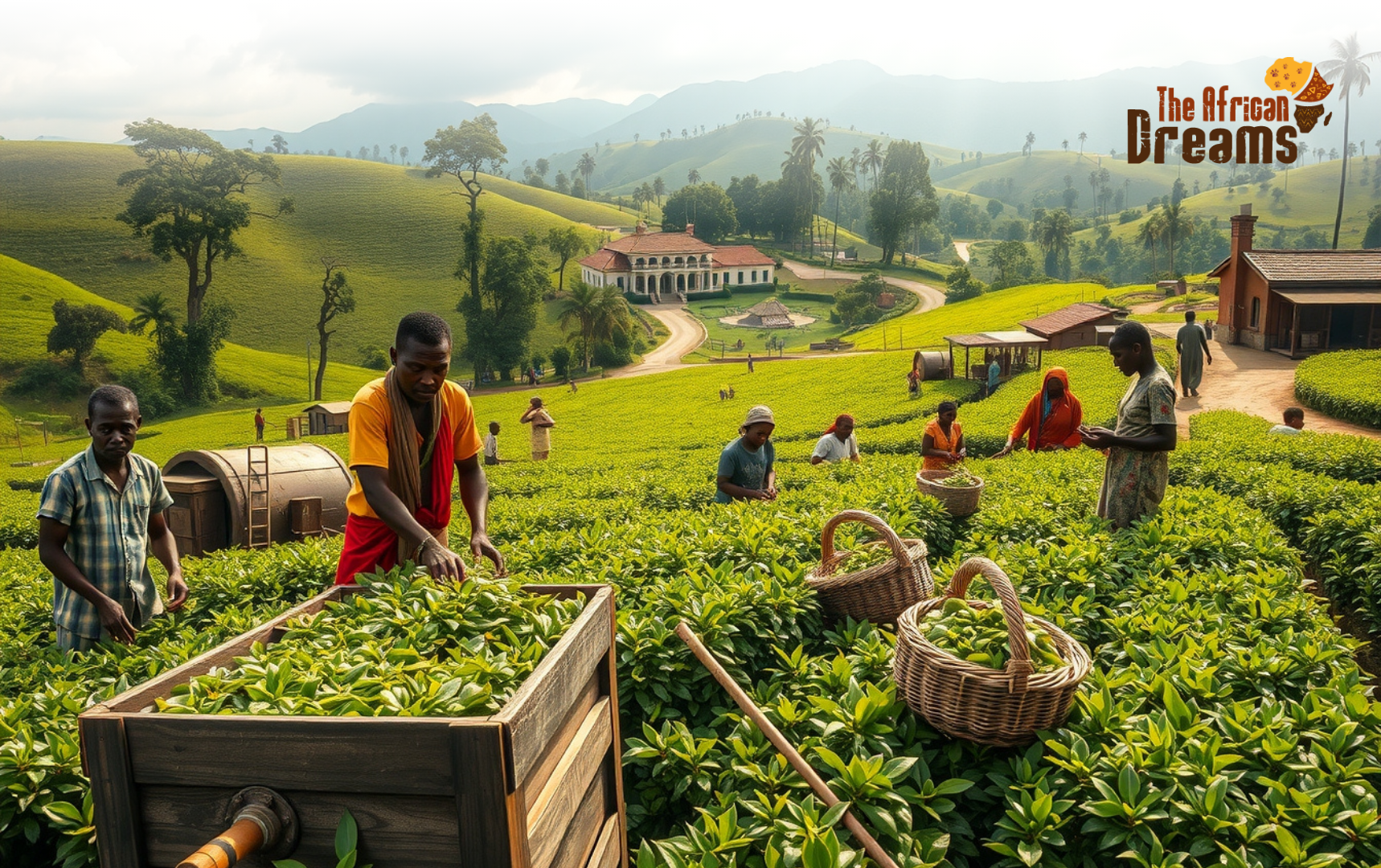
Did you know that Tea is the second most consumed beverage in the world after water? This shows how and why tea businesses can be successful. Are you interested in investing? Then you have come to the perfect place. Here, we talk about the Tea Industry in Cameroon.
Cameroon is a country in Sub-Saharan Africa. It is often called ‘Miniature in Africa’ due to its diversity. Cameroon is known to have a bit of all of Africa, hence the phrase. Located in the center of Central Africa, Cameroon is a very strategic piece of land. Agriculture is its mainstay, and you would be amazed to know that Cameroon has the perfect climate and fertile land for crop cultivation.
Cameroon’s tea industry is a symbolic tradition and is of economic importance. Tea has become a significant agricultural product, contributing to the livelihoods of many rural families. It forms a core part of the country’s export economy.
The Historical Roots of Tea Farming in Cameroon
Tea is a central part of daily life in Cameroon, served both hot and cold depending on regional preferences. Chai, a beloved variant, is typically prepared with black tea simmered in a mixture of water and milk, enriched with ground cardamom and sweetened with sugar. This popular drink is often enjoyed during gatherings with friends and family, providing a comforting moment of relaxation.
Historically, Cameroon’s tea exports were primarily directed towards European markets. Today, however, the focus has shifted towards neighboring countries such as Sudan and Chad, although a significant portion of the tea produced still satisfies domestic demand.
Tea cultivation in Cameroon began in 1914, introduced by German settlers on the fertile volcanic slopes of Mount Cameroon. Despite facing setbacks during the mid-20th century due to political and social upheavals, the industry saw rejuvenation in the late 1960s, growing to encompass over 3,890 acres of tea plantations today. These plantations yield approximately 5,000 tonnes of tea annually, emphasizing the adaptability and resilience of Cameroonian tea farmers over the decades.
The Journey from Leaf to Cup: The Tea Production Process
Tea leaves are turned to become the aromatic beverage loved globally. The production process in Cameroon involves traditional methods where the focus is largely on black tea. Black tea dominates the local and export markets of Cameroon. The process includes withering, rolling, fermentation, and drying—each step carefully managed to ensure quality. Recent trends show an increasing interest in green and herbal teas, reflecting global shifts towards healthier, more diverse tea consumption.
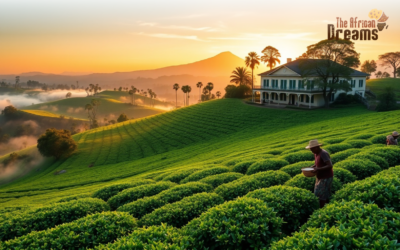
Tea production in Cameroon involves several key processes. And it is concentrated in specific locations known for their conducive climates and soil types. The primary areas for tea cultivation include the highland regions around Tole and Ndu. In these locations, the volcanic soil provides an excellent environment for growing tea. These regions have been pivotal to Cameroon’s tea production historically and continue to be significant today. The Ndawara Tea Estate is the largest in Cameroon, with currently around 5000ha of cultivated plantation.
The types of tea produced in Cameroon mainly include black tea. This is the most prevalent, along with smaller quantities of green tea and various herbal teas. Black tea production involves a specific set of processes to achieve its distinct flavor and color.
After plucking, the leaves undergo withering to reduce moisture content. Then it goes through rolling to break down the leaves and release essential oils, and oxidation (often referred to as fermentation). This, in turn, develops the rich flavors and dark color, and finally, drying to halt the oxidation process and prepare the tea for packaging.
Present Condition
Today, approximately 3,890 acres are dedicated to tea cultivation in Cameroon, with 1,482 acres featuring cloned tea bushes. The tea leaves are harvested year-round, and during peak seasons, around 2,300 workers are employed.
Presently, Chad and Sudan are the primary markets for Cameroonian tea.
The current condition of tea production in Cameroon shows a slight decline in production levels compared to previous years. The most recent data indicates a production of 5,506 tonnes in 2022, which is a slight decrease from the previous year.
Historically, the highest production was around 6,000 tonnes in 2009, reflecting some fluctuation in output over the years.
Export Data
Tea plays a pivotal role in Cameroon’s economy, with a significant portion of its production destined for export markets in neighboring African countries and beyond. In 2022, Cameroon’s tea exports amounted to $282,000.
The largest share went to the Central African Republic, totaling $243,000. Other significant destinations included France ($33,500), Canada ($3,080), South Africa ($1,240), and Belgium ($448).
The implementation of the African Continental Free Trade Area (AfCFTA) is expected to further boost Cameroon’s tea exports by reducing trade barriers and opening up larger markets. This is a strategic move to capitalize on the growing global demand for tea.
The Future Of Cameroonian Tea: Challenges and Opportunities
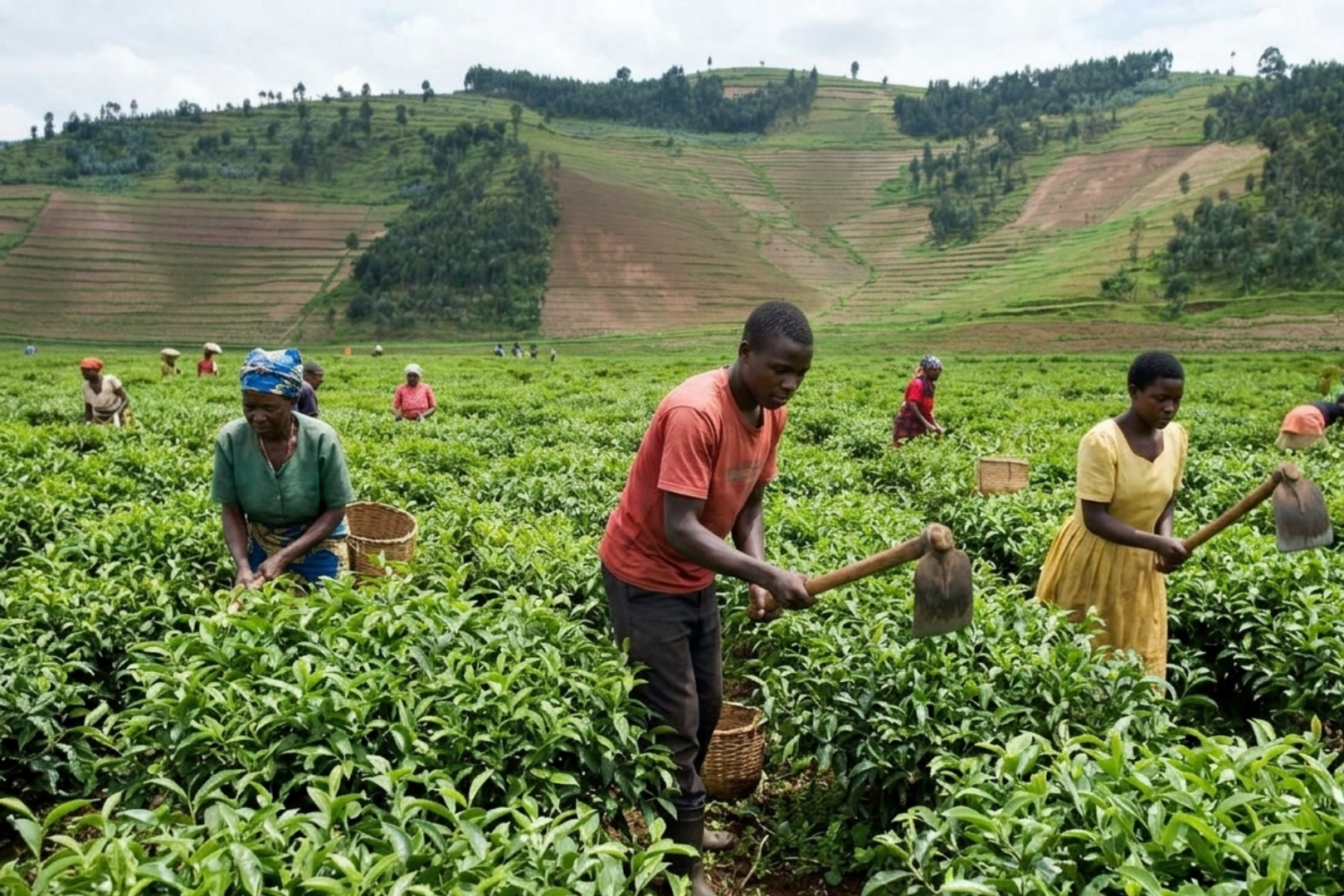
For a Cameroonian tea farmer, the day starts early, with the misty morning being the best time for tea plucking. The labor-intensive nature of tea farming involves meticulous care from planting to harvesting. Farmers face challenges such as fluctuating market prices and climate change. Yet they persist, driven by the deep-rooted tea culture and the economic necessity of tea production.
The increasing global demand for diverse and sustainable tea products presents a significant opportunity. However, challenges such as climate change and economic instability exist. This is due to the use of chemicals in agricultural systems. The need for more advanced agricultural techniques also continues to pose risks to the industry’s sustainability and growth.
In recent years, Cameroon has adopted innovations such as the use of sustainable agricultural practices. Additionally, more efficient processing technologies have been introduced. These advancements are crucial, as they help reduce environmental impact and improve the economic viability of tea farming.
Conclusion
Cameroon’s tea industry offers clear opportunities for growth and profit. The country’s fertile soil and long history with tea set it up to increase its role in the global tea market. The new AfCFTA agreement will open more markets and lower trade barriers, boosting exports even more.
Investing in this industry isn’t just about making money. It’s also about supporting sustainable farming and helping thousands of farmers make a living. The process of making tea in Cameroon is filled with tradition and hard work.
For investors looking to diversify and make a meaningful impact, Cameroon’s tea industry is a promising option. Take this chance to join the industry and take it to global success. By investing in Cameroon’s tea, you’re investing in a future of success and sustainability.
0 Comments