
Introduction
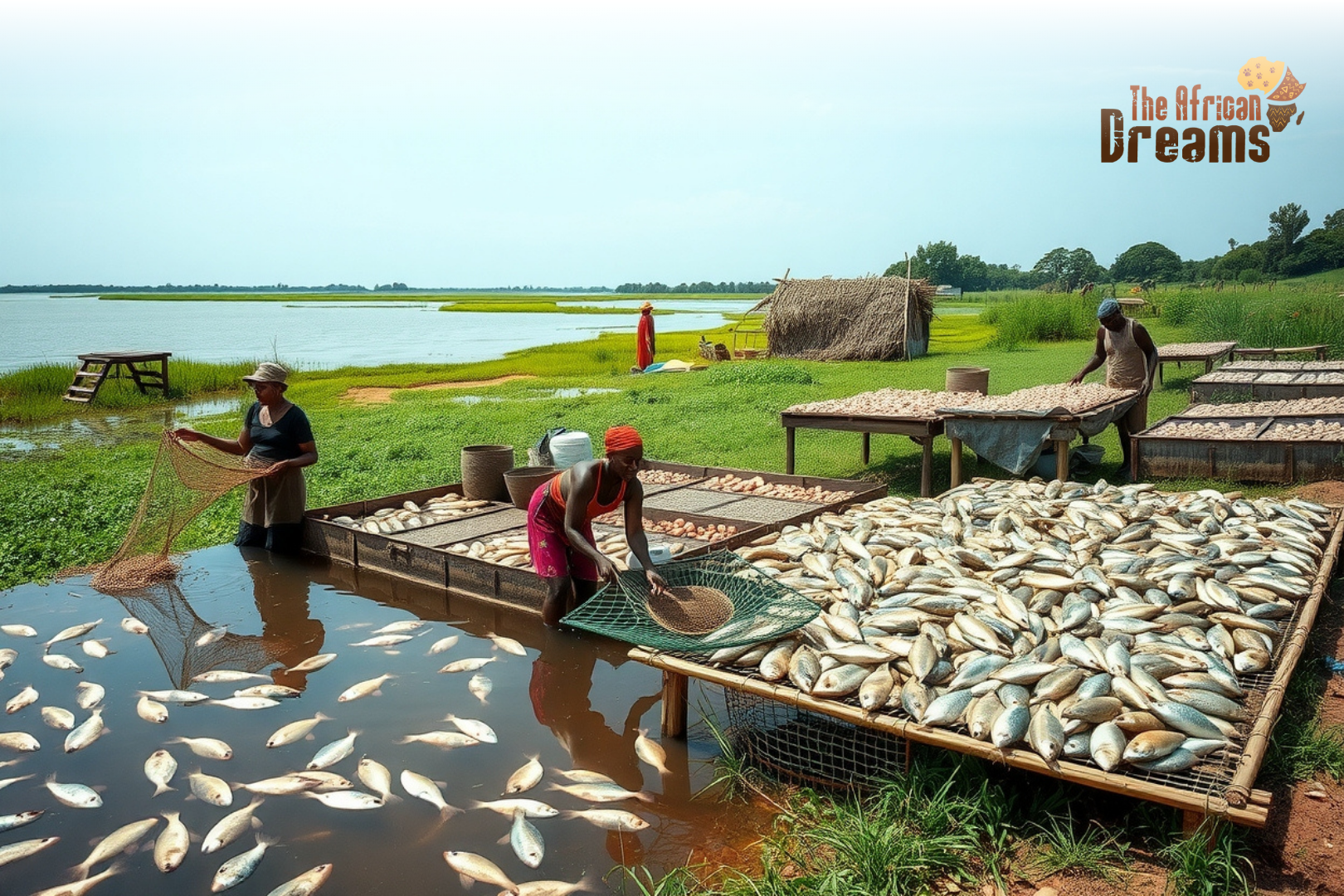
Malawi is a country in southeastern Africa where water bodies cover 20% of the country. Like many sectors that contribute greatly to the economy, the fisheries and aquaculture sector is also among them. It is directly connected to Malawi’s vast water bodies, especially Lake Malawi, the most famous water body of Malawi. This sector also contributes greatly to the livelihoods of people, especially playing a great role in the empowerment of women. About 90 percent of the fish landed was smoked and dried to supply rural areas, making trade a major occupation among many fishing communities, including women. Malawi’s fish production also contributes to 30% of Malawi’s animal protein. With government support and policies, this sector has a good chance of sustainable growth. This article will provide an overview of Malawi’s fisheries and aquaculture, the importance of the sector to Malawi’s national economy, trade, and food security, the challenges it faces, solutions or recommendations, and opportunities for small-scale aquaculture in Malawi.
Article Highlights
1. Overview of Fisheries And Aquaculture of Malawi
2. Importance of Fisheries and Aquaculture in Malawi
- National Economy
- Trade
- Food Security
3. Challenges
4. Solutions or recommendations
5. Opportunities for Small-Scale Aquaculture in Malawi
- Local Feed Production
- Utilizing Predator Resources
- Expanding Fish Markets
- Access to Loans and Credit
- Fingerling Production
- Low Start-Up Costs
- Boosting Food Security and Reducing Imports
- Potential for Cage Farming
Overview of Fisheries And Aquaculture of Malawi
Malawi’s fisheries and aquaculture sector plays a great role in the national economy. From positive to challenging, every situation can be observed across the sector, including the production and post-harvest sectors. Malawi’s 20% surface area consists of major water bodies like Lakes Malawi, Malombe, Chilwa, and Chiuta, and the Shire River System.
In the 1970s, fisheries contributed greatly to 70% of animal protein and 40% of total dietary protein, but degradation in production was observed over the next three decades until 2010. Currently, Malawi has shown good per capita fish consumption, which is about 11 kg per year. Although aquaculture is still a small sector, it shows good growth, with over 10,000 ponds across key districts, including Machinga, Mulanje, and Nkhotakota.
In 2017, production growth in this sector was 12,217 tonnes, but in 2018, it dropped to 9,000 tonnes, showing some fluctuation. To control this fluctuation and maintain steady growth, the government is taking several initiatives, such as promoting aquaculture-agriculture practices, strengthening extension services, and encouraging commercial investment.
Besides the production sector, the post-harvest sector also has significant points to be observed. 90% of fish is preserved through sun-drying, smoking, or roasting, but mostly using traditional processing methods. To improve fish quality and reduce post-harvest losses, the National Fisheries and Aquaculture Policy (2016-2021) has focused on promoting better processing techniques. The fisheries and aquaculture sector not only has a serious positive impact on the economy but also significantly influences people’s livelihoods, especially in women’s empowerment.
In fish markets, particularly in fish processing and trading, women play a great role. Though markets rely on dried fish, chilling facilities are limited. Large-scale fisheries can be found in the south of Malawi. However, large companies like MALDECO are helping with more advanced processing and distribution. Overall, Malawi’s fisheries and aquaculture sector faces challenges but also contributes greatly to the economy and livelihoods. With proper management solutions from government, private, and non-government initiatives, it can maintain steady growth.
Importance of Fisheries and Aquaculture in Malawi
National Economy
The socio-economic condition of Malawi is significantly influenced by its fisheries sector. This sector contributes to employment, food security, and livelihoods. Highlighting its importance, in 2017, fish landings generated USD 235.74 million from 199,454 tonnes. Additionally, the ornamental fish trade contributed USD 228,862.88 from 36,367 exported live fish, while aquaculture generated USD 33.14 million by producing 12,217 tonnes. Whether at the national or household level, the fisheries and aquaculture sector has demonstrated its great significance.
Trade
One of the most renowned lakes that has significant importance in contributing to local and international research, tourism, and foreign exchange earnings is Lake Malawi. This lake hosts around 700–1,000 fish species. It has hosted over 800 endemic fish species. Chambo, Utaka, Kambuzi, Mbaba, Ncheni, and Kampango are some key commercial fish groups. Besides, in the exported fish group, Mbuna is a special one. In 2016 and 2017, Malawi exported 36,147 and 36,367 live ornamental fish. Since the late 1980s, fish imports have exceeded exports. The export destinations include Hong Kong, China, etc., with Germany being the largest market (40%). The importing countries include Zimbabwe, Zambia, South Africa, Tanzania, and others.
Food Security
In 2017, Malawi’s annual per capita fish consumption was 11.6 kg. Thirty percent of animal protein and 5% of total protein intake was provided by it. An important source of essential fatty acids and micronutrients like vitamin A, iron, and zinc is fish. It supports cognitive and physical development. Still below the WHO-recommended 13–15 kg per person per year, fish consumption has significantly increased from the 2007–2011 average of 5.89 kg. People in rural areas are mainly the consumers of fish. The consumers include vulnerable groups such as children, the elderly, and people living with HIV (PLWH). Thus, another great importance of Malawi’s fisheries and aquaculture can be seen in the food security of Malawi.
Challenges the Fisheries And Aquaculture Sector Faces in Malawi
- Costly Fish Feed: Fish feeds are costly and often unavailable, which is why 65.9% of farmers struggle to obtain commercial fish feed. Thus, they choose other alternatives that are lower in nutrition, hampering fish growth.
- Lack of Tools: 40% of farmers lack access to necessary aquaculture tools like thermometers, oxygen meters, and fishing nets. 24.3% of farmers cannot afford essential fish farming tools such as fishing nets, oxygen meters, and fish graders.
- Lack of Training: 31.3% of farmers report that training programs focus more on crops than fish farming. Even extension agents rarely visit the farms.
- Difficulty in Loan Access: 27.7% of farmers cannot access loans from banks or government programs.
- Difficulty with Market Access: 28.2% of farmers struggle with market access and therefore sell fish at local markets at much lower prices. This situation worsens due to the lack of storage facilities. 7.2% of farmers cannot expand their fish farms due to the growth of crop production by other farmers.
- Poor Weather: Droughts dry up ponds, and floods overflow dams due to inadequate drainage infrastructure. In this situation, around 35.9% of farmers suffer.
- Predators: 57.4% of farmers experience fish losses from predators like otters and monitor lizards, as well as theft, especially on farms far from homesteads.
- Diseases: 4.3% of farmers have been affected by Epizootic Ulcerative Syndrome (EUS), which causes high fish mortality, especially in districts like Mchinji, Dowa, and Lilongwe.
- Inadequate Workforce: 3.3% of farmers, especially those in community farms, struggle to find workers for seasonal activity.
- Dependency on Recycled Fingerlings: 32.2% of farmers depend on recycled fingerlings.
Solutions or Recommendations
- Establishment of a local feed manufacturing plant to reduce feed costs and ensure better availability in local markets.
- Allow bulk purchasing of inputs by encouraging the formation of associations or cooperatives
- Establishment of hatcheries to produce fingerlings and improve farmers’ access to hybrid varieties. This can be done with the help of district fisheries departments.
- A fish feed manufacturing plant could be set up in each district of Malawi. It could make commercial feed more accessible and affordable.
- For addressing farmers’ input needs, contract farming arrangements can help.
- Extension services and training programs should be made available. Government loan programs, commercial banks, and microfinance institutions should provide fish farmers with access to loans. With government support and policies like the 2006 Aquaculture Master Plan, this sector has a good chance of sustainable growth.
- Agricultural diversification could enable farmers to earn higher incomes
- The government could subsidize the cost of fish farming. They should help farmers access water pumps for drawing water from nearby lakes or rivers.
- Fish farmers could form associations to supply fish in bulk and negotiate better prices.
- Ponds should be constructed with concrete and equipped with water inlets, outlets, and proper drainage systems to prevent flooding. Farmers should protect their ponds by scaring off predators, building fences, and setting up animal traps.
Opportunities for Small-Scale Aquaculture in Malawi
1. Local Feed Production
Most farmers are dependent on expensive imported feed from Zambia. This causes the cost of feed to be high. Investing in local feed production might help in this case. It can lower costs, create jobs, and meet demand. Besides, different protein sources like Black Soldier Fly larvae and mopane worm meal could also be explored.
2. Utilizing Predator Resources
Lizards and birds steal fish from farms, but in some regions, lizards are used for food, leather, and medicine. Their skins are valuable for high-quality leather. Thus, a potential income source can be created for farmers through trapping and processing.
3. Expanding Fish Markets
Farmers in rural areas struggle with limited market access. The cost of fish there is very low, too. To increase profit in this case, group harvests for urban markets and supply contracts with supermarkets and restaurants could be some possible ways.
4. Access to Loans and Credit
Lack of financial support can hamper aquaculture expansion. Village savings and loan groups in rural areas could provide the capital for small-scale fish farmers to expand aquaculture.
5. Fingerling Production
The cost of fingerlings is very high, and availability is very low, which makes farmers dependent on recycled ones. Investing in certified hatcheries and farmer-led fingerling production could improve supply and quality. This will boost productivity too.
6. Low Start-Up Costs
Aquaculture requires a small investment. This makes it accessible for farmers with available water sources. Thus, there is room for diversification and small-scale expansion.
7. Boosting Food Security and Reducing Imports
Fish is a key protein source and a healthier alternative to red meat. Malawi has high fish imports. If more fish are produced locally, Malawi will not need to depend on imports.
8. Potential for Cage Farming
Malawi has great potential for cage farming in lakes, reservoirs, and rivers. It requires lower investment, and if more awareness is created and guidelines are effectively maintained, there will be good practices of cage farming in climate-affected areas, too.
Conclusion
Despite challenges such as high feed costs, limited market access, and environmental threats, Malawi’s fisheries and aquaculture sector has significant growth potential. By improving feed production, expanding market access, strengthening regulations, and increasing financial support for small-scale farmers, Malawi can enhance fish production and reduce dependence on imports.
Besides this, government policies, private sector investment, and community-driven initiatives can make this sector grow and expand effectively. If continuous efforts are given in research, training, and infrastructure development, the sector can contribute even more to economic growth, job creation, and nutritional security. Thus, Malawi’s fisheries and aquaculture sector shows great potential for sustainable growth.





0 Comments