
Introduction
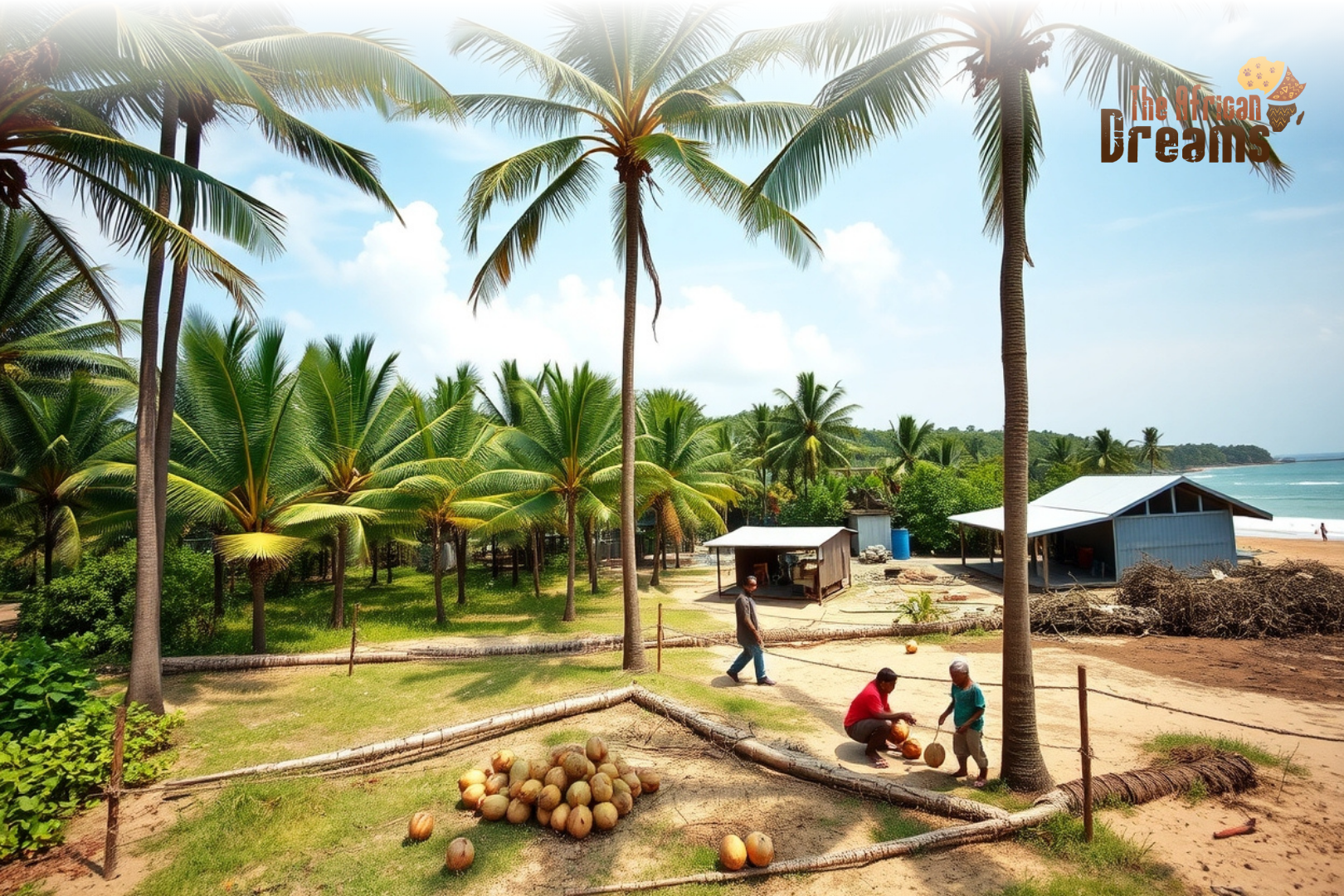
The DRC is increasingly venturing into emerging agricultural opportunities to diversify its economy. The coconut industry has not been an exception. Coconuts are versatile and commercially highly valued due to the increasing global demand for coconut-based oil and water. This case study examines the Congo initiative to establish a sustainable coconut industry. It discusses challenges, solutions, and market opportunities for coconut oil and water.
The Challenges of Congo’s Coconut Industry
- Congo faces several challenges in developing a thriving coconut industry. Its agriculture is underdeveloped, with less than 20% of its 10 million hectares of arable land brought into cultivation.
- Paralyzing infrastructure, such as a lack of appropriate processing facilities for coconuts, limits the scalability of coconut products.
- Poor transportation links between farms in the countryside and markets also limit farmers’ access to profitable ventures.
- Smallholder farmers also lack the technical knowledge of modern coconut farming practices. Many traditional methods result in suboptimal yields and are uneconomic in terms of the harvesting process. This affects the large-scale commercial feasibility of coconut farming.
- Inadequate irrigation systems compound this situation, making farms prone to changes in seasons.
The Solutions
Various activities are, therefore, being undertaken to improve the production and processing of coconuts. In this regard, the following are some of the major initiatives:
- Improved Varieties of Coconut and Technical Support:
More productive and disease-resistant hybrid coconut varieties are being disseminated through various programs. Seeds are being distributed to farmers through agricultural agencies.
The agencies are training farmers on good farming practices. Thus, this group’s coveted aim is to improve the quality and quantity of coconuts.
- Investment in Processing Facilities:
The government collaborates with private investors to establish local coconut processing facilities. These facilities produce value-added products such as virgin coconut oil, coconut water, and coconut milk.
The government has established processing plants in key coastal areas to ensure easy access to raw materials and transport networks. This reduces post-harvest losses and boosts the incomes of smallholder farmers.
- Capacity Building and Market Linkages:
Farmers will be trained in modern coconut cultivation and harvesting techniques. More focus will also be placed on increasing coconut productivity through sustainable methods. Besides, market linkages will be strengthened through partnerships with cooperatives and agri-businesses that ensure stable prices.
Implementation
It is planned gradually by the government of Congo:
- Demonstration Farms and Pilot Projects: Pilot projects have started implementing hybrid coconut plants in coastal provinces with suitable agroclimatic conditions. Demonstration farms are meant for advanced cultivation and post-harvest methods that farmers can learn and replicate.
- Private Investment Incentives: Special economic zones have been developed to attract investments in coconut processing. Major investors enjoy tax holidays and hassle-free regulations for setting up coconut oil mills and water-processing facilities. The zones further encourage export-oriented production of high-quality VCO and bottled coconut water.
- Developing Sustainable Supply Chains: Public-private sector partnerships are being created to develop efficient supply chains for value-chain products derived from coconut oil and water. This includes the collection points, cold storage, and transport networks linking the farms along the coast to the processing centers. The government has targeted regional export increases to meet the rapidly expanding global demand for coconut-based products.
Results and Economic Impact
The results of these initiatives in the first phase have been modestly encouraging. For farmers adopting hybrid varieties and modern practices, yields were up to 20-30% higher than those achieved with traditional methods.
With the establishment of coconut processing facilities, farmers can sell their produce at a premium after adding value. It increases farmers’ incomes.
The demand for coconut water and oil is insatiable. Whereas global demand for refreshing coconut water is increasing due to its thirst-quenching properties and appeal among health-conscious consumers, its oil remains on the fashionable list in the food and cosmetics industries. This provides the Congo with twice as many opportunities to increase exports and earn foreign exchange.
Additionally, the coconut industry opens up new opportunities, particularly for women involved in coconut processing and value-added activities. Similarly, infrastructure development in SEZs and increased private investment from various industrial sectors will witness the opening of thousands of direct and indirect job opportunities, thereby stimulating local economies.
Prospects and Future Expansion
The long-term vision of the coconut industry in Congo is to be strategically positioned as a key player in Central Africa. Among plans for expansion are increased processing capacities that will result in a broader range of products, such as coconut cream, desiccated coconut, and coir. Digital platforms will also be set up; these will allow smallholders direct access to various markets, allowing them to transact locally and abroad with buyers.
Final remarks
The push by Congo to develop a sustainable coconut industry primarily evokes how much agriculture can spur economic growth and reduce poverty. Investing in coconut oil and water products, the country tries to reach increased farmer incomes and a growing global market foothold. If this is continued, government support will be required to build infrastructure, train farmers, and encourage private investments. With proper strategies, Congo’s coconut industry should act as an excellent model for other African countries that brag about successfully diversifying their economies and using high-value agricultural products.

0 Comments