
Introduction
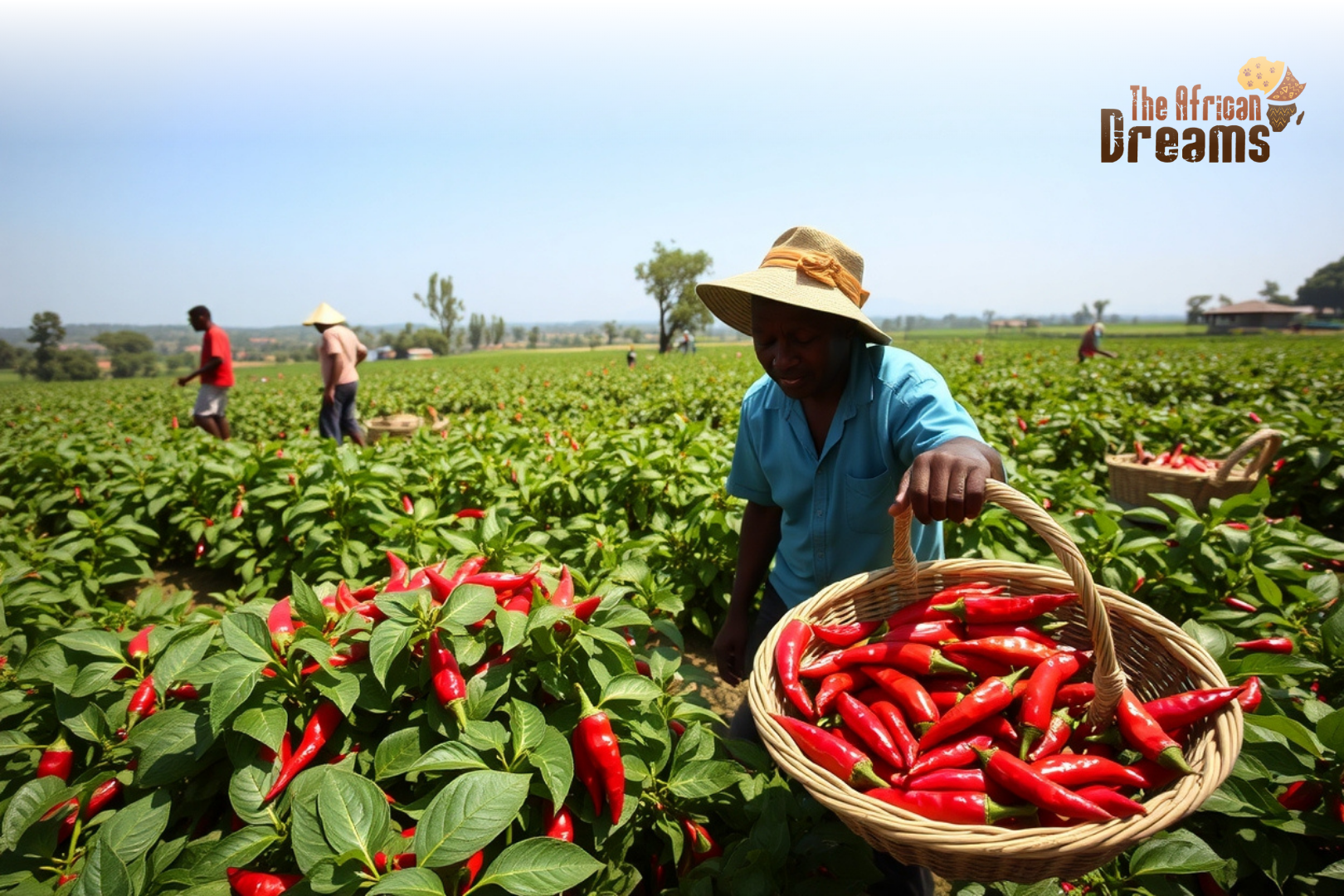
The Congolese chilli pepper is likely to be an influential player in the international spice market, thereby gaining from the demand increase in such produce across cuisines through Asia, Europe, and Africa. Chilli has become popular for its taste and health benefits, leading Congo to identify this crop as one of the strategic drivers of economic growth. This article explores opportunities for Congo in the chilli pepper industry, elaborating on the challenges faced, the solutions implemented, and the outcomes that position Congo as an emerging exporter. Recent investments in infrastructure, training, and market access help enhance production and quality while gaining global market penetration. This blog will discuss Congo’s chilli pepper industry and its growing demand shortly.
The Challenge
For quite some time, Congo has been facing key challenges in the chilli pepper industry. Some of these problems have resulted in high losses after harvesting. As much as 40 percent of the produce gotten from the farms spoils before it reaches the market.
This is partly due to poor infrastructure, mainly in the areas of storage, with a lack of cold storage facilities and a rather poorly developed transportation network. All this has led to farmers failing to keep their chilli pepper products fresh for longer periods, hence limiting competitiveness in various international markets.
Climate variability has also been a major challenge for chilli production in Congo. The reliance on rain-fed agriculture makes it particularly vulnerable to the unpredictable weather, which has become very erratic in recent years. In areas prone to drought, this results in low yields and inconsistent harvests.
In addition, there is infestation by pests such as aphids and thrips, which can cause up to 30% crop loss. These are usually accompanied by a variety of pests that, without the proper tools and knowledge to manage them, often reduce yields.
From the market’s perspective, Congo had to fight for a slot with other leading countries in chilli production, such as India, which was producing 1.7 million metric tonnes as far back as 2022, accounting for 38% of global production.
Entry into such a competitive market calls for farmers not only to realise bulk production of chilli pepper but also to meet high-quality standards, which has been another challenge facing Congolese farmers due to a lack of access to modern agricultural inputs and technologies.
The Solution
It was against this backdrop that the government of Congo rolled out a number of initiatives in response to international organisations, aimed at improving productivity and market access for chilli peppers. The introduction of modern farming methods is probably the best approach adopted so far. Farmers were taught to use climate-resilient chilli varieties that are less affected by pests and drought. These varieties not only improve yields but also ensure consistent chilli pepper quality, a key attribute for export markets.
The organisation of farmer cooperatives is another important intervention that enables small farmers to pool resources and knowledge to improve their bargaining power. Such cooperatives have also helped farmers appropriately acquire high-quality agricultural inputs, such as seeds and organic fertilizers.
With these inputs, farmers have been able to follow sustainable farming principles, minimising their dependence on chemical pesticides and restoring the health of their soil. This has resulted in higher yields and better quality chilli peppers.
The government has also invested heavily in post-harvest infrastructure, building cold storage facilities and improving transportation networks so that perishable goods spoil less, ensuring that even chilli peppers from the remotest parts of the land reach the market in good condition. Improvements in infrastructure massively reduced post-harvest losses and enabled Congo to meet the international standards required for exporting the crop.
Similarly, market access programs have been initiated to connect Congolese chilli farmers with international buyers. Through these programs, farmers have participated in trade fairs and showcased their products digitally to a wide international audience. This has helped the Congo tap into new markets in Asia and Europe, where demand for quality chillies is on the rise.
The Implementation
Accordingly, these solutions have been implemented in phases, starting with pilot projects in the country’s main chilli-producing areas. Such pilot programs have remained pegged on training farmers in modern agricultural techniques, such as integrated pest management and water-efficient irrigation systems. By applying such techniques, farmers can rely less on rainfall and better protect their crops from pests, achieving more predictable yields.
Consequently, the government has been working closely with the private sector to enhance logistical and distribution networks, ensuring chilli peppers are well transported from farms to ports. This has been very important for entering the international market, given that delivery time determines the quality of fresh chilli peppers.
Partnerships with logistics companies helped smooth the export process and reduce delays. This helps Congolese chilli peppers reach their destinations in good condition.
The most innovative feature of the implementation so far has been the use of digital platforms to connect farmers with international buyers. Through these platforms, farmers can track market prices, negotiate directly with buyers, and receive payment safely and efficiently. This has increased the level of transparency within the chilli pepper supply chain and allowed farmers to negotiate better prices for their products.
The Results
The result of these efforts has been consolidation into very remarkable changes in the production of chilli peppers in Congo. Chilli pepper production in Congo has increased by 35% since 2020, driven mainly by improved farming techniques and post-harvest handling.
Volume exports have similarly increased, with chilli pepper exports rising 20 percent over the last three years. This growth has been fuelled by rising demand in Europe and Asia, where consumers are increasingly seeking high-quality, sustainably produced spices.
On the economic side, it is estimated that chilli pepper farming has boosted the incomes of smallholder farmers by as much as 60 percent in some cases. The average chilli pepper farmer has benefited from increased income of 30-70 percent, driven by higher yields and improved market access.
These have motivated many farmers to enter the industry, further expanding chilli production and contributing to aggregate agricultural growth. The industry has been optimistic about the environment.
Farmers have embraced sustainable farming through the use of organic fertilisers and irrigation systems that conserve water. For example, drip irrigation systems reduce water use by roughly 30–40%, helping conserve scarce water resources and protect the environment from damage.
Going Forward
The Congo chilli pepper industry is an outstanding example of how investments in agriculture, if properly targeted, can uncover hidden economic potential and open up new sources of growth. Addressing critical constraints that had been limiting agricultural development, such as post-harvest losses in processing and market access, the utilisation of modern farming techniques has transformed Congo into a new player within the international market for chilli peppers. This development of the industry has improved the livelihoods not only of thousands of smallholder farmers but also contributed to the broader economic development of the country.
Going forward, further expansion of the chilli pepper industry in Congo will require sustained investment in infrastructure, technology, and farmer education. The global pepper seeds market size was worth USD 667 million in 2022 and is expected to rise to USD 900 million by 2030 at a CAGR of 3.5%, with particular demand in regions such as Asia. Equally, Congo is also in a better position to capitalise on such trends with a view to increasing its share of the global market.
Final Remarks
In summary, as the Congo continues to get it right for a sophisticated supply chain for the chilli pepper and adds to its reputation as a serious exporter, the future both for the industry and the country generally is bright. The industry’s success gives meaning to other agri-food sectors in the Congo, showing how effective selective investments and joint efforts can turn challenges into opportunities.


0 Comments