
Introduction
Zimbabwe is a country known for its beautiful scenery, culture, diverse wildlife, and landscape. The climate of the country is mostly tropical, with the rainy season starting from November to March and the dry season from April to October. These seasons have variations depending on altitude. However, climate change is impacting Zimbabwe greatly. It is showing unpredictable rainfall patterns and sudden, frequent droughts, which have severely affected Zimbabwe’s major component of its economy, agriculture. Crops like maize and tobacco are most vulnerable, destroying food security and livelihoods. But to fix the problem, Zimbabwe had taken climate-smart agriculture (CSA) initiatives. CSA promotes good farming practices that help farmers to get used to and find ways to farm in a climate change.
Climate-smart agriculture is very important for ensuring long-term food security and a stable future for Zimbabwe’s farming communities. This blog discusses climate-smart agriculture, challenges in Zimbabwe’s agricultural sector due to climate change, and the importance of climate-smart agriculture in Zimbabwe.
Article Highlights
1. What is Climate Smart Agriculture?
2. Challenges in Zimbabwe’s Agricultural Sector due to Climate Change
3. Importance of Climate-Smart Agriculture in Zimbabwe
- Improvement of Livelihood
- Mitigating Climate Change Impact
- Building Climate Resilience
- Promoting Sustainable Agricultural Practices
- Securing Agricultural Investments
What is Climate-smart Agriculture?
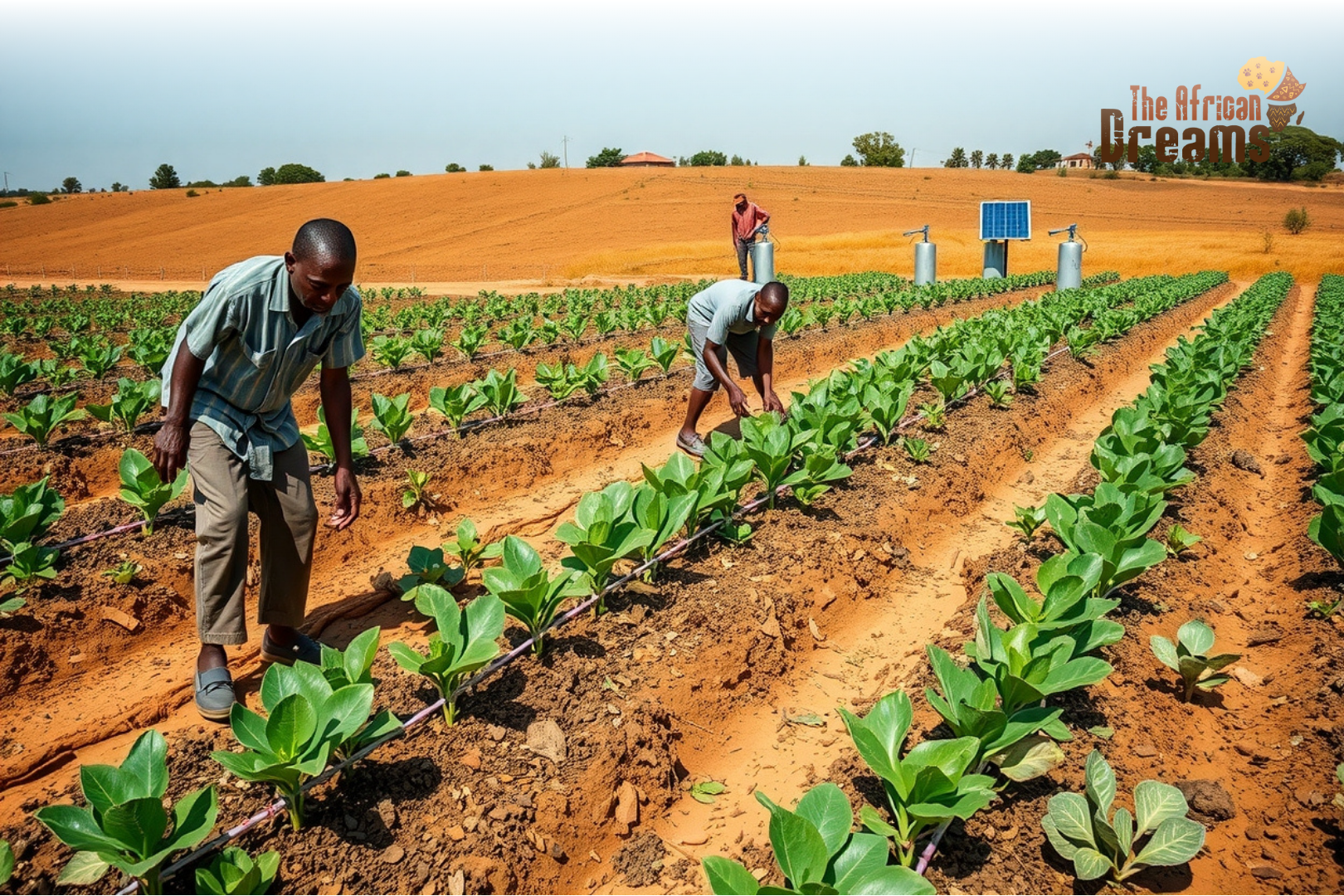
Climate-smart agriculture (CSA) is a way to improve farming while adapting to climate change. The goal is to ensure food security and support development, even as the climate changes and food demand grows. It also promotes improving crop yields and lowering environmental impacts. Techniques like drought-resistant crops, improved irrigation, and soil conservation are getting the most fame as they support the agricultural sector’s resilience the most.
CSA primarily focuses on three areas:
1. Increasing Productivity: Growing more food in a sustainable way.
2. Building Resilience: Helping farms adapt to climate challenges.
3. Reducing Greenhouse Gases: Cutting down emissions that contribute to global warming.
CSA requires careful planning to succeed, though. This planning is for balancing these goals. Different countries and groups have their own tasks and priorities. But the aim of the CSA is to create a fair, efficient, and effective food system that helps people and the environment. Even though the concept of CSA is a bit new, many of its practices are already being used by many farmers worldwide to deal with risks. To fully implement CSA, Zimbabwe needs to observe current and potential future practices, as well as the financial and institutional support required to make them work.
To learn about the Zimbabwe’s climate smart agriculture investment plan, read Zimbabwe Climate Smart Agriculture Investment Plan.
Challenges in Zimbabwe’s Agricultural Sector Due to Climate Change
1. The population is expected to keep growing, more than doubling from 13.1 million in 2012 to 29.6 million by 2050, and reaching 40.2 million by 2100. With a fast growth rate of 2.8% per year, this will likely put more pressure on natural resources and increase greenhouse gas emissions. This will make the country more prone to climate-related disasters. Food insecurity is already a challenge, and the country has struggled to maintain its strategic grain reserves, which should hold 500,000 tonnes. This problem is made worse by extreme weather, including droughts and long dry periods.
2. Low quality of land is a major problem in the country, with deforestation being a major cause of soil erosion. Many soils are already acidic and nutrient-poor, making it essential to use proper soil management techniques. To maintain and improve soil fertility, farmers can adopt practices like integrated soil fertility management, erosion control, better livestock management, and efficient irrigation.
3. Drought is a big, serious problem for agriculture. It impacts both crops and livestock. In 2015, agricultural production dropped by 5%, then by another 3.6% decline in 2016. Both years were affected by drought, including the severe El Niño-induced drought of 2015/16, which left 2.8 million people facing food shortages.
4. Crop and livestock pests and diseases are a growing challenge, especially as climate change affects their spread and occurrence. In 2016, the fall armyworm appeared in the country for the first time. If not controlled, this pest can destroy up to 70% of the maize crop, threatening food security.
5. Zimbabwe is experiencing more extreme weather events, including droughts, heatwaves, heavy rains, and flash floods. Rainfall patterns have become unpredictable, with a 5% decline in rainfall over the past century and more frequent dry spells. Average temperatures have risen by 0.3°C to 0.6°C since 1933, with hot days becoming more common. By 2070, temperatures may increase by up to 2.5%, and rainfall could drop by 5.9%, especially in the southwest and central-eastern regions, which will severely impact agriculture.
6. Regardless of climate change, the results suggest that Zimbabwe may become more reliant on importing certain food items. The country is expected to remain a net importer of groundnuts, potatoes, sorghum, and soybeans. For sorghum, net exports are predicted to be higher under the climate change scenario, with an increase of 32.4 percentage points compared to the scenario without climate change. However, for potatoes, groundnuts, and soybeans, net exports are expected to decrease under climate change by 6.2 percentage points, 35.7 percentage points, and 2.1 percentage points, respectively, compared to the no-climate-change scenario.
7. The impact of climate change on the area cultivated by 2050 indicates the following:
- The area used for soybean and potato cultivation is expected to decrease under both scenarios. However, the decrease will be more significant under the climate change scenario, with a reduction of 0.2 percentage points for soybeans and 8.8 percentage points for potatoes.
- For cotton, wheat, and vegetables, the area under cultivation is expected to increase. However, under the climate change scenario, the increase will be smaller by 1.4 percentage points for cotton, 6.8 percentage points for wheat, and 4.5 percentage points for vegetables.
8.In terms of crop yields, results indicate that by 2050, the following could occur:
- Under the climate change scenario, the yields for maize, cotton, and potatoes are expected to be 7.5 percentage points, 5.9 percentage points, and 26.1 percentage points lower, respectively, compared to the scenario without climate change.
- Under the climate change scenario, the yields for vegetables, wheat, sugarcane, groundnuts, and soybeans are expected to be 6.5 percentage points, 6.9 percentage points, 4 percentage points, 2.2 percentage points, and 1.9 percentage points lower, respectively.
To know more about Zimbabwe’s agriculture and how farmers are adapting to climate change for more crops, read Zimbabwe’s Agriculture: Farmers Adapting to Climate Change for More Crops.
Importance of Climate-Smart Agriculture in Zimbabwe
1. Improvement of Livelihood
Climate Smart Agriculture plays a crucial role in Zimbabwe, primarily in solving food security challenges that are spread throughout by climate change. CSA practices, such as drought resistant crops and improved irrigation techniques, have successfully improved food availability and stability for the farmers of Zimbabwe.
According to a study published in Agriculture and Food Security, CSA adoption of these techniques has resulted in noteworthy improvements in both food security and income for smallholder farmers. Zimbabwe farms are able to create more resilient farming systems through practices such as crop variety and agroforestry. This leads to stable yields even during climate change problems. This not only lowers the risk of food insecurity but also helps increase the incomes of a variety of households, primarily, different farmers. Hence, it allows farmers to invest in other aspects of their livelihood.
2. Mitigating Climate Change Impact
Zimbabwe’s agricultural sector is highly exposed to the impact of climate change, mostly in relation to its staple crop, maize. Research and Projections expect that without intervention, maize yields will be lowered as much as 33% by 2030 due to increasing temperatures, lower rates of rainfall, and more droughts.
The World Bank notes that CSA is an important plan to mitigate these impacts by promoting practices that adapt to unpredictable weather changing patterns. These include using drought-resistant crop varieties, implementing efficient water management practices, and adopting better soil health strategies. By taking in CSA techniques, farmers can manage these risks better and secure their livelihoods, and ensure a stable food supply
3. Building Climate Resilience
Zimbabwe is facing higher climate variability. These include erratic rainfall, frequent droughts, and flooding. These directly affect agricultural productivity. CSA is a vital tool for helping farmers build resilience to these climate changes.
In Masvingo District, CSA has proven to be highly effective in mitigating the impacts of drought and white. Implementing techniques such as water conservation practices, improved varieties of seeds, and better land management has allowed farmers to be able to stabilize crop yields and ensure good food production. The adoption of CSA ensures that farmers can withstand and recover from extreme weather events. This enhances the long term sustainability of their agricultural system.
4. Promoting Sustainable Agricultural Practices
Besides simply adapting to climate change, CSA also focuses on lowering agriculture’s environmental footprint. This is achieved through practices that promote sustainability, such as lowering soil erosion, improving water efficiency, and enhancing biodiversity. In Zimbabwe, various CSA innovations such as the use of organic fertilizer, agroecological practices, and powerful irrigation systems have helped lower greenhouse gas emissions and environmental degradation.
These practices not only contribute to the long term health of the agricultural sector but also increase the efficiency of land use, making it possible to produce more food with less environmental cost. Hence, CSA promotes a more sustainable agricultural future for Zimbabwe. It ensures that the future generation can continue to rely on agriculture as a key source of food and income.
5. Securing Agricultural Investments
Investments in the CSA are vital for Zimbabwe’s agricultural future. The country’s agriculture is at risk due to climate change. Without planned investments in CSA, the sector could face declines in both productivity and good security.
The World Bank highlights that CSA investments are necessary to make sure the sector gets along with climate challenges, remains productive, and continues to support livelihoods. These investments can help in making CSA practices bigger and making them accessible to smallholder farmers, primarily those in more unsafe regions. The financial support from both local and international stakeholders can help Zimbabwe’s agriculture sector become more sustainable, climate resilient, and ensure more long term viability of its agricultural industry.
Conclusion
Zimbabwe’s agricultural sector is facing major challenges due to the impacts of climate change. These include unpredictable rainfall, long droughts, and land degradation. But the adoption of Climate-Smart Agriculture (CSA) offers a promising solution to these challenges. CSA mostly focuses on sustainable farming practices such as drought-resistant crops, efficient irrigation, and better soil management. This helps farmers adapt to climate conditions, boost productivity, and make sure long term food security.
As Zimbabwe continues to face climate variability, the importance of CSA is immeasurable. It not only helps mitigate the negative effects of climate change but also promotes environmental sustainability, durability, and economic growth. By investing in CSA, Zimbabwe can protect its agricultural future, enhance food security, and improve the livelihoods of its farming communities. With support and innovation, CSA can build the way for a more sustainable and better agricultural sector in Zimbabwe.

0 Comments